

A Technical Analysis: Mesh Count and Screen Motion Adjustments for Your Feed Vibro Separator
Post Date: 2026-10-19
Introduction
Selecting the correct screen mesh and adjusting vibration settings are two important steps in configuring a Rotary Vibrating Sieve for animal feed processing. Even when a machine has sufficient nominal capacity, an unsuitable screen specification or poorly matched motion pattern can affect separation accuracy, material flow, and production consistency.
Feed ingredients such as ground corn, soybean meal, bran, protein powders, and mineral additives have different particle-size distributions and flow characteristics. A screen that works well for one material may not provide the desired result for another. Operators must therefore consider the relationship between mesh count, actual aperture size, wire diameter, open area, feed rate, and vibration trajectory.
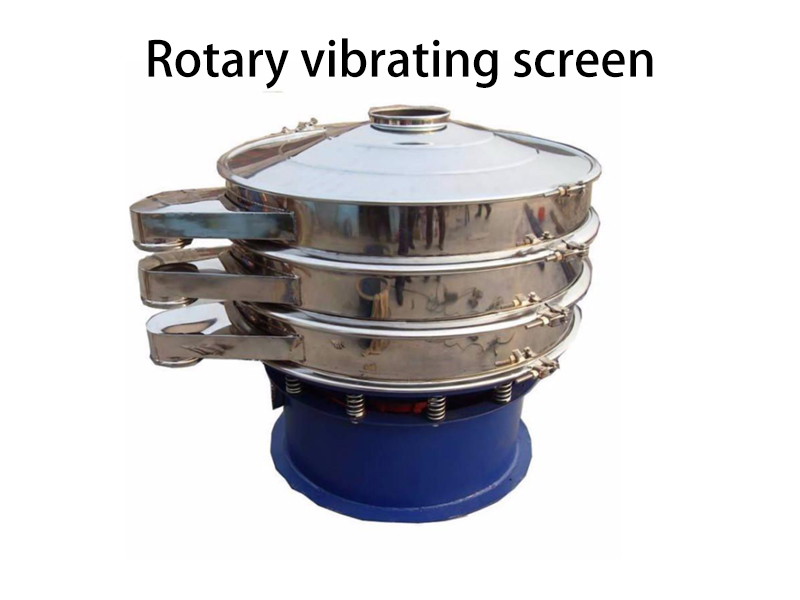
Gaofu Machinery's Rotary Vibrating Sieve uses a vertical vibration motor with upper and lower eccentric weights to generate three-dimensional movement. This motion helps distribute material across the screen and supports size-based classification. The appropriate screen and operating settings depend on the specific feed material, separation target, and machine configuration. Gaofu Rotary Vibrating Screen.
This technical guide explains how feed manufacturers can evaluate these variables systematically and make adjustments based on measured screening results.
1. Mesh Count and Aperture Size: Understanding the Difference
Mesh count is commonly used to describe the number of openings or wires within a defined length of screen. However, mesh count alone does not establish the actual opening size.
Two screens with the same mesh count may have different apertures if their wire diameters differ. Likewise, screens specified using different measurement conventions may not be directly comparable. For equipment selection, the actual aperture dimension and screen specification are more useful than mesh count alone.
Three parameters should be considered together:
- Mesh count: The number of mesh openings or wires per unit length, according to the supplier's stated convention.
- Aperture size: The clear opening between adjacent wires, typically expressed in millimeters or micrometers.
- Wire diameter: The thickness of the wire used to form the screen mesh.
A finer mesh generally has smaller openings, but the relationship between mesh count and aperture depends on wire diameter and the applicable screen standard.
For example, two suppliers may both describe a screen as having a particular mesh count, yet the screens may not provide identical openings. When purchasing replacement mesh or comparing equipment configurations, confirm the aperture, wire diameter, material, and applicable specification with the supplier.
For feed manufacturers, the central question is not simply, "How many mesh?" It is, "What effective opening is required to separate this material into the intended size fractions?"
2. How to Select Mesh for Different Feed Ingredients
Screen selection should begin with the intended separation result. A Rotary Vibrating Sieve may be used to remove oversized particles, classify an ingredient into different fractions, or control the size range of a material before blending or further processing.
The correct aperture depends on the material and the target specification.
Ground grain and coarse meal
Ground corn and other grain-based materials can contain a broad range of particle sizes. If the objective is to separate coarse particles from finer material, the aperture should be chosen according to the desired cut size and the existing particle-size distribution.
An aperture that is too small may retain more usable material than intended. An aperture that is too large may allow some particles from the coarse fraction to pass through.
Soybean meal and protein ingredients
Protein meals may contain both fine particles and larger fragments. Their behavior also depends on moisture, oil content, particle shape, and how the material was processed upstream.
Screen selection should account for both the desired size range and the material's flow characteristics. Testing representative samples can help determine whether the proposed aperture provides a useful separation without unnecessary product loss.
Bran and fibrous ingredients
Bran and other irregular or fibrous materials may behave differently from rounded particles. Long or flat particles can sometimes pass through an opening when aligned in a particular direction, even if their longest dimension exceeds the nominal aperture.
For these materials, screen selection should be based on practical screening trials rather than particle length alone.
Mineral additives and fine ingredients
Fine mineral ingredients may require smaller apertures, depending on the target size range. However, a finer screen can also reduce open area and increase the likelihood of material accumulation when the feed is cohesive or moisture-sensitive.
The final configuration should be validated under realistic operating conditions.
3. Why Open Area Matters Alongside Mesh Count
Open area refers to the proportion of the screen surface occupied by clear openings through which particles can pass. It influences how much of the screen is available for separation.
A screen with smaller apertures may provide a more precise cut for a particular application, but it can also have a lower open area depending on wire diameter and mesh construction. Less open area can restrict particle passage and may reduce effective capacity under some conditions.
Open area should therefore be evaluated together with:
- Actual aperture size.
- Wire diameter and screen construction.
- Total screen area.
- Particle-size distribution.
- Material feed rate and bed depth.
- The tendency of the material to agglomerate or block openings.
A finer screen does not automatically produce better overall performance. If the required throughput cannot be maintained or the screen repeatedly accumulates material, the configuration may need to be reviewed.
For an industrial vibro separator, the best screen is the one that meets the separation target at a practical production rate while remaining suitable for the material and maintenance requirements.
4. Understanding Three-Dimensional Screen Motion
A Rotary Vibrating Sieve uses compound vibration to move material across the mesh. In Gaofu's design, a vertical vibration motor and eccentric weights at the upper and lower ends generate a combination of horizontal, vertical, and inclined motion.
The combined movement influences how material spreads across the screen, how particles encounter openings, and how quickly material travels toward the discharge.
Horizontal movement
The horizontal component contributes to material transport across the screen surface. Its effect depends on the overall trajectory, screen geometry, feed distribution, and material characteristics.
Vertical movement
The vertical component changes particle position and can help redistribute the material bed. This may create additional opportunities for particles to reach the screen surface.
Inclined movement
The inclined component contributes to the compound movement that carries material across the screen toward the discharge. Its relationship with the other movement components influences the material's trajectory and residence time.
These components act together rather than functioning as completely independent controls. Changing the relative phase angle of the eccentric weights can change the overall movement pattern.
Operators should follow the instructions for their specific machine model. Exact adjustment positions, permissible settings, and procedures should not be generalized across different screen sizes or motor configurations.
5. How Screen Motion Interacts with Mesh Selection
Mesh and motion should be evaluated as a combined system. A screen aperture defines which particles may pass through, while the movement pattern affects how frequently particles encounter the openings and how long they remain on the screen.
Consider three common operating situations.
Situation A: Suitable aperture, but material accumulates on the screen.
Possible contributing factors include excessive feed rate, uneven material distribution, cohesive feed, or a movement pattern that does not transport the material effectively. The solution may involve reviewing feed distribution or operating settings rather than immediately changing to a finer mesh.
Situation B: Throughput is acceptable, but too many coarse particles pass through.
The aperture may be too large for the target cut, or the particle shape and orientation may allow some coarse particles to pass. Review the actual aperture specification, screen condition, and representative sample results before deciding whether a different mesh is required.
Situation C: The screen captures coarse material, but the usable fraction is lower than expected.
The aperture may be too small, or acceptable particles may be retained because of their shape, agglomeration, or limited screen contact. Analyze the reject stream to determine whether the loss is caused by screen selection or another process variable.
These examples illustrate why a single adjustment should not be assumed to resolve every screening problem. A change in mesh or motion should be followed by a measured evaluation of the resulting fractions.
6. Adjusting Eccentric-Weight Phase Angles
On a Rotary Vibrating Sieve, the relative phase angles of the upper and lower eccentric weights influence the compound motion generated by the motor assembly. This provides a means of configuring the material's movement trajectory within the limits of the machine design.
However, there is no universal phase-angle setting suitable for every feed ingredient and screen specification. A setting that works well for one material may produce a different result with another.
Before adjusting the weights, operators should:
- Identify the current setting and record the existing screening results.
- Confirm that the screen is correctly installed and in good condition.
- Check whether uneven feeding, material accumulation, or a blocked discharge is affecting performance.
- Consult the machine-specific operating manual for permissible adjustment procedures.
- Isolate the equipment from energy sources and follow the required safety procedure before accessing the vibration motor or eccentric weights.
- Make only manufacturer-approved changes.
- Restart the equipment according to the operating procedure and evaluate the result using representative samples.
Do not adjust eccentric weights while the machine is running or bypass guards and safety interlocks. If the correct adjustment procedure is unclear, seek guidance from the equipment supplier.
7. Feed Rate, Bed Depth, and Residence Time
Screening performance depends not only on the mesh and vibration settings but also on the amount of material entering the machine.
At a high feed rate, material may form a deeper layer over the screen. Particles beneath the upper layer can have fewer opportunities to contact the mesh, potentially reducing the proportion of material that passes through during its time on the screen.
At a lower feed rate, particles may have more opportunities to encounter openings, but the production target may not be met.
The appropriate operating point balances throughput, separation quality, and stability.
When evaluating the feed rate, consider:
- Whether material enters the screen evenly.
- Whether the material bed is excessively deep in any area.
- Whether the screen is being used across its available surface.
- Whether the undersize and oversize outlets discharge consistently.
- Whether the particle-size distribution meets the target at the required throughput.
If the screening result changes as feed rate increases, do not assume that stronger vibration is the only possible solution. The screen area, aperture, material characteristics, and inlet arrangement may also need review.
8. A Practical Method for Fine-Tuning Mesh and Motion
A structured test helps separate the effects of screen selection from the effects of operating settings.
Step 1: Define the separation target
Specify the required particle-size range and the acceptable amount of material in each fraction. If the purpose is to remove coarse particles, define what qualifies as coarse for that application.
Step 2: Characterize the incoming feed
Collect representative samples and determine the existing particle-size distribution. Record relevant conditions such as moisture, temperature where applicable, and any visible agglomeration.
Step 3: Confirm the screen specification
Verify the aperture, wire diameter, screen construction, and condition. Do not rely on mesh count alone when selecting a replacement screen.
Step 4: Establish a baseline
Run the machine under stable, approved operating conditions. Record feed rate, screen configuration, discharge behavior, and the results of particle-size analysis.
Step 5: Investigate the main limitation
Determine whether the problem relates primarily to aperture size, material movement, excessive loading, screen condition, or material properties.
Step 6: Make a controlled adjustment
Change one relevant variable at a time where practical. Use only manufacturer-approved settings and procedures.
Step 7: Compare the results
Collect samples from the feed and discharge streams. Evaluate the amount of material in each fraction, product loss, throughput, and whether the separation target is met.
Step 8: Document the validated setup
Record the screen specification, operating conditions, material type, and measured results. This creates a useful reference for future production runs and troubleshooting.
The method does not eliminate the need for engineering judgment, but it helps reduce guesswork and makes comparisons between settings more meaningful.
9. Common Screen-Selection and Adjustment Mistakes
Several avoidable mistakes can make screening performance inconsistent.
Choosing mesh by count alone. Different wire diameters can result in different apertures at the same mesh count. Confirm the actual opening size and screen specification.
Assuming finer mesh is always better. Smaller openings may improve the intended size cut but can reduce open area, increase retention of usable material, and make cleaning more demanding.
Increasing vibration without identifying the cause. A poor separation result may originate from an unsuitable aperture, uneven feeding, or a damaged screen. Increasing vibration intensity may not address the underlying issue.
Changing several settings at once. When mesh, feed rate, and phase-angle settings are changed simultaneously, it becomes harder to identify which change affected the result.
Ignoring the reject fraction. Oversize material should be sampled or inspected when appropriate. The reject stream can reveal whether the screen is removing unwanted particles or retaining too much usable product.
Overlooking screen wear. Damaged or deformed mesh can change the effective opening and undermine the intended separation.
A disciplined troubleshooting process begins with inspection and data collection before making configuration changes.
10. Maintenance Practices for Consistent Screening
Even a well-selected mesh and validated movement pattern require routine maintenance.
Before operation, check that the screen is correctly installed, the mesh is intact, the frame and fasteners are secure, and the feed and discharge paths are unobstructed. Inspect the machine for abnormal vibration, unusual noise, or changes in material distribution.
After the required production or cleaning interval, inspect the screen for wear, deformation, residue, and blocked openings. Replace damaged mesh in accordance with the manufacturer's recommendations.
Maintenance records should include screen identity, replacement date, operating observations, and any adjustments made to the approved vibration settings. Tracking these details can help identify whether changes in screening results correspond to screen wear, ingredient variation, or equipment condition.
For feed applications, cleaning and changeover procedures should be appropriate for the material and plant hygiene requirements. The machine should be returned to service only after required inspection and safety checks are complete.
11. Gaofu Machinery Rotary Vibrating Sieve for Feed Processing
Gaofu Machinery manufactures rotary vibrating screening equipment for powder and granular materials. Its Rotary Vibrating Sieve uses a vertical vibration motor and upper and lower eccentric weights to generate three-dimensional motion, supporting screening, grading, and selected impurity-removal applications.
For animal feed manufacturers, screen selection should be based on the ingredient's particle-size distribution, required cut size, target throughput, material flow characteristics, and cleaning requirements. The movement configuration should then be evaluated against the selected screen and actual operating conditions.
When requesting a machine configuration or replacement screen, provide the technical team with the material name, current particle-size distribution, target aperture, required throughput, number of fractions, and relevant material characteristics. If the machine is already in operation, include the current screen specification and measured screening results.
This information can help the supplier assess the application more accurately. Actual performance depends on the equipment configuration, screen condition, material properties, and operating conditions, so testing may be appropriate before finalizing the setup.
Learn more about the Gaofu Rotary Vibrating Screen and discuss your feed-screening requirements with the technical team.
Conclusion
Mesh count and screen motion are closely related factors in configuring an industrial vibro separator for animal feed processing. Mesh count provides a useful reference, but the actual aperture, wire diameter, and open area are essential when choosing a screen. The compound movement generated by the eccentric weights influences material distribution, screen contact, and transport toward the discharge.
A suitable configuration balances the required particle-size separation with throughput, material behavior, and maintenance needs. Rather than assuming that finer mesh or stronger vibration will always improve results, feed manufacturers should establish a target, inspect the screen, make controlled adjustments according to the machine manual, and verify the outcome through representative sampling.
Gaofu Machinery's Rotary Vibrating Sieve can be evaluated for feed ingredient screening and classification applications. By combining an appropriate screen specification with validated operating conditions and regular maintenance, manufacturers can make more informed decisions about screening performance and production consistency.