

A Technical Analysis: Screen Cylinder Mesh Selection and Paddle Speeds for Protein Powder
Post Date: 2026-10-28
In high-volume protein powder processing—spanning whey isolates, micellar casein, soy protein concentrates, and fine pea protein powders—achieving consistent yield and precision particle classification depends directly on tuning core machine variables. While overall sifter throughput and sanitary housing design are critical, process engineers must pay close attention to the interaction between screen cylinder mesh selection and rotary paddle tip speeds.
Selecting inappropriate mesh geometries or rotor velocity parameters can lead to incomplete agglomerate breakdown, accelerated screen wear, or unnecessary energy consumption.
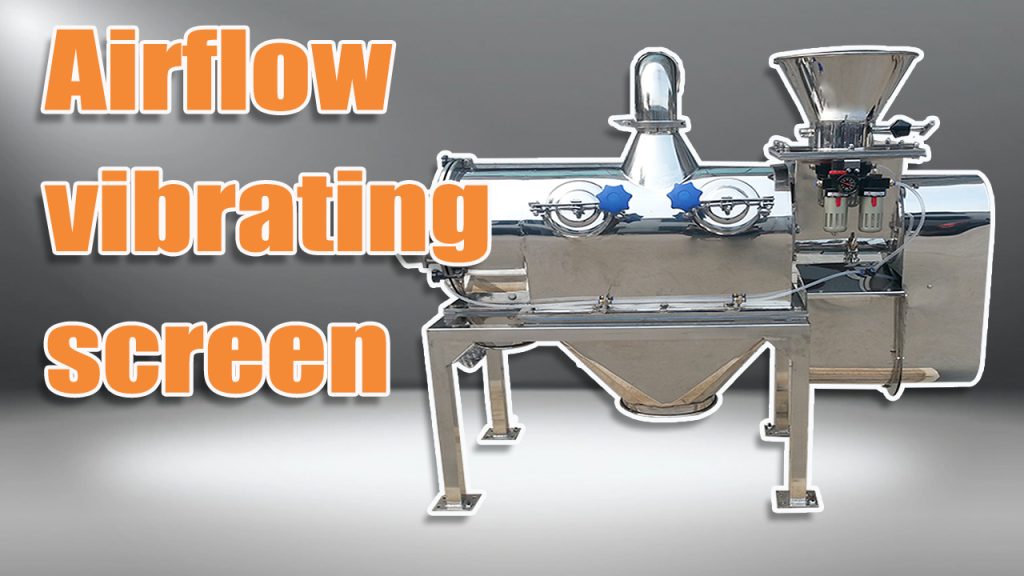
To provide technical clarity for plant managers and process engineering teams, Gaofu Machinery offers this analytical breakdown of how mesh media parameters and internal paddle aerodynamics interact inside the Gaofu Centrifugal Sifter to deliver optimized powder separation.
1. Screen Cylinder Mesh Selection Dynamics
Inside a centrifugal sifter, the screen mesh functions not under a static gravity load, but under continuous radial pressure generated by fluidized powder. Selecting the proper mesh configuration involves balancing open area percentage, wire diameter, structural stability, and material grade.
[Fluidized Powder Cloud] ───> [Centrifugal Acceleration] ───> [Screen Mesh Interface]
                                                                     │
                                                    ┌────────────────┴────────────────┐
                                                    ▼                                 ▼
                                       [Compliant Fine Pass]            [Oversize / Contaminant Rejection]
A. Woven Wire Mesh vs. Perforated/Wedge Wire Baskets
- Woven Wire Mesh (Stainless Steel 304/316L): Offers maximum percentage open area, making it the preferred choice for high-throughput fine sifting (typically 40-mesh to 120-mesh). High open area reduces pneumatic backpressure within the sifting chamber and maximizes per-hour tonnage.
- Perforated Plate & Synthetic Mesh: Utilized in specialized applications where zero metal-wire breakage can be tolerated, or when handling highly abrasive or corrosive specialty formulations.
B. Mesh Aperture and Wire Diameter Metrics
Choosing the correct aperture depends on raw material bulk density, moisture content, and target particle size distribution (PSD):
| Protein Powder Variant | Typical Mesh Size | Aperture Range (µm) | Open Area Target (%) | Primary Separation Focus |
| Whey Protein Isolate (WPI) | 60 – 100 Mesh | 250 – 150 µm | 38% – 48% | Delumping & foreign fiber capture |
| Plant Protein Blends (Pea/Soy) | 40 – 80 Mesh | 400 – 180 µm | 40% – 52% | Dispersing cohesive agglomerates |
| Micellar Casein | 50 – 80 Mesh | 300 – 180 µm | 39% – 45% | High-density flow optimization |
Selecting a wire diameter that is too thick reduces open area, restricting throughput. Conversely, wire that is too thin risks fatigue stretching under continuous high-velocity centrifugal forces. Gaofu screen cylinders utilize pre-tensioned, reinforced basket frameworks to maintain exact aperture geometries during heavy operational cycles.
2. Rotary Paddle Speed Mechanics and Tip-Speed Physics
The internal rotor assembly carries helically pitched paddles that rotate inside the stationary screen cylinder. The peripheral tip speed ($v_t$) of these paddles determines the kinetic energy transferred to the powder bed.
$$v_t = \pi \times D \times n$$
(Where $D$ is the rotor outer diameter and $n$ is the rotational speed in RPM).
                     ┌───────────────────────────────────────────┐
                     │          Rotor Speed Calibration          │
                     └─────────────────────┬─────────────────────┘
                                           │
                    ┌──────────────────────┴──────────────────────┐
                    ▼                                             ▼
       [Tip Speed Too Low (< 10 m/s)]               [Tip Speed Too High (> 25 m/s)]
       - Insufficient centrifugal force              - Excessive particle degradation
       - Agglomerates pass to overs                  - Unnecessary thermal generation
       - Screen blinding risk increases              - Premature screen wire wear
A. The Fluidization Threshold
For effective sifting, the paddle tip speed must generate sufficient force to fluidize the incoming powder bed. Fluidization occurs when centrifugal acceleration exceeds the internal cohesive energy of the powder matrix.
- Low-Density Powders: Require higher tip speeds to achieve necessary centrifugal acceleration.
- Dense, Cohesive Powders: Require high-torque paddle dynamics at calibrated speeds to shear lumps without compacting material against the mesh.
B. Thermal Transfer and Shear Considerations
Protein molecules can undergo denaturation if exposed to excessive localized frictional heating. Gaofu Machinery calculates paddle-to-mesh clearance tolerances (typically 1.5 mm to 3.0 mm) alongside calibrated VFD (Variable Frequency Drive) motor controls. This ensures that:
- Material is propelled by an air-shear cushion rather than direct mechanical grinding against the wire screen.
- Heat buildup remains near zero during continuous, multi-shift production runs.
- Energy consumption is matched precisely to the required separation duty.
3. Synergistic Optimization: Matching Mesh and Rotor Parameters
Achieving peak performance requires balancing screen open area with rotor dynamics:
Optimal Processing Zone = Correct Mesh Aperture + Calibrated Rotor Tip Speed + Controlled Helical Pitch
- High Throughput with Cohesive Stock: Pair a high-open-area, pre-tensioned 60-mesh stainless screen basket with a VFD-controlled rotor operating at optimized mid-to-high tip speeds. This breaks soft agglomerates while keeping the mesh cleared via aerodynamic airflow.
- Strict CCP Safety Auditing: Pair a fine 100-mesh basket with a moderate rotor speed to allow high-precision particle passage while preventing fragile foreign contaminants (such as paper threads or soft fibers) from being forced through the mesh.
Summary & Technical Engineering Support
Optimizing a protein powder sifting line requires more than sizing a motor—it demands matching physical mesh parameters with rotary velocity dynamics. Gaofu Machinery's Centrifugal Sifter line provides adjustable rotor speed controls, custom helical paddle geometries, and precision pre-tensioned screen cylinders to give process engineers exact control over their separation parameters.
To consult with our technical team, request custom particle size analysis, or receive recommendations for your facility's mesh and speed configurations, contact Gaofu Machinery today.