

Best Practices for Operating a Flour Sieving Machine with a Centrifugal Sifter in Food Manufacturing
Post Date: 2026-07-13
Introduction
Efficient powder screening is an essential part of many food manufacturing processes. Flour mills, bakeries, ingredient suppliers, and food processing facilities commonly use a flour sieving machine to classify particles, remove oversized materials, and prepare powders for blending, conveying, packaging, or further processing. Proper equipment operation helps support stable production, consistent screening results, and routine maintenance.
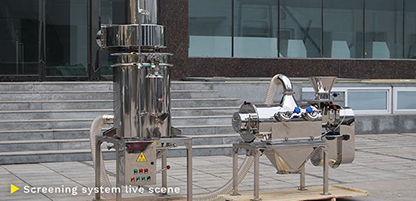
The Centrifugal Sifter from Gaofu Machinery is designed for continuous screening of dry powders. Using centrifugal force and a rotating paddle assembly, it can be configured for a variety of flour and food ingredient applications. This article outlines practical operating best practices to help manufacturers use a centrifugal sifter effectively while maintaining reliable production performance.
Why Proper Equipment Operation Matters
A flour sieving machine performs an important function within the production line. Even well-designed equipment depends on appropriate installation, operation, and maintenance to achieve consistent screening performance.
Following standardized operating procedures may help manufacturers:
- Maintain stable material flow
- Support consistent particle classification
- Reduce unnecessary equipment wear
- Improve production efficiency
- Facilitate routine maintenance
- Contribute to internal quality management procedures
Operating practices should always follow the equipment manual and the manufacturer's recommendations.
Understanding the Working Principle of a Centrifugal Sifter
A Centrifugal Sifter differs from conventional vibrating screening equipment.
During operation:
- Powder enters the feed inlet.
- Rotating paddles distribute the material inside a cylindrical screen.
- Centrifugal force moves the powder evenly across the screen surface.
- Fine particles pass through the selected mesh.
- Oversized particles are discharged separately.
This screening method is suitable for many free-flowing food powders and can be incorporated into continuous production systems.
Best Practice 1: Evaluate Material Characteristics Before Operation
Different powders behave differently during screening.
Before starting production, review:
- Particle size distribution
- Moisture content
- Bulk density
- Flowability
- Tendency to form soft agglomerates
- Product temperature
Understanding these properties helps determine an appropriate mesh specification and operating configuration.
Best Practice 2: Select the Appropriate Screen Mesh
The screen mesh is one of the most important factors affecting screening performance.
Mesh selection should be based on:
- Product specifications
- Required particle size
- Material characteristics
- Production objectives
If multiple products are processed on the same production line, confirm that the selected mesh is appropriate for each material before operation.
Best Practice 3: Maintain a Consistent Material Feed
Stable feeding contributes to smooth equipment operation.
Operators should:
- Avoid sudden surges in material flow.
- Feed material at a consistent rate.
- Match the feed volume to the equipment's rated capacity.
- Observe material distribution during operation.
An even feed can help maintain stable screening conditions and reduce unnecessary mechanical stress.
Best Practice 4: Monitor Equipment During Production
Operators should observe the machine throughout the production cycle.
Items to monitor include:
- Material flow
- Discharge condition
- Equipment vibration
- Operating noise
- Motor performance
- Powder leakage
- Product consistency
If abnormal operating conditions are observed, the equipment should be inspected before continuing production.
Best Practice 5: Keep the Screening Chamber Clean
Regular cleaning supports hygienic food production and reliable equipment operation.
Cleaning may help:
- Remove powder residue
- Reduce material buildup
- Facilitate product changeovers
- Support routine sanitation procedures
Cleaning methods should be compatible with the processed materials and the manufacturer's recommendations.
Best Practice 6: Perform Routine Equipment Inspections
Routine inspections can help identify wear before it affects production.
Inspection items may include:
- Cylindrical screen
- Rotating paddle assembly
- Bearings
- Drive motor
- Seals and gaskets
- Fasteners
- Electrical connections
Inspection frequency should reflect operating hours, processed materials, and production schedules.
Best Practice 7: Follow a Preventive Maintenance Plan
Preventive maintenance supports reliable long-term equipment performance.
Typical maintenance activities include:
- Screen replacement
- Bearing lubrication (where applicable)
- Inspection of rotating components
- Cleaning internal surfaces
- Checking shaft alignment
- Tightening mechanical fasteners
Maintenance should be performed according to the manufacturer's recommendations and plant maintenance procedures.
Best Practice 8: Train Equipment Operators
Well-trained operators are more likely to recognize changes in equipment performance and respond appropriately.
Training topics may include:
- Startup and shutdown procedures
- Screen replacement
- Cleaning methods
- Routine inspections
- Safe operating practices
- Reporting abnormal conditions
Operator training supports consistent production and equipment management.
Best Practice 9: Integrate the Equipment with the Production Line
A centrifugal sifter is commonly used as part of a larger powder handling system.
Integration may include:
- Pneumatic conveying systems
- Screw conveyors
- Storage silos
- Mixers
- Packaging equipment
- Dust collection systems
Proper system design helps ensure smooth material transfer between production stages.
Best Practice 10: Maintain Accurate Operating Records
Production and maintenance records provide useful information for equipment management.
Records may include:
- Production volume
- Processed materials
- Screen mesh used
- Maintenance activities
- Screen replacements
- Cleaning schedules
- Equipment inspections
These records can support preventive maintenance planning and process optimization.
Typical Applications of the Gaofu Centrifugal Sifter
The Gaofu Centrifugal Sifter can be configured for a wide range of food powder applications.
Flour Milling
- Wheat flour
- Rice flour
- Corn flour
- Whole wheat flour
Starch Processing
- Corn starch
- Potato starch
- Tapioca starch
- Rice starch
Dairy Ingredients
- Milk powder
- Whey powder
- Protein powder
Baking Ingredients
- Sugar powder
- Cocoa powder
- Baking premixes
- Food additives
Beverage Powders
- Coffee powder
- Tea powder
- Nutritional powders
- Instant beverage mixes
Application suitability depends on material characteristics and production requirements.
Features of the Gaofu Centrifugal Sifter
The Gaofu Centrifugal Sifter is designed for continuous dry powder screening.
Centrifugal Screening Principle
Rotating paddles move powder through a cylindrical screen for particle classification.
Continuous Operation
Designed for continuous production under recommended operating conditions.
Multiple Mesh Options
Available with different mesh specifications for various food powder applications.
Enclosed Equipment Design
The enclosed structure helps reduce powder leakage during operation and supports cleaner production environments.
Compact Equipment Layout
The machine is suitable for integration into a variety of production facilities.
Stainless Steel Product-Contact Components
Food-contact parts can be manufactured using stainless steel materials suitable for food processing applications.
Equipment specifications and available configurations may vary according to customer requirements.
Fortune 500 Client Testimonials
CNPC、CSCEC、Sinochem Holdings、CRCC、China Minmetals Corporation、CNOOC、CR、Sinopharm、CHN Energy、COFCO Corporation、Huawei Technologies、PowerChina、CITIC Group、Wuchan Zhongda Group、NORINCO、Chalco、CNBM、 Shaanxi Coal and Chemical Industry Group、Ansteel Group、CETC、CSSC、CASC、CEC、Jinchuan Group、CASIC、Conch Cement、CNNC、SPH、Shanxi Coking Coal Group、 Zhongtai Chemical、GPHL、DEC、Sinosteel Corporation、MCC、China National Salt Industry Chemical、China Baowu Steel Group、China Animal Husbandry Industry Co., Ltd.、CECEP
About Gaofu
Xinxiang Gaofu Machinery Co., Ltd. was founded back in the 1980s. With over 40 years of development, it has been certified as a National-level Specialized, Refined, Unique & Innovative Little Giant Enterprise, National Green Factory, National High-tech Enterprise, and National Intellectual Property Advantage Enterprise, and serves as the President Unit of China Vibration Screening Industry Association.
The company is accredited with the Henan Provincial Industrial Design Center, Henan Provincial Engineering Technology Research Center for Intelligent On-line Screening System, and Xinxiang Municipal Engineering Technology Research Center for Fine Screening.
Gaofu has obtained more than 500 patents including invention patents, utility model patents and design patents, been awarded the Science and Technology Achievement Prize issued by the Ministry of Industry and Information Technology of China, and participated in drafting and formulating 4 national standards.
Gaofu’s product portfolio covers multiple series and hundreds of specifications, including vibrating screening equipment, conveying equipment, coal crushing equipment, filtration equipment and automatic material handling systems.
Core products include vibrating screens, screening machines, vibratory sifters, rotary vibrating screens, ultrasonic vibrating screens, linear vibrating screens, airflow screens, gyratory screens, roller screens, dewatering screens, bar screens, vacuum feeding machines, dust-free feeding stations, bulk bag feeding stations, feeding systems, automatic powder feeding systems, automatic slag-discharging filters, leaf filters, clay filters, toothed roll crushers, coal crushers and other machinery.
These products are widely applied in food, pharmaceutical, chemical, metallurgy, construction materials, mining, thermal power, environmental protection and many other industries, winning recognition and trust from over 10,000 clients worldwide.
Gaofu products enjoy strong sales across Greater China, and are exported to more than 100 countries and regions such as Russia, Canada, the United States, New Zealand, Japan, Brazil and South Africa.
Upholding the corporate mission of Improving material quality & efficiency to fully satisfy customer demands, Gaofu maintains long-term partnerships with clients to achieve win-win development.
At present, Gaofu is an official qualified supplier for numerous Fortune Global 500 enterprises, including CNPC, Sinopec, Sinochem Holdings, China Resources Group, Sinopharm Group, COFCO, China National Building Material, China Aerospace Science and Technology Corporation, Jinchuan Group and more.
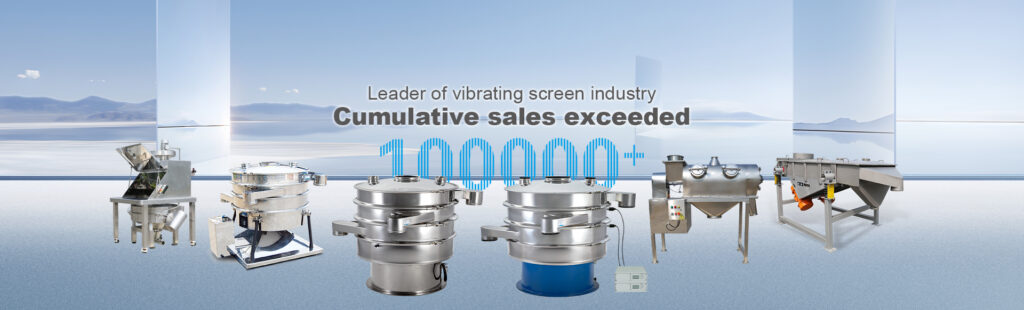
Gaofu Machinery ranks No.1 in global sales volume of vibrating screens.
In May 2024, Frost & Sullivan, a world-renowned international consulting firm, issued a Market Position Verification Certificate confirming that Gaofu achieved the world’s largest shipment volume of vibrating screens in the global market in 2023.