

Best Practices for Using a Flour Sieving Machine with a Filtration Sieve in Flour Manufacturing
Post Date: 2026-07-10
Introduction
Flour screening is an essential process in modern flour manufacturing. Whether producing wheat flour, rice flour, corn flour, or specialty flour blends, manufacturers strive to maintain consistent particle distribution while supporting efficient production workflows. A properly selected and operated flour sieving machine can contribute to these objectives by separating oversized particles, reducing soft agglomerates, and preparing flour for subsequent processing stages.
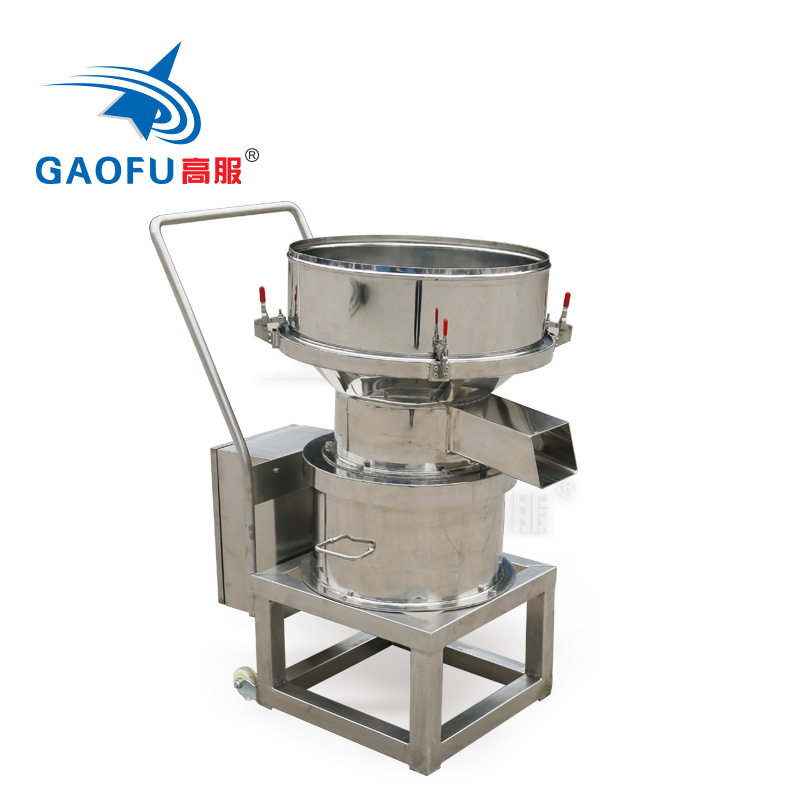
The Filtration Sieve from Gaofu Machinery is designed for fine powder screening and selected liquid-solid filtration applications. Suitable for various food powders, it can be configured to meet different production requirements. This article outlines practical best practices for using a filtration sieve in flour manufacturing to support stable operation, efficient maintenance, and consistent screening performance.
The Importance of Flour Screening
During milling, conveying, storage, and transportation, flour may experience changes in particle distribution or develop soft agglomerates due to environmental conditions. Screening before blending or packaging helps prepare the material for downstream processing.
Depending on the production process, a flour sieving machine can help:
- Separate oversized particles
- Reduce soft agglomerates
- Improve particle size consistency
- Support stable material flow
- Help protect downstream equipment
- Contribute to routine quality control procedures
Screening performance depends on factors such as material characteristics, mesh selection, operating conditions, and equipment maintenance.
Understanding the Gaofu Filtration Sieve
The Gaofu Filtration Sieve is a vibrating screening machine designed for dry powder classification and selected liquid-solid filtration tasks. Through controlled vibration, materials move evenly across the screen surface, allowing particles that meet the selected mesh specification to pass while retaining larger particles.
The equipment can be configured for processing:
- Wheat flour
- Rice flour
- Corn flour
- Potato starch
- Tapioca starch
- Milk powder
- Whey powder
- Protein powder
- Sugar powder
- Cocoa powder
- Coffee powder
- Baking premixes
- Seasoning powders
- Food additives
- Beverage powders
It may also be configured for suitable liquid filtration applications depending on production requirements.
Best Practice 1: Understand Material Characteristics
Every flour and food powder behaves differently during screening. Before selecting a mesh size or configuring equipment, evaluate:
- Particle size distribution
- Moisture content
- Bulk density
- Flowability
- Tendency to form agglomerates
- Temperature
- Product sensitivity
Understanding these characteristics helps determine an appropriate screening configuration.
Best Practice 2: Select an Appropriate Screen Mesh
The screen mesh is one of the most important factors influencing screening performance.
The selected mesh should correspond to:
- Product specifications
- Desired particle size
- Material characteristics
- Production objectives
A mesh that is too coarse or too fine may affect throughput or screening results. Mesh selection should be verified through product testing when appropriate.
Best Practice 3: Feed Material Evenly
Consistent material feeding supports stable equipment operation.
When operating a flour sieving machine:
- Avoid sudden surges of material.
- Maintain a steady feed rate whenever possible.
- Match the feed volume to the equipment's designed operating range.
- Monitor material distribution across the screen surface.
Proper feeding practices can contribute to stable screening performance.
Best Practice 4: Perform Routine Equipment Inspections
Regular inspections help identify wear before it affects production.
Operators should routinely check:
- Screen mesh condition
- Sealing components
- Fasteners
- Springs or vibration supports
- Vibration motor
- Electrical connections
Inspection frequency should be based on production schedules and operating conditions.
Best Practice 5: Clean the Equipment Regularly
Food processing equipment should be cleaned according to the manufacturer's recommendations and the facility's sanitation procedures.
Regular cleaning may help:
- Remove material residue
- Reduce product buildup
- Support changeovers between different products
- Maintain hygienic production conditions
Cleaning methods should be appropriate for the materials being processed.
Best Practice 6: Monitor Vibration Performance
Stable vibration contributes to consistent material movement across the screen.
Operators should observe:
- Unusual vibration patterns
- Abnormal operating noise
- Changes in material flow
- Equipment stability during operation
If abnormal conditions are detected, equipment should be inspected before continued operation.
Best Practice 7: Schedule Preventive Maintenance
Preventive maintenance helps support reliable equipment operation.
Maintenance plans may include:
- Screen replacement
- Lubrication where applicable
- Inspection of moving components
- Electrical system checks
- Replacement of worn seals
- Verification of fastener tightness
Maintenance schedules should be based on equipment usage and the manufacturer's recommendations.
Best Practice 8: Match Equipment to Production Capacity
Selecting equipment with capacity appropriate for production requirements helps optimize operation.
Manufacturers should consider:
- Hourly throughput
- Batch or continuous production
- Future production expansion
- Integration with upstream and downstream equipment
Choosing equipment based on actual production needs can contribute to efficient system utilization.
Best Practice 9: Consider Dust Management
Fine powders can generate airborne dust during processing.
The enclosed design of the Gaofu Filtration Sieve is intended to help reduce powder leakage during screening. The overall effectiveness of dust management depends on the complete production system, including ventilation and dust collection equipment.
Best Practice 10: Keep Maintenance Records
Documenting routine maintenance supports long-term equipment management.
Maintenance records may include:
- Inspection dates
- Screen replacements
- Cleaning schedules
- Spare part replacements
- Motor inspections
- Operational observations
These records can assist with preventive maintenance planning and equipment management.
Features of the Gaofu Filtration Sieve
The Gaofu Filtration Sieve is designed to support fine powder screening and selected liquid-solid filtration applications.
Typical features include:
Compact Structure
Suitable for production environments with varying layout requirements.
Enclosed Screening Design
Helps reduce powder leakage during operation.
Stable Vibration System
Supports continuous movement of material across the screen surface.
Multiple Mesh Specifications
Allows the equipment to be configured for different materials and particle size requirements.
Convenient Screen Replacement
Designed to facilitate routine maintenance.
Stainless Steel Product-Contact Components
Food-contact parts can be manufactured using stainless steel materials suitable for food processing applications.
Equipment specifications and configurations may vary depending on customer requirements.
Typical Food Processing Applications
The filtration sieve is suitable for a range of food manufacturing processes, including:
Flour Milling
Screening flour before blending or packaging.
Starch Processing
Processing corn, potato, rice, and tapioca starch.
Dairy Ingredients
Screening milk powder, whey powder, and dairy ingredient powders.
Baking Ingredients
Handling flour, sugar powder, cocoa powder, and baking premixes.
Beverage Powder Manufacturing
Processing coffee powder, tea powder, nutritional powders, and instant beverage mixes.
Liquid Filtration
Filtering fruit juice, soy milk, syrup, beverage concentrates, and chocolate slurry where appropriate.
Application suitability depends on the material characteristics and production requirements.
About Gaofu
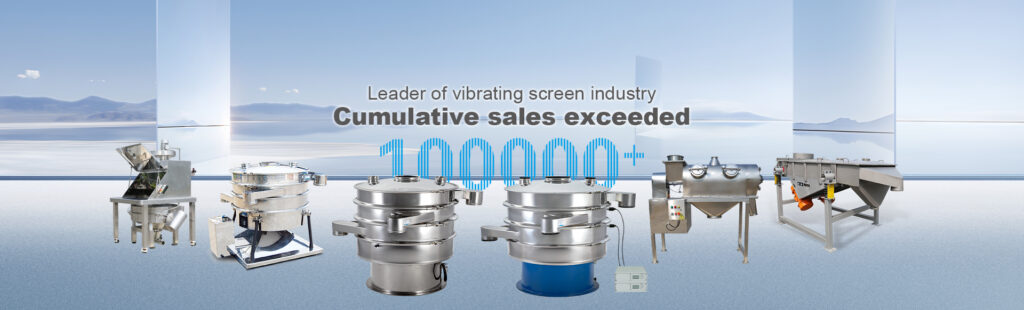
Xinxiang Gaofu Machinery Co., Ltd. was founded in the 1980s. After more than 40 years of development, it has become a "National Specialized and Innovative Small Giant Enterprise", a "National Green Factory", a "National High-tech Enterprise", a "National Intellectual Property Advantage Enterprise", and the "President Unit of the Vibration Association". Meanwhile, it has been designated as the "Henan Provincial Industrial Design Center", the "Henan Provincial Engineering Technology Research Center for Intelligent Online Screening System", and the "Xinxiang City Engineering Technology Research Center for Fine Screening". It has successfully applied for more than 500 patents, including invention, utility model and design patents, and has won the "Science and Technology Achievement Award issued by the Ministry of Industry and Information Technology". It has also participated in the drafting and formulation of 4 "National Standards".
Gaofu's product line covers multiple series and hundreds of varieties of equipment, including vibrating screening equipment, conveying equipment, coal crushing equipment, filtration equipment, and material handling automation systems. Main products include vibrating screens, screening machines, vibrating separators, rotary vibrating screens, ultrasonic vibrating screens, linear screens, air classifiers, gyratory screens, roller screens, dewatering screens, bar screens, vacuum feeders, dust-free feeding stations, ton bag feeding stations, feeding systems, automatic powder feeding systems, automatic slag discharge filters, blade filters, clay filters, toothed roller crushers, coal crushers, and other equipment. These products are widely used in food, pharmaceutical, chemical, metallurgical, building materials, mining, thermal power, environmental protection, and many other industries, earning the trust and praise of over 10,000 customers worldwide.
Gaofu's products not only sell well in Greater China, but are also exported to more than 100 countries and regions, including Russia, Canada, the United States, New Zealand, Japan, Brazil, and South Africa. The company is committed to the mission of "improving material quality and efficiency to meet customer needs" and will accompany its customers all the way to achieve harmonious win-win results. Currently, it has become a cooperative supplier for many Fortune Global 500 companies, including CNPC, Sinopec, Sinochem Group, China Resources Group, Sinopharm Group, COFCO Group, China National Building Materials Group, China Aerospace Science and Technology Corporation, and Jinchuan Group. Gaofu Machinery – the world's number one seller of vibrating screens. In May 2024, Frost & Sullivan, an internationally authoritative consulting firm, awarded it a market position confirmation certificate based on its research on the global vibrating screen market and calculated according to global vibrating screen sales in 2023.