

Centrifugal Sifter vs. Traditional Flour Sifter Options: Understanding High-Capacity Scalping
Post Date: 2026-06-17
In high-capacity industrial food processing, the selection of your primary screening technology determines your production line's throughput and material quality. When scaling up, facilities often weigh the benefits of traditional vibrating screens against the specialized capabilities of a centrifugal sifter. Understanding the mechanical differences is essential for choosing the right equipment for high-capacity scalping.
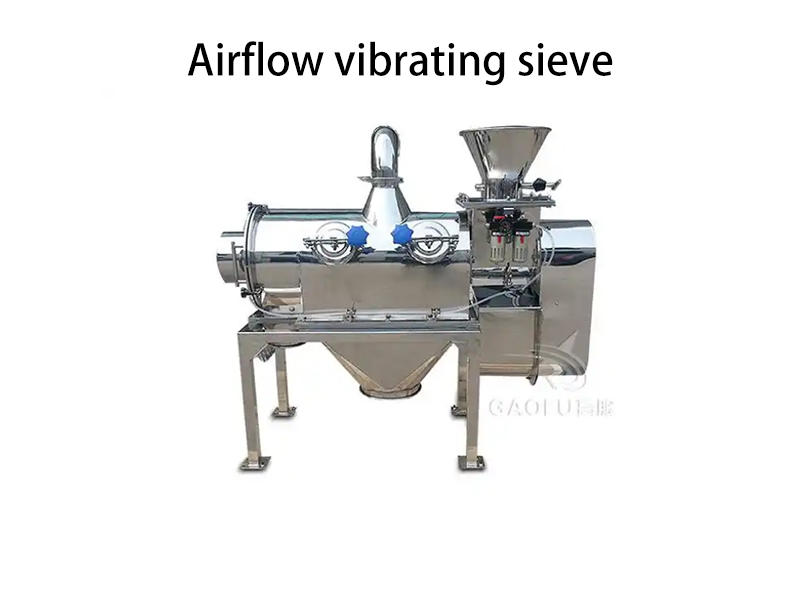
Mechanical Differences in Screening
The fundamental difference lies in how each machine manages the material flow.
- Traditional Vibratory Screeners: These units utilize vibration to move material across a screen surface, relying largely on gravity to achieve separation. They are effective for a broad range of applications but can face limitations in high-speed, pressurized, or high-volume throughput environments.
- Centrifugal Sifter Technology: This equipment utilizes a rotating internal paddle assembly to push material against a stationary screen. This mechanical force allows for significantly higher throughput within a smaller equipment footprint compared to traditional vibrating designs.
Key Advantages for Scalping Applications
Scalping—the removal of oversized particles or debris from a high-volume product stream—requires speed and reliability. A centrifugal sifter provides specific advantages for these intense tasks:
- Efficient Agglomerate Breakdown: The internal beater bar assembly actively breaks down clumps, ensuring that usable material is reclaimed rather than rejected as waste.
- Pressure Integration: Unlike many traditional sifters, a centrifugal sifter can be configured as a dust-tight unit, allowing it to integrate directly into pneumatic conveying lines without compromising system pressure.
- Consistent Throughput: By utilizing kinetic energy rather than gravity, these units maintain flow consistency even at the rapid speeds required by large-scale bakeries and industrial milling operations.
Selecting the Right Equipment for Your Facility
Choosing between these technologies depends on your specific operational demands, including your required throughput (e.g., kg/h) and whether your line requires pneumatic integration. Gaofu Machinery provides technical guidance to help facilities evaluate their material properties and production constraints to ensure optimal equipment performance.
Conclusion
While traditional vibrating screens remain a standard in many facilities, the centrifugal sifter offers a high-performance alternative for high-capacity scalping and pneumatic processing. By prioritizing technical efficiency and the specific needs of your material, you can optimize your production yield and ensure consistent product quality.
© 2026 Gaofu Machinery. All rights reserved. This article is intended for educational purposes regarding industrial equipment selection.
Does your current production setup require high-capacity pneumatic integration, or are you looking to optimize your throughput at a specific processing bottleneck?
About Gaofu
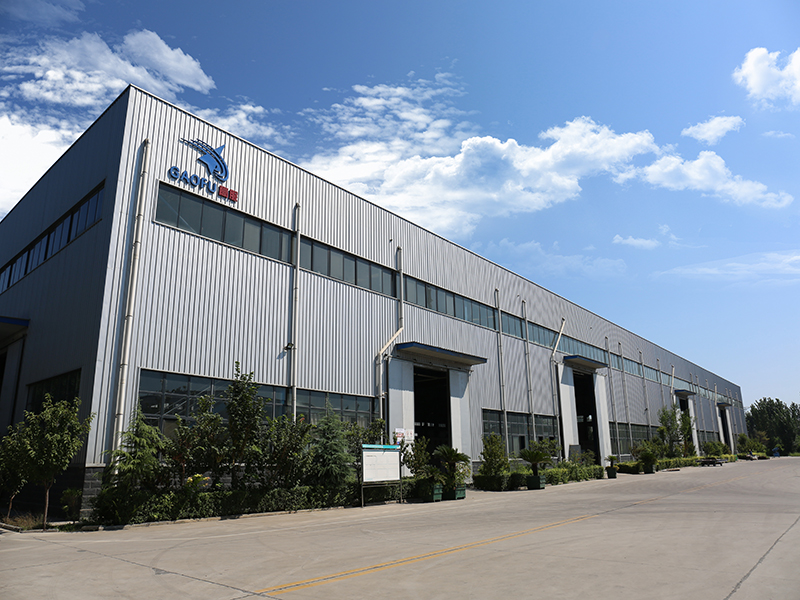
Xinxiang Gaofu Machinery Co., Ltd. was founded in the 1980s. After more than 40 years of development, it has become a "National Specialized and Innovative Small Giant Enterprise", a "National Green Factory", a "National High-tech Enterprise", a "National Intellectual Property Advantage Enterprise", and the "President Unit of the Vibration Association". Meanwhile, it has been designated as the "Henan Provincial Industrial Design Center", the "Henan Provincial Engineering Technology Research Center for Intelligent Online Screening System", and the "Xinxiang City Engineering Technology Research Center for Fine Screening". It has successfully applied for more than 500 patents, including invention, utility model and design patents, and has won the "Science and Technology Achievement Award issued by the Ministry of Industry and Information Technology". It has also participated in the drafting and formulation of 4 "National Standards".
Gaofu's product line covers multiple series and hundreds of varieties of equipment, including vibrating screening equipment, conveying equipment, coal crushing equipment, filtration equipment, and material handling automation systems. Main products include vibrating screens, screening machines, vibrating separators, rotary vibrating screens, ultrasonic vibrating screens, linear screens, air classifiers, gyratory screens, roller screens, dewatering screens, bar screens, vacuum feeders, dust-free feeding stations, ton bag feeding stations, feeding systems, automatic powder feeding systems, automatic slag discharge filters, blade filters, clay filters, toothed roller crushers, coal crushers, and other equipment. These products are widely used in food, pharmaceutical, chemical, metallurgical, building materials, mining, thermal power, environmental protection, and many other industries, earning the trust and praise of over 10,000 customers worldwide.
Gaofu's products not only sell well in Greater China, but are also exported to more than 100 countries and regions, including Russia, Canada, the United States, New Zealand, Japan, Brazil, and South Africa. The company is committed to the mission of "improving material quality and efficiency to meet customer needs" and will accompany its customers all the way to achieve harmonious win-win results. Currently, it has become a cooperative supplier for many Fortune Global 500 companies, including CNPC, Sinopec, Sinochem Group, China Resources Group, Sinopharm Group, COFCO Group, China National Building Materials Group, China Aerospace Science and Technology Corporation, and Jinchuan Group. Gaofu Machinery – the world's number one seller of vibrating screens. In May 2024, Frost & Sullivan, an internationally authoritative consulting firm, awarded it a market position confirmation certificate based on its research on the global vibrating screen market and calculated according to global vibrating screen sales in 2023.