

Common Challenges Solved by a Flour Sieving Machine in Flour Processing Applications
Post Date: 2026-07-08
Supporting Efficient and Consistent Flour Screening in Modern Food Production
In today's food manufacturing industry, flour processing requires more than high-capacity milling equipment. Producing flour with consistent particle size and preparing it for mixing, packaging, or further processing also depends on an effective screening stage. A properly selected flour sieving machine can help improve the flow of powdered materials and support stable production across different processing applications.
The Rotary Vibrating Sieve is widely used in flour mills and food processing facilities because it offers flexible screening configurations for a variety of powder materials. When matched with the appropriate mesh size and production capacity, it can help manufacturers address several common screening challenges while integrating smoothly with automated production lines.
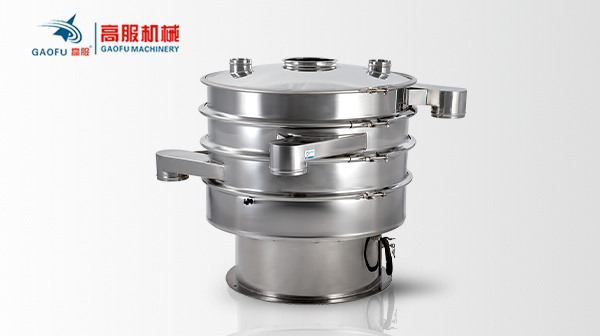
At Gaofu Machinery, we design customized Rotary Vibrating Sieve solutions for food, pharmaceutical, chemical, and new material industries, providing equipment configurations tailored to customer requirements.
Why Flour Screening Is Important
After milling or ingredient preparation, flour often requires screening before entering downstream production. Screening helps prepare materials by separating particles according to the selected mesh size.
Depending on the application, a flour sieving machine may be used to:
- Remove oversized particles
- Separate soft agglomerates formed during storage or transportation
- Improve particle size consistency
- Remove foreign materials that are larger than the selected screen opening
- Prepare powders for blending, batching, or packaging
The effectiveness of screening depends on material characteristics, equipment configuration, operating conditions, and maintenance practices.
Common Challenges in Flour Processing
Challenge 1: Inconsistent Particle Size
Different production batches may contain variations in particle size distribution. This can influence downstream processes such as mixing, dosing, and packaging.
A Rotary Vibrating Sieve classifies materials according to the selected screen mesh, helping produce a more uniform particle size distribution before further processing.
Challenge 2: Soft Agglomerates After Storage
Powders stored in silos or bags may develop soft agglomerates due to moisture, handling, or storage conditions.
A flour sieving machine can separate these agglomerates during screening, allowing finer particles to pass through the selected mesh while retaining larger lumps for further evaluation or reprocessing, depending on the production process.
Challenge 3: Oversized Particles
Occasionally, oversized particles may remain after milling or raw material preparation.
Screening equipment provides an additional quality control step by separating particles that exceed the selected mesh size before the material enters downstream equipment.
Challenge 4: Irregular Material Flow
Uneven feeding can influence how material spreads across the screen surface.
Many production lines combine a Rotary Vibrating Sieve with:
- Feeding systems
- Vacuum conveying systems
- Bulk bag feeding stations
- Storage hoppers
A controlled feeding system can help maintain a steady material supply to the screening machine.
Challenge 5: Powder Containment
Food manufacturers often seek equipment that supports cleaner production environments.
Rotary Vibrating Sieves are commonly designed with enclosed screening chambers and sealing components that can help reduce powder dispersion during normal operation. The effectiveness of containment depends on equipment configuration, installation, and operating conditions.
Challenge 6: Product Changeovers
Many food manufacturers process multiple products using the same production line.
Depending on the equipment design, quick-release clamps and accessible screen assemblies can simplify routine cleaning and screen replacement, helping reduce changeover time between production batches.
Why Choose a Rotary Vibrating Sieve?
Flexible Screening Configurations
Rotary Vibrating Sieves are available with:
- Single-deck screening
- Double-deck screening
- Multi-deck screening
The appropriate configuration depends on the desired particle size classification and production requirements.
Wide Material Compatibility
The equipment is suitable for screening numerous powdered food materials, including:
- Wheat flour
- Rice flour
- Corn flour
- Starch
- Sugar powder
- Milk powder
- Cocoa powder
- Protein powder
- Coffee powder
- Baking premixes
- Food additives
- Spice powders
Equipment selection should be based on the physical properties of the material and the intended application.
Compact Installation
The compact structure of a Rotary Vibrating Sieve allows it to be integrated into new or existing production lines alongside conveying, feeding, mixing, and packaging equipment.
Integration with Automated Systems
Modern flour processing plants often connect screening equipment with:
- Feeding systems
- Vacuum conveyors
- Storage silos
- Mixing equipment
- Packaging lines
- PLC-based control systems
Integrated equipment can help support coordinated material handling throughout the production process.
Equipment Selection Tips
When choosing a flour sieving machine, manufacturers should evaluate:
Material Characteristics
Consider:
- Particle size distribution
- Bulk density
- Moisture content
- Flowability
- Cohesiveness
These factors influence screen mesh selection and equipment configuration.
Production Capacity
Choose equipment that matches:
- Hourly production requirements
- Daily operating schedule
- Available installation space
- Future production expansion plans
Proper capacity selection supports balanced operation throughout the production line.
Screen Mesh Selection
Mesh size should be selected according to:
- Finished product specifications
- Particle size requirements
- Production objectives
- Material characteristics
Selecting an appropriate mesh helps achieve the desired screening results.
Hygienic Design
Food processing equipment should support cleaning and sanitation.
Many Rotary Vibrating Sieves include:
- Stainless steel product-contact surfaces
- Food-grade sealing materials
- Smooth internal finishes
- Enclosed construction
- Quick-release clamps for maintenance
Equipment selection should comply with applicable food safety standards and facility operating procedures.
Routine Maintenance Recommendations
Regular maintenance contributes to reliable equipment operation.
Typical maintenance tasks include:
- Inspecting the screen mesh
- Cleaning internal surfaces
- Checking vibration motor performance
- Inspecting seals and fasteners
- Replacing worn components when necessary
Maintenance schedules should follow the manufacturer's recommendations and actual operating conditions.
Why Choose Gaofu Machinery?
Gaofu Machinery has specialized in vibrating screening and powder handling technology for more than 40 years, providing customized equipment solutions for customers worldwide.
Our Product Portfolio
- Rotary Vibrating Sieves
- Linear Vibrating Screens
- Airflow Sieves
- Ultrasonic Vibrating Screens
- Tumbler Screening Machines
- Feeding Systems
- Vacuum Conveying Systems
- Bulk Bag Feeding Stations
- Integrated Powder Handling Solutions
Company Strengths
- More than 40 years of industry experience
- 60,000㎡ manufacturing base
- More than 500 patent applications
- Products exported to over 100 countries and regions
- Serving more than 10,000 customers worldwide
Our engineering team works closely with customers to understand production requirements, material characteristics, and facility layouts, providing equipment recommendations tailored to each application.
Conclusion
Flour processing facilities may encounter challenges such as inconsistent particle size, soft agglomerates, oversized particles, uneven material flow, and frequent product changeovers. A properly selected flour sieving machine, such as a Rotary Vibrating Sieve, can help address these challenges by providing controlled particle classification and integrating efficiently with modern powder handling systems.
By carefully evaluating material properties, production capacity, screen mesh selection, hygiene requirements, and maintenance needs, manufacturers can select screening equipment that supports efficient flour processing and reliable production. Gaofu Machinery offers customized Rotary Vibrating Sieve solutions designed to meet a wide range of food processing applications and operational requirements.