

Designing an Efficient Production Line with a Filtration Sieving Machine for Continuous Material Screening
Post Date: 2026-08-08
Introduction
In modern manufacturing, production efficiency depends not only on individual machines but also on how effectively each process stage works together. For industries such as food processing, beverage manufacturing, pharmaceuticals, chemicals, and new materials, continuous material screening plays an important role in maintaining stable production workflows.
A filtration sieving machine can serve as a key processing unit within a production line by separating oversized particles, filtering suspended solids, and supporting consistent material preparation before downstream operations. However, achieving an efficient screening process requires careful planning of equipment selection, material transfer, process layout, and system integration.
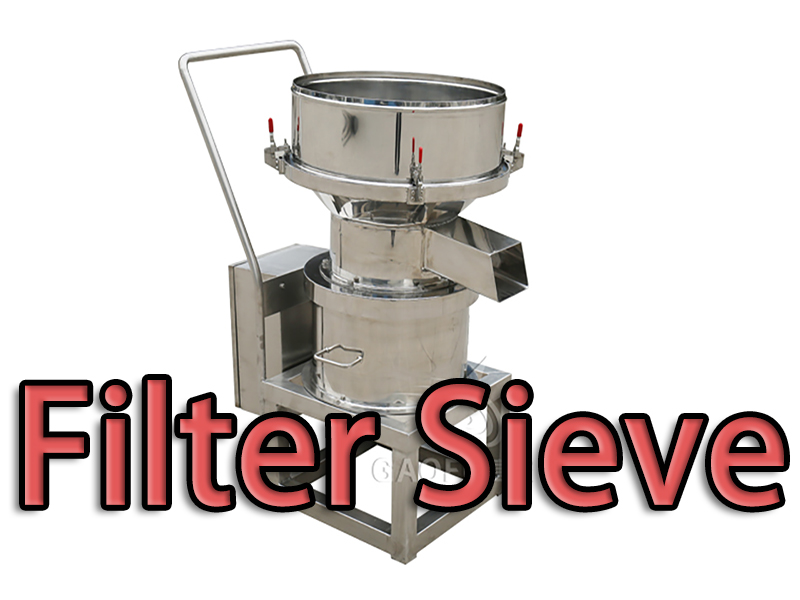
The Gaofu Filtration Sieve is designed for continuous screening and filtration applications, providing configurable solutions for powders, liquids, and slurry materials. This article discusses how manufacturers can design an efficient production line using a filtration sieve and the factors that influence continuous screening performance.
Understanding the Role of a Filtration Sieving Machine in Production Lines
A filtration sieving machine is commonly installed as part of a complete material handling and processing system.
Its main functions may include:
- Removing oversized particles
- Separating suspended solids from liquids
- Classifying fine materials
- Preparing ingredients before mixing
- Supporting stable feeding into downstream equipment
- Improving material handling efficiency
The specific role of the filtration sieve depends on the product characteristics and manufacturing process.
For example:
- In powder processing, it may be used for particle classification and safety screening.
- In liquid processing, it may be used for liquid-solid separation.
- In ingredient production, it may prepare materials before blending and packaging.
Key Steps for Designing a Continuous Screening Production Line
1. Analyze Material Characteristics First
Before selecting equipment, manufacturers should understand the properties of the material being processed.
Important factors include:
Particle Size Distribution
The size range of particles determines the required screen mesh and separation objective.
Moisture Content
Moisture can affect powder flow behavior and material movement across the screen.
Viscosity
For liquid and slurry applications, viscosity influences filtration performance and material discharge.
Solid Concentration
The amount of suspended solids may affect processing capacity and screen selection.
A clear understanding of material characteristics helps establish a suitable screening solution.
2. Select the Appropriate Filtration Sieve Configuration
Different production lines require different machine configurations.
Important selection factors include:
Screen Deck Design
A single-deck machine may be suitable for basic screening tasks, while multi-deck configurations can be considered when multiple separation stages are required.
Mesh Selection
The screen mesh should match the intended filtration or classification target.
Equipment Size
Machine dimensions should correspond with:
- Required processing capacity
- Installation space
- Material characteristics
- Production schedule
The most suitable configuration depends on the actual application requirements.
3. Plan Material Feeding Methods
Stable feeding is essential for continuous screening.
Common feeding methods include:
- Gravity feeding
- Screw conveying
- Vacuum conveying
- Pump feeding for liquids
- Hopper feeding systems
A consistent feed rate helps distribute material evenly across the screen surface and supports stable operation.
Possible upstream equipment includes:
- Feeding Systems
- Vacuum Feeders
- Big Bag Feeding Stations
- Storage Hoppers
- Mixing Equipment
4. Optimize Material Flow Between Equipment
An efficient production line requires smooth connection between different processing stages.
A typical screening workflow may include:
Raw Material Storage → Feeding System → Filtration Sieve → Processing Equipment → Packaging or Storage
When designing the layout, manufacturers should consider:
- Equipment height difference
- Material discharge direction
- Transfer distance
- Cleaning accessibility
- Operator convenience
A well-planned layout can help reduce unnecessary material handling steps.
5. Consider Automation and Process Control
Modern production lines often combine screening equipment with automated systems.
Automation options may include:
- Automatic feeding control
- Material level monitoring
- Production data monitoring
- Integrated conveying systems
Automation design should be based on the production scale, process requirements, and investment objectives.
Applications in Continuous Material Screening
A filtration sieving machine can support continuous screening in multiple industries.
Food Powder Processing
Common applications include:
- Flour
- Starch
- Sugar powder
- Cocoa powder
- Milk powder
- Protein powders
- Seasoning ingredients
The equipment can help remove oversized particles and prepare powders for mixing or packaging.
Beverage Production
Applications may include:
- Fruit juice
- Tea extracts
- Coffee concentrates
- Syrups
- Beverage ingredients
Filtration requirements vary according to product formulation and processing conditions.
Dairy Processing
Possible applications include:
- Milk products
- Whey processing
- Dairy ingredient preparation
- Liquid dairy mixtures
Equipment selection should consider viscosity, solids content, and hygiene requirements.
Chemical and Industrial Materials
Filtration sieves may also be applied to:
- Ceramic slurry
- Chemical suspensions
- Coating materials
- Fine material mixtures
Material compatibility should be evaluated before equipment selection.
Designing for Hygienic Production
For food and beverage applications, production line design should consider cleaning and sanitation requirements.
Important factors include:
Product-Contact Materials
Stainless steel product-contact components are commonly selected for food processing equipment according to application needs.
Equipment Accessibility
Design should allow convenient inspection of:
- Screen assemblies
- Discharge areas
- Product-contact surfaces
Cleaning Procedures
Cleaning frequency and methods should follow:
- Plant sanitation procedures
- Material characteristics
- Equipment manufacturer's recommendations
Reducing Production Interruptions Through Proper Planning
Continuous screening requires attention to equipment reliability and maintenance planning.
Manufacturers should consider:
Spare Screen Availability
Screens are important wear components and should be inspected regularly.
Routine Equipment Checks
Regular checks may include:
- Motor condition
- Fasteners
- Sealing components
- Discharge outlets
Preventive Maintenance
Scheduled maintenance can help support stable operation and extend equipment service life.
Maintenance requirements vary depending on operating conditions.
Features of the Gaofu Filtration Sieve
The Gaofu Filtration Sieve is designed for continuous material screening and filtration applications.
Flexible Screening Capability
Suitable for:
- Fine powder screening
- Liquid filtration
- Slurry separation
- Oversized particle removal
Adaptable Configurations
Equipment can be customized according to:
- Material properties
- Processing capacity
- Installation requirements
- Production objectives
Continuous Processing Design
The vibration-based screening system supports continuous material movement across the screen surface.
Production Line Integration
The filtration sieve can be connected with:
- Feeding Systems
- Vacuum Feeders
- Big Bag Feeding Stations
- Pumps
- Mixing Systems
- Storage Tanks
- Packaging Equipment
Food Processing Compatibility
Product-contact components can be manufactured using stainless steel materials according to customer requirements and application conditions.
Example Production Line Structures
Different industries may use different screening layouts.
Powder Processing Line
Raw Material Feeding → Filtration Sieve → Mixing → Storage → Packaging
Suitable for:
- Flour
- Starch
- Sugar powder
- Protein powder
Liquid Processing Line
Storage Tank → Pump Feeding → Filtration Sieve → Processing Tank → Filling System
Suitable for:
- Juice
- Syrup
- Beverage ingredients
- Liquid food products
Ingredient Preparation Line
Bulk Material Handling → Screening → Blending → Packaging
Suitable for:
- Food additives
- Seasonings
- Nutritional ingredients
The actual production layout should be designed according to material characteristics and factory conditions.
Fortune 500 Client Testimonials
CNPC、CSCEC、Sinochem Holdings、CRCC、China Minmetals Corporation、CNOOC、CR、Sinopharm、CHN Energy、COFCO Corporation、Huawei Technologies、PowerChina、CITIC Group、Wuchan Zhongda Group、NORINCO、Chalco、CNBM、 Shaanxi Coal and Chemical Industry Group、Ansteel Group、CETC、CSSC、CASC、CEC、Jinchuan Group、CASIC、Conch Cement、CNNC、SPH、Shanxi Coking Coal Group、 Zhongtai Chemical、GPHL、DEC、Sinosteel Corporation、MCC、China National Salt Industry Chemical、China Baowu Steel Group、China Animal Husbandry Industry Co., Ltd.、CECEP
About Gaofu
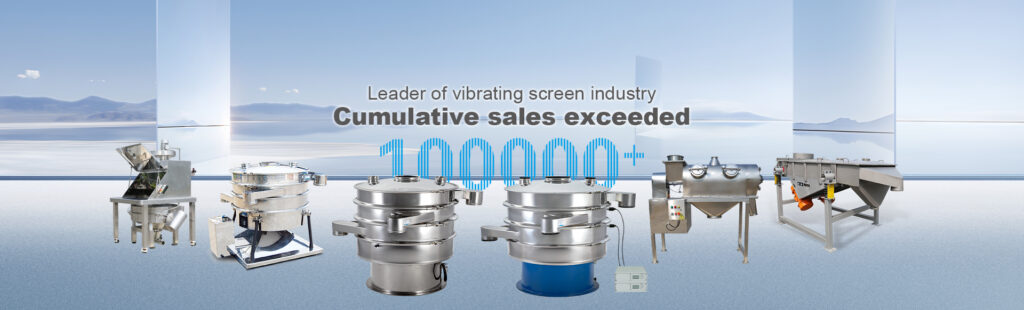
Xinxiang Gaofu Machinery Co., Ltd. was founded back in the 1980s. With over 40 years of development, it has been certified as a National-level Specialized, Refined, Unique & Innovative Little Giant Enterprise, National Green Factory, National High-tech Enterprise, and National Intellectual Property Advantage Enterprise, and serves as the President Unit of China Vibration Screening Industry Association.
The company is accredited with the Henan Provincial Industrial Design Center, Henan Provincial Engineering Technology Research Center for Intelligent On-line Screening System, and Xinxiang Municipal Engineering Technology Research Center for Fine Screening.
Gaofu has obtained more than 500 patents including invention patents, utility model patents and design patents, been awarded the Science and Technology Achievement Prize issued by the Ministry of Industry and Information Technology of China, and participated in drafting and formulating 4 national standards.
Gaofu’s product portfolio covers multiple series and hundreds of specifications, including vibrating screening equipment, conveying equipment, coal crushing equipment, filtration equipment and automatic material handling systems.
Core products include vibrating screens, screening machines, vibratory sifters, rotary vibrating screens, ultrasonic vibrating screens, linear vibrating screens, airflow screens, gyratory screens, roller screens, dewatering screens, bar screens, vacuum feeding machines, dust-free feeding stations, bulk bag feeding stations, feeding systems, automatic powder feeding systems, automatic slag-discharging filters, leaf filters, clay filters, toothed roll crushers, coal crushers and other machinery.
These products are widely applied in food, pharmaceutical, chemical, metallurgy, construction materials, mining, thermal power, environmental protection and many other industries, winning recognition and trust from over 10,000 clients worldwide.
Gaofu products enjoy strong sales across Greater China, and are exported to more than 100 countries and regions such as Russia, Canada, the United States, New Zealand, Japan, Brazil and South Africa.
Upholding the corporate mission of Improving material quality & efficiency to fully satisfy customer demands, Gaofu maintains long-term partnerships with clients to achieve win-win development.
At present, Gaofu is an official qualified supplier for numerous Fortune Global 500 enterprises, including CNPC, Sinopec, Sinochem Holdings, China Resources Group, Sinopharm Group, COFCO, China National Building Material, China Aerospace Science and Technology Corporation, Jinchuan Group and more.
Gaofu Machinery ranks No.1 in global sales volume of vibrating screens.
In May 2024, Frost & Sullivan, a world-renowned international consulting firm, issued a Market Position Verification Certificate confirming that Gaofu achieved the world’s largest shipment volume of vibrating screens in the global market in 2023.