

Maintaining Pressure Differential Balance: Airflow Management in a Vacuum Feeder Flour Sieve Setup
Post Date: 2026-09-10
Introduction
In powder processing, a Vacuum Feeder is more than a device for moving flour from one location to another. Its conveying performance is closely related to airflow, pressure differential, filter condition, pipeline resistance, and the receiving equipment connected to the system.
When a Vacuum Feeder is used together with a flour sieve, maintaining an appropriate pressure differential can help support a more stable conveying process. If airflow conditions change significantly because of excessive resistance, filter loading, unsuitable pipeline arrangements, or improper system matching, material transfer may become less consistent.
For flour-processing facilities, understanding airflow management can therefore be useful when designing, operating, and maintaining a vacuum conveying and sieving system.
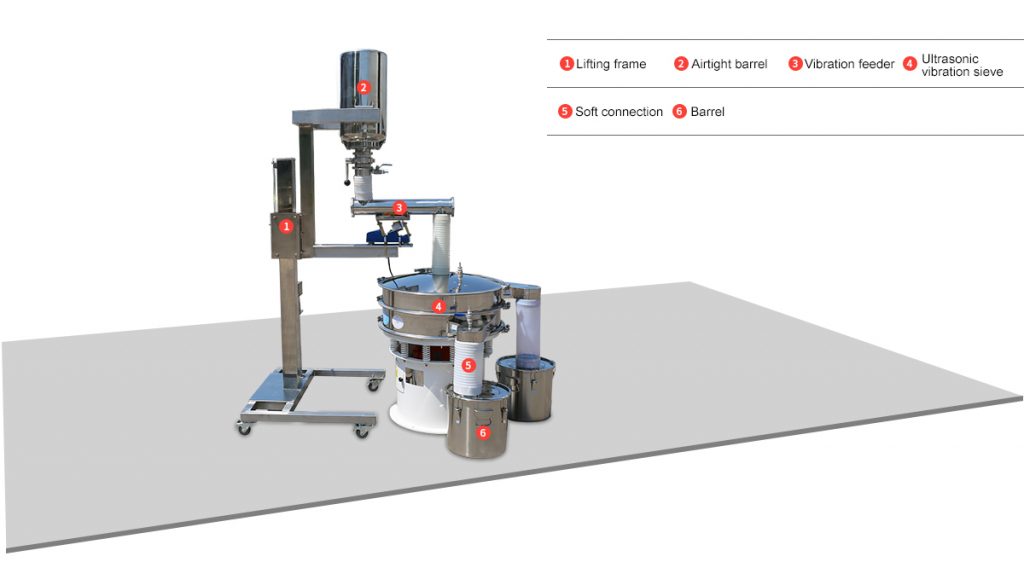
This article explains the role of pressure differential balance in a Vacuum Feeder flour sieve setup, with particular attention to airflow paths, system resistance, filter condition, equipment matching, and practical maintenance.
1. What Is Pressure Differential in a Vacuum Feeder System?
A vacuum conveying system relies on a pressure difference between the material pickup side and the receiving side.
In simplified terms:
Air Pressure at Material Pickup → Pressure Differential → Material Transfer → Receiving Equipment
The pressure differential provides the driving force for air and entrained powder to move through the conveying route.
In an actual installation, however, the pressure difference is affected by multiple factors, including:
- Pipeline length
- Pipeline diameter
- Number of bends
- Material properties
- Filter resistance
- Air leakage
- Vacuum source
- Receiving equipment
- Conveying rate
Therefore, pressure differential should be considered as part of the complete system rather than as an isolated specification.
2. Why Airflow Matters When Conveying Flour
Flour is a fine powder with flow characteristics that can vary according to formulation, moisture content, particle size, and bulk density.
During vacuum conveying, the airflow needs to carry the material through the conveying route without creating unnecessary system resistance.
A simplified material path may be represented as:
Flour Supply → Pickup Point → Vacuum Pipeline → Vacuum Feeder → Flour Sieve
Air moves through the system while the flour is transported toward the receiving point.
If the airflow conditions are not appropriately matched to the material and system design, several operating issues may require attention, such as inconsistent conveying, material accumulation, increased filter loading, or unstable feeding to the sieve.
3. Understanding the Airflow Path
A useful way to evaluate a Vacuum Feeder flour sieve system is to map the complete airflow route.
For example:
Atmospheric Air → Material Pickup → Conveying Pipeline → Vacuum Feeder → Filter → Vacuum Source
At the same time, the flour follows a material route:
Flour → Pickup Point → Conveying Pipeline → Receiving Section → Flour Sieve
These two flows interact throughout the conveying process.
The airflow carries the powder through the pipeline, while the filter helps separate the conveyed material from the air before the air reaches the vacuum-generating equipment.
This makes filter condition and airflow resistance important parts of routine system management.
4. Pressure Differential and Pipeline Resistance
Every conveying pipeline creates resistance to airflow.
Factors that can increase resistance include:
- Long conveying distances
- Small pipeline diameters
- Excessive elbows
- Sharp directional changes
- Improper connections
- Material accumulation
- Internal surface conditions
A simple design principle is:
More Flow Resistance → Greater Pressure Loss
This does not mean that the largest possible pipeline is always the correct choice. Pipeline diameter should be matched to the material, conveying conditions, required capacity, and vacuum system.
The objective is to establish a conveying route with resistance appropriate to the application.
5. The Influence of Pipeline Layout
Pipeline layout can have a direct influence on airflow management.
A poorly planned route may contain unnecessary bends or sections that make inspection and cleaning more difficult.
When designing the pipeline, engineers may review:
- Total conveying distance
- Vertical lifting distance
- Number of bends
- Bend radius
- Connection points
- Pipeline accessibility
- Cleaning requirements
A practical layout aims to provide a defined path from the flour source to the Vacuum Feeder and downstream sieve while considering pressure loss and maintenance access.
6. Filter Resistance and Pressure Differential
The filter is an important component in many vacuum conveying arrangements.
Its function is to help separate powder from the conveying air before the air reaches the vacuum source.
As flour accumulates on a filter surface, airflow resistance can increase.
The relationship can be illustrated as:
Clean Filter → Lower Resistance
Progressive Powder Loading → Increasing Resistance
Excessive Loading → Potentially Restricted Airflow
For this reason, filter condition should be included in routine inspection procedures.
If the system provides pressure or vacuum monitoring, changes in operating readings can provide useful information about whether the airflow path requires inspection.
7. How Filter Condition Can Affect Conveying
A filter that requires cleaning or replacement may influence the pressure conditions inside the Vacuum Feeder.
Possible indicators requiring investigation may include:
- Changes in conveying behavior
- Reduced material transfer consistency
- Increased vacuum resistance
- Longer conveying cycles
- Abnormal operating readings
- Greater powder accumulation in unexpected locations
These signs do not necessarily identify one specific fault. Operators should inspect the complete system and follow the equipment manufacturer's troubleshooting procedures.
8. Air Leakage and System Sealing
Air leakage can also influence pressure differential.
Vacuum systems depend on controlled airflow. If air enters the system through unintended gaps, the vacuum source may need to handle additional air volume without producing a corresponding increase in material transfer.
Potential leakage points include:
- Pipeline joints
- Gaskets
- Access covers
- Flexible connections
- Inspection doors
- Discharge connections
Routine inspection of seals and connections can therefore support more predictable airflow conditions.
The appropriate sealing method should be selected according to the equipment design and operating environment.
9. Connecting the Vacuum Feeder with a Flour Sieve
The flour sieve is not independent of the conveying system.
When the Vacuum Feeder transfers flour into the sieve, the receiving equipment can influence the overall airflow arrangement.
A simplified configuration is:
Flour Source→Vacuum Feeder→Flour Sieve→Screened Flour Collection
The inlet and discharge arrangements should be designed so that material can enter and leave the system without creating unnecessary restrictions.
Where a closed process is required, the connections between the Vacuum Feeder, sieve, and downstream equipment should also be reviewed for suitable sealing and airflow management.
10. Avoiding Unnecessary Airflow Restrictions
Small details in a conveying system can contribute to overall resistance.
For example:
- Sudden pipeline diameter changes
- Poorly positioned bends
- Narrow connection sections
- Obstructed filters
- Incorrectly sized valves
- Material buildup
Each restriction may contribute to pressure loss.
Instead of examining only the vacuum source, system designers should evaluate the complete airflow route.
A useful approach is:
Vacuum Source → Filter → Vacuum Feeder → Pipeline → Pickup Point
Every section should be reviewed for its contribution to the total pressure balance.
11. Managing Airflow During Different Operating Conditions
A Vacuum Feeder may not operate under exactly the same conditions throughout the production cycle.
For example, the system may experience differences between:
- Startup
- Material pickup
- Conveying
- Material discharge
- Filter cleaning
- Idle periods
These operating stages can create changes in airflow and pressure.
Understanding the operating cycle can help engineers determine whether pressure fluctuations are part of normal system operation or indicate a condition requiring inspection.
12. Pressure Differential and Material Loading
The amount of flour entering the conveying pipeline can also influence the air-material relationship.
If the material loading rate changes significantly, the concentration of powder within the conveying airflow may change.
A simplified relationship is:
Airflow + Flour Loading → Pneumatic Conveying Conditions
Therefore, material supply should be coordinated with the conveying system.
An unstable or excessive material feed may create conditions that require more careful airflow management.
The appropriate conveying parameters should be determined through application evaluation and equipment testing where necessary.
13. Maintaining Stable Airflow Around the Flour Sieve
Once flour reaches the screening stage, the sieve itself becomes part of the overall process layout.
The system should consider:
- Flour inlet configuration
- Screening chamber design
- Discharge arrangement
- Downstream collection
- Sealing requirements
- Air movement around the equipment
If the sieve is connected to other enclosed processing equipment, the pressure relationship between different sections may also require evaluation.
This is particularly relevant when multiple pieces of powder-processing equipment operate as one continuous system.
14. Pressure Differential Is Not Simply About Increasing Vacuum
A common misconception is that stronger vacuum automatically produces better conveying.
In practice, system performance depends on the relationship between:
Vacuum Level + Airflow + Material Loading + Pipeline Resistance + Equipment Design
Increasing vacuum without evaluating the complete system may not provide the intended improvement.
A properly engineered Vacuum Feeder should instead be matched to the actual conveying requirements.
The appropriate operating range depends on the equipment configuration, material properties, conveying distance, and process conditions.
15. Flour Dust Management and Airflow Design
Flour is a fine powder, so airflow management should also be considered alongside dust-control measures.
A well-designed enclosed conveying route can help define where powder and conveying air travel.
For flour-processing installations, manufacturers should consider:
- Enclosed transfer points
- Suitable seals
- Filter arrangements
- Dust collection where applicable
- Equipment grounding and bonding requirements
- Cleaning procedures
- Applicable combustible-dust safety requirements
The complete installation should be assessed according to relevant regulations, site conditions, and safety practices.
No single Vacuum Feeder feature should be treated as a substitute for a complete dust-safety assessment.
16. Monitoring Pressure and Airflow Conditions
Where appropriate instrumentation is available, monitoring can help operators understand system behavior.
Useful parameters may include:
- Vacuum pressure
- Differential pressure
- Filter pressure drop
- Conveying cycle duration
- Material transfer rate
- Equipment operating status
Rather than focusing on one reading, operators can compare current conditions with established operating references.
For example:
Normal Operating Range → Monitor Trends → Identify Changes → Inspect System if Necessary
Trend monitoring may help identify developing maintenance requirements before they significantly affect production.
17. Maintenance Practices for Airflow Stability
Routine maintenance can support the intended airflow path.
A maintenance checklist may include:
Pipeline
Check for:
- Powder accumulation
- Blockages
- Loose connections
- Damaged sections
Filter
Check for:
- Powder buildup
- Damage
- Improper installation
- Cleaning requirements
Seals
Check for:
- Wear
- Deformation
- Loose connections
- Air leakage
Vacuum Components
Check according to the manufacturer's maintenance recommendations.
The maintenance interval should be established according to operating conditions rather than applying one universal schedule to every installation.
18. Troubleshooting Pressure Differential Changes
When pressure conditions change unexpectedly, operators can review the system systematically.
Step 1: Check the Filter
Determine whether excessive powder accumulation is restricting airflow.
Step 2: Check the Pipeline
Look for blockages, buildup, or unexpected resistance.
Step 3: Inspect Connections
Check whether seals or joints are allowing uncontrolled air entry.
Step 4: Review Material Loading
Determine whether the flour feed rate has changed.
Step 5: Check the Vacuum Source
Confirm that the vacuum-generating equipment is operating according to its normal condition.
Step 6: Inspect the Flour Sieve
Review the receiving section and downstream connections.
This systematic approach can help distinguish between material-related, equipment-related, and airflow-related issues.
19. Designing a Balanced Vacuum Feeder Flour Sieve System
A practical design process can follow several stages:
1. Analyze Flour Properties
2. Define Required Conveying Conditions
3. Determine Conveying Distance and Elevation
4. Design the Pipeline
5. Select the Vacuum Feeder
6. Evaluate Filter and Airflow Resistance
7. Match the Flour Sieve
8. Review Sealing and Dust Management
9. Establish Monitoring and Maintenance Procedures
This approach treats pressure differential as part of the overall system design rather than as a standalone equipment parameter.
20. Application Example: Flour Transfer Before Screening
Consider a food-processing line where flour must be transferred from a material supply point to a screening stage.
A possible arrangement is:
Flour Storage→Material Pickup→Vacuum Feeder→Conveying Pipeline→Flour Sieve→Screened Flour Collection
In this arrangement, the vacuum conveying section handles material transfer while the sieve performs the screening operation.
For stable operation, the system may be evaluated for:
- Conveying distance
- Flour characteristics
- Airflow requirements
- Filter resistance
- Pipeline configuration
- Sieve inlet design
- Downstream discharge
- Cleaning and maintenance
The final arrangement should be selected according to actual process conditions.
21. Gaofu Vacuum Feeder for Flour Screening Applications
Gaofu Machinery provides Vacuum Feeder solutions that can be considered for powder conveying applications connected with flour screening processes.
For a flour sieve setup, the system can be evaluated according to:
- Flour type
- Material properties
- Required conveying capacity
- Horizontal conveying distance
- Vertical conveying height
- Pipeline configuration
- Vacuum requirements
- Filter arrangement
- Screening equipment
- Plant layout
Gaofu Machinery can also provide screening and feeding equipment for different powder-processing applications, allowing manufacturers to evaluate material transfer and screening as connected process stages.
The exact equipment configuration should be determined according to the material, production conditions, plant layout, and applicable technical and safety requirements.
Why Consider Gaofu Machinery?
For flour and other powder-processing applications, equipment selection is only one part of system planning. Airflow, pressure differential, material characteristics, screening requirements, and maintenance access can all influence the overall arrangement.
Gaofu Machinery focuses on screening and powder-processing equipment and can provide equipment options including:
- Vacuum Feeders
- Rotary Vibrating Sieves
- Centrifugal Sifters
- Filtration Sieves
- Ultrasonic Vibrating Screens
- Feeding Systems
- Big Bag Feeding Stations
An application-based evaluation can help determine how these equipment stages should work together within a specific production line.
Conclusion
Pressure differential balance is an important consideration when a Vacuum Feeder is connected with a flour sieve. Airflow must travel through the complete conveying route, and factors such as pipeline resistance, filter loading, air leakage, material feed, and downstream equipment can influence system behavior.
A practical evaluation should therefore look beyond the vacuum source itself:
Material Properties → Airflow Requirements → Pipeline Resistance → Filter Condition → Pressure Differential → Flour Sieve Connection
Regular inspection and appropriate maintenance can help operators identify changes in airflow conditions and maintain the intended operating state of the conveying system.
For flour-processing manufacturers, a carefully evaluated Vacuum Feeder flour sieve setup can provide a structured approach to powder transfer and screening while allowing airflow and pressure conditions to be considered as part of the complete process design.
Food Industry Client Testimonials
Nestlé, CP Group, Haitian Flavour & Fragrance, Yihai Kerry, Yili, Mengniu,Shuanghui, Wahaha, Master Kong, Want Want, Anjoy Foods, Angel Yeast,Yangyuan Foods, Uni-President Enterprises, Qiaqia Food, Luhua Group,Alpenliebe, Golden Monkey, Orion, Xizhilang,Sanquan Foods, Synear Food, Oishi, Wong Lo Kat, Yanjing Beer, Seamild,Jinpai, Chubang, Hengshun Vinegar Industry, Longda Group, Beijing Daoxiangcun, Anhe Dairy,Weiwei Group, Xiangpiaopiao, Maiquer, Tianbing, Binqi Food, Ligao Okun
About Gaofu
Originated in the 1980s, Xinxiang Gaofu Machinery Co., Ltd. has developed into a leading enterprise after more than 40 years of steady development. The company holds authoritative national qualifications including National-level Specialized, Refined, Unique and Innovative Little Giant Enterprise, National Green Factory, National High-tech Enterprise, and National Intellectual Property Advantage Enterprise, and acts as the President Unit of the Vibration Industry Association.
It has established three provincial and municipal R&D platforms: Henan Provincial Industrial Design Center, Henan Provincial Engineering Technology Research Center for Intelligent On-line Screening System, and Xinxiang Municipal Fine Screening Engineering Technology Research Center. Up to now, Gaofu has obtained more than 500 patents covering invention, utility model and design. It has been awarded the Science and Technology Achievement Prize by the Ministry of Industry and Information Technology of China and has participated in drafting and formulating 4 national standards.
Gaofu’s product portfolio covers multiple series and hundreds of specifications, mainly including vibrating screening equipment, conveying equipment and intelligent automatic material handling systems. We provide one-stop overall solutions such as automatic feeding systems, powder supply systems, pneumatic conveying systems, metering and weighing systems, batching systems, micro-ingredient batching systems, water supply systems, oil supply systems, fluid conveying systems, central kitchen powder supply systems, powder conveying systems and feeding systems.
In terms of food production lines, our mature supporting systems cover two major categories: baking production lines and pasta production lines. The baking series includes production lines for bread, cake, crisp cake, croissant, toast, pizza, biscuit and hamburger. The pasta series includes intelligent production lines for steamed buns, stuffed buns, twisted rolls, sesame paste cakes, steamed dumplings, boiled dumplings, fried dough sticks and pies.
Gaofu products sell well across Greater China and are exported to more than 100 countries and regions worldwide, including Russia, Canada, the United States, New Zealand, Japan, Brazil and South Africa. Widely applied in food, pharmaceutical, chemical, metallurgical, building materials, mining, thermal power, environmental protection and other industries, our products have won the trust and recognition of over 10,000 global customers.
Adhering to the corporate mission of improving material quality and efficiency to meet customer needs, Gaofu has long-term stable cooperative relationships with global clients to achieve harmonious and win-win development. At present, Gaofu has become an official qualified supplier of many Fortune Global 500 enterprises, including CNPC, Sinopec, Sinochem Group, China Resources Group, Sinopharm Group, COFCO, China National Building Material, China Aerospace and Jinchuan Group.