

Selecting a Feeding Station for a Sieving Machine: Key Factors for Powder Processing Applications
Post Date: 2026-08-11
Introduction
In powder processing industries, the connection between material feeding and screening equipment has a direct influence on the overall production workflow. Whether processing flour, food ingredients, chemical powders, or industrial materials, manufacturers need to consider how raw materials are introduced into a sieving machine and how the feeding process matches the requirements of the complete production line.
A suitable feeding station provides a practical solution for bulk material supply by creating a connection between material storage, conveying systems, and screening equipment. When selecting a feeding station for a sieving machine application, manufacturers should evaluate multiple factors, including material characteristics, production requirements, equipment compatibility, and maintenance conditions.
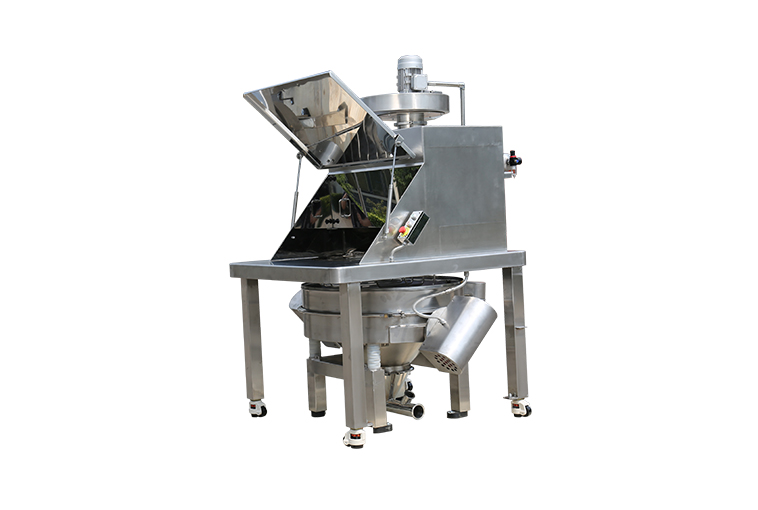
The Gaofu Feeding Station is designed for bulk powder handling applications and can be configured according to different processing environments. This article discusses the key factors to consider when selecting a feeding station for powder processing systems.
The Importance of Choosing the Right Feeding Station
A feeding station is an important part of many powder production lines. It determines how bulk materials enter the screening process and influences the coordination between upstream and downstream equipment.
A typical powder screening workflow may include:
Bulk Material Storage → Feeding Station → Sieving Machine → Material Collection → Further Processing
In this process, the feeding station helps manage:
- Material loading
- Powder transfer
- Feeding stability
- Equipment connection
Selecting an appropriate feeding station helps manufacturers create a production system that matches their operational requirements.
1. Evaluate the Characteristics of the Processed Material
The first step in selecting a feeding station is understanding the properties of the material.
Different powders have different handling behaviors, which may affect equipment selection.
Important factors include:
Powder Flowability
Some powders move easily, while others may have poor flow characteristics.
Manufacturers should consider:
- Material movement behavior
- Discharge conditions
- Feeding consistency
A suitable feeding design should match the material’s flow characteristics.
Bulk Density
Bulk density affects:
- Storage volume
- Feeding capacity
- Equipment configuration
Understanding material density helps manufacturers select suitable system parameters.
Moisture Content
Moisture levels may influence:
- Powder adhesion
- Material movement
- Cleaning requirements
The feeding station should be selected according to the actual material condition.
Particle Characteristics
Particle size and composition may affect:
- Material transfer behavior
- Screening requirements
- Feeding method selection
2. Match the Feeding Station with the Sieving Machine
A feeding station should work effectively with the selected screening equipment.
Manufacturers should evaluate:
- Material inlet design
- Feeding speed requirements
- Equipment connection method
- Production line arrangement
Different sieving machines may have different feeding requirements.
Examples include:
Rotary Vibrating Sieve Integration
A feeding station can supply materials to rotary vibrating sieves for applications such as:
- Powder screening
- Particle separation
- Material classification
Centrifugal Sifter Integration
For continuous powder screening processes, feeding stations can be connected with centrifugal sifters according to production requirements.
Linear Vibrating Screen Integration
For applications requiring larger-volume screening, feeding systems should match the material supply requirements of the linear screen.
3. Consider Required Production Capacity
Production capacity is an important factor when selecting feeding equipment.
Manufacturers should evaluate:
- Material supply rate
- Screening equipment capacity
- Operating time
- Production targets
The feeding station should provide suitable material flow according to the complete production system.
An unmatched feeding capacity may influence the coordination between feeding and screening stages.
4. Select an Appropriate Feeding Method
Different production lines may require different feeding methods.
Common feeding approaches include:
Bulk Bag Feeding
Suitable for materials supplied in large bags.
Applications may include:
- Flour
- Food powders
- Chemical materials
Hopper-Based Feeding
Suitable for systems requiring storage and controlled discharge.
Vacuum Conveying Integration
Suitable for powder transfer systems where enclosed conveying is required.
The appropriate feeding method depends on:
- Material characteristics
- Production environment
- Equipment layout
5. Consider Production Line Layout
A feeding station should fit into the overall factory arrangement.
Manufacturers should review:
- Available installation space
- Material flow direction
- Equipment height
- Maintenance access
A practical layout helps connect:
Material Supply → Feeding Station → Sieving Machine → Final Processing
The final design should be based on actual production conditions.
6. Evaluate Hygiene and Cleaning Requirements
For industries such as food processing, cleaning management is an important consideration.
Manufacturers should evaluate:
- Material contact areas
- Cleaning accessibility
- Maintenance procedures
Applications involving food powders may require equipment selection based on applicable production requirements.
The cleaning method should be determined according to:
- Material type
- Production schedule
- Factory standards
7. Consider Dust Management Requirements
Powder processing may involve dust control considerations.
When selecting a feeding station, manufacturers may evaluate:
- Equipment sealing design
- Material transfer method
- Connection with other dust management equipment
A suitable system design helps organize powder handling processes.
The actual results depend on:
- Equipment configuration
- Operating conditions
- Production environment
8. Review Automation and Control Options
Modern powder processing plants often use automated production systems.
Manufacturers may consider:
- Automatic material supply
- Equipment coordination
- Production monitoring
The required automation level depends on:
- Factory operation methods
- Production scale
- Process objectives
9. Evaluate Maintenance and Service Requirements
Long-term equipment management is an important part of production planning.
Manufacturers should consider:
Inspection
Regular checks may include:
- Feeding components
- Material outlets
- Connection areas
Cleaning
Cleaning requirements depend on:
- Material properties
- Industry application
- Production frequency
Component Management
Operators should monitor:
- Equipment condition
- Wear parts
- Operating performance
Following appropriate maintenance procedures helps support stable operation.
Applications of Feeding Stations in Powder Processing
Feeding stations are used in different industries where bulk materials need controlled transfer.
Flour Processing Applications
Flour production lines may use feeding stations for:
- Bulk flour transfer
- Screening preparation
- Powder handling
A possible process flow:
Flour Storage → Feeding Station → Sieving Machine → Packaging
Food Powder Applications
Food manufacturers may process materials such as:
- Starch
- Sugar powder
- Cocoa powder
- Protein powder
- Ingredient powders
Feeding stations help connect bulk supply with screening equipment.
Chemical Powder Applications
Chemical industries may handle:
- Additives
- Mineral powders
- Fine chemical materials
Equipment selection should consider material compatibility and production conditions.
Industrial Powder Applications
Other industries may use feeding stations for:
- Ceramic powders
- Industrial additives
- Fine materials
The suitable configuration depends on application requirements.
How Gaofu Feeding Station Supports Powder Processing Systems
The Gaofu Feeding Station is designed for bulk powder handling applications.
Material Supply Management
Suitable for:
- Bulk material unloading
- Powder transfer
- Production line feeding
Connection with Screening Equipment
Can integrate with:
- Sieving machines
- Conveying systems
- Storage equipment
- Processing systems
Flexible Configuration
Solutions can be selected according to:
- Material properties
- Production requirements
- Factory conditions
Multi-Industry Applications
Applicable fields include:
- Food processing
- Flour manufacturing
- Chemical production
- Industrial powder handling
Food Industry Client Testimonials
Nestlé, CP Group, Haitian Flavour & Fragrance, Yihai Kerry, Yili, Mengniu,Shuanghui, Wahaha, Master Kong, Want Want, Anjoy Foods, Angel Yeast,Yangyuan Foods, Uni-President Enterprises, Qiaqia Food, Luhua Group,Alpenliebe, Golden Monkey, Orion, Xizhilang,Sanquan Foods, Synear Food, Oishi, Wong Lo Kat, Yanjing Beer, Seamild,Jinpai, Chubang, Hengshun Vinegar Industry, Longda Group, Beijing Daoxiangcun, Anhe Dairy,Weiwei Group, Xiangpiaopiao, Maiquer, Tianbing, Binqi Food, Ligao Okun
About Gaofu
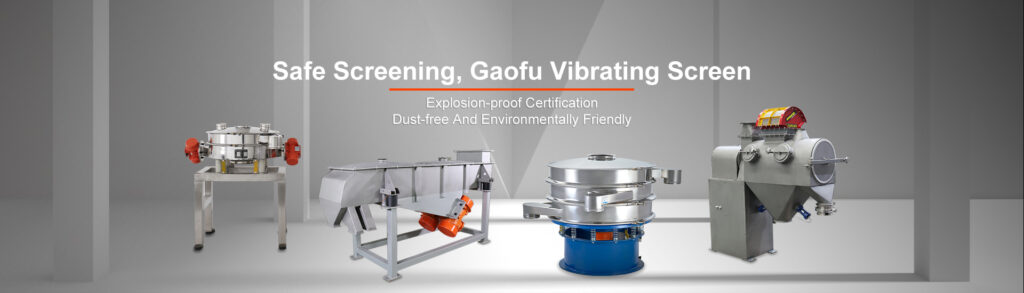
Originated in the 1980s, Xinxiang Gaofu Machinery Co., Ltd. has developed into a leading enterprise after more than 40 years of steady development. The company holds authoritative national qualifications including National-level Specialized, Refined, Unique and Innovative Little Giant Enterprise, National Green Factory, National High-tech Enterprise, and National Intellectual Property Advantage Enterprise, and acts as the President Unit of the Vibration Industry Association.
It has established three provincial and municipal R&D platforms: Henan Provincial Industrial Design Center, Henan Provincial Engineering Technology Research Center for Intelligent On-line Screening System, and Xinxiang Municipal Fine Screening Engineering Technology Research Center. Up to now, Gaofu has obtained more than 500 patents covering invention, utility model and design. It has been awarded the Science and Technology Achievement Prize by the Ministry of Industry and Information Technology of China and has participated in drafting and formulating 4 national standards.
Gaofu’s product portfolio covers multiple series and hundreds of specifications, mainly including vibrating screening equipment, conveying equipment and intelligent automatic material handling systems. We provide one-stop overall solutions such as automatic feeding systems, powder supply systems, pneumatic conveying systems, metering and weighing systems, batching systems, micro-ingredient batching systems, water supply systems, oil supply systems, fluid conveying systems, central kitchen powder supply systems, powder conveying systems and feeding systems.
In terms of food production lines, our mature supporting systems cover two major categories: baking production lines and pasta production lines. The baking series includes production lines for bread, cake, crisp cake, croissant, toast, pizza, biscuit and hamburger. The pasta series includes intelligent production lines for steamed buns, stuffed buns, twisted rolls, sesame paste cakes, steamed dumplings, boiled dumplings, fried dough sticks and pies.
Gaofu products sell well across Greater China and are exported to more than 100 countries and regions worldwide, including Russia, Canada, the United States, New Zealand, Japan, Brazil and South Africa. Widely applied in food, pharmaceutical, chemical, metallurgical, building materials, mining, thermal power, environmental protection and other industries, our products have won the trust and recognition of over 10,000 global customers.
Adhering to the corporate mission of improving material quality and efficiency to meet customer needs, Gaofu has long-term stable cooperative relationships with global clients to achieve harmonious and win-win development. At present, Gaofu has become an official qualified supplier of many Fortune Global 500 enterprises, including CNPC, Sinopec, Sinochem Group, China Resources Group, Sinopharm Group, COFCO, China National Building Material, China Aerospace and Jinchuan Group.