

What to Consider When Selecting a Flour Sieving Machine for Different Types of Flour
Post Date: 2026-07-08
Choosing the Right Screening Solution for Diverse Flour Processing Applications
Flour is available in many forms, including wheat flour, rice flour, corn flour, oat flour, chickpea flour, starch-based powders, and specialty baking ingredients. Each material has unique particle characteristics, flow behavior, and processing requirements. As a result, selecting the right flour sieving machine is an important step in building an efficient and reliable flour production line.
Among the various screening technologies used in food processing, the Rotary Vibrating Sieve is a versatile solution for handling a wide range of powdered materials. Its flexible configuration, compact structure, and compatibility with automated production systems make it suitable for many flour screening applications.
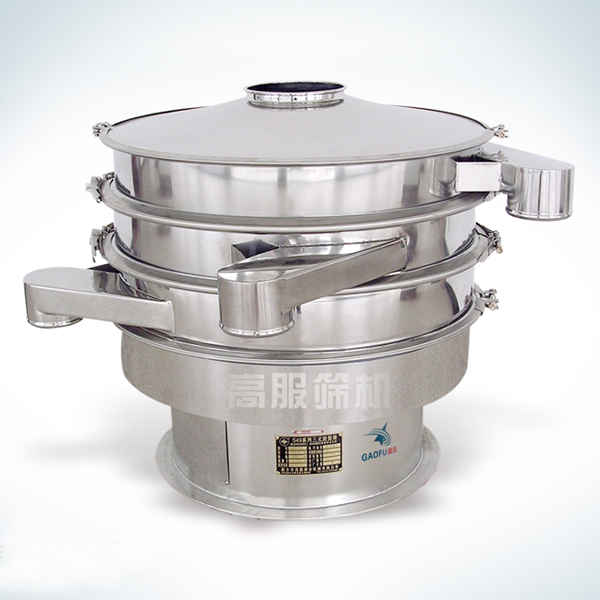
At Gaofu Machinery, we provide customized Rotary Vibrating Sieve solutions that are designed according to customer requirements, production capacity, and material characteristics.
Why Flour Screening Matters
After milling, transportation, or storage, flour may contain oversized particles, soft agglomerates, or inconsistencies in particle size distribution. Screening prepares the material before it enters downstream equipment such as mixers, packaging machines, or batching systems.
A flour sieving machine may help:
- Separate oversized particles
- Break up soft agglomerates during screening
- Improve particle size consistency
- Remove foreign materials that exceed the selected mesh opening
- Prepare powders for subsequent processing
The effectiveness of the screening process depends on the characteristics of the material, the selected mesh size, equipment configuration, and operating conditions.
Understanding the Rotary Vibrating Sieve
A Rotary Vibrating Sieve is a circular screening machine powered by a vertical vibration motor. Adjustable upper and lower eccentric weights create three-dimensional vibration, allowing materials to move evenly across the screen surface while being separated according to particle size.
A standard Rotary Vibrating Sieve typically includes:
- Feed inlet
- Stainless steel screen frame
- Precision screen mesh
- Vertical vibration motor
- Upper and lower eccentric weights
- Discharge outlet(s)
- Fully enclosed cover
- Machine base
The machine can be configured with one or multiple screening decks depending on production requirements.
Different Types of Flour and Their Screening Considerations
Wheat Flour
Wheat flour is one of the most commonly processed materials in food manufacturing.
When selecting a flour sieving machine, manufacturers should consider:
- Required particle size distribution
- Production capacity
- Mesh selection
- Hygienic design
- Compatibility with automated production lines
Rice Flour
Rice flour particles often have different flow characteristics compared with wheat flour.
Equipment selection should evaluate:
- Material flowability
- Moisture content
- Desired screening accuracy
- Production throughput
Corn Flour
Corn flour may contain a wider particle size distribution depending on the milling process.
Important considerations include:
- Appropriate screen mesh
- Feed rate control
- Equipment capacity
- Material discharge characteristics
Oat Flour
Oat flour can exhibit different bulk density and flow behavior.
Manufacturers should assess:
- Feeding consistency
- Screen mesh selection
- Equipment cleaning requirements
- Production scheduling
Specialty Flour and Baking Ingredients
Gluten-free flours, protein powders, starches, and baking premixes often require customized screening solutions.
Equipment selection should be based on:
- Material characteristics
- Product specifications
- Production volume
- Hygiene requirements
Key Factors When Selecting a Flour Sieving Machine
1. Material Characteristics
Every flour behaves differently during screening.
Evaluate:
- Particle size distribution
- Bulk density
- Moisture content
- Flowability
- Cohesiveness
- Abrasiveness
These properties influence machine selection and operating parameters.
2. Screen Mesh Selection
The screen mesh determines the particle size separation.
Mesh selection should consider:
- Product specifications
- Desired particle size
- Downstream processing requirements
- Material characteristics
Selecting an appropriate mesh helps achieve the intended screening objective.
3. Production Capacity
Equipment should match the planned production volume.
Consider:
- Hourly output
- Daily operating schedule
- Batch or continuous production
- Future production expansion
Selecting equipment according to actual production needs supports balanced operation.
4. Number of Screening Decks
Rotary Vibrating Sieves can be configured with:
- Single-deck screening
- Double-deck screening
- Multi-deck screening
The appropriate number of decks depends on the required particle classification.
5. Hygienic Design
Food processing equipment should facilitate cleaning and sanitation.
Common features include:
- Stainless steel product-contact surfaces
- Food-grade sealing materials
- Smooth internal finishes
- Fully enclosed construction
- Quick-release clamps for screen replacement
Equipment should comply with applicable food safety regulations and plant sanitation procedures.
6. Integration with Production Equipment
Modern flour processing lines often combine a flour sieving machine with:
- Feeding systems
- Vacuum conveying systems
- Bulk bag feeding stations
- Mixing equipment
- Packaging machines
- Storage silos
Integrated system design can improve material transfer throughout the production process.
7. Maintenance Accessibility
Routine maintenance supports long-term equipment performance.
Maintenance activities typically include:
- Screen inspection
- Mesh replacement
- Cleaning product-contact surfaces
- Motor inspection
- Seal inspection
- Fastener checks
Maintenance schedules should follow the manufacturer's recommendations and actual operating conditions.
Typical Applications
The Rotary Vibrating Sieve is suitable for screening many powdered food products, including:
- Wheat flour
- Rice flour
- Corn flour
- Oat flour
- Soy flour
- Chickpea flour
- Potato starch
- Corn starch
- Sugar powder
- Milk powder
- Cocoa powder
- Protein powder
- Coffee powder
- Spice powders
- Baking premixes
- Food additives
The final equipment configuration should be selected according to the specific production process and material properties.
Advantages of a Rotary Vibrating Sieve
When configured appropriately for the application, a Rotary Vibrating Sieve may provide several operational benefits:
- Compact equipment design
- Flexible screening configurations
- Multiple screen deck options
- Compatibility with automated powder handling systems
- Suitable for batch or continuous production
- Adaptability to a wide variety of food powders
Actual performance depends on material characteristics, equipment configuration, operating conditions, and maintenance practices.
Why Choose Gaofu Machinery?
Gaofu Machinery has specialized in vibrating screening and powder handling technology for more than 40 years, supplying customized equipment solutions to customers around the world.
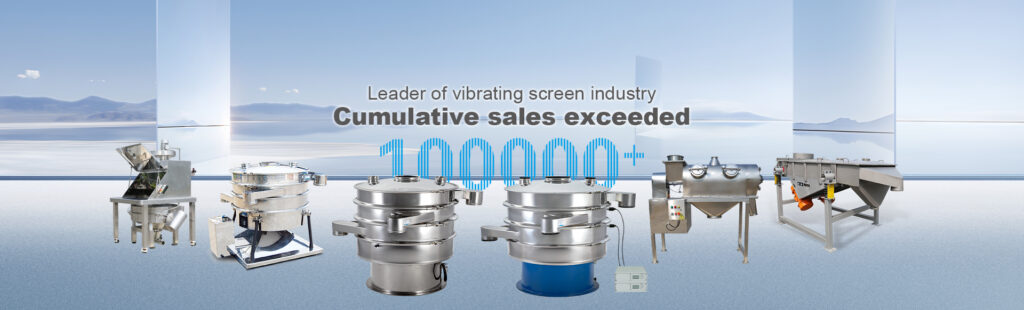
Our Product Portfolio
- Rotary Vibrating Sieves
- Airflow Sieves
- Linear Vibrating Screens
- Ultrasonic Vibrating Screens
- Tumbler Screening Machines
- Feeding Systems
- Vacuum Conveying Systems
- Bulk Bag Feeding Stations
- Integrated Powder Handling Solutions
Company Strengths
- More than 40 years of industry experience
- 60,000㎡ manufacturing base
- More than 500 patent applications
- Products exported to over 100 countries and regions
- Serving more than 10,000 customers worldwide
Our engineering team works closely with customers to evaluate production objectives, material characteristics, and plant layouts, helping recommend equipment configurations that align with specific processing requirements.
Conclusion
Selecting the right flour sieving machine requires a thorough understanding of the type of flour being processed, the desired particle size, production capacity, hygiene requirements, and equipment integration needs. Because different flours have unique physical characteristics, there is no single screening configuration that fits every application.
A Rotary Vibrating Sieve offers a flexible solution for screening a wide variety of flour products and can be integrated with feeding, conveying, mixing, and packaging equipment to support an efficient production process. By evaluating your material properties and production goals carefully, you can choose equipment that helps maintain stable screening performance and supports consistent powder handling across your facility.
Gaofu Machinery provides customized Rotary Vibrating Sieve solutions designed to meet the requirements of modern flour processing, helping manufacturers select equipment that matches their production capacity, product specifications, and operational objectives.