

What to Consider When Selecting a Vacuum Feeder for a Flour Sifter Installation
Post Date: 2026-06-26
A Practical Guide to Choosing the Right Powder Conveying Solution
In modern flour processing facilities, efficient material transfer is an important part of maintaining a stable production workflow. While flour sifters are responsible for screening and classifying powders, the performance of the entire system also depends on how materials are delivered to the screening equipment.
A Vacuum Feeder is commonly used to transport flour and other food powders through enclosed pipelines, providing a controlled method of conveying materials from storage to the flour sifter. However, selecting the right vacuum feeder requires more than simply matching a conveying capacity. Material characteristics, production requirements, equipment compatibility, and plant layout should all be considered during system design.
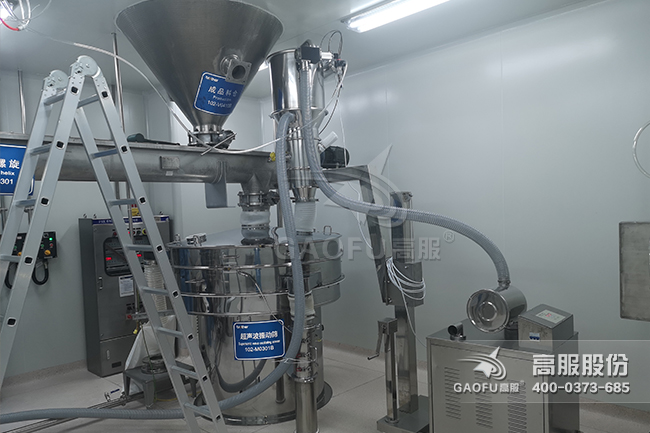
At Gaofu Machinery, we help customers develop integrated powder handling solutions by evaluating the complete production process rather than selecting equipment independently.
Why Use a Vacuum Feeder with a Flour Sifter?
A Vacuum Feeder transports powdered or granular materials using negative pressure. When integrated with a flour sifter, it creates a continuous process that typically includes:
- Raw material storage
- Vacuum conveying
- Controlled material feeding
- Flour screening
- Downstream mixing, packaging, or storage
Compared with manual feeding methods, an enclosed conveying system may help improve material handling consistency and reduce the number of transfer points throughout the production line.
Key Factors to Consider
1. Material Characteristics
The first step in selecting a vacuum feeder is understanding the properties of the material being conveyed.
Important factors include:
- Particle size
- Bulk density
- Moisture content
- Flowability
- Abrasiveness
- Temperature sensitivity
For example, fine flour and starch generally convey differently from coarse granules or hygroscopic powders. These characteristics influence pipeline design, conveying speed, and feeder configuration.
2. Required Conveying Capacity
Production output determines the required conveying capacity of the vacuum feeder.
Consider questions such as:
- How many kilograms or tons per hour must be conveyed?
- Will production expand in the future?
- Is continuous or batch operation required?
Selecting equipment with capacity appropriate for the production line helps maintain a balanced process between conveying and screening.
3. Matching the Flour Sifter Capacity
The conveying capacity of the Vacuum Feeder should be coordinated with the processing capacity of the flour sifter.
If the feeding rate significantly exceeds the screening capacity, material may accumulate at the sifter inlet. Conversely, insufficient feeding may reduce equipment utilization.
A balanced design supports stable material flow throughout the system.
4. Conveying Distance and Pipeline Layout
Vacuum conveying systems can transport materials both horizontally and vertically.
When planning a system, evaluate:
- Total conveying distance
- Vertical lift height
- Number of bends
- Available installation space
- Existing equipment arrangement
These factors influence system sizing and overall conveying performance.
5. Food Safety and Hygiene Requirements
Food processing equipment often requires hygienic design features.
Depending on the application, customers may consider:
- Stainless steel contact parts
- Food-grade seals
- Smooth internal surfaces
- Easy-to-clean construction
- Quick-disassembly components
The appropriate configuration depends on applicable production standards and customer requirements.
6. Dust Management
Powder handling systems should consider methods for controlling dust during conveying.
A Vacuum Feeder transports material in enclosed pipelines, which may help reduce powder exposure during transfer. Additional dust collection equipment can also be integrated where required by the production process.
7. Control System Requirements
Automation requirements vary between production facilities.
Common control options include:
- Automatic conveying cycles
- Level sensor integration
- PLC compatibility
- Alarm monitoring
- Remote operation interfaces
Selecting suitable control functions can simplify equipment operation and integration into existing production lines.
8. Maintenance Accessibility
Routine maintenance contributes to long-term equipment performance.
When evaluating a Vacuum Feeder, consider:
- Filter replacement procedures
- Access to conveying pipelines
- Cleaning requirements
- Inspection intervals
- Spare parts availability
A design that allows convenient maintenance may help reduce downtime during scheduled servicing.
Typical System Configuration
A flour processing line using a Vacuum Feeder may include:
- Raw material storage bin or bulk bag unloading station
- Vacuum Feeder
- Receiving hopper
- Flour sifter
- Mixer, packaging machine, or storage silo
Each configuration should be designed according to the production process and facility layout.
Common Applications
Vacuum Feeders integrated with flour sifters are suitable for handling a variety of food powders, including:
- Wheat flour
- Rice flour
- Corn flour
- Starch
- Sugar powder
- Milk powder
- Protein powder
- Cocoa powder
- Baking premixes
- Food additives
Equipment selection should be based on material testing and engineering evaluation.
Why Choose Gaofu Machinery?
Gaofu Machinery has specialized in screening and powder handling equipment for more than 40 years, providing integrated solutions for food, chemical, pharmaceutical, mining, and other industries.
Our Advantages
- 40+ years of industry experience
- 60,000㎡ production base
- 500+ patent applications
- Exported to more than 100 countries and regions
- Serving over 10,000 global customers
- Customized feeding, conveying, and screening solutions
Our engineering team works closely with customers to understand material properties, production capacity, and plant layout before recommending a suitable system configuration.
Conclusion
Selecting a Vacuum Feeder for a flour sifter installation involves evaluating multiple engineering factors, including material characteristics, conveying capacity, equipment compatibility, hygiene requirements, and production goals. A well-planned conveying system can support stable material transfer and effective integration with screening equipment.
If you are planning a new flour processing line or upgrading an existing facility, Gaofu Machinery can provide customized vacuum conveying and flour screening solutions designed around your specific operational requirements.