

A Technical Analysis: Filter Regeneration Protocols in a Vacuum Feeder Flour Sieve Line
Post Date: 2026-09-10
Introduction
In a vacuum conveying system for flour and other fine powders, the filter inside the Vacuum Feeder plays an important role in separating conveyed material from the transport air. As flour accumulates on the filter surface during operation, airflow resistance can gradually change. For this reason, an appropriate filter regeneration or cleaning protocol can be an important part of routine equipment management.
Filter regeneration refers to a method of removing accumulated powder from the filter surface so that the filter can continue performing its intended separation function. Depending on the Vacuum Feeder design, regeneration may involve pneumatic cleaning, mechanical cleaning, manual cleaning, or another manufacturer-specified method.
For a flour sieve line, filter regeneration should not be considered simply as a cleaning action. It involves the relationship between powder loading, filter condition, conveying cycles, cleaning frequency, equipment design, and maintenance procedures.
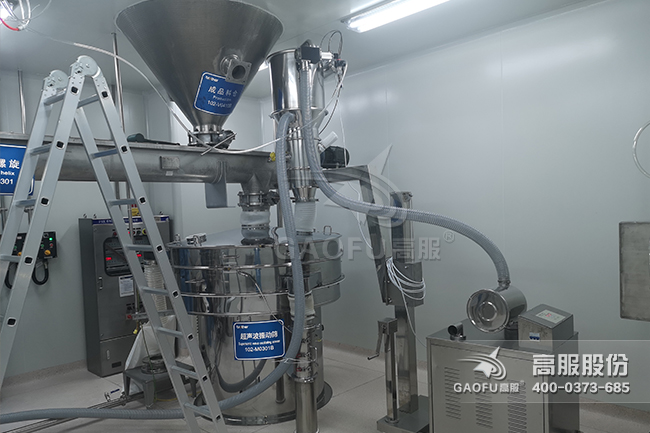
This article provides a technical overview of filter regeneration protocols for a Vacuum Feeder flour sieve line, while highlighting practical considerations for food and powder-processing applications.
1. The Role of the Filter in a Vacuum Feeder
During vacuum conveying, air and flour travel through the conveying system toward the Vacuum Feeder.
A simplified process is:
Flour Pickup → Vacuum Conveying → Vacuum Feeder → Filter Separation → Vacuum Source
The filter helps retain the conveyed powder within the material-handling section while allowing the conveying air to continue toward the vacuum-generating equipment.
Because flour particles can accumulate on the filter surface, the filter's operating condition can change over time.
This creates the need for a suitable regeneration strategy.
2. What Is Filter Regeneration?
Filter regeneration is the process of removing accumulated material from the filter surface.
Depending on equipment design, possible methods include:
- Reverse-air cleaning
- Compressed-air pulse cleaning
- Mechanical vibration
- Manual cleaning
- Filter element replacement
- Manufacturer-specific cleaning mechanisms
Not every Vacuum Feeder uses the same regeneration method.
Therefore, operators should first identify the filter structure and cleaning mechanism specified for their particular equipment.
3. Why Flour Processing Requires Filter Management
Flour is a fine powder, and its properties can influence filter loading.
Factors may include:
- Particle size
- Moisture
- Bulk density
- Powder flowability
- Material temperature
- Conveying frequency
When flour accumulates on a filter surface, the available air passage can gradually become restricted.
A simplified operating sequence is:
Clean Filter → Powder Accumulation → Increasing Filter Resistance → Regeneration → Filter Surface Recovery
The actual degree of resistance and the appropriate regeneration frequency depend on the equipment and application.
4. Filter Loading Is a Dynamic Process
Filter loading does not necessarily occur at a constant rate.
For example, a production line may process different flour materials during different shifts. The quantity and characteristics of powder entering the Vacuum Feeder can therefore change.
Filter loading may be influenced by:
- Batch size
- Conveying cycle
- Powder concentration
- Material moisture
- Conveying velocity
- Filter surface area
For this reason, a fixed cleaning interval may not always be appropriate for every production condition.
A more practical approach is to establish a cleaning protocol based on equipment instructions and observed operating conditions.
5. The Basic Filter Regeneration Cycle
A typical automatic regeneration sequence may be represented as:
Material Conveying→Filter Loads with Powder→Cleaning Cycle Activated→Accumulated Powder Removed→Powder Returns to Material Side→Conveying Resumes
The exact sequence varies according to Vacuum Feeder design.
In some systems, regeneration may occur between conveying cycles. In others, cleaning may be triggered according to a control program or pressure-related operating condition.
The manufacturer's equipment design should determine the appropriate procedure.
6. Pneumatic Filter Regeneration
Some vacuum conveying systems use compressed air to clean filter elements.
A simplified principle is:
Compressed Air → Cleaning Valve → Filter Element → Powder Release
The cleaning air moves through or across the filter in a direction intended to dislodge accumulated powder.
Potential advantages of this method include:
- Automated cleaning
- Reduced need for frequent manual intervention
- Repeatable cleaning cycles
- Suitability for certain continuous or batch processes
However, the required pressure, pulse duration, frequency, and air quality should be determined according to the equipment design.
Operators should not arbitrarily increase cleaning pressure in an attempt to obtain stronger cleaning.
7. Reverse-Air Regeneration
Another approach is reverse-air cleaning.
During normal operation:
Process Air → Filter → Vacuum Source
During regeneration:
Cleaning Air → Filter in Reverse Direction → Powder Release
The reverse airflow can help detach accumulated flour from the filter surface.
The effectiveness of this method depends on filter construction, powder characteristics, air conditions, and system design.
The appropriate regeneration sequence should be established according to the Vacuum Feeder manufacturer's instructions.
8. Mechanical Filter Cleaning
Some filter assemblies may use mechanical movement or vibration to assist with powder removal.
A mechanical cleaning method can be useful when the equipment is designed specifically for this purpose.
Important considerations include:
- Filter construction
- Mechanical frequency
- Powder characteristics
- Filter mounting
- Equipment vibration
- Maintenance requirements
The cleaning mechanism should be compatible with the filter element.
Improper mechanical force may shorten filter service life or damage the filter material.
9. Manual Filter Cleaning
Manual cleaning may still be appropriate for certain Vacuum Feeder configurations or maintenance situations.
A manual cleaning procedure may include:
- Stop the equipment.
- Isolate the relevant energy sources according to site procedures.
- Open the designated access area.
- Remove the filter according to manufacturer instructions.
- Clean the filter using the specified method.
- Inspect the filter for damage.
- Reinstall the filter correctly.
- Check sealing and connections.
- Resume operation after the required safety checks.
The specific procedure should always follow the equipment manual and the facility's safety requirements.
10. Choosing the Appropriate Regeneration Frequency
There is no single cleaning interval suitable for every flour application.
The regeneration frequency may depend on:
- Material throughput
- Powder properties
- Filter surface area
- Conveying cycle
- Filter construction
- Environmental conditions
- Operating duration
A useful maintenance approach is to establish a baseline and then monitor operating trends.
For example:
Initial Cleaning Schedule → Observe Filter Condition → Review Operating Data → Adjust Maintenance Interval
Any adjustment should remain within the equipment manufacturer's recommended operating range.
11. Pressure Drop as a Maintenance Indicator
Changes in pressure-related readings can provide useful information about filter condition.
As powder accumulates:
Filter Loading ↑ → Airflow Resistance May ↑
After effective regeneration:
Powder Loading ↓ → Filter Resistance May Decrease
Where suitable monitoring instruments are installed, operators can compare readings with established operating references.
However, pressure changes can have multiple causes. A change in pressure should not automatically be attributed to filter loading.
Pipeline blockage, leakage, material loading, vacuum-source performance, or other conditions may also contribute.
12. Filter Regeneration and Material Recovery
During regeneration, the powder removed from the filter should return to the appropriate material side of the system where the equipment design permits.
This can help prevent unnecessary loss of material.
A representative cycle is:
Conveyed Flour → Filter Surface → Regeneration → Powder Release → Material Collection Area
The actual direction of released material depends on the Vacuum Feeder's internal structure.
Designers should also consider whether the regenerated powder needs to remain within the same product stream and whether the cleaning procedure is compatible with product-quality requirements.
13. Preventing Excessive Filter Loading
Regeneration is only one part of filter management.
Excessive loading can also be associated with upstream or operating conditions such as:
- Excessive material loading
- Unsuitable conveying parameters
- Material with high moisture
- Incorrect filter selection
- Poor pipeline conditions
- Unexpected powder accumulation
If a filter requires unusually frequent cleaning, operators may benefit from investigating the cause rather than simply increasing the cleaning frequency.
This can turn filter maintenance from a reactive task into a broader equipment-diagnostic process.
14. Filter Selection and Regeneration Performance
The regeneration method must be compatible with the filter element.
Relevant characteristics may include:
- Filter material
- Filter area
- Filter geometry
- Surface structure
- Temperature resistance
- Chemical compatibility
- Cleaning resistance
For flour applications, material-contact and hygiene requirements should also be considered.
The filter should be selected according to the Vacuum Feeder design and actual powder characteristics rather than using a generic replacement element without verification.
15. Maintaining Filter Integrity
A filter that appears visually clean may still require inspection.
Operators should check for:
- Tears
- Cracks
- Deformation
- Loose mounting
- Abnormal wear
- Damaged seals
- Powder bypass
Filter regeneration should remove accumulated powder without compromising the structural integrity of the filter.
If damage is detected, the filter should be repaired or replaced according to the manufacturer's maintenance recommendations.
16. Filter Regeneration in a Flour Sieve Line
When the Vacuum Feeder is connected with a flour sieve, filter maintenance becomes one component of the broader production process.
A representative system is:
Flour Supply→Vacuum Feeder→Filter Separation→Flour Sieve→Screened Flour Collection
The Vacuum Feeder handles powder transfer, while the flour sieve performs particle separation.
Filter regeneration should therefore be coordinated with the conveying cycle so that cleaning activities do not create unnecessary disruption to the downstream screening operation.
17. Coordinating Regeneration with Production Cycles
A batch-processing line may provide natural opportunities for filter cleaning.
For example:
Conveying Cycle → Material Discharge → Filter Regeneration → Next Conveying Cycle
In a different configuration, the regeneration mechanism may operate automatically during the conveying process.
The appropriate approach depends on:
- Vacuum Feeder structure
- Production cycle
- Material properties
- Filter type
- Required conveying continuity
The objective is to establish a regeneration strategy that is compatible with the actual production sequence.
18. Filter Regeneration and Food Hygiene
For food-processing applications, filter cleaning also needs to be considered from a hygiene perspective.
Important factors may include:
- Filter material compatibility
- Cleaning method
- Residual powder
- Product changeover
- Filter accessibility
- Cleaning frequency
- Cross-contamination controls
If different products are processed through the same equipment, the cleaning protocol may need to be more extensive than routine in-process regeneration.
Food-contact suitability and sanitation requirements should be verified according to the applicable regulations and the specific installation.
19. Dry Cleaning and Wet Cleaning
The correct cleaning method depends on the filter and application.
Dry Cleaning
Dry cleaning may be considered where the powder and equipment design favor a dry process.
Possible methods include:
- Controlled air cleaning
- Vacuum cleaning
- Mechanical cleaning
Wet Cleaning
Wet cleaning may be appropriate for certain equipment designs, but not every filter element or Vacuum Feeder is designed for wet washing.
Before using water or cleaning solutions, operators should confirm:
- Filter compatibility
- Equipment manufacturer's instructions
- Drying requirements
- Residual moisture risks
- Product-changeover procedures
An unsuitable cleaning method can affect filter condition and powder handling performance.
20. Cleaning Air Quality Matters
Where compressed air is used for filter regeneration, the quality of the cleaning air can be relevant to the production environment.
For food applications, manufacturers should evaluate the compressed-air quality requirements applicable to the process.
Potential considerations include:
- Oil contamination
- Moisture
- Particles
- Air treatment
- Pressure stability
The cleaning-air specification should be established according to the equipment design and applicable food-processing requirements.
21. Filter Regeneration and Combustible Dust Considerations
Flour dust can present combustible-dust considerations depending on the material and facility conditions.
Filter regeneration should therefore be included in the site's broader safety assessment.
Manufacturers may need to consider:
- Cleaning-air pressure
- Static electricity
- Grounding and bonding
- Electrical equipment
- Dust containment
- Dust collection
- Equipment protection
- Applicable regulations
The complete installation should be evaluated according to the material properties, site conditions, and relevant safety requirements.
22. Troubleshooting an Ineffective Regeneration Cycle
If filter cleaning appears less effective than expected, operators can review the system systematically.
Check 1: Cleaning Mechanism
Confirm that the regeneration mechanism is operating according to its intended cycle.
Check 2: Cleaning-Air Supply
Where pneumatic cleaning is used, inspect the air supply and relevant components.
Check 3: Filter Condition
Check for damage, deformation, or excessive permanent buildup.
Check 4: Powder Characteristics
Review whether material moisture or other characteristics have changed.
Check 5: Conveying Conditions
Check whether material loading or conveying conditions have changed.
Check 6: Internal Accumulation
Inspect areas where powder may be accumulating unexpectedly.
This approach can help distinguish a filter problem from a wider process issue.
23. Establishing a Filter Regeneration Protocol
A practical protocol can contain several levels of maintenance.
Level 1: Routine Observation
Operators monitor:
- Conveying behavior
- Filter condition
- Operating readings
- Cleaning-cycle behavior
Level 2: Scheduled Inspection
Maintenance personnel inspect:
- Filter surfaces
- Seals
- Cleaning components
- Connections
Level 3: Deep Cleaning
A more thorough cleaning is performed according to the production and sanitation schedule.
Level 4: Filter Replacement
A filter is replaced when inspection indicates that cleaning can no longer restore the required condition or when the manufacturer's service criteria are reached.
This layered approach can make filter maintenance easier to organize.
24. Creating a Filter Maintenance Record
A maintenance record can help identify trends over time.
Useful information may include:
| Item | Recommended Record |
|---|---|
| Filter type | Installed filter specification |
| Cleaning method | Pneumatic, mechanical, manual, etc. |
| Cleaning frequency | Actual regeneration interval |
| Operating condition | Relevant process condition |
| Inspection result | Filter condition |
| Replacement date | Service history |
| Abnormal observations | Issues requiring investigation |
Tracking these factors can help maintenance teams identify whether filter loading behavior is changing.
25. Application Example: Vacuum Feeding Before Flour Screening
Consider a flour-processing line in which flour is conveyed pneumatically before entering a screening machine.
The process may be arranged as:
Flour Storage→Material Pickup→Vacuum Feeder→Filter Regeneration Cycle→Flour Sieve→Screened Product Collection
During normal operation, flour gradually loads the filter surface. At the appropriate point in the conveying cycle, the filter regeneration mechanism removes accumulated powder.
The key maintenance objective is to keep the filter in a condition suitable for the intended conveying process without using unnecessarily aggressive or frequent cleaning.
The actual regeneration strategy should be determined by the Vacuum Feeder design and operating conditions.
26. How Gaofu Vacuum Feeder Can Fit into a Flour Screening Process
Gaofu Machinery provides Vacuum Feeder solutions for powder conveying applications that can be considered for connection with flour screening equipment.
For applications involving filter regeneration, the system can be evaluated according to:
- Flour characteristics
- Conveying capacity
- Filter configuration
- Cleaning method
- Regeneration frequency
- Conveying cycle
- Sieve inlet arrangement
- Cleaning requirements
- Production environment
The Vacuum Feeder can also be considered together with screening and feeding equipment to create a process arrangement suited to the customer's specific application.
The final configuration should be determined according to actual material properties, production conditions, plant layout, equipment specifications, and applicable safety and hygiene requirements.
Why Consider Gaofu Machinery for Powder Processing?
A flour-processing line involves more than screening alone. Powder conveying, filtration, screening, material collection, cleaning, and maintenance can all influence the overall process.
Gaofu Machinery offers equipment options for powder handling and screening applications, including:
- Vacuum Feeders
- Rotary Vibrating Sieves
- Centrifugal Sifters
- Filtration Sieves
- Ultrasonic Vibrating Screens
- Feeding Systems
- Big Bag Feeding Stations
For a Vacuum Feeder flour sieve line, an application-based evaluation can help determine the appropriate relationship between conveying, filter management, and screening.
Equipment selection should be based on the actual production process rather than relying on a single performance claim.
Conclusion
Filter regeneration is an important maintenance consideration in a Vacuum Feeder flour sieve line. During powder conveying, flour can accumulate on the filter surface, gradually affecting airflow resistance and system operating conditions.
A practical filter management strategy can include:
Monitor Filter Condition → Regenerate at an Appropriate Point → Inspect Filter Integrity → Record Operating Trends → Replace When Required
The most suitable regeneration method may involve pneumatic cleaning, reverse air, mechanical action, manual cleaning, or another equipment-specific approach.
For flour-processing applications, the protocol should also consider hygiene, cleaning-air quality, product changeover, combustible-dust safety, and applicable regulations.
With appropriate equipment selection and a maintenance procedure matched to the actual operating environment, filter regeneration can become a structured part of Vacuum Feeder management rather than an isolated cleaning task.
Food Industry Client Testimonials
Nestlé, CP Group, Haitian Flavour & Fragrance, Yihai Kerry, Yili, Mengniu,Shuanghui, Wahaha, Master Kong, Want Want, Anjoy Foods, Angel Yeast,Yangyuan Foods, Uni-President Enterprises, Qiaqia Food, Luhua Group,Alpenliebe, Golden Monkey, Orion, Xizhilang,Sanquan Foods, Synear Food, Oishi, Wong Lo Kat, Yanjing Beer, Seamild,Jinpai, Chubang, Hengshun Vinegar Industry, Longda Group, Beijing Daoxiangcun, Anhe Dairy,Weiwei Group, Xiangpiaopiao, Maiquer, Tianbing, Binqi Food, Ligao Okun
About Gaofu
Originated in the 1980s, Xinxiang Gaofu Machinery Co., Ltd. has developed into a leading enterprise after more than 40 years of steady development. The company holds authoritative national qualifications including National-level Specialized, Refined, Unique and Innovative Little Giant Enterprise, National Green Factory, National High-tech Enterprise, and National Intellectual Property Advantage Enterprise, and acts as the President Unit of the Vibration Industry Association.
It has established three provincial and municipal R&D platforms: Henan Provincial Industrial Design Center, Henan Provincial Engineering Technology Research Center for Intelligent On-line Screening System, and Xinxiang Municipal Fine Screening Engineering Technology Research Center. Up to now, Gaofu has obtained more than 500 patents covering invention, utility model and design. It has been awarded the Science and Technology Achievement Prize by the Ministry of Industry and Information Technology of China and has participated in drafting and formulating 4 national standards.
Gaofu’s product portfolio covers multiple series and hundreds of specifications, mainly including vibrating screening equipment, conveying equipment and intelligent automatic material handling systems. We provide one-stop overall solutions such as automatic feeding systems, powder supply systems, pneumatic conveying systems, metering and weighing systems, batching systems, micro-ingredient batching systems, water supply systems, oil supply systems, fluid conveying systems, central kitchen powder supply systems, powder conveying systems and feeding systems.
In terms of food production lines, our mature supporting systems cover two major categories: baking production lines and pasta production lines. The baking series includes production lines for bread, cake, crisp cake, croissant, toast, pizza, biscuit and hamburger. The pasta series includes intelligent production lines for steamed buns, stuffed buns, twisted rolls, sesame paste cakes, steamed dumplings, boiled dumplings, fried dough sticks and pies.
Gaofu products sell well across Greater China and are exported to more than 100 countries and regions worldwide, including Russia, Canada, the United States, New Zealand, Japan, Brazil and South Africa. Widely applied in food, pharmaceutical, chemical, metallurgical, building materials, mining, thermal power, environmental protection and other industries, our products have won the trust and recognition of over 10,000 global customers.
Adhering to the corporate mission of improving material quality and efficiency to meet customer needs, Gaofu has long-term stable cooperative relationships with global clients to achieve harmonious and win-win development. At present, Gaofu has become an official qualified supplier of many Fortune Global 500 enterprises, including CNPC, Sinopec, Sinochem Group, China Resources Group, Sinopharm Group, COFCO, China National Building Material, China Aerospace and Jinchuan Group.