

How a Feeding System Supports Consistent Flour Sieve Operations in Automated Powder Processing Lines
Post Date: 2026-09-10
Introduction
In automated flour processing, a sieving machine can only perform within the conditions created by the material supplied to it. Even when the screening equipment has an appropriate mesh configuration, variations in the incoming flour flow may influence how material spreads across the screen surface and how consistently the process operates.
This is where a properly configured Feeding System becomes an important part of the production line.
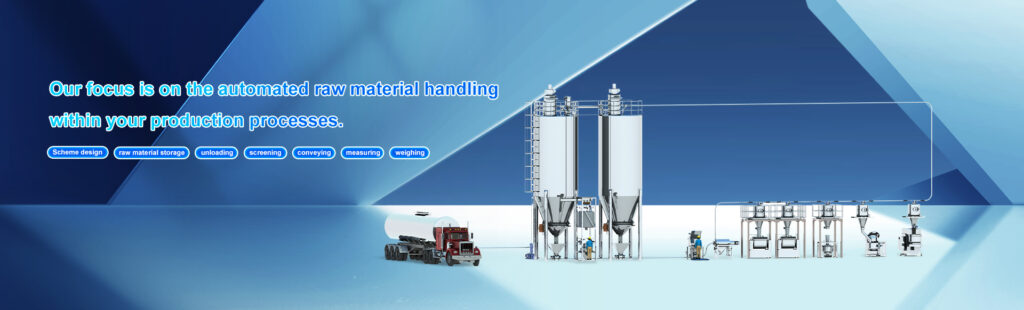
Rather than simply moving flour toward a sieve, a feeding system can help coordinate material supply, regulate the feed rate, manage temporary variations in material availability, and establish a more predictable flow into the screening stage.
For automated powder processing lines, the objective is not necessarily to maximize the feeding rate. A more practical goal is to establish a feed condition that is compatible with the capacity and screening requirements of the flour sieve.
This article examines how a Feeding System can support consistent flour sieve operations and what technical factors should be considered when designing an automated powder-processing line.
1. Why Consistent Feeding Matters to Flour Sieving
Flour screening is influenced by the relationship between the material and the screening surface.
A simplified process is:
Material Supply → Feeding System → Flour Sieve → Product Collection
If the flour enters the sieve at a highly variable rate, the amount of material presented to the screen may also fluctuate.
For example:
Irregular Feed → Changing Screen Loading → Variable Material Distribution
By comparison:
Controlled Feed → More Predictable Screen Loading
This does not mean that a controlled feeding rate automatically guarantees a particular screening result. Screen mesh, material properties, equipment configuration, moisture, particle-size distribution, and other process conditions remain important.
2. The Feeding System as a Process-Control Point
In an automated powder-processing line, the feeding system can serve as an intermediate control point between material storage and screening.
Instead of allowing the upstream material source to directly determine the sieve's incoming flow, the feeding system can be designed to manage the transfer.
A representative arrangement is:
Flour Storage
↓
Feeding System
↓
Flour Sieve
↓
Screened Flour
The feeding stage can therefore be considered part of the screening process rather than merely an auxiliary material-handling component.
3. Managing Variations in Material Supply
Upstream material supply may not always be perfectly uniform.
Variations can occur because of:
- Different batch sizes
- Intermittent upstream equipment
- Material bridging
- Changes in hopper level
- Manual replenishment
- Changes in powder flowability
If these variations are transferred directly to the sieve, the screening load may change accordingly.
A suitably designed feeding system can help manage these fluctuations by providing a more controlled transition between the material source and the screening machine.
The appropriate solution depends on the specific material supply arrangement.
4. Controlling the Feed Rate
Feed rate is one of the central parameters in flour sieve operation.
Too little material may leave part of the available screening area underused, while excessive material loading may make it more difficult for particles to interact with the screen surface as intended.
A practical relationship is:
Material Characteristics + Screen Area + Mesh Specification + Feed Rate
The feeding system should therefore be selected according to the requirements of the downstream sieve.
Rather than setting the feeder at the highest possible output, operators should establish a feeding condition appropriate for the screening task.
5. Matching Feeding Capacity with Sieve Capacity
A feeding system and flour sieve should be evaluated as a matched process.
For example:
Feeding Capacity
↓
Sieve Processing Capacity
↓
Downstream Collection Capacity
If the feeding stage supplies material significantly faster than the sieve can process it, material accumulation or unstable loading may occur.
If the feed rate is substantially below the intended process requirement, production efficiency may be affected.
Therefore, equipment selection should consider the entire material flow instead of evaluating the feeder independently.
6. Supporting Uniform Material Distribution
A consistent feed rate is useful, but the location and manner in which flour enters the sieve are also important.
The feeding system should be evaluated for how it delivers material into the screening equipment.
Potential considerations include:
- Inlet position
- Feed chute design
- Material distribution
- Drop height
- Flow direction
- Connection geometry
The objective is to introduce flour onto the screening area in a way that is compatible with the sieve structure.
An appropriate inlet arrangement can help avoid concentrating excessive material in one area of the screen.
7. Preventing Sudden Material Surges
A sudden increase in flour flow can change the loading condition of the sieve.
Possible causes include:
- Hopper discharge changes
- Intermittent upstream feeding
- Material suddenly breaking loose
- Incorrect feeder settings
- Control-system changes
A feeding system with suitable control functions can help moderate these variations.
A simplified process can be viewed as:
Variable Upstream Supply → Feeding Control → More Consistent Sieve Loading
The actual degree of control depends on the feeder type, control system, material properties, and process design.
8. Managing Hopper Flow
Many powder-processing systems use a hopper or storage vessel before the feeding stage.
However, flour does not always flow from a hopper in exactly the same way throughout operation.
Potential issues may include:
- Bridging
- Rat-holing
- Arching
- Powder compaction
- Uneven discharge
These conditions can interrupt the material supply to the feeder.
Therefore, hopper geometry and discharge equipment should be evaluated together.
A feeding system can help regulate the material leaving the hopper, but it cannot by itself eliminate every possible powder-flow problem.
9. The Relationship Between Hopper Level and Feed Stability
The amount of flour in a hopper can influence the pressure exerted on the material below it and, depending on the hopper design, its discharge behavior.
During automated operation, the system may experience:
High Material Level → Continuous Discharge → Lower Material Level → Replenishment
A feeding system can be configured to respond to the process conditions where appropriate.
Level monitoring, feeder control, and upstream material replenishment can potentially be coordinated to maintain a suitable supply to the flour sieve.
The exact control strategy should be selected according to the process architecture.
10. Feeding System Control in Automated Lines
Automation can provide a way to coordinate feeding with other equipment.
Depending on the system, possible control functions may include:
- Start/stop coordination
- Feed-rate adjustment
- Level-based control
- Alarm signals
- Interlocking
- Timed feeding
- Variable-speed control
For example:
Low Hopper Level → Material Supply Activated
Normal Level → Feeding Continues
High-Level Condition → Feeding Adjusted or Stopped
These functions should be configured according to actual equipment capabilities and production requirements.
11. Coordinating Feeding with Sieve Operation
A flour sieve and feeding system should not necessarily operate independently.
A coordinated sequence may be:
Feeding System Ready
↓
Flour Sieve Starts
↓
Material Feeding Begins
↓
Screening Continues
↓
Feeding Stops
↓
Sieve Completes Required Emptying Cycle
The actual sequence depends on the production process and equipment controls.
Coordination can help prevent situations where material continues entering a sieve that is not ready to receive it.
12. Supporting Stable Screening During Continuous Production
Continuous powder processing requires attention to material flow over time rather than only at startup.
A feeding system may be designed to maintain a defined supply condition throughout the operating period.
Important factors include:
- Feed-rate stability
- Hopper replenishment
- Material flowability
- Feeder response
- Sieve capacity
- Downstream discharge
The system should be evaluated under actual production conditions because powder behavior can change during extended operation.
13. Different Feeding Methods for Flour
The appropriate feeding method depends on how flour is supplied to the production line.
Potential arrangements include:
Screw Feeding
A screw feeder may be considered where controlled mechanical transfer is required.
Vibratory Feeding
Vibratory feeding can be considered for certain powder-flow applications where controlled movement is appropriate.
Vacuum Conveying
A Vacuum Feeder may be suitable where enclosed pneumatic transfer is required.
Big Bag Feeding
A Big Bag Feeding Station can be considered where flour is supplied in bulk bags.
These systems can serve different process requirements and should not be treated as interchangeable without application evaluation.
14. Combining a Feeding System with a Big Bag Feeding Station
For bulk flour handling, a possible process is:
Big Bag → Feeding Station → Feeding System → Flour Sieve
The big bag station handles bulk-material discharge, while the feeding system can regulate the supply toward the screening stage.
This separation of functions can make the process easier to configure according to:
- Bulk-bag size
- Flour characteristics
- Required feed rate
- Screening capacity
- Plant layout
The final arrangement depends on the production requirements and material-handling conditions.
15. Combining a Feeding System with a Vacuum Feeder
Where flour must be pneumatically conveyed before screening, another possible arrangement is:
Flour Source → Vacuum Feeder → Feeding System → Flour Sieve
Alternatively, the feeding system may be positioned upstream of the vacuum conveying stage, depending on the process.
The key consideration is to determine which equipment should perform each function:
Material Transfer → Buffering → Feed Regulation → Screening
Clear functional separation can help engineers develop a more predictable material-flow path.
16. Managing Fine Flour Flow
Fine flour may have different flow behavior from coarser granular materials.
Factors such as:
- Moisture
- Particle size
- Bulk density
- Cohesion
- Temperature
- Storage time
may influence how flour moves through a feeder.
For this reason, feeding equipment should be selected according to the actual material rather than relying solely on nominal capacity.
Material testing may be appropriate when flow characteristics are uncertain.
17. Preventing Feed Interruptions
An automated screening line depends on continuous or appropriately timed material supply.
Potential causes of feeding interruption include:
- Empty hopper
- Material bridging
- Feeder blockage
- Incorrect control settings
- Mechanical failure
- Poor material flowability
A properly planned feeding system can incorporate monitoring and maintenance procedures designed around these potential conditions.
However, the specific solution depends on the equipment configuration.
18. Feeding System and Screen Mesh Selection
The feeding system should be considered alongside the selected screen mesh.
A fine mesh may require different material-loading conditions from a relatively coarse screening application.
The process can be considered as:
Flour Properties
↓
Required Separation
↓
Mesh Selection
↓
Sieve Configuration
↓
Appropriate Feed Condition
The feeder does not determine particle separation by itself. Instead, it provides material to the screening process under the conditions established by the system design.
19. Reducing Process Variability Through Monitoring
Automated feeding systems may incorporate sensors or control signals that allow operators to monitor process conditions.
Possible monitoring points include:
- Hopper level
- Feeder speed
- Motor status
- Material flow
- Sieve operating status
- Downstream collection level
Monitoring can help identify changes before they develop into larger process interruptions.
A practical approach is:
Monitor → Compare with Normal Operating Conditions → Investigate Deviations → Adjust or Maintain
The appropriate monitoring parameters depend on the system design.
20. Cleaning and Product Changeover
For food-processing facilities, the feeding system should also be considered during product changeover.
Flour may remain in:
- Hopper interiors
- Feed screws
- Flexible connections
- Chutes
- Valves
- Transfer sections
A changeover procedure may therefore need to include both the feeding system and the flour sieve.
Cleaning accessibility should be considered during equipment selection and layout planning.
The applicable cleaning method depends on the equipment design, flour product, hygiene requirements, and facility procedures.
21. Dust Management Around the Feeding Stage
Fine flour can generate airborne particles during material transfer.
An appropriately enclosed feeding arrangement can help define the material path.
Potential design elements include:
- Enclosed hoppers
- Sealed connections
- Dust collection
- Controlled discharge
- Appropriate filters
The effectiveness of dust management depends on the complete system design and operating conditions.
For flour-processing facilities, combustible-dust considerations may also apply. The complete installation should be assessed according to applicable safety requirements and site conditions.
22. Feeding System Maintenance
Consistent feeding depends partly on equipment condition.
Routine inspection may include:
Feeder
Check for:
- Wear
- Material buildup
- Abnormal noise
- Drive condition
Hopper
Check for:
- Bridging
- Residual material
- Internal buildup
Connections
Check for:
- Leakage
- Loose fittings
- Damaged seals
Controls
Check:
- Sensors
- Signals
- Alarms
- Control functions
Maintenance intervals should be established according to operating conditions and manufacturer recommendations.
23. Troubleshooting Inconsistent Flour Feeding
When the sieve receives an inconsistent material flow, operators can review the upstream feeding process.
Check 1: Material Supply
Is enough flour available in the hopper or supply vessel?
Check 2: Material Flowability
Has moisture or another material characteristic changed?
Check 3: Feeder Condition
Is there buildup, blockage, or mechanical wear?
Check 4: Control Settings
Has the feed rate or operating sequence changed?
Check 5: Sieve Inlet
Is the material entering the sieve as intended?
This sequence can help distinguish between material, feeder, control, and sieve-interface issues.
24. Designing a Feeding System Around the Sieve
A practical engineering process can follow several stages:
Step 1 — Define Flour Characteristics
Identify particle size, moisture, bulk density, and flow behavior.
Step 2 — Define Screening Requirements
Determine the required separation and screen configuration.
Step 3 — Determine Feed Requirements
Establish the desired material flow range.
Step 4 — Select the Feeding Method
Evaluate mechanical, vibratory, pneumatic, or bulk-bag feeding options.
Step 5 — Match the Feeder and Sieve
Check capacities, interfaces, and operating conditions.
Step 6 — Plan Controls
Determine whether level, speed, status, or other signals need to be coordinated.
Step 7 — Review Cleaning and Safety
Evaluate accessibility, dust management, and applicable requirements.
Step 8 — Validate the Complete Process
Check the system under representative production conditions.
25. Example of an Automated Flour Screening Line
A representative automated line may be arranged as:
Flour Storage
↓
Feeding System
↓
Flour Sieve
↓
Fine Flour Collection
↓
Downstream Processing
In a larger installation, additional equipment may be incorporated:
Big Bag Feeding Station
↓
Material Transfer
↓
Feeding System
↓
Flour Sieve
↓
Collection
↓
Packaging or Processing
The feeding system provides the transition between material supply and screening, while the sieve performs the required separation.
26. Gaofu Feeding System for Flour Sieving Applications
Gaofu Machinery provides Feeding System solutions for powder-processing applications where controlled material supply is required before screening.
For flour sieve applications, the feeding system can be evaluated according to:
- Flour characteristics
- Required feed rate
- Hopper capacity
- Screening capacity
- Material supply method
- Equipment layout
- Automation requirements
- Cleaning requirements
- Dust-management considerations
Depending on the production process, the Feeding System can also be considered together with Gaofu equipment such as:
- Rotary Vibrating Sieves
- Centrifugal Sifters
- Ultrasonic Vibrating Screens
- Filtration Sieves
- Vacuum Feeders
- Big Bag Feeding Stations
The final equipment configuration should be determined according to the specific material, production process, plant layout, and applicable technical and safety requirements.
Why Consider a Gaofu Feeding System?
For automated powder processing, stable screening begins with an appropriately planned material supply process.
A Gaofu Feeding System can be considered as part of a broader production arrangement designed around:
- Controlled material supply
- Suitable feed-rate adjustment
- Equipment coordination
- Practical maintenance
- Powder-handling requirements
- Integration with screening equipment
Rather than applying one standard configuration to every flour application, equipment selection can be based on the characteristics of the material and the requirements of the production line.
Conclusion
A Feeding System can play an important role in supporting consistent flour sieve operations by managing how material reaches the screening stage.
The key relationship can be summarized as:
Material Supply → Feeding Control → Consistent Sieve Loading → Screening → Collection
A well-planned system should consider more than nominal feeding capacity. Flour characteristics, hopper behavior, feed-rate requirements, sieve configuration, material distribution, automation controls, cleaning, and safety all contribute to the final process arrangement.
By treating the feeding stage and flour sieve as connected process functions, manufacturers can evaluate how material-flow variability can be managed within an automated powder-processing line.
The most suitable Feeding System should ultimately be selected according to actual flour properties, production requirements, equipment specifications, plant layout, and applicable standards.
Food Industry Client Testimonials
Nestlé, CP Group, Haitian Flavour & Fragrance, Yihai Kerry, Yili, Mengniu,Shuanghui, Wahaha, Master Kong, Want Want, Anjoy Foods, Angel Yeast,Yangyuan Foods, Uni-President Enterprises, Qiaqia Food, Luhua Group,Alpenliebe, Golden Monkey, Orion, Xizhilang,Sanquan Foods, Synear Food, Oishi, Wong Lo Kat, Yanjing Beer, Seamild,Jinpai, Chubang, Hengshun Vinegar Industry, Longda Group, Beijing Daoxiangcun, Anhe Dairy,Weiwei Group, Xiangpiaopiao, Maiquer, Tianbing, Binqi Food, Ligao Okun
About Gaofu
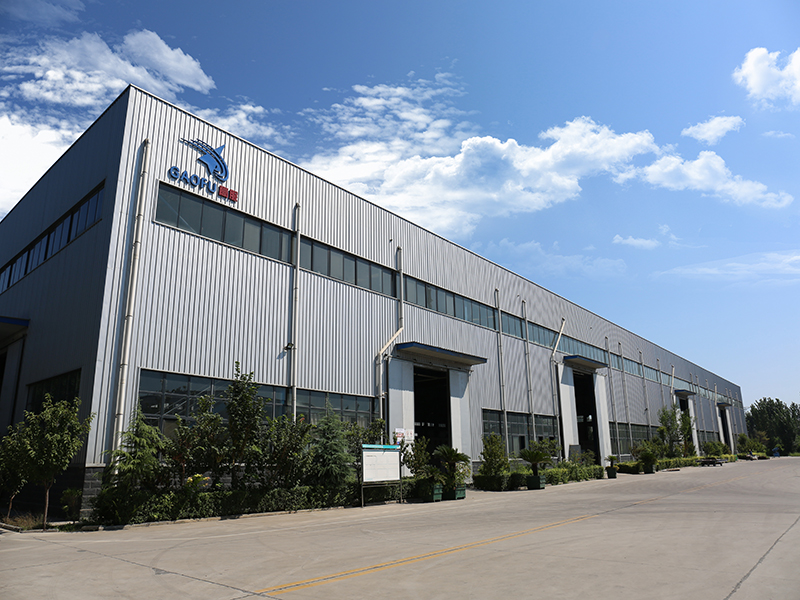
Originated in the 1980s, Xinxiang Gaofu Machinery Co., Ltd. has developed into a leading enterprise after more than 40 years of steady development. The company holds authoritative national qualifications including National-level Specialized, Refined, Unique and Innovative Little Giant Enterprise, National Green Factory, National High-tech Enterprise, and National Intellectual Property Advantage Enterprise, and acts as the President Unit of the Vibration Industry Association.
It has established three provincial and municipal R&D platforms: Henan Provincial Industrial Design Center, Henan Provincial Engineering Technology Research Center for Intelligent On-line Screening System, and Xinxiang Municipal Fine Screening Engineering Technology Research Center. Up to now, Gaofu has obtained more than 500 patents covering invention, utility model and design. It has been awarded the Science and Technology Achievement Prize by the Ministry of Industry and Information Technology of China and has participated in drafting and formulating 4 national standards.
Gaofu’s product portfolio covers multiple series and hundreds of specifications, mainly including vibrating screening equipment, conveying equipment and intelligent automatic material handling systems. We provide one-stop overall solutions such as automatic feeding systems, powder supply systems, pneumatic conveying systems, metering and weighing systems, batching systems, micro-ingredient batching systems, water supply systems, oil supply systems, fluid conveying systems, central kitchen powder supply systems, powder conveying systems and feeding systems.
In terms of food production lines, our mature supporting systems cover two major categories: baking production lines and pasta production lines. The baking series includes production lines for bread, cake, crisp cake, croissant, toast, pizza, biscuit and hamburger. The pasta series includes intelligent production lines for steamed buns, stuffed buns, twisted rolls, sesame paste cakes, steamed dumplings, boiled dumplings, fried dough sticks and pies.
Gaofu products sell well across Greater China and are exported to more than 100 countries and regions worldwide, including Russia, Canada, the United States, New Zealand, Japan, Brazil and South Africa. Widely applied in food, pharmaceutical, chemical, metallurgical, building materials, mining, thermal power, environmental protection and other industries, our products have won the trust and recognition of over 10,000 global customers.
Adhering to the corporate mission of improving material quality and efficiency to meet customer needs, Gaofu has long-term stable cooperative relationships with global clients to achieve harmonious and win-win development. At present, Gaofu has become an official qualified supplier of many Fortune Global 500 enterprises, including CNPC, Sinopec, Sinochem Group, China Resources Group, Sinopharm Group, COFCO, China National Building Material, China Aerospace and Jinchuan Group.