

Choosing a Rotary Vibrating Sieve for Salt: What Processors Should Consider Before Equipment Selection
Post Date: 2026-09-16
Selecting screening equipment for salt processing involves more than choosing a machine based on its name or nominal capacity. Different salt products can have different particle-size distributions, moisture conditions, production requirements, and handling characteristics. The processing environment can also place specific requirements on equipment materials, cleaning, installation, and maintenance.
A Rotary vibrating sieve can be considered for salt screening, classification, and particle-size separation applications. Before purchasing equipment, processors can evaluate the complete operating situation and communicate the relevant technical information to the equipment supplier.
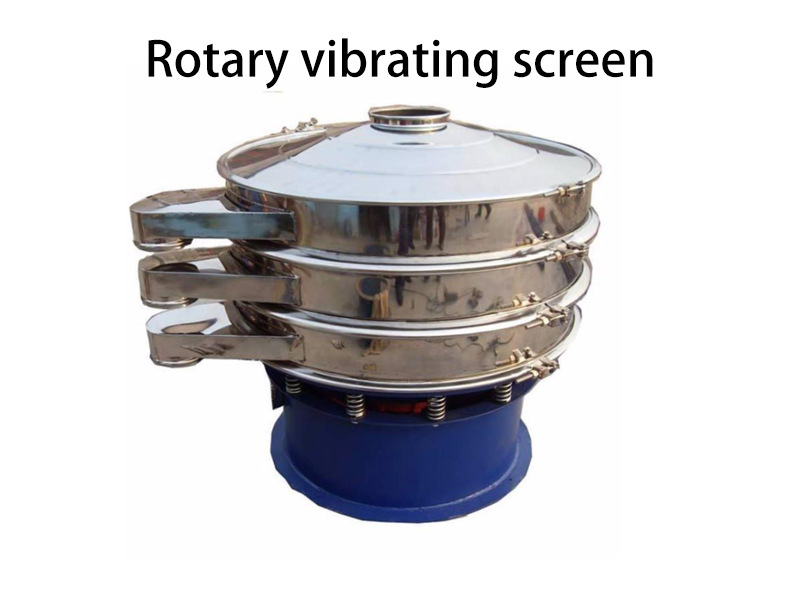
A structured selection process can help establish whether a particular machine configuration is appropriate for the intended application.
1. Define the Actual Screening Objective
The first step is to identify what the Rotary vibrating sieve needs to accomplish.
Salt-processing applications may involve different objectives, such as:
- Removing oversized salt crystals
- Separating fine and coarse fractions
- Producing a defined particle-size range
- Screening material before blending
- Removing unwanted particles from a product stream
- Preparing salt for packaging or further processing
These applications do not necessarily require the same machine configuration.
For example, simple oversize removal may involve one screening stage, while multi-fraction classification may require several screening decks with different mesh specifications.
Clearly defining the screening objective provides a useful starting point for subsequent equipment selection.
2. Provide Representative Salt Samples
Material testing can be particularly useful when selecting screening equipment.
Salt can differ in particle size, shape, moisture, bulk density, and flow characteristics. Two products described generally as “salt” may therefore behave differently during screening.
When discussing a project with a supplier, processors can provide information such as:
- Typical particle-size distribution
- Bulk density
- Moisture content
- Feed temperature
- Product composition
- Expected percentage of oversize material
- Target particle-size range
Where practical, representative material samples can provide additional information for equipment evaluation.
Testing under realistic conditions can help determine whether the proposed screen configuration and operating conditions correspond with the intended application.
3. Determine the Required Processing Capacity
Capacity is another important consideration.
Processors should distinguish between the desired production output and the amount of material that actually needs to pass through the screening machine per unit of time.
Capacity requirements may vary according to:
- Hourly production
- Operating hours per shift
- Number of production shifts
- Batch size
- Feed consistency
- Number of screening fractions
- Upstream and downstream equipment
A machine should not simply be selected because its nominal capacity appears suitable. Actual screening capacity can depend on the material and operating conditions.
The required capacity should therefore be discussed together with the salt characteristics and screening objective.
4. Consider the Required Number of Screening Layers
The number of screening fractions can influence the Rotary vibrating sieve configuration.
If the process only requires coarse-particle removal, a simpler arrangement may be appropriate.
If the process needs several particle-size fractions, multiple screening decks can be considered.
For example:
Salt Feed → Coarse Separation → Intermediate Classification → Fine Fraction
Each screening deck can use a different mesh specification according to the desired separation.
The number of layers should be determined by the actual product specification rather than selecting additional decks without a defined process requirement.
5. Evaluate Mesh Specifications Carefully
Mesh selection is closely related to the target particle-size range.
Before ordering a Rotary vibrating sieve, processors should communicate the desired cut size or particle-size distribution rather than simply requesting a particular mesh without explaining the application.
Relevant information can include:
- Desired particle-size range
- Maximum allowable oversize
- Minimum target particle size
- Number of fractions
- Required screen material
- Expected feed composition
The relationship between mesh opening and actual separation should also be evaluated using the characteristics of the salt being processed.
6. Review the Machine's Contact Materials
Salt and food ingredients come into contact with the internal components of the screening equipment.
Therefore, the material used for product-contact components should be considered during equipment selection.
Processors may need to evaluate:
- Equipment construction material
- Screen material
- Surface condition
- Sealing materials
- Fasteners and internal components
- Cleaning procedures
For food-processing applications, the equipment should be selected and operated according to the customer's hygiene standards and applicable regulations.
The exact material specification should be confirmed with the equipment supplier based on the intended product and processing environment.
7. Consider Cleaning and Product Changeover
A salt-processing facility may handle different grades or products on the same production line.
If product changeovers occur frequently, cleaning accessibility becomes an important equipment-selection factor.
Before purchasing a Rotary vibrating sieve, processors can consider:
- How the screen is removed
- Access to internal areas
- Cleaning method
- Inspection access
- Potential material-retention areas
- Time required for routine cleaning
- Procedures for changing between products
The appropriate cleaning approach depends on the customer's production standards and sanitation procedures.
A machine that is convenient to inspect and clean may be easier to incorporate into an established maintenance and sanitation program.
8. Check Installation Space Before Ordering
Available factory space can influence equipment selection.
Before confirming a Rotary vibrating sieve, processors should review:
- Overall machine dimensions
- Inlet height
- Outlet positions
- Required maintenance clearance
- Floor space
- Available vertical space
- Nearby equipment
- Operator access
It is also useful to consider how the machine will be installed, inspected, and serviced after commissioning.
Early dimensional confirmation can help reduce the possibility of conflicts with existing production equipment.
9. Evaluate the Feeding Arrangement
The Rotary vibrating sieve needs a suitable material supply arrangement.
The feeding equipment may involve a hopper, conveyor, feeding device, storage system, or other upstream equipment depending on the production line.
Processors should provide information about:
- Material source
- Feed height
- Expected feed rate
- Feeding method
- Available connection points
- Upstream equipment
- Required enclosure or containment
The feeding arrangement should be compatible with the screening machine's inlet and operating requirements.
10. Consider the Discharge Requirements
The screening process produces one or more material streams that need to be collected or transferred.
Before selecting the machine, processors can determine where each fraction needs to go.
For example:
Screened Salt → Collection Hopper → Conveying → Blending or Packaging
The discharge configuration can then be evaluated according to the downstream process.
Important considerations may include outlet position, discharge direction, collection equipment, conveying connections, and available installation space.
11. Review Dust-Control Requirements
Fine salt particles may become airborne during feeding, screening, and discharge.
If dust containment is relevant to the production environment, processors should communicate this requirement before equipment selection.
Potential considerations include:
- Enclosed screening
- Sealed connections
- Cover configuration
- Dust collection interfaces
- Material-transfer points
- Cleaning procedures
Where combustible dust hazards may be relevant, the complete installation should be evaluated according to material properties, site conditions, applicable regulations, and appropriate safety assessments.
Any explosion-protection requirements should be discussed during the engineering stage rather than added without considering the complete system.
12. Think About Maintenance Requirements
A Rotary vibrating sieve contains mechanical and screening components that require inspection and maintenance.
Before purchasing equipment, customers can ask about:
- Screen replacement procedures
- Routine inspection points
- Vibration-related components
- Seal inspection
- Fastener checks
- Lubrication requirements where applicable
- Recommended maintenance intervals
- Spare-part availability
Understanding these requirements before installation can help operators prepare suitable maintenance procedures and spare-parts planning.
13. Consider Future Changes in Production
Equipment selection is often based on current requirements, but production conditions can change.
Processors may later introduce:
- Different salt grades
- New particle-size specifications
- Higher production requirements
- Additional screening fractions
- New downstream equipment
- Different cleaning procedures
If such changes are reasonably expected, they can be discussed with the supplier before finalizing the machine configuration.
A flexible equipment arrangement may provide additional options for future adjustments, although unnecessary oversizing or excessive complexity should also be avoided.
14. Ask the Supplier for a Complete Technical Proposal
A useful equipment proposal should address more than the machine model.
When evaluating a Rotary vibrating sieve, processors can ask suppliers to clarify:
- Recommended machine configuration
- Screening layers
- Screen specifications
- Material-contact construction
- Approximate capacity under stated conditions
- Inlet and outlet arrangement
- Installation dimensions
- Cleaning and maintenance requirements
- Available customization
- Required operating conditions
Providing complete application information allows the supplier to develop a more relevant proposal.
15. Gaofu Machinery Rotary Vibrating Sieve for Salt Applications
Gaofu Machinery provides Rotary vibrating sieve equipment for granular and powder screening applications, including food-processing materials such as salt.
The equipment configuration can be evaluated according to the customer's material characteristics, screening objective, production capacity, particle-size requirements, installation conditions, and hygiene considerations.
Depending on the project, Gaofu can discuss screening layers, mesh specifications, material-contact components, discharge arrangements, and other configuration details.
Gaofu Machinery also provides equipment manufacturing, customization, installation support, and after-sales service for customers developing screening and material-processing systems.
Conclusion
Choosing a Rotary vibrating sieve for salt processing should begin with a clear understanding of the material and production requirements.
Processors can evaluate the screening objective, salt characteristics, capacity, mesh specifications, number of screening layers, contact materials, cleaning requirements, installation space, feeding and discharge arrangements, dust-control needs, and maintenance considerations before placing an equipment order.
Providing these details to the supplier can make the equipment-selection process more structured and help establish a configuration that corresponds with the actual production environment.
For salt-processing applications, Gaofu Machinery can work with customers to evaluate these technical factors and develop a Rotary vibrating sieve configuration based on the specific application requirements.