

Common Material Flow Challenges in Flour Sieve Lines and Feeding System Solutions to Consider
Post Date: 2026-09-15
In flour processing and food powder production, stable material flow is an important consideration for maintaining an organized screening process. A flour sieve can separate particles according to the selected screening requirements, but the overall performance of the line also depends on how material reaches the screening equipment.
When flour or food powders move unevenly, several practical problems may appear. Material may accumulate inside a hopper, form a bridge above an outlet, discharge intermittently, or enter the flour sieve in irregular quantities. These conditions can make the screening process more difficult to control and may increase the need for operator intervention.
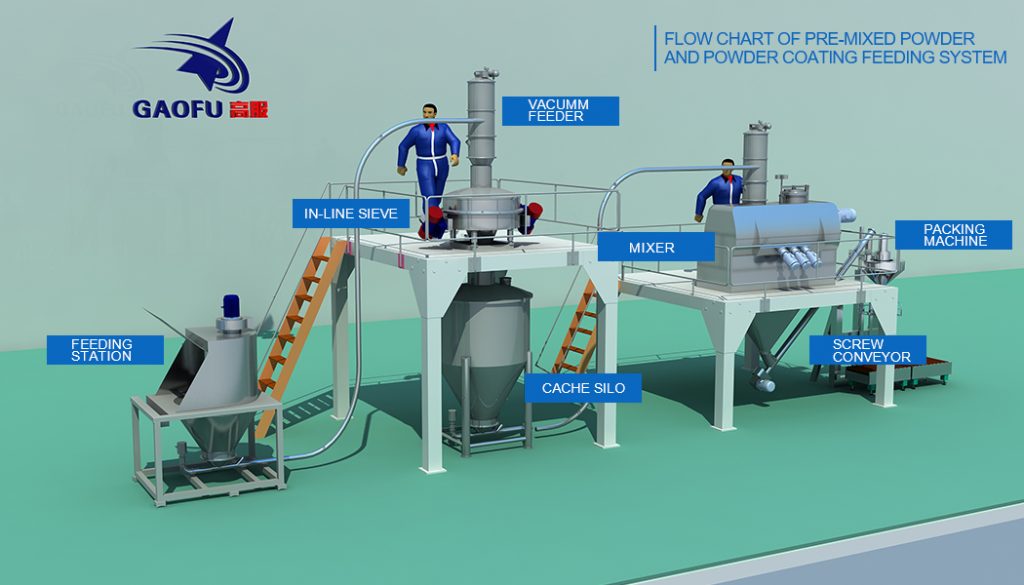
A properly considered Feeding system can help address these material-flow challenges by providing a controlled route from material storage or loading equipment toward the flour sieve. The appropriate configuration should be selected according to material properties, production requirements, equipment layout, hygiene conditions, and applicable safety standards.
1. Irregular Material Discharge
One common challenge is inconsistent discharge from the material storage or feeding section. Instead of flowing at a relatively stable rate, flour may leave the hopper in intermittent surges.
Several factors can contribute to this situation, including hopper geometry, material characteristics, moisture variation, powder cohesion, and outlet design.
A Feeding system can be configured to regulate how material leaves the storage section before entering the flour sieve. Depending on the application, the system may incorporate suitable conveying or feeding components to create a more predictable material route.
The objective is not necessarily to maintain one fixed feeding rate under every condition. Rather, the Feeding system should be designed around the actual operating range of the production line.
2. Powder Bridging Above the Outlet
Some flour and food powders can develop arches or bridges inside a hopper. When this happens, material above the outlet may temporarily stop moving even though sufficient powder remains in the hopper.
This can create a cycle of interruption followed by sudden discharge. Such behavior may affect downstream screening stability.
When designing a Feeding system, engineers can consider hopper dimensions, outlet geometry, material flow characteristics, and the relationship between the storage volume and discharge mechanism.
Where appropriate, additional flow-assistance measures may also be considered. The specific solution should be determined through material testing and site conditions rather than relying on one configuration for every powder.
3. Material Accumulation in Transfer Sections
Transfer sections between equipment can become potential accumulation points when the geometry is not well matched to the material.
For flour and fine food powders, small changes in elevation, connection geometry, or internal surfaces may influence how easily material moves through the system.
A Feeding system should therefore consider the complete material path rather than only the feeding device itself.
Smooth transitions, accessible inspection points, appropriate internal dimensions, and practical cleaning access can help reduce unnecessary material retention. These considerations are particularly relevant where frequent product changeovers or sanitation procedures are required.
4. Sudden Material Surges
Another challenge occurs when accumulated powder is released suddenly. A large amount of material may enter the flour sieve within a short period.
This can change the loading conditions on the screening surface and may make the process less consistent than a controlled feed.
A suitable Feeding system can use a buffer or controlled discharge arrangement where required. The purpose is to moderate material delivery according to the capacity and operating requirements of the flour sieve.
For a new production line, the relationship between storage capacity, feeding capacity, sieve capacity, and downstream handling should be evaluated together.
5. Powder Flowability Changes
Flour is not always identical from one production condition to another. Variations in particle size, moisture content, temperature, formulation, and storage time can influence flow behavior.
Food powders containing starch, protein, sugar, or other ingredients may also have different flow characteristics.
For this reason, Feeding system selection should not rely solely on the material name. A more useful evaluation considers:
- Bulk density
- Particle size distribution
- Moisture content
- Flowability
- Cohesion
- Powder temperature
- Required feeding capacity
- Batch or continuous operation
- Cleaning and changeover requirements
This approach allows the Feeding system configuration to be matched more closely with the actual application.
6. Feeding Problems During Start-Up and Shutdown
Material flow can behave differently during equipment start-up and shutdown than during normal operation.
If upstream material begins moving before the flour sieve reaches its intended operating condition, unnecessary accumulation may occur. Similarly, stopping downstream equipment without considering the remaining material in the Feeding system can leave powder inside the process route.
A coordinated operating sequence can therefore be useful.
Depending on the production line, the control strategy may consider:
Material Supply → Feeding System → Flour Sieve → Collection
The exact sequence should be adapted to the equipment configuration and process requirements. Interlocks, sensors, alarms, or manual operating procedures may be considered according to the level of automation required.
7. Uneven Feeding Caused by Material Storage Conditions
Storage conditions can also influence powder flow. Flour stored for different periods may exhibit changes in bulk behavior, particularly when exposed to humidity or temperature fluctuations.
A Feeding system can be designed with suitable storage-to-discharge interfaces to accommodate the expected operating conditions.
For example, the system may need to consider:
- Hopper shape and volume
- Outlet position
- Feeding direction
- Powder residence time
- Inspection access
- Cleaning requirements
- Environmental conditions around the equipment
These details can have a practical influence on whether material moves smoothly toward the flour sieve.
8. Excessive Operator Intervention
When material flow is not adequately controlled, operators may need to repeatedly inspect hoppers, adjust feeding components, or manually deal with interruptions.
A well-planned Feeding system can reduce unnecessary manual handling by providing a more structured material route and allowing operators to monitor key process conditions.
The appropriate level of automation depends on production scale, material characteristics, labor arrangements, and the customer's process-control requirements. Manual, semi-automatic, and automated configurations may all be considered for different applications.
9. Managing Dust During Powder Transfer
Flour and other fine food powders can generate airborne particles during loading, transfer, and discharge. Dust management is therefore an important consideration when designing a Feeding system.
Enclosed transfer routes, suitable sealing arrangements, dust collection interfaces, and properly designed connection points can help reduce uncontrolled powder release.
For facilities handling combustible dust, the complete system should also be evaluated according to applicable local regulations, equipment requirements, and site-specific safety assessments. Explosion-protection measures should be selected based on the actual material and operating environment.
10. Designing the Feeding System Around the Flour Sieve
A Feeding system should not be treated as an isolated component. Its configuration should correspond with the requirements of the flour sieve and the rest of the production line.
Key questions during project evaluation may include:
- What type of flour or food powder will be handled?
- What is the required feeding capacity?
- Is the process batch-based or continuous?
- How much buffer capacity is required?
- What are the available installation dimensions?
- How frequently will the system be cleaned or changed over?
- What level of dust containment is required?
- What monitoring or control functions are needed?
- What are the applicable food-hygiene and safety requirements?
Answering these questions before equipment selection can help reduce mismatches between the feeding section and screening section.
11. Feeding System Solutions from Gaofu Machinery
Gaofu Machinery provides Feeding system solutions for powder-processing applications where controlled material handling is required before screening.
The system can be considered for different material-loading and conveying arrangements, with configuration determined according to the customer's material characteristics, processing requirements, equipment layout, and operating conditions.
For flour and food powder applications, particular attention can be given to material-contact components, transfer routes, cleaning access, dust-management requirements, and the connection between feeding and screening equipment.
Gaofu Machinery integrates equipment manufacturing, technical design, customization, installation support, and after-sales service, providing a coordinated approach for customers developing fine screening systems.
Conclusion
Material-flow challenges in flour sieve lines can originate from many factors, including powder cohesion, hopper geometry, storage conditions, transfer design, feeding surges, and changes in material properties.
A suitable Feeding system can provide a more organized material route and help coordinate material delivery with the requirements of the flour sieve. However, the appropriate configuration should always be determined by the specific material, capacity, layout, hygiene requirements, and operating conditions.
For flour mills, food manufacturers, and powder-processing facilities, evaluating material flow at the system-design stage can provide a practical foundation for building a reliable and maintainable screening process.