

Designing a Flexible Feeding System for Flour Sieve Applications in Modern Flour and Food Processing
Post Date: 2026-09-15
Modern flour mills and food-processing facilities often handle more than one product, production format, or processing requirement. As product portfolios expand, the material-handling equipment connected to a flour sieve may also need to accommodate changing production conditions.
A flexible Feeding system can provide a practical approach to these changing requirements. Rather than designing the feeding section around only one fixed production condition, engineers can consider modular equipment configuration, adjustable connections, multiple material sources, cleaning requirements, and future production changes.
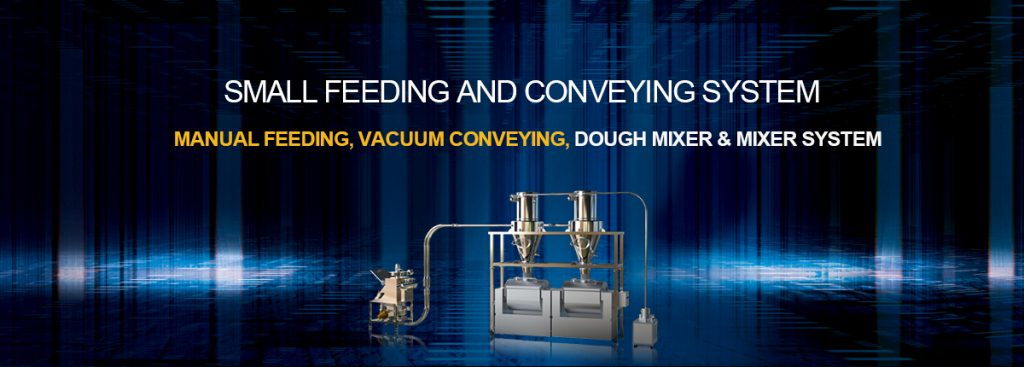
For flour and food powder applications, flexibility should not mean adding unnecessary equipment. Instead, the Feeding system should provide the functions required by the process while allowing reasonable adjustment when materials, capacities, or production arrangements change.
1. Why Flexibility Matters in Flour Processing
A flour-processing facility may manufacture different grades or formulations of flour, while food manufacturers may handle starch, sugar, protein powder, cocoa powder, milk powder, and other powdered ingredients.
Each material can have different flow characteristics and handling requirements.
Production schedules can also change. A facility may operate one product for several hours and then switch to another product. In other cases, production capacity may increase as a business expands.
A fixed feeding arrangement designed around one operating condition may therefore become less convenient when production requirements change.
A flexible Feeding system can be designed with these potential changes in mind from the beginning.
2. Modular Configuration for Different Production Requirements
One way to improve system flexibility is through modular equipment design.
Depending on the application, a Feeding system may include different combinations of:
- Feed hoppers
- Conveying equipment
- Feeding devices
- Valves and discharge components
- Flexible connections
- Dust-control interfaces
- Inspection and cleaning access
- Control components
The specific combination should be selected according to the process rather than applying the same configuration to every project.
A modular approach can also make it easier to evaluate future modifications. If a customer later needs a different material source, feeding capacity, or equipment arrangement, certain sections may be redesigned without necessarily replacing the entire process line.
3. Supporting Multiple Powder Materials
Flexibility is particularly relevant when one production facility handles several food powders.
For example, a Feeding system may be required to handle different combinations of flour, starch, sugar, protein powder, or other powdered ingredients.
Material properties should be evaluated before selecting the feeding configuration. Important factors can include:
- Particle size
- Bulk density
- Moisture content
- Flowability
- Cohesiveness
- Temperature
- Feeding capacity
- Cleaning requirements
The system can then be configured around the characteristics of the materials expected to be processed.
This approach helps avoid treating all powders as though they behave identically.
4. Flexible Connection with Flour Sieves
The connection between the Feeding system and flour sieve is another area where flexibility can be considered.
Production equipment may have different inlet positions, installation heights, or available floor space. A feeding arrangement designed without considering these differences may require unnecessary modifications during installation.
Flexible connections and suitable transition sections can provide additional design options when equipment needs to be positioned differently.
However, connection design should still maintain appropriate sealing, accessibility, material flow, and cleaning conditions.
The objective is to provide installation flexibility without creating unnecessary accumulation areas or difficult-to-clean structures.
5. Adapting to Different Production Capacities
Production capacity can change as a facility introduces new products or adjusts operating schedules.
A Feeding system should therefore be evaluated according to both current requirements and realistic future needs.
For example, engineers may consider whether the system needs to support:
- Different operating rates
- Longer production cycles
- Multiple production shifts
- Increased material storage
- Additional screening equipment
- Future equipment expansion
This does not mean that every Feeding system needs oversized equipment. Excess capacity can increase equipment cost and occupy valuable production space.
A better approach is to identify the expected operating range and select a configuration that provides suitable flexibility within that range.
6. Designing for Product Changeovers
Food-processing facilities may need to change from one powder product to another. During these transitions, cleaning and inspection become important parts of the operating procedure.
A flexible Feeding system can incorporate practical access points for inspection and cleaning.
Design considerations may include:
- Accessible material-contact areas
- Removable components where appropriate
- Reduced powder-retention zones
- Suitable surface finishes
- Convenient inspection openings
- Logical equipment arrangement
The specific sanitary requirements should follow the customer's product standards and applicable regulations.
For facilities processing several products, these details can influence how easily the Feeding system can be incorporated into routine changeover procedures.
7. Flexible Layout for Different Factory Spaces
Not every flour or food-processing facility has the same building structure.
Some installations have considerable vertical space but limited floor area. Others may require a compact horizontal arrangement because of existing equipment, structural limitations, or production-line positioning.
A flexible Feeding system can be designed around the available installation environment.
Engineers may evaluate:
Material Source → Feeding Equipment → Flour Sieve → Collection or Next Process
The arrangement can then be adjusted according to equipment height, transfer distance, maintenance access, operator movement, and available space.
Early layout evaluation can help reduce installation conflicts and provide better access to equipment that requires inspection or maintenance.
8. Preparing for Future Production Changes
Equipment selection is often based on today's production requirements, but a processing facility may operate for many years.
Future changes could include:
- Additional product varieties
- Different powder formulations
- Increased production volume
- Additional flour sieve units
- New material sources
- Revised packaging systems
- Higher levels of process monitoring
A Feeding system designed with reasonable expansion options may provide more adaptability when these changes occur.
For example, connection locations, structural space, control interfaces, and material-transfer routes can be considered during the initial engineering stage.
Planning for potential expansion does not require predicting every future requirement. It means identifying realistic changes that may influence equipment configuration.
9. Balancing Flexibility with Simplicity
A flexible system should still remain practical.
Adding too many valves, transfer points, sensors, or unnecessary components can increase installation complexity and create additional maintenance requirements.
Therefore, system designers should distinguish between useful flexibility and unnecessary complexity.
A practical Feeding system should aim to provide:
- Appropriate material handling
- Reasonable configuration flexibility
- Convenient inspection
- Practical cleaning access
- Maintainable components
- Compatibility with the flour sieve
- Suitable space utilization
The final design should reflect the actual production process rather than adding features simply because they are technically available.
10. Flexibility for Semi-Automatic and Automated Lines
Different customers have different levels of process automation.
Some facilities may prefer straightforward operator-controlled feeding, while others may require a more automated production arrangement.
A Feeding system can be configured according to the desired operating method.
For automated applications, suitable sensors, control interfaces, alarms, and equipment-status signals may be incorporated where required. For simpler applications, a more straightforward configuration may be appropriate.
The important consideration is that the Feeding system should match the customer's production management approach instead of introducing unnecessary control complexity.
11. Hygiene and Safety Considerations
Flexibility should not compromise hygiene or safety.
When handling flour and food powders, material-contact surfaces, cleaning access, sealing arrangements, and product-changeover procedures should be considered during system design.
For facilities handling combustible powders, dust-related risks should also be evaluated according to the material properties, installation environment, applicable regulations, and site-specific safety requirements.
If explosion-protection measures are necessary, they should be selected as part of the complete system design rather than treated as an independent equipment option.
12. Gaofu Machinery Feeding System Solutions
Gaofu Machinery develops Feeding system solutions for powder-processing and screening applications.
The system configuration can be customized according to material characteristics, feeding requirements, equipment arrangement, production conditions, and customer-specific installation needs.
For flour and food-processing applications, Gaofu can consider the relationship between material loading, feeding, screening, collection, cleaning, and subsequent processing when developing an overall equipment arrangement.
With capabilities covering equipment manufacturing, customization, installation support, and after-sales service, Gaofu Machinery provides a coordinated approach for customers developing feeding and fine-screening systems.
Conclusion
Flexibility is becoming an important consideration for flour and food-processing equipment as manufacturers handle diverse products and changing production requirements.
A flexible Feeding system can be designed around multiple powder characteristics, variable production conditions, different factory layouts, product changeovers, and potential future expansion. At the same time, flexibility should be balanced with system simplicity, maintenance access, hygiene, and safety.
For a flour sieve application, the most suitable configuration depends on the customer's material, capacity, layout, operating procedures, and applicable requirements. Careful engineering at the beginning of a project can help create a Feeding system that remains practical as production needs evolve.