

Design Considerations for Integrating a Rotary Vibrating Sieving Machine into a Powder Processing Line
Post Date: 2026-08-06
Introduction
When planning a modern powder processing facility, equipment selection is only one part of the engineering process. The way each machine connects with upstream and downstream systems can significantly influence material flow, production efficiency, maintenance accessibility, and future expansion possibilities. A Rotary vibrating sieving machine is often installed between material receiving, conveying, mixing, storage, and packaging stages, making its integration strategy an important aspect of overall line design.
Unlike standalone screening operations, integrated production lines require careful consideration of material characteristics, conveying methods, installation space, automation requirements, and cleaning procedures. The goal is not simply to add a screening machine, but to create a coordinated powder handling system that supports the specific needs of the production process.
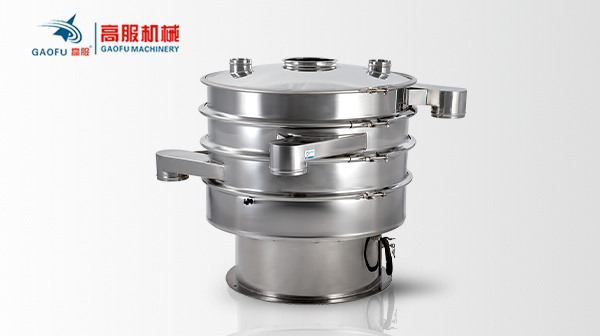
The Gaofu Rotary Vibrating Sieve is designed for flour, starch, food ingredients, dairy powders, protein powders, and other fine materials. With flexible inlet and outlet configurations, multiple screen deck options, and compatibility with automated conveying systems, it can be adapted to a wide range of powder processing applications. This article focuses on the engineering considerations involved in integrating a rotary vibrating sieving machine into a complete production line.
Understanding the Role of Screening in a Process Line
In many powder manufacturing facilities, screening serves as a transition point between raw material handling and downstream processing.
A typical production sequence may include:
Raw Material Receiving → Feeding System → Vacuum Feeder → Rotary Vibrating Sieve → Mixer → Storage Silo → Packaging Equipment
Within this workflow, the screening machine may perform functions such as:
- Particle size classification
- Separation of oversized particles
- Removal of agglomerates
- Preparation of materials for mixing or packaging
- Support for internal process control procedures
Because the screening stage interacts with multiple pieces of equipment, integration planning should begin during the early stages of production line design.
Define the Process Objective First
Before selecting a machine configuration, manufacturers should clearly define the purpose of the screening stage.
Common objectives include:
Safety Screening
Installed before packaging or mixing to separate larger unwanted particles.
Particle Classification
Used to produce specific particle size ranges for different product grades.
Process Conditioning
Applied after storage to break up small agglomerates and restore powder flowability.
Multi-Stage Separation
Designed to generate multiple particle fractions within a single operation.
The intended function influences screen selection, number of decks, discharge arrangement, and system layout.
Evaluate Material Characteristics
Successful integration begins with understanding the powder being processed.
Key properties include:
- Particle size distribution
- Bulk density
- Moisture content
- Flowability
- Cohesion
- Abrasiveness
- Tendency to generate dust
These characteristics affect not only screening performance but also feeding methods, conveying equipment, and hopper design. Materials with different flow behaviors may require different inlet configurations or feed control strategies.
Select an Appropriate Feeding Method
The performance of a rotary vibrating sieve is closely related to the stability of material feeding. During line design, engineers typically evaluate how powder will enter the machine.
Possible feeding methods include:
Gravity Feeding
Suitable when upstream equipment is positioned above the screening machine.
Vacuum Conveying
Often used for enclosed powder transfer and automated production lines.
Screw Conveying
Applicable for controlled material delivery from storage bins or process vessels.
Manual Feeding Stations
Common in smaller production facilities or multi-product operations.
Maintaining a consistent feed rate helps distribute material evenly across the screen surface and supports stable operation.
Consider Inlet and Outlet Orientation
One advantage of a rotary vibrating sieve is the flexibility of its discharge arrangement. During integration, engineers should consider:
- Available floor space
- Direction of material flow
- Position of downstream equipment
- Maintenance access requirements
- Future equipment modifications
Proper outlet orientation can reduce unnecessary conveying distances and simplify production line layout.
Plan for Equipment Accessibility
A screening machine requires periodic inspection, screen replacement, and cleaning. Adequate maintenance space should be reserved around the equipment.
Important considerations include:
- Clearance for removing screen frames
- Access to vibration motors
- Space for cleaning operations
- Inspection access to seals and fasteners
- Safe working areas for maintenance personnel
Insufficient maintenance access can increase servicing time and complicate routine operations.
Integrate with Dust Management Systems
Fine powders may generate airborne dust during handling and screening. Depending on the production process, manufacturers may integrate the rotary vibrating sieve with:
- Dust collection interfaces
- Enclosed conveying systems
- Sealed transfer points
- Negative pressure handling systems
Dust management performance depends on the complete production system, ventilation design, housekeeping practices, and maintenance procedures.
Design for Hygienic Operation
Food and pharmaceutical applications often require equipment that supports routine cleaning and sanitation procedures. Manufacturers may consider:
- Stainless steel product-contact components
- Smooth internal surfaces
- Accessible cleaning points
- Reduced product retention areas
- Compatibility with established sanitation protocols
Cleaning procedures should follow the equipment manufacturer's recommendations and applicable industry regulations.
Allow for Future Expansion
Production requirements often change over time. When designing the initial system, manufacturers may consider:
- Additional production capacity
- New product varieties
- Extra screening stages
- Expanded conveying systems
- Additional packaging lines
A modular layout can simplify future equipment additions without major reconstruction of the existing production line.
Features of the Gaofu Rotary Vibrating Sieve
The Gaofu Rotary Vibrating Sieve is designed for powder and fine particle screening in food and related industries.
Flexible Equipment Configurations
Available with different machine diameters, screen deck arrangements, and mesh specifications.
Multiple Discharge Options
Outlet orientation can be configured according to production line layout requirements.
Stainless Steel Product-Contact Components
Food-contact parts can be manufactured using stainless steel materials suitable for hygienic processing applications.
Compact Structural Design
Designed to fit various factory layouts while supporting integration with conveying and processing equipment.
Compatibility with Automated Systems
Can be connected with:
- Feeding Systems
- Vacuum Feeders
- Big Bag Feeding Stations
- Mixers
- Storage Silos
- Packaging Equipment
Equipment specifications and optional configurations vary according to customer requirements.
Fortune 500 Client Testimonials
CNPC、CSCEC、Sinochem Holdings、CRCC、China Minmetals Corporation、CNOOC、CR、Sinopharm、CHN Energy、COFCO Corporation、Huawei Technologies、PowerChina、CITIC Group、Wuchan Zhongda Group、NORINCO、Chalco、CNBM、 Shaanxi Coal and Chemical Industry Group、Ansteel Group、CETC、CSSC、CASC、CEC、Jinchuan Group、CASIC、Conch Cement、CNNC、SPH、Shanxi Coking Coal Group、 Zhongtai Chemical、GPHL、DEC、Sinosteel Corporation、MCC、China National Salt Industry Chemical、China Baowu Steel Group、China Animal Husbandry Industry Co., Ltd.、CECEP
About Gaofu
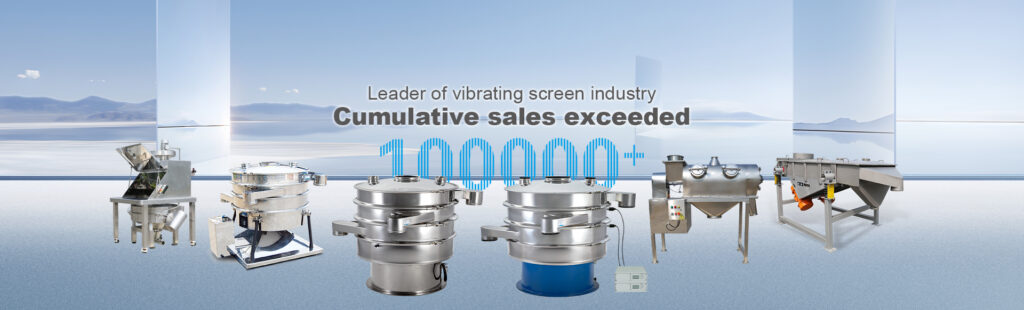
Xinxiang Gaofu Machinery Co., Ltd. was founded back in the 1980s. With over 40 years of development, it has been certified as a National-level Specialized, Refined, Unique & Innovative Little Giant Enterprise, National Green Factory, National High-tech Enterprise, and National Intellectual Property Advantage Enterprise, and serves as the President Unit of China Vibration Screening Industry Association.
The company is accredited with the Henan Provincial Industrial Design Center, Henan Provincial Engineering Technology Research Center for Intelligent On-line Screening System, and Xinxiang Municipal Engineering Technology Research Center for Fine Screening.
Gaofu has obtained more than 500 patents including invention patents, utility model patents and design patents, been awarded the Science and Technology Achievement Prize issued by the Ministry of Industry and Information Technology of China, and participated in drafting and formulating 4 national standards.
Gaofu’s product portfolio covers multiple series and hundreds of specifications, including vibrating screening equipment, conveying equipment, coal crushing equipment, filtration equipment and automatic material handling systems.
Core products include vibrating screens, screening machines, vibratory sifters, rotary vibrating screens, ultrasonic vibrating screens, linear vibrating screens, airflow screens, gyratory screens, roller screens, dewatering screens, bar screens, vacuum feeding machines, dust-free feeding stations, bulk bag feeding stations, feeding systems, automatic powder feeding systems, automatic slag-discharging filters, leaf filters, clay filters, toothed roll crushers, coal crushers and other machinery.
These products are widely applied in food, pharmaceutical, chemical, metallurgy, construction materials, mining, thermal power, environmental protection and many other industries, winning recognition and trust from over 10,000 clients worldwide.
Gaofu products enjoy strong sales across Greater China, and are exported to more than 100 countries and regions such as Russia, Canada, the United States, New Zealand, Japan, Brazil and South Africa.
Upholding the corporate mission of Improving material quality & efficiency to fully satisfy customer demands, Gaofu maintains long-term partnerships with clients to achieve win-win development.
At present, Gaofu is an official qualified supplier for numerous Fortune Global 500 enterprises, including CNPC, Sinopec, Sinochem Holdings, China Resources Group, Sinopharm Group, COFCO, China National Building Material, China Aerospace Science and Technology Corporation, Jinchuan Group and more.
Gaofu Machinery ranks No.1 in global sales volume of vibrating screens.
In May 2024, Frost & Sullivan, a world-renowned international consulting firm, issued a Market Position Verification Certificate confirming that Gaofu achieved the world’s largest shipment volume of vibrating screens in the global market in 2023.