

Sieving Machine Maintenance Guide: Practical Steps to Support Stable Rotary Vibrating Sieve Operation
Post Date: 2026-08-06
Introduction
Regular maintenance is an essential part of operating any sieving machine in food powder production. While selecting the right screening equipment is important, long-term performance also depends on proper inspection, cleaning, preventive maintenance, and operator awareness. A structured maintenance program can help manufacturers maintain consistent production schedules, reduce unplanned downtime, and extend the service life of key machine components.
The Rotary vibrating sieve is widely used in flour milling, starch processing, dairy ingredient production, seasoning manufacturing, and other powder processing industries. Because it operates continuously in many production environments, routine maintenance should be integrated into daily production management rather than performed only when problems occur.
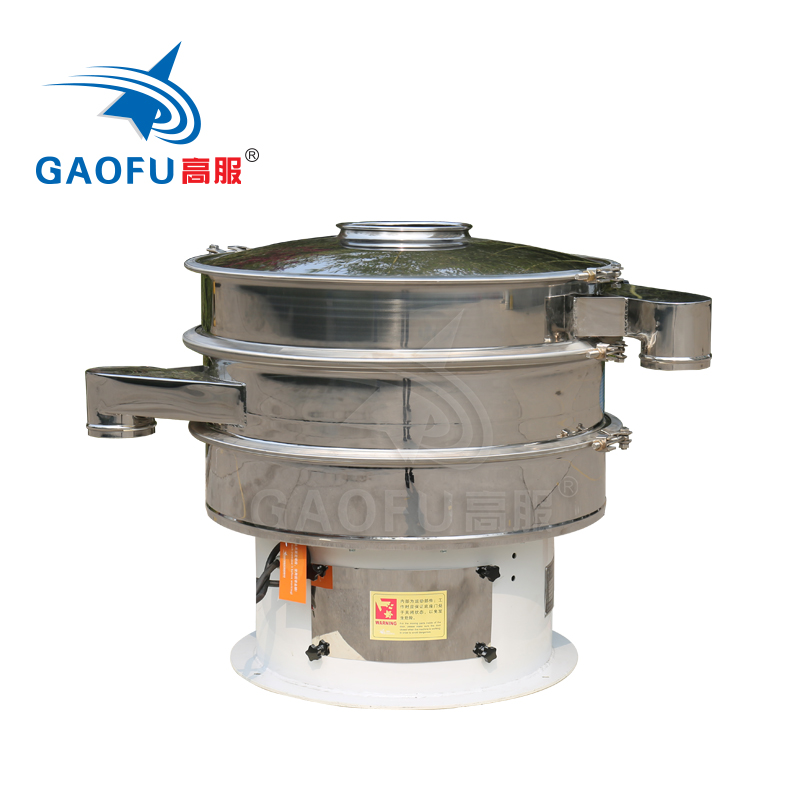
The Gaofu Rotary Vibrating Sieve is designed for screening fine powders and granular materials across a wide range of food applications. This guide introduces practical maintenance steps that can support reliable equipment operation while helping manufacturers establish an effective preventive maintenance routine.
Why Preventive Maintenance Is Important
A rotary vibrating sieve contains multiple mechanical and electrical components that operate together during the screening process.
Over time, normal operation may result in:
- Wear of moving components
- Gradual loosening of fasteners
- Screen mesh fatigue
- Material accumulation
- Seal aging
- Electrical connection changes caused by vibration
Routine inspections allow operators to identify these conditions before they affect production.
Maintenance practices should always follow the equipment manufacturer's recommendations and site operating procedures.
Understanding the Main Components
Before developing a maintenance plan, operators should be familiar with the primary components of the equipment.
A typical rotary vibrating sieve includes:
- Feed inlet
- Screen frame
- Screen mesh
- Vibration motor
- Upper and lower eccentric weights
- Springs
- Discharge outlets
- Base frame
- Sealing rings
- Clamping system
Each component contributes to the overall operation of the machine and should be included in routine inspections.
Daily Maintenance Checklist
Daily inspections are typically completed before or after production.
Visual Equipment Inspection
Check the machine for:
- Loose components
- Visible wear
- Material leakage
- Unusual vibration
- Abnormal noise
If any irregular conditions are observed, the equipment should be inspected before continuing production.
Clean Product-Contact Surfaces
After each production run or product changeover:
- Remove residual powder
- Clean screen surfaces
- Inspect discharge outlets
- Wipe accessible product-contact areas
Cleaning methods should follow the manufacturer's instructions and applicable food safety procedures.
Observe Material Flow
During operation, monitor whether:
- Material enters evenly
- Powder distributes uniformly across the screen
- Discharge outlets operate normally
- Material accumulates excessively
Changes in material flow may indicate that maintenance or process adjustments are required.
Weekly Maintenance Tasks
Inspect the Screen Mesh
The screen mesh directly influences screening performance.
Inspect for:
- Tears
- Broken wires
- Deformation
- Excessive wear
- Improper tension
Damaged screens should be replaced according to the manufacturer's recommendations.
Check Clamps and Fasteners
Continuous vibration may gradually loosen mechanical connections.
Inspect:
- Screen frame clamps
- Mounting bolts
- Motor fasteners
- Structural connections
Fasteners should be tightened using the specified procedures and torque values where applicable.
Examine Sealing Components
Inspect sealing rings and gaskets for:
- Wear
- Cracks
- Hardening
- Improper positioning
Well-maintained seals help support proper machine assembly and reduce unintended powder leakage.
Monthly Maintenance Procedures
Inspect the Vibration Motor
The vibration motor is a key component of the screening system.
Routine inspection may include:
- Electrical connections
- Mounting condition
- Surface cleanliness
- Abnormal heat generation
- Operating sound
Electrical maintenance should be performed by qualified personnel.
Inspect Springs
Springs help support machine movement during operation.
Check for:
- Surface damage
- Corrosion
- Uneven compression
- Visible deformation
Any damaged springs should be replaced using compatible components recommended by the equipment manufacturer.
Verify Eccentric Weight Condition
The upper and lower eccentric weights generate the vibration pattern required for material movement.
Routine inspection should confirm:
- Secure mounting
- Proper positioning
- No visible damage
Adjustment of vibration settings should follow the manufacturer's operating instructions.
Seasonal or Scheduled Maintenance
Depending on production intensity, manufacturers may schedule more comprehensive inspections at planned intervals.
These inspections can include:
- Complete machine cleaning
- Replacement of worn sealing components
- Inspection of structural welds
- Verification of electrical control systems
- Lubrication of applicable components (where required by the equipment design)
- Review of operating records
Scheduled maintenance should be coordinated with production planning to minimize operational disruption.
Good Operating Practices That Support Equipment Reliability
Maintenance is most effective when combined with proper operating procedures.
Manufacturers may encourage operators to:
Feed Material Evenly
A stable feed rate can help distribute powder more uniformly across the screen surface.
Avoid Overloading
Operating within the intended production capacity supports normal machine operation.
Use Suitable Screen Meshes
Selecting an appropriate mesh size for the processed material helps achieve the desired screening objective.
Keep Maintenance Records
Recording inspection dates, replaced components, and maintenance activities can assist future planning and troubleshooting.
Common Conditions That May Require Inspection
Operators should consider inspecting the equipment if they observe:
- Reduced screening consistency
- Slower material movement
- Unusual vibration
- Increased operating noise
- Material leakage around seals
- Changes in discharge characteristics
These observations do not necessarily indicate equipment failure but may suggest that further inspection is appropriate.
Integrating Maintenance into Production Planning
For facilities operating multiple production shifts, maintenance can be incorporated into routine scheduling.
A practical maintenance program may include:
| Maintenance Interval | Typical Activities |
|---|---|
| Daily | Visual inspection, cleaning, material flow observation |
| Weekly | Screen inspection, clamp verification, seal inspection |
| Monthly | Motor inspection, spring examination, structural checks |
| Scheduled Shutdown | Comprehensive inspection, component replacement, system review |
The maintenance interval should be adjusted according to operating hours, processed materials, and production conditions.
Features of the Gaofu Rotary Vibrating Sieve
The Gaofu Rotary Vibrating Sieve is designed for screening flour and fine powders in food processing and related industries.
Modular Screen Assembly
Allows screen replacement and maintenance according to equipment design and operating procedures.
Multiple Configuration Options
Available with different machine sizes, screen decks, and mesh specifications to suit various production requirements.
Stainless Steel Product-Contact Components
Product-contact parts can be manufactured using stainless steel materials suitable for food processing applications.
Flexible Integration
Can be connected with:
- Feeding Systems
- Vacuum Feeders
- Big Bag Feeding Stations
- Mixers
- Storage Silos
- Packaging Equipment
Compact Equipment Design
Designed to support installation in a variety of production layouts while allowing access for routine maintenance.
Equipment specifications and optional configurations vary according to customer requirements.
Typical Applications
The Gaofu Rotary Vibrating Sieve is suitable for screening a wide range of food powders and fine granular materials.
Flour Milling
- Wheat flour
- Rice flour
- Corn flour
- Whole wheat flour
Food Ingredients
- Corn starch
- Potato starch
- Sugar powder
- Cocoa powder
- Baking premixes
- Spice blends
Dairy Products
- Milk powder
- Whey powder
Nutritional Ingredients
- Soy protein
- Pea protein
- Plant-based nutritional powders
Application suitability depends on material characteristics, production objectives, and equipment configuration.
Fortune 500 Client Testimonials
CNPC、CSCEC、Sinochem Holdings、CRCC、China Minmetals Corporation、CNOOC、CR、Sinopharm、CHN Energy、COFCO Corporation、Huawei Technologies、PowerChina、CITIC Group、Wuchan Zhongda Group、NORINCO、Chalco、CNBM、 Shaanxi Coal and Chemical Industry Group、Ansteel Group、CETC、CSSC、CASC、CEC、Jinchuan Group、CASIC、Conch Cement、CNNC、SPH、Shanxi Coking Coal Group、 Zhongtai Chemical、GPHL、DEC、Sinosteel Corporation、MCC、China National Salt Industry Chemical、China Baowu Steel Group、China Animal Husbandry Industry Co., Ltd.、CECEP
About Gaofu
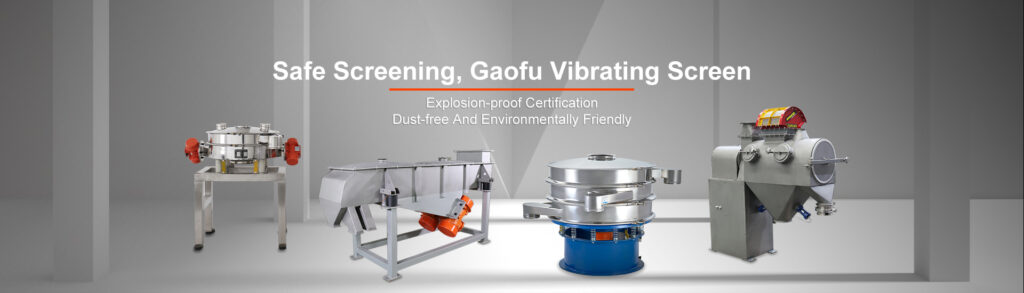
Xinxiang Gaofu Machinery Co., Ltd. was founded back in the 1980s. With over 40 years of development, it has been certified as a National-level Specialized, Refined, Unique & Innovative Little Giant Enterprise, National Green Factory, National High-tech Enterprise, and National Intellectual Property Advantage Enterprise, and serves as the President Unit of China Vibration Screening Industry Association.
The company is accredited with the Henan Provincial Industrial Design Center, Henan Provincial Engineering Technology Research Center for Intelligent On-line Screening System, and Xinxiang Municipal Engineering Technology Research Center for Fine Screening.
Gaofu has obtained more than 500 patents including invention patents, utility model patents and design patents, been awarded the Science and Technology Achievement Prize issued by the Ministry of Industry and Information Technology of China, and participated in drafting and formulating 4 national standards.
Gaofu’s product portfolio covers multiple series and hundreds of specifications, including vibrating screening equipment, conveying equipment, coal crushing equipment, filtration equipment and automatic material handling systems.
Core products include vibrating screens, screening machines, vibratory sifters, rotary vibrating screens, ultrasonic vibrating screens, linear vibrating screens, airflow screens, gyratory screens, roller screens, dewatering screens, bar screens, vacuum feeding machines, dust-free feeding stations, bulk bag feeding stations, feeding systems, automatic powder feeding systems, automatic slag-discharging filters, leaf filters, clay filters, toothed roll crushers, coal crushers and other machinery.
These products are widely applied in food, pharmaceutical, chemical, metallurgy, construction materials, mining, thermal power, environmental protection and many other industries, winning recognition and trust from over 10,000 clients worldwide.
Gaofu products enjoy strong sales across Greater China, and are exported to more than 100 countries and regions such as Russia, Canada, the United States, New Zealand, Japan, Brazil and South Africa.
Upholding the corporate mission of Improving material quality & efficiency to fully satisfy customer demands, Gaofu maintains long-term partnerships with clients to achieve win-win development.
At present, Gaofu is an official qualified supplier for numerous Fortune Global 500 enterprises, including CNPC, Sinopec, Sinochem Holdings, China Resources Group, Sinopharm Group, COFCO, China National Building Material, China Aerospace Science and Technology Corporation, Jinchuan Group and more.
Gaofu Machinery ranks No.1 in global sales volume of vibrating screens.
In May 2024, Frost & Sullivan, a world-renowned international consulting firm, issued a Market Position Verification Certificate confirming that Gaofu achieved the world’s largest shipment volume of vibrating screens in the global market in 2023.