

How a Feeding System Coordinates Material Supply and Sieving Machine Operations in Automated Powder Processing Lines
Post Date: 2026-08-17
Introduction
In an automated powder-processing line, the sieving machine is only one part of the material-handling process. Before screening begins, powder must be supplied from an upstream source, transferred at an appropriate rate, and delivered to the screening equipment according to the production sequence.
A Feeding system provides the connection between material storage or preparation and downstream processing. When integrated with a sieving machine, it can help organize material supply, equipment coordination, and collection into a structured production workflow.
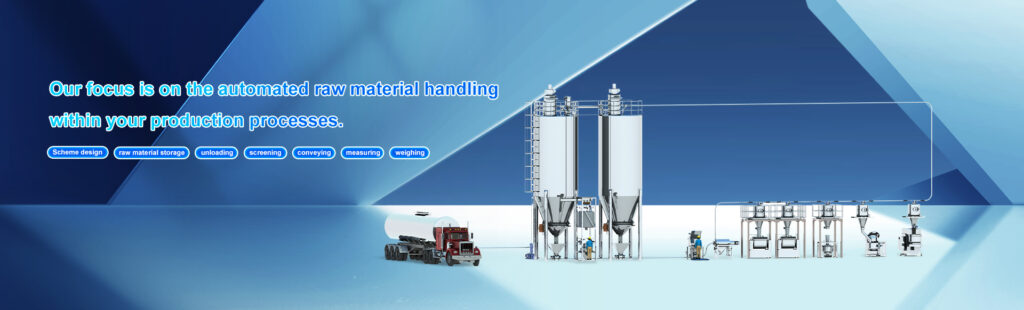
The appropriate configuration depends on material characteristics, production requirements, equipment layout, and applicable hygiene and safety standards. Rather than relying on a single standard arrangement, manufacturers should evaluate the feeding and screening stages as one integrated process.
1. What Role Does a Feeding System Play?
A Feeding system is designed to move or supply material from an upstream source toward the next processing stage.
In a powder-processing line, the basic sequence may be:
Material Storage → Feeding System → Sieving Machine → Collection
The feeding system can include different components depending on the application, such as:
- Feed hoppers
- Conveying equipment
- Feeding valves
- Pipeline connections
- Material-level monitoring devices
- Control components
The specific configuration should be selected according to the production process rather than assuming that every powder requires the same feeding method.
2. Why Coordination Matters in Automated Processing
A production line can contain several independent machines, but the material needs to move through them in a logical sequence.
For example:
Material Available → Feeding → Sieving → Collection
If the feeding stage and screening stage are not properly coordinated, the production line may experience:
- Irregular material supply
- Unnecessary equipment idle periods
- Excessive manual intervention
- Material accumulation at transfer points
- Difficulties during product changeovers
A coordinated Feeding system allows manufacturers to consider these stages together during system design.
3. Start with the Material Supply Source
Before selecting a Feeding system, identify where the powder comes from.
Possible sources include:
Storage Hopper
Hopper → Feeding System → Sieving Machine
This arrangement can be considered when powder is stored in a process hopper.
Big Bag Feeding Station
Big Bag → Feeding Station → Sieving Machine
This approach can connect bulk-bag unloading with downstream screening.
Vacuum Feeder
Storage → Vacuum Feeder → Sieving Machine
A Vacuum Feeder can serve as the conveying component when pneumatic transfer is suitable for the material and process.
Upstream Processing Equipment
Mixer / Grinder / Other Equipment → Feeding System → Sieving Machine
This can be considered when screening is required after another processing operation.
4. Match Material Supply with Screening Requirements
The feeding stage should be evaluated according to the requirements of the downstream sieving machine.
Important questions include:
- How much material needs to enter the screen?
- Is the screening process batch or continuous?
- What type of powder is being handled?
- What is the required screening specification?
- How is screened material collected?
A useful planning relationship is:
Material Availability → Feeding → Sieving → Collection
This helps ensure that the feeding system is not designed independently of the screening stage.
5. Consider the Characteristics of the Powder
Different powders can behave differently during feeding.
Flowability
Free-flowing powders may move easily through a suitable feeding arrangement, while cohesive powders may require additional consideration at the material inlet.
Bulk Density
Bulk density affects the quantity of powder transported within a given volume.
Particle Size
Particle size can influence both feeding behavior and screening requirements.
Moisture
Moisture can change powder flowability and may contribute to agglomeration in certain materials.
Abrasiveness
Abrasive powders may require consideration of wear-resistant contact components and maintenance.
Temperature
The operating temperature of the powder should be considered when selecting the appropriate feeding equipment.
6. Select the Sieving Machine According to the Process
The Feeding system should be connected to a screening machine that matches the material and separation objective.
Rotary Vibrating Sieve
A rotary vibrating sieve can be considered for powder screening, classification, and removal of oversized particles.
A typical arrangement is:
Feeding System → Rotary Vibrating Sieve → Collection
The screen mesh and machine configuration should be selected according to the actual application.
Centrifugal Sifter
A centrifugal sifter can be considered for suitable continuous powder-screening applications.
Ultrasonic Vibrating Screen
For selected fine-powder applications, an ultrasonic-assisted screening configuration may be considered where the material and mesh requirements are appropriate.
Linear Vibrating Screen
A linear vibrating screen can be considered for various bulk-material screening requirements.
The feeding arrangement should match the selected screen's inlet and operating conditions.
7. Coordinate Feeding with the Screening Cycle
Automation becomes particularly useful when feeding and screening operations need to follow a defined sequence.
A representative cycle could be:
Material Available
↓
Feeding System Activated
↓
Material Enters Sieving Machine
↓
Screening Operation
↓
Material Collection
↓
Next Feeding Cycle
The actual control sequence depends on whether the production line operates continuously or in batches.
This type of coordination can help establish a more structured workflow between upstream and downstream equipment.
8. Continuous Powder Processing
For continuous production, the Feeding system may operate as part of an ongoing material supply process.
A representative arrangement is:
Storage → Feeding System → Sieving Machine → Continuous Collection
The system should be evaluated according to:
- Required material supply rate
- Screening capacity
- Storage capacity
- Collection capacity
- Operating schedule
Actual throughput depends on the material and equipment configuration, so nominal equipment capacity should not be interpreted as a guaranteed production result.
9. Batch Powder Processing
Batch production requires a different approach.
A possible workflow is:
Batch Preparation → Feeding → Screening → Collection
The Feeding system may be coordinated with material-level signals or batch-control logic.
For example, the feeding stage can be activated when the receiving equipment is ready for the next batch.
The exact sequence should be developed according to the production process.
10. Consider the Material Transfer Distance
Plant layout has a direct influence on Feeding system design.
Evaluate:
- Horizontal transfer distance
- Vertical transfer distance
- Equipment height
- Pipeline routing
- Number of transfer points
- Maintenance clearance
For example, a production line may have the material source at floor level and the sieving machine on an elevated platform.
The Feeding system should be designed around the actual plant geometry rather than an assumed standard layout.
11. Plan the Feeding System Around Multiple Materials
Some facilities process different powders using the same screening line.
For example:
Material A → Feeding System → Sieving Machine
followed by:
Material B → Feeding System → Sieving Machine
In such cases, consider:
- Material changeover
- Cleaning
- Residual powder
- Screen replacement
- Cross-contamination controls
- Storage identification
The exact procedure depends on the materials and applicable production requirements.
12. Food Powder Processing Applications
Food and ingredient powders may require carefully planned feeding and screening processes.
Potential applications include:
- Flour
- Starch
- Sugar powder
- Cocoa powder
- Protein powder
- Other dry food ingredients
A representative workflow is:
Ingredient Storage → Feeding System → Sieving Machine → Collection
The system design should consider:
Hygienic Material Handling
Product-contact components should be appropriate for the intended application and relevant requirements.
Cleaning Access
Components requiring routine cleaning should remain accessible.
Product Changeover
Where multiple products are processed, appropriate cleaning and changeover procedures should be established.
Powder Residue
The system layout should consider potential accumulation points.
13. Chemical and Industrial Powder Applications
The Feeding system can also be considered for chemical and industrial powder processing.
Potential materials include:
- Mineral powders
- Ceramic powders
- Industrial additives
- Fillers
- Other dry chemical materials
The design should evaluate:
- Material compatibility
- Bulk density
- Flowability
- Particle size
- Abrasiveness
- Temperature
- Special handling requirements
For combustible or hazardous powders, the complete installation should be designed in accordance with applicable safety standards and regulations.
14. Enclosed Material Transfer
Where the process requires a defined powder-transfer route, the Feeding system may incorporate enclosed conveying components.
For example:
Storage → Feeding Equipment → Enclosed Transfer Route → Sieving Machine
Depending on the configuration, this may help reduce the number of open manual transfer points.
However, actual dust containment depends on the complete system, including seals, filters, connections, operating conditions, and material characteristics.
15. Coordinate the Collection Stage
The feeding system should be considered together with the equipment downstream of the sieving machine.
A complete workflow could be:
Storage → Feeding System → Sieving Machine → Fine Material Collection → Further Processing
If oversized particles are separated:
Sieving Machine → Oversized Material Collection
Collection containers, hoppers, or downstream conveying equipment should be incorporated into the original layout.
16. Use Material-Level Signals Where Appropriate
Automated powder processing can incorporate level monitoring at different points.
Possible monitoring locations include:
- Raw-material hopper
- Feeding hopper
- Sieving machine inlet
- Finished-material collection vessel
- Oversized-material container
Signals from these locations can be incorporated into the control system according to the process design.
This can help coordinate when material should be supplied or when a collection vessel requires attention.
17. Integrate Equipment Interlocking
Interlocking can be considered when multiple machines need to operate in a defined sequence.
For example:
Feeding Ready → Sieving Machine Ready → Feeding Starts
Similarly, the system may be configured so that the feeding operation responds to the operating status of downstream equipment.
The exact interlocking strategy depends on the equipment and control architecture.
18. Consider Cleaning and Maintenance During Design
Automation does not remove the need for maintenance.
A practical design should provide access to components that require routine inspection.
Feeding System
Check:
- Feed hopper
- Valves
- Seals
- Conveying components
- Sensors
Sieving Machine
Check:
- Screen mesh
- Screen frame
- Inlet
- Discharge
- Operating components
Transfer Route
Inspect:
- Connections
- Sealing points
- Material accumulation
- Physical condition
Maintenance intervals should follow equipment recommendations and actual operating conditions.
19. Plan for Production Flexibility
A Feeding system may need to support changes in:
- Material type
- Batch size
- Production rate
- Screening specification
- Operating schedule
For facilities with variable production requirements, the feeding and screening stages should be evaluated for compatibility across the intended operating range.
This can be particularly relevant when one sieving machine serves several products.
20. Practical System Design Example
Consider a flour-processing line.
Stage 1: Storage
Flour is stored in a hopper.
Stage 2: Material Feeding
The Feeding system transfers flour toward the screening equipment.
Stage 3: Screening
A suitable sieving machine separates material according to the selected screen specification.
Stage 4: Collection
The screened flour enters a collection vessel.
Stage 5: Further Processing
The flour continues to mixing, packaging, or another downstream operation.
The simplified workflow is:
Flour Storage → Feeding System → Sieving Machine → Collection → Further Processing
The exact equipment configuration should be determined from the flour properties and production requirements.
21. Gaofu Feeding System for Integrated Screening Lines
The Gaofu Feeding System can be considered for powder-processing lines where controlled material supply is required before screening.
Depending on the application, a feeding solution may be integrated with:
- Rotary Vibrating Sieves
- Centrifugal Sifters
- Ultrasonic Vibrating Screens
- Linear Vibrating Screens
- Vacuum Feeders
- Big Bag Feeding Stations
- Other customized screening equipment
System planning can take into account:
- Material characteristics
- Required feeding method
- Conveying distance
- Screening objectives
- Production mode
- Plant layout
- Automation requirements
This allows the material-supply stage and screening stage to be planned as connected parts of one production process.
Why Choose Gaofu Machinery?
Gaofu Machinery provides equipment for screening, feeding, conveying, filtration, and powder-processing applications.
Its product range includes:
- Feeding Systems
- Vacuum Feeders
- Big Bag Feeding Stations
- Rotary Vibrating Sieves
- Centrifugal Sifters
- Filtration Sieves
- Linear Vibrating Screens
- Ultrasonic Vibrating Screens
Equipment configuration should be selected according to actual material properties, process requirements, installation conditions, and applicable industry standards.
Conclusion
An automated powder-processing line depends on coordination between material supply and downstream processing. A Feeding system provides the link between storage or upstream preparation and the sieving machine, while automation can coordinate feeding, screening, collection, and subsequent processing according to the production sequence.
For food, chemical, mineral, and other powder applications, system design should consider material flowability, bulk density, particle size, moisture, conveying distance, screening requirements, production mode, cleaning, maintenance, and applicable safety requirements.
The Gaofu Feeding System can be configured as part of an integrated powder-processing line and connected with different conveying and screening technologies according to application needs. By designing material supply and screening as coordinated stages, manufacturers can develop a structured workflow suited to their specific production conditions.