

How Feeding System Design Influences Material Distribution Before Sieving Machine Screening Processes
Post Date: 2026-08-17
Introduction
In powder-processing operations, the performance of a sieving machine depends not only on the screen structure and mesh selection but also on how material enters the screening stage. Before powder reaches the screening surface, the Feeding system plays an important role in organizing material intake, controlling transfer conditions, and supporting a stable connection between upstream equipment and screening equipment.
A well-planned Feeding system considers factors such as material properties, feeding method, inlet design, production capacity, and equipment layout. By evaluating these elements together, manufacturers can develop a more coordinated powder-processing workflow.
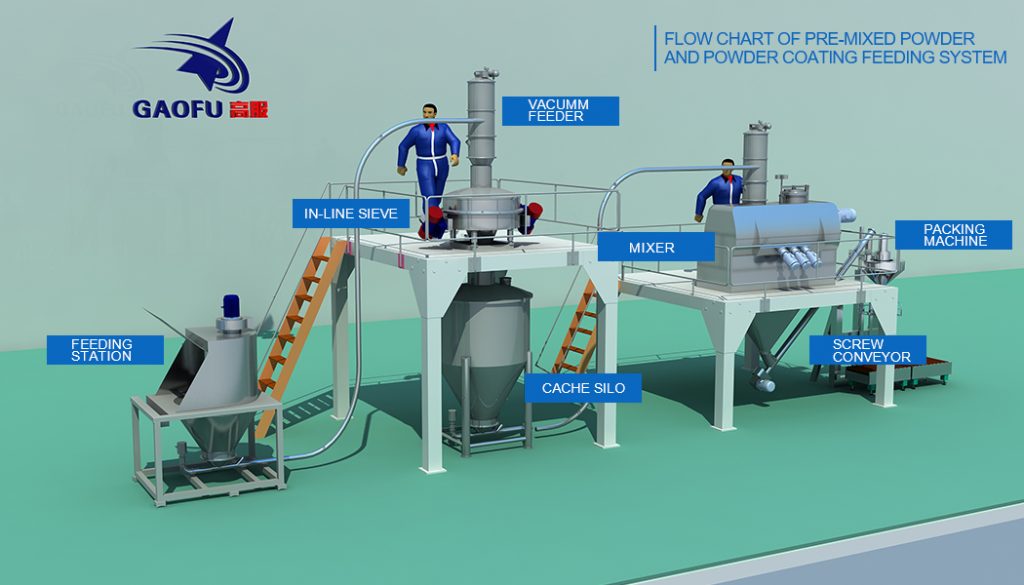
This article explains how Feeding system design influences material distribution before sieving operations and what factors should be considered when integrating feeding equipment with screening systems.
1. The Relationship Between Feeding and Screening
A sieving machine separates materials according to particle size, but the material must first arrive at the screen under suitable conditions.
A typical process flow is:
Material Source → Feeding System → Sieving Machine → Collection System
The Feeding system serves as the transition between storage or upstream processing and the screening stage.
Its design can influence:
- How material enters the screen
- How consistently powder is supplied
- How the production line is arranged
- How equipment operates together
The feeding stage does not replace the screening function. Instead, it provides the material supply conditions required for the sieving process.
2. Why Material Distribution Before Screening Matters
Before entering a sieving machine, powder may need to be distributed in a suitable manner.
Material distribution can be influenced by:
- Feed point location
- Feeding speed
- Material flow characteristics
- Inlet structure
- Equipment connection design
- Installation height
If the feeding arrangement does not match the screening equipment, the material may not enter the screening area under the intended conditions.
Therefore, Feeding system design should be considered during the early planning stage of the production line.
3. Evaluate Material Flow Characteristics First
Different powders behave differently during feeding.
Before designing the Feeding system, manufacturers should evaluate:
Flowability
Some powders move easily, while others may tend to bridge, compact, or accumulate.
Bulk Density
Density affects how much material is transferred during a feeding cycle.
Particle Size Distribution
Powders containing a wide range of particle sizes may require different feeding considerations from uniform powders.
Moisture Content
Moisture can influence powder movement and may affect material handling behavior.
Cohesion
Fine powders with stronger adhesion characteristics may require additional attention in the feeding section.
Understanding these characteristics helps determine the appropriate feeding structure before the sieving process.
4. Feeding Point Design and Screen Inlet Connection
The connection between the Feeding system and sieving machine is a key part of system integration.
Consider:
- Inlet size
- Connection direction
- Feeding position
- Material drop distance
- Equipment height
- Transfer method
A representative arrangement is:
Feeding Outlet → Sieving Machine Inlet → Screening Surface
The transition between these two stages should be designed according to the selected equipment configuration.
Improper connection design may create unnecessary challenges during installation, operation, or maintenance.
5. How Feeding Rate Affects Material Supply
The feeding rate should correspond with the requirements of the screening process.
A basic relationship is:
Material Supply Rate ↔ Screening Capacity ↔ Collection Capacity
If the feeding rate is not coordinated with the sieving machine, the overall production process may require adjustment.
When evaluating feeding rate, consider:
- Required production output
- Powder characteristics
- Screen specification
- Number of screening layers
- Collection method
- Operating schedule
Actual screening performance depends on the complete system configuration and operating conditions.
6. Designing for Uniform Material Entry
Uniform material entry is one consideration when integrating a Feeding system with a sieving machine.
The design may involve evaluating:
- Position of the feeding outlet
- Material distribution path
- Distance between feeder and screen
- Transition structure
- Material accumulation points
Different sieving machines may have different inlet requirements.
For example:
Rotary Vibrating Sieve
The Feeding system should provide a suitable material entry point according to the screen structure and application.
Centrifugal Sifter
The feeding arrangement should correspond with the continuous powder-transfer requirements of the equipment.
Linear Vibrating Screen
The feeding design should consider the width and direction of material movement.
The appropriate design depends on the actual machine type and material.
7. Feeding System Integration with Different Material Sources
A Feeding system can connect with various upstream sources.
Hopper Feeding
Storage Hopper → Feeding System → Sieving Machine
Suitable for materials stored in process vessels.
Big Bag Material Supply
Big Bag Feeding Station → Feeding System → Sieving Machine
Suitable for bulk powder handling applications.
Vacuum Conveying
Vacuum Feeder → Sieving Machine
Suitable where pneumatic material transfer is considered appropriate.
Production Equipment Connection
Mixer / Grinder / Processing Equipment → Feeding System → Sieving Machine
Used when screening follows another production stage.
The upstream source influences the feeding system structure and connection design.
8. Consider Capacity Coordination Across the Line
A complete powder-processing line includes several connected capacities.
For example:
Storage Capacity
↓
Feeding Capacity
↓
Sieving Capacity
↓
Collection Capacity
When designing the system, evaluate:
- Material availability
- Feeding cycle
- Screen processing requirements
- Collection volume
- Production duration
A feeding system should be selected based on the overall process rather than a single equipment parameter.
9. Food Powder Screening Applications
Food-processing facilities often require organized material handling before screening.
Typical materials include:
- Flour
- Starch
- Sugar powder
- Cocoa powder
- Protein powder
- Other dry ingredients
A representative process is:
Ingredient Storage → Feeding System → Sieving Machine → Product Collection
When designing the feeding stage, consider:
Cleaning Access
The equipment layout should allow practical inspection and cleaning.
Product Contact
Material-contact parts should meet the requirements of the intended application.
Product Changeover
Facilities processing different materials should establish suitable cleaning procedures.
Material Residue
The system should consider areas where powder may remain after operation.
10. Chemical and Industrial Powder Considerations
Industrial powders may require additional evaluation before selecting a Feeding system.
Consider:
- Material compatibility
- Abrasion characteristics
- Powder density
- Particle size
- Moisture
- Temperature
- Special handling requirements
Examples of industrial powders include:
- Mineral powders
- Ceramic materials
- Chemical additives
- Industrial fillers
For combustible or hazardous powders, the complete installation should be evaluated according to applicable safety requirements.
11. Influence of Equipment Layout on Material Distribution
Factory layout affects how the Feeding system connects with the sieving machine.
Important layout factors include:
- Horizontal transfer distance
- Vertical transfer distance
- Available installation space
- Equipment height difference
- Maintenance area
- Operator access
For example, a multi-level production facility may require a different feeding arrangement from a single-floor workshop.
The Feeding system should be designed according to the actual plant environment.
12. Batch and Continuous Feeding Design
Different production methods require different feeding approaches.
Batch Production
A batch system may follow:
Material Preparation → Feeding → Screening → Collection
The Feeding system supplies material according to the batch sequence.
Continuous Production
A continuous system may follow:
Continuous Material Supply → Feeding → Screening → Collection
The feeding and screening stages need to be coordinated according to production requirements.
The appropriate configuration depends on the manufacturing process.
13. Automation and Feeding Control
Modern powder-processing lines may include different levels of automation.
Possible control functions include:
- Material-level monitoring
- Feeding start/stop control
- Equipment status monitoring
- Interlocking between machines
- Alarm notifications
For example:
Sieving Machine Ready → Feeding System Starts
or:
Collection Vessel Full → Feeding Stops
The control method should be developed according to the production process and equipment requirements.
14. Consider Enclosed Material Handling
For applications requiring a more controlled material-transfer environment, enclosed feeding arrangements may be considered.
A possible workflow is:
Storage → Enclosed Feeding System → Sieving Machine → Collection
The actual dust-control effect depends on the entire system design, including:
- Equipment sealing
- Filters
- Connections
- Material properties
- Operating conditions
The Feeding system should be evaluated as part of the complete powder-handling solution.
15. Maintenance and Inspection Considerations
A practical Feeding system design should allow convenient maintenance.
Regular inspection may include:
Feeding Components
Check:
- Feed outlets
- Valves
- Seals
- Sensors
- Material-contact areas
Connection Sections
Inspect:
- Inlet connections
- Transfer points
- Sealing conditions
Sieving Machine Interface
Check:
- Screen inlet
- Material entry area
- Discharge sections
Maintenance procedures should follow equipment recommendations and actual operating conditions.
16. Practical Design Checklist
Before selecting a Feeding system for a sieving machine, consider:
Material
- What powder is being handled?
- Is it free-flowing or cohesive?
- What is the bulk density?
- Is moisture present?
Feeding
- Where does the material come from?
- What feeding method is required?
- What feeding rate is needed?
Screening
- What separation objective is required?
- Which sieving machine is suitable?
- What inlet arrangement is needed?
Layout
- How far does material travel?
- Is vertical transfer required?
- Is maintenance space available?
Production
- Is the process batch or continuous?
- What capacity is required?
- How is material collected?
Automation
- Is automatic feeding required?
- Are monitoring signals needed?
- Should equipment be interlocked?
17. Gaofu Feeding System for Sieving Machine Applications
The Gaofu Feeding System can be considered for powder-processing applications where controlled material supply is required before screening.
It can be integrated with various screening equipment, including:
- Rotary Vibrating Sieves
- Centrifugal Sifters
- Ultrasonic Vibrating Screens
- Linear Vibrating Screens
- Vacuum Feeders
- Big Bag Feeding Stations
Configuration can be evaluated according to:
- Material characteristics
- Feeding requirements
- Screening objectives
- Production capacity
- Factory layout
- Automation needs
This allows the feeding and screening stages to be planned as connected parts of a complete powder-processing system.
Why Choose Gaofu Machinery?
Gaofu Machinery provides equipment solutions for:
- Screening
- Feeding
- Conveying
- Filtration
- Powder processing
Product categories include:
- Feeding Systems
- Vacuum Feeders
- Big Bag Feeding Stations
- Rotary Vibrating Sieves
- Centrifugal Sifters
- Filtration Sieves
- Linear Vibrating Screens
- Ultrasonic Vibrating Screens
Equipment selection should be based on actual application conditions, material properties, and production requirements.
Conclusion
The design of a Feeding system can influence how material enters a sieving machine and how the overall powder-processing line is organized. Factors such as material flow behavior, feeding rate, inlet connection, equipment layout, capacity coordination, automation, cleaning, and maintenance should all be considered together.
A practical integration approach follows:
Analyze Material Characteristics → Design Feeding Structure → Match Sieving Requirements → Coordinate Capacity → Plan Automation and Maintenance
The Gaofu Feeding System provides a configurable approach for connecting material supply and screening operations. By designing the feeding stage as part of the complete sieving process, manufacturers can create a powder-handling workflow suited to their specific production conditions.