

Sieving Machine Production Line Engineering: Connecting a Feeding System with Upstream and Downstream Equipment
Post Date: 2026-08-17
Introduction
In modern powder-processing facilities, a sieving machine is often integrated into a larger production system rather than operating as an independent unit. Material needs to move smoothly from storage, preparation, or handling equipment into the screening stage and then continue toward collection, packaging, or further processing.
A Feeding system serves as an important connection point within this workflow. By linking upstream material sources with downstream screening and collection equipment, it helps organize the movement of powder through different production stages.
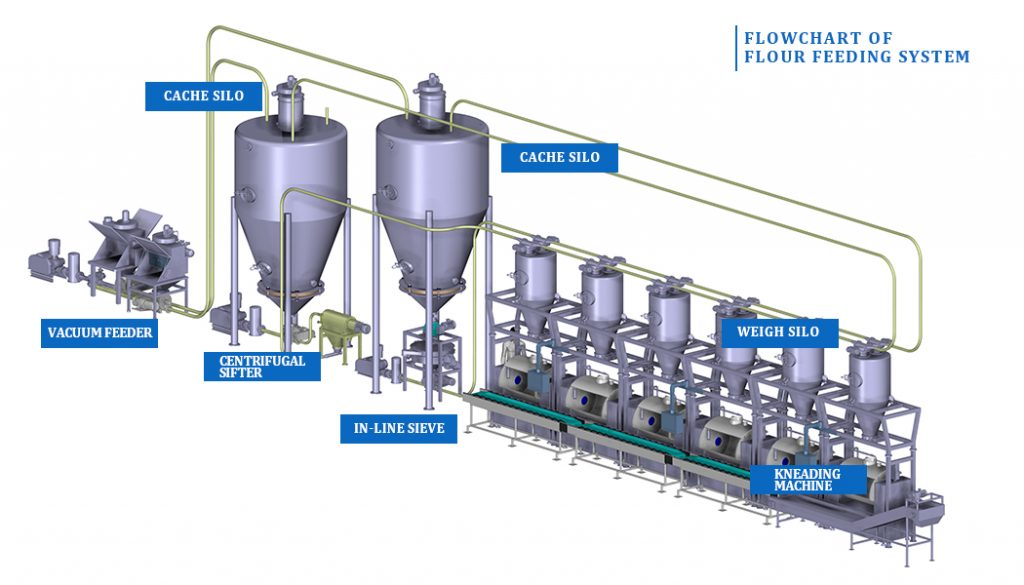
Successful production-line engineering requires consideration of material characteristics, equipment interfaces, process sequence, plant layout, automation requirements, cleaning procedures, and maintenance access. This article explains practical approaches for connecting a Feeding system with upstream and downstream equipment around a sieving machine.
1. Understanding the Position of a Feeding System in a Sieving Line
A complete powder-processing line may include multiple stages:
Material Receiving → Storage → Feeding System → Sieving Machine → Collection → Further Processing
Within this structure:
- The upstream equipment prepares or stores the material.
- The Feeding system transfers material toward the screening stage.
- The sieving machine performs particle separation.
- Downstream equipment receives and processes the screened material.
The Feeding system acts as a bridge between different process sections, helping establish a coordinated material flow route.
2. Start Production Line Design from the Complete Process Flow
Before selecting equipment, manufacturers should define the entire production sequence.
A process-flow review should answer:
- Where does the material enter the factory?
- Where is the material stored?
- How does material reach the sieving machine?
- How is screened material collected?
- What happens after screening?
A simplified workflow may be:
Raw Material → Storage → Feeding System → Sieving Machine → Collection Hopper → Packaging
or:
Processing Equipment → Feeding System → Sieving Machine → Next Production Stage
The actual arrangement depends on the production objective and material requirements.
3. Connecting Upstream Equipment with the Feeding System
The upstream side of the Feeding system determines how material enters the screening process.
Common upstream connections include:
Storage Hopper Connection
Storage Hopper → Feeding System → Sieving Machine
This arrangement can be considered for powders stored before screening.
Important factors include:
- Hopper outlet size
- Material flow behavior
- Storage volume
- Feeding method
- Maintenance access
Big Bag Feeding Station Connection
Big Bag Feeding Station → Feeding System → Sieving Machine
This configuration can connect bulk material unloading with the screening stage.
Considerations include:
- Bag unloading method
- Material discharge behavior
- Dust-control requirements
- Transfer route
Vacuum Feeder Connection
Vacuum Feeder → Sieving Machine
When pneumatic conveying is suitable, a Vacuum Feeder can serve as part of the material-transfer process.
The system design should consider:
- Conveying distance
- Material characteristics
- Pipeline arrangement
- Receiving equipment location
Processing Equipment Connection
Some production lines require screening after mixing, grinding, or another process.
Example:
Mixer → Feeding System → Sieving Machine
The connection should match the output conditions of the upstream equipment.
4. Designing the Interface Between Feeding System and Sieving Machine
The connection between the Feeding system and sieving machine is a key engineering consideration.
Evaluate:
- Feed inlet dimensions
- Equipment height
- Connection direction
- Material entry location
- Transfer distance
- Maintenance clearance
A typical arrangement is:
Feeding Outlet → Sieving Machine Inlet → Screening Area
The design should ensure compatibility between the feeding equipment and the selected screening machine.
Different sieving technologies may require different inlet arrangements.
5. Connecting the Feeding System with Rotary Vibrating Sieves
A rotary vibrating sieve is commonly considered for powder screening and classification applications.
A possible production arrangement is:
Storage → Feeding System → Rotary Vibrating Sieve → Collection
During integration, consider:
- Material entry position
- Screen capacity
- Required mesh specification
- Collection method
- Equipment layout
The feeding system should provide material according to the actual screening requirements.
6. Connecting with Other Sieving Equipment
Different materials and processes may require different screening technologies.
Centrifugal Sifter
Possible arrangement:
Feeding System → Centrifugal Sifter → Collection
Suitable for applications where continuous powder screening is considered appropriate.
Ultrasonic Vibrating Screen
Possible arrangement:
Feeding System → Ultrasonic Vibrating Screen → Collection
Can be considered for selected fine-powder applications.
Linear Vibrating Screen
Possible arrangement:
Feeding System → Linear Vibrating Screen → Collection
Can be considered for various bulk-material screening requirements.
The correct combination depends on the material and process objectives.
7. Designing Downstream Connections After Screening
The production line does not end at the sieving machine outlet.
After screening, material may move to:
- Collection hopper
- Storage vessel
- Packaging equipment
- Mixing equipment
- Filling equipment
- Other processing machines
A complete workflow may be:
Feeding System → Sieving Machine → Collection Hopper → Packaging
or:
Feeding System → Sieving Machine → Further Processing Equipment
Downstream planning should be completed together with the screening stage.
8. Coordinating Feeding Capacity with the Complete Line
Production-line engineering requires capacity matching between different sections.
Consider:
Upstream Supply Capacity
↓
Feeding Capacity
↓
Sieving Capacity
↓
Collection Capacity
Important evaluation factors include:
- Required production rate
- Material availability
- Screen configuration
- Collection volume
- Operating schedule
A Feeding system should not be selected only according to its transfer ability. It should fit the complete process.
9. Material Characteristics Affect Equipment Connections
Different powders can influence how the production line should be designed.
Important material factors include:
Flowability
Determines how easily material moves through storage and feeding sections.
Bulk Density
Influences material volume and feeding requirements.
Particle Size
Affects both feeding behavior and screening objectives.
Moisture
May influence powder movement and potential material buildup.
Abrasiveness
May affect component selection and maintenance planning.
Temperature
Should be considered when selecting suitable equipment materials.
Material evaluation is an important step before finalizing the production-line design.
10. Food Powder Production Line Integration
Food-processing applications often require coordinated material handling.
Typical materials include:
- Flour
- Starch
- Powdered sugar
- Cocoa powder
- Protein powder
- Other dry ingredients
A possible process flow:
Ingredient Storage → Feeding System → Sieving Machine → Collection → Packaging
Engineering considerations include:
Cleaning Access
Equipment layout should allow practical cleaning and inspection.
Product Changeover
Multiple products may require suitable cleaning procedures.
Material Contact
Contact components should be selected according to application requirements.
Residual Material Control
The design should consider locations where powder may remain after operation.
11. Chemical and Industrial Powder Line Integration
Industrial powder applications may require additional engineering evaluation.
Potential materials include:
- Mineral powders
- Ceramic powders
- Chemical additives
- Industrial fillers
Consider:
- Chemical compatibility
- Abrasion
- Density
- Moisture
- Particle characteristics
- Special handling requirements
For combustible or hazardous powders, the complete system should be assessed according to applicable safety standards and regulations.
12. Planning the Factory Layout
Equipment connection design depends heavily on the physical production environment.
Evaluate:
- Floor space
- Equipment height
- Transfer distance
- Operator access
- Maintenance area
- Material flow direction
For example:
Compact Layout
Short-distance connection between storage, feeding, and screening equipment.
Multi-Level Layout
Vertical transfer may be required between process stages.
The Feeding system should be designed according to the actual installation environment.
13. Automation and Equipment Coordination
Modern powder-processing lines may include automated coordination between machines.
Possible functions include:
- Automatic feeding cycles
- Material-level monitoring
- Equipment status feedback
- Start/stop control
- Alarm functions
- Interlocking
A representative sequence:
Sieving Machine Ready
↓
Feeding System Activated
↓
Material Transfer Begins
↓
Screening Operation
↓
Collection Monitoring
The automation level should be determined according to the production process.
14. Batch and Continuous Production Engineering
Production mode affects how equipment should be connected.
Batch Processing
Flow:
Batch Material Preparation → Feeding → Screening → Collection
The Feeding system supplies material according to the batch schedule.
Continuous Processing
Flow:
Continuous Material Supply → Feeding → Screening → Continuous Collection
The feeding and screening stages should be evaluated together for continuous operation.
15. Designing for Maintenance and Inspection
A production line should provide access for routine maintenance.
Feeding System
Inspect:
- Feed hopper
- Valves
- Seals
- Sensors
- Discharge section
Sieving Machine
Inspect:
- Screen mesh
- Screen frame
- Inlet
- Discharge outlet
- Operating components
Connections
Inspect:
- Transfer points
- Sealing areas
- Material accumulation
- Connection condition
Maintenance planning should be included during engineering design.
16. Product Changeover Considerations
Facilities producing multiple powders should consider how materials are changed.
Evaluate:
- Feeding system cleaning
- Screen replacement
- Residual material removal
- Collection equipment cleaning
- Production scheduling
A practical changeover plan depends on the material type and application requirements.
17. Practical Sieving Production Line Example
Consider a starch-processing line.
Step 1: Storage
Starch is stored in a material hopper.
Step 2: Feeding
The Feeding system transfers starch toward the screening stage.
Step 3: Screening
The sieving machine separates material according to the selected screening requirement.
Step 4: Collection
Screened starch enters the collection system.
Step 5: Further Processing
The material moves to packaging or another production process.
Workflow:
Starch Storage → Feeding System → Sieving Machine → Collection → Packaging
The exact equipment configuration depends on material properties and production conditions.
18. Gaofu Feeding System for Integrated Screening Lines
The Gaofu Feeding System can be considered for production lines requiring coordinated material supply before screening.
It can be integrated with:
- Rotary Vibrating Sieves
- Centrifugal Sifters
- Ultrasonic Vibrating Screens
- Linear Vibrating Screens
- Vacuum Feeders
- Big Bag Feeding Stations
- Customized screening equipment
System planning can consider:
- Material characteristics
- Feeding requirements
- Production capacity
- Equipment layout
- Screening objectives
- Automation needs
This allows the feeding, screening, and collection stages to be designed as one connected production workflow.
Why Choose Gaofu Machinery?
Gaofu Machinery provides equipment solutions for:
- Powder screening
- Feeding
- Conveying
- Filtration
- Material handling
Products include:
- Feeding Systems
- Vacuum Feeders
- Big Bag Feeding Stations
- Rotary Vibrating Sieves
- Centrifugal Sifters
- Filtration Sieves
- Linear Vibrating Screens
- Ultrasonic Vibrating Screens
Equipment selection should be based on actual material properties, production requirements, installation conditions, and applicable industry standards.
Conclusion
Engineering a sieving machine production line requires more than selecting individual machines. The Feeding system must connect upstream material sources with downstream screening and collection equipment while considering material flow, capacity coordination, layout, automation, cleaning, and maintenance.
A practical integrated workflow is:
Upstream Equipment → Feeding System → Sieving Machine → Downstream Equipment
By planning these stages together, manufacturers can create a structured powder-processing system designed around their specific production requirements.
The Gaofu Feeding System provides a configurable approach for connecting material supply and screening operations, supporting the development of coordinated powder-processing solutions across food, chemical, mineral, and other industrial applications.