

Pellet Durability Optimization: Eliminating Fines in Animal Feed Using a Vibro Separator
Post Date: 2026-10-16
Pellet quality is an important consideration in animal-feed manufacturing. After pelleting, cooling, conveying, storage, and packaging, some products may contain loose particles or fines generated during handling. Excessive fines can affect product appearance, material flow, transportation efficiency, and the consistency of the feed delivered to the customer.
For manufacturers producing pelletized feed, a Vibro Separator, such as a Rotary Vibrating Sieve, can provide a dedicated separation stage for removing or recovering undersized particles from the finished pellet stream.
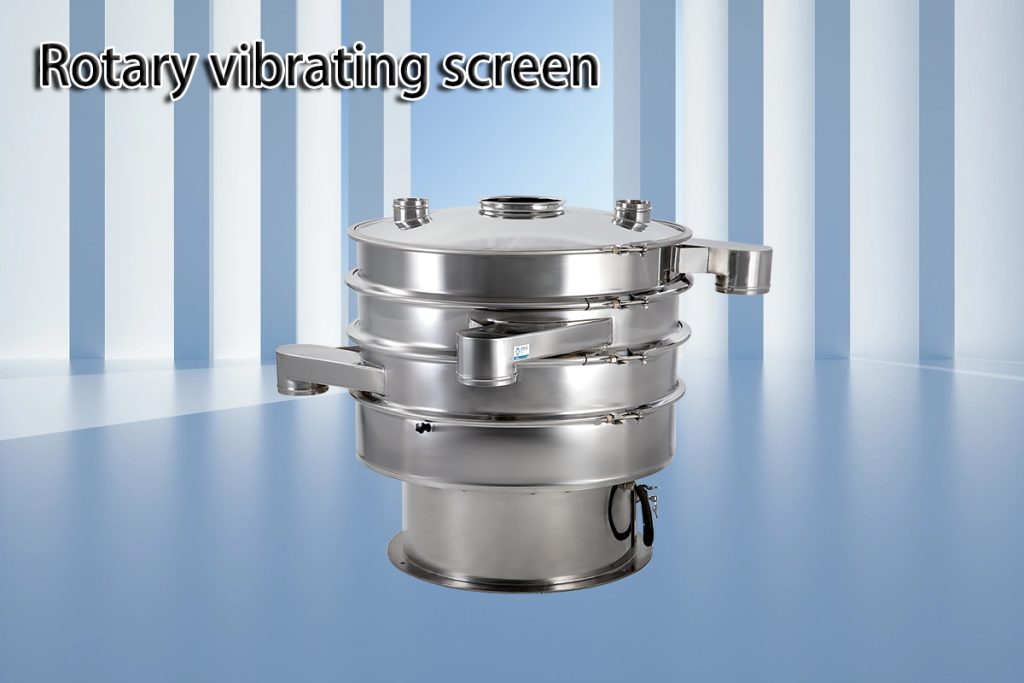
The purpose of this equipment is not to make the pellets themselves more durable. Instead, it separates fines that are already present, allowing manufacturers to evaluate the pellet stream more effectively and establish a process for handling off-size material.
The distinction is important: pellet durability is primarily influenced by formulation and pelleting conditions, while a vibro separator manages the physical separation of fines after production.
1. Understanding the Relationship Between Pellet Durability and Fines
Feed pellets are subjected to mechanical forces throughout production and distribution.
Typical stages include:
Pelleting → Cooling → Conveying → Screening → Storage → Packaging → Transportation → Feeding
At different points, pellets can experience impact, compression, friction, and abrasion. Some particles may break away from the pellet, creating fines.
The quantity of fines found at the final screening stage therefore does not necessarily indicate that the pelletizing machine itself is responsible.
Instead, fines can reflect the combined effect of:
- Pellet formulation
- Moisture and conditioning
- Die and roller conditions
- Cooling
- Mechanical conveying
- Transfer points
- Storage
- Handling
- Packaging
A Rotary Vibrating Sieve can separate the fines, but reducing their formation requires attention to the upstream process as well.
2. What a Vibro Separator Does in Pellet Processing
A Rotary Vibrating Sieve uses vibration to move material across a screening surface.
When pelletized feed is introduced to the machine, particles smaller than the selected screen opening can pass through the mesh, while larger pellets remain on the screening surface and move toward the appropriate discharge.
A simplified process is:
Finished Pellets → Vibro Separator → Acceptable Pellets + Fines
This provides a straightforward method for separating the two fractions.
The screening stage can therefore serve as a product-conditioning step before the feed enters storage or packaging.
The exact screen opening should be established according to the pellet specification rather than using one universal size for all feed products.
3. Screening Is Not the Same as Improving Pellet Strength
It is useful to distinguish between pellet durability and fines removal.
Pellet durability relates to how well pellets resist mechanical degradation during handling.
A screening machine does not strengthen a pellet. Instead, it separates particles according to the selected screening criterion.
For example:
Higher pellet durability → potentially less fines generation
while:
Effective screening → separation of fines already present
These are complementary objectives.
If a production line consistently generates excessive fines, simply installing a larger screening machine may not solve the underlying problem. The pelletizing, cooling, conveying, and handling stages should also be reviewed.
The Rotary Vibrating Sieve can then provide a controlled separation point for the material that does reach the screening stage.
4. Why Remove Fines Before Packaging?
Removing fines before packaging can help manufacturers maintain a more consistent finished-pellet stream.
Depending on the product specification, excessive loose material may:
- Change the visual appearance of the product
- Increase dust generation during handling
- Affect bulk-flow behavior
- Occupy packaging volume
- Increase the amount of material outside the desired pellet specification
The actual significance depends on the type of feed and customer requirements.
A screening stage can provide a practical way to separate fines before the material enters the finished-product packaging process.
A typical route is:
Pellet Cooler → Rotary Vibrating Sieve → Finished Pellet Storage → Packaging
The separated fines can then be directed to an appropriate process route according to the manufacturer's formulation and quality procedures.
5. Where Should the Vibro Separator Be Installed?
The optimum screening location depends on what the manufacturer wants to measure or control.
Immediately After Cooling
Pelleting → Cooling → Screening
This arrangement can provide an early check of pellet quality before further conveying and storage.
Before Packaging
Pelleting → Cooling → Conveying → Screening → Packaging
This arrangement allows the final pellet stream to be screened immediately before packaging.
At Multiple Checkpoints
Some production systems may use more than one screening or sampling checkpoint when the process requires it.
For example:
After Pelleting → Intermediate Screening → Storage → Final Screening → Packaging
Whether multiple screening stages are justified depends on the product specification, production rate, handling conditions, and quality-control strategy.
6. Why Screening After Cooling Can Be Useful
Pellets normally undergo cooling or conditioning before further handling.
The physical state of the material after cooling can influence how it behaves during screening.
If screening occurs immediately after cooling, manufacturers can evaluate the pellet stream before additional conveying and transfer operations introduce further mechanical stress.
This creates a useful diagnostic checkpoint.
For example:
Low fines after cooling + higher fines before packaging
may indicate that later handling or transfer stages deserve investigation.
By contrast:
High fines immediately after cooling
may suggest that upstream pelleting or cooling conditions require review.
This makes the screening stage useful not only for separation but also for process observation.
7. Screen Opening Should Reflect the Pellet Specification
The screen opening is central to fines separation.
If the aperture is too large, some particles that the manufacturer considers fines may remain with the accepted pellet fraction.
If the aperture is too small, material that should remain with the finished product may be separated unnecessarily.
Therefore, the appropriate screen opening should be established from:
- Pellet dimensions
- Product specification
- Acceptable fines percentage
- Pellet shape
- Pellet strength
- Required throughput
- Customer requirements
The aperture should be validated with representative material.
It is generally preferable to establish a measurable fines criterion first and then select the screening configuration around that requirement.
8. Pellet Size and Fines Size Are Not Identical Across Feed Products
Different feed products can have significantly different pellet dimensions.
For example, feeds intended for different animal species may use different pellet sizes, while aquafeed may have its own dimensional requirements.
Consequently, a screening configuration suitable for one pellet product should not automatically be transferred to another.
A manufacturer may need different screening specifications for:
- Small pellets
- Medium pellets
- Large pellets
- Crumbled feed
- Extruded feed
- Specialty feed products
The Rotary Vibrating Sieve should therefore be evaluated using the actual product that will pass through the machine.
9. Screening Pellet Fines Without Excessive Product Loss
Fines removal creates an important balance.
The objective is not simply to maximize the amount of material separated through the screen.
Instead, the manufacturer should determine how much material genuinely falls outside the finished-product specification.
If the screen removes too much acceptable material together with the fines, product recovery may be reduced.
This can be evaluated through a mass-balance approach:
Feed to Sieve = Accepted Pellet Fraction + Separated Fine Fraction
The manufacturer can then examine the percentage represented by each stream.
Sampling both fractions provides more useful information than evaluating only the total amount of material collected underneath the screen.
10. Use the Fines Fraction as a Process Indicator
Separated fines can provide useful process information.
A sudden increase in fines may indicate a change somewhere upstream.
Possible areas for investigation include:
- Pellet formulation
- Conditioning
- Die operation
- Cooling
- Conveyor speed
- Transfer height
- Impact at chutes
- Storage handling
- Packaging equipment
The screen itself may be operating normally while the material entering it has changed.
This is why a vibro separator can serve as more than a simple cleanup machine. It can create a measurable checkpoint for monitoring physical pellet condition.
11. Examine Transfer Points When Fines Increase
Pellets can encounter significant mechanical stress at transfer points.
For example:
Conveyor → Chute → Elevator → Storage Bin
Every transfer can introduce impact or friction.
If the pellet stream has acceptable fines levels immediately after screening but develops more fines after several transfers, the handling system should be investigated.
Potential considerations include:
- Drop height
- Transfer direction
- Conveyor speed
- Chute design
- Impact surfaces
- Number of transfers
- Mechanical compression
A Rotary Vibrating Sieve can separate the resulting fines, but reducing unnecessary mechanical damage may require changes elsewhere in the material-handling route.
12. Screening Can Support Pellet Quality Monitoring
A consistent screening stage makes it easier to compare different production batches.
For example, a manufacturer can record:
| Batch | Fines Fraction | Pellet Fraction | Observation |
|---|---|---|---|
| Batch A | Record result | Record result | Normal |
| Batch B | Record result | Record result | Normal |
| Batch C | Record result | Record result | Investigate variation |
Over time, these records can reveal whether fines generation is relatively stable or whether changes occur under certain production conditions.
The screening result can then be compared with pellet durability measurements and other laboratory or production data.
This provides a more complete picture than relying on visual inspection alone.
13. Combine Screening With Pellet Durability Testing
A vibro separator and a pellet durability test answer different questions.
A durability test evaluates how pellets respond to a defined mechanical challenge.
A screening stage measures the proportion of material separated according to the selected screen criterion during actual production.
Using both can provide complementary information.
For example:
Durability Testing → Resistance to Mechanical Breakdown
Production Screening → Actual Fines Separation
If laboratory durability results are satisfactory but production fines are unexpectedly high, the manufacturer may investigate transportation and handling conditions.
If fines are already high immediately after production, upstream pelleting conditions may deserve closer examination.
The two measurements should not be treated as interchangeable.
14. Consider Screen Loading and Throughput
A Rotary Vibrating Sieve must receive material at a rate compatible with its screening area and configuration.
If too much material enters the machine at once, the screen surface may become heavily loaded, potentially reducing separation opportunities.
If the feed rate is too low, the equipment may not be used efficiently.
The actual screening capacity depends on factors such as:
- Screen diameter
- Screen area
- Number of layers
- Aperture
- Material characteristics
- Pellet dimensions
- Feed distribution
- Separation requirement
Gaofu's published rotary vibrating sieve information describes multiple machine diameters and screen configurations, with capacity depending on the selected model and application. Manufacturer-listed capacity should be treated as reference information rather than a guaranteed result for every pellet product.
15. Avoid Excessive Mechanical Stress Before the Screen
If the objective is to measure fines generated during pellet production, unnecessary mechanical handling before the screening point can distort the result.
For example:
Pellet Production → Long Conveyor → Multiple Transfers → Screening
may produce a different fines level from:
Pellet Production → Cooling → Screening
The screening result therefore reflects not only pellet durability but also everything that happened before the screening checkpoint.
When establishing a quality-control procedure, manufacturers should document the location of the screen and the material-handling stages immediately upstream.
This makes comparisons between batches more meaningful.
16. Manage Separated Fines According to the Production Plan
Once fines have been separated, the manufacturer needs a defined route for them.
Depending on the feed formulation and quality procedures, the fines may be:
- Reprocessed
- Returned to an appropriate production stage
- Collected separately
- Used in accordance with an approved formulation
- Managed as off-specification material
The correct route depends on the product, formulation, regulatory requirements, and internal quality procedures.
The screening machine should not be assumed to make separated fines automatically suitable for reintegration.
Any reuse should be controlled through the manufacturer's established formulation and quality-management procedures.
17. Prevent Cross-Contamination During Product Changeovers
Feed mills often process multiple products.
When different formulations pass through the same screening equipment, the sieve should be incorporated into the plant's cleaning and changeover procedures.
Particular attention should be given to:
- Screen surfaces
- Product-contact areas
- Discharge outlets
- Gaskets and seals
- Material-retention points
- Fines collection equipment
The cleaning procedure should follow the machine manufacturer's instructions and the feed manufacturer's quality requirements.
For products requiring specific segregation controls, the sieve should form part of the overall cross-contamination management program.
18. Rotary Vibrating Sieve as a Pellet-Fines Separation Unit
Gaofu's Rotary Vibrating Sieve is designed for screening and classifying a range of powder and granular materials. Its published product information describes a three-dimensional vibrating motion generated by a vertical vibration motor and identifies applications involving grading and impurity removal.
For pelletized feed, the machine can be evaluated as a downstream separation unit when the objective is to separate undersized material from the accepted pellet fraction.
A typical configuration may include:
Feed Pellets
↓
Cooling
↓
Rotary Vibrating Sieve
↓
Accepted Pellets + Fines
↓
Storage / Packaging
The final screen specification should be established from the actual pellet dimensions and finished-product requirements.
Gaofu's broader feed-processing portfolio also includes different screening solutions for feed ingredients, granular feed, premixes, and aquafeed, so equipment selection can be matched to the particular material and separation duty rather than applying one machine to every feed product.
19. A Practical Pellet-Fines Optimization Workflow
For manufacturers looking to manage fines systematically, the following workflow can provide a useful starting point.
Step 1: Establish the Finished-Pellet Specification
Define acceptable pellet dimensions and fines limits.
Step 2: Measure Fines at a Defined Point
Choose a consistent sampling and screening location.
Step 3: Install or Configure the Vibro Separator
Select the screen aperture and machine arrangement according to the product.
Step 4: Record the Screening Result
Track the percentage of accepted pellets and separated fines.
Step 5: Compare Production Batches
Look for meaningful changes rather than isolated fluctuations.
Step 6: Investigate Upstream Changes
If fines increase, examine formulation, conditioning, cooling, conveying, and transfer conditions.
Step 7: Review Pellet Durability Separately
Use appropriate durability testing to evaluate pellet resistance to mechanical degradation.
Step 8: Optimize the Entire Handling Route
Where necessary, reduce avoidable impacts and unnecessary transfers.
This approach prevents the screen from being used as a substitute for upstream process improvement.
20. Why a Vibro Separator Can Add Value to Pellet Handling
The main value of a Rotary Vibrating Sieve in this application is its ability to create a defined separation point.
It can help manufacturers:
- Separate loose fines from pellets
- Establish a measurable fines fraction
- Prepare pellets for packaging
- Monitor changes between batches
- Support product classification
- Provide a physical screening checkpoint
The actual benefit depends on the feed product, screen configuration, production conditions, and quality criteria.
No screening machine can guarantee a specific pellet-durability result or eliminate all fines under every operating condition.
The correct objective is to establish an appropriate separation process and use its results to support broader pellet-quality management.
21. Gaofu Machinery for Feed Screening Applications
Gaofu Machinery provides screening equipment for powder and granular material processing, including Rotary Vibrating Sieve solutions that can be evaluated for suitable feed applications.
For pellet-fines separation, the proposed configuration can be developed around:
- Pellet dimensions
- Fines specification
- Required throughput
- Number of fractions
- Screen aperture
- Material flow
- Installation conditions
- Cleaning requirements
Where the separation requirement is application-specific, representative material testing can help confirm the suitability of the selected screen configuration.
The machine should be integrated into the manufacturer's established feed-quality procedures rather than considered a standalone solution for pellet durability.
Conclusion
Pellet durability and fines management are related but different aspects of animal-feed production.
Pellet durability concerns how well pellets withstand mechanical stress.
Fines screening concerns separating undersized material that is already present in the production stream.
A Rotary Vibrating Sieve used as a Vibro Separator can support the second objective by creating a controlled separation stage after cooling, before packaging, or at another defined point in the production process.
For feed manufacturers, the most useful strategy is to combine screening data with pellet durability testing and observations from pelleting, cooling, conveying, and storage. If the fines fraction changes, the data can help identify where further investigation is needed.
Gaofu Machinery can evaluate Rotary Vibrating Sieve configurations according to the actual pellet product, screening specification, throughput, and production conditions. With a clearly defined fines criterion and representative material testing where appropriate, the screening stage can become a practical part of a structured pellet-quality management process.