

Preventing Screen Blinding: Ball-Tray Mechanics in an Animal Feed Vibro Separator
Post Date: 2026-10-16
Screen blinding is a practical concern when processing powders and granular feed materials. During operation, particles can accumulate in or around screen openings, reducing the effective open area of the mesh. When this occurs, material has fewer opportunities to pass through the screen, which may affect throughput, separation consistency, and cleaning intervals.
For an animal-feed Vibro Separator, one approach to managing this issue is the use of a ball-tray screen-cleaning system. In a Rotary Vibrating Sieve, bouncing cleaning balls located beneath the screen can repeatedly contact the mesh as the machine vibrates. Their movement helps dislodge particles that might otherwise remain around the openings.
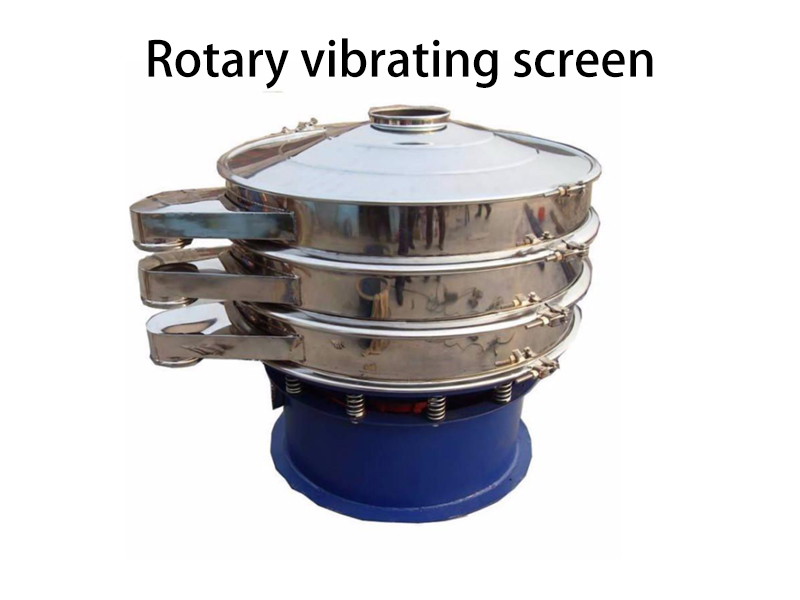
The mechanism is relatively simple, but effective configuration requires more than merely placing balls beneath a screen. Ball material, size, quantity, screen characteristics, feed properties, and operating conditions all need to be considered.
1. What Is Screen Blinding?
Screen blinding occurs when particles block or partially obstruct screen openings.
Unlike ordinary material flow, where particles pass through the mesh, blinded openings become unavailable for screening. The effective open area of the screen can therefore decrease.
Common forms of screen obstruction include:
- Particles lodged in apertures
- Fine powder accumulating on the mesh
- Sticky material adhering to the screen surface
- Fibrous particles becoming trapped
- Irregular particles bridging openings
- Agglomerated feed material covering sections of the mesh
The severity depends heavily on the material and screening conditions.
For animal-feed applications, powdered ingredients and fine granular products may require particular attention because their particle size and physical characteristics can make screen obstruction more likely under certain conditions.
2. How a Ball Tray Works
A ball tray is positioned below the screening mesh.
When the Rotary Vibrating Sieve operates, the machine generates vibration. The cleaning balls move within the tray and repeatedly contact the underside of the screen.
A simplified sequence is:
Machine Vibration → Ball Movement → Contact With Screen → Particle Dislodging → Restored Screen Openings
The balls do not perform the primary separation.
The screen mesh performs the separation, while the ball tray functions as a mechanical cleaning aid.
This distinction is important when configuring a Vibro Separator. The cleaning system should support the screening process rather than be treated as a substitute for correct mesh selection or suitable operating conditions.
3. Why Screen Cleaning Matters in Feed Processing
A screen can only separate material effectively through its available openings.
When a significant number of openings become obstructed, the active screening area can decrease.
Possible operational symptoms include:
- Reduced material throughput
- Increased material retention
- Changes in the screened fraction
- Uneven material movement
- More frequent manual cleaning
- Increasing material accumulation on the screen
The presence of one or two blocked openings is not necessarily a serious problem. The concern arises when obstruction becomes widespread enough to influence the process.
For this reason, screen-cleaning design should be considered according to the actual material and separation duty.
4. Animal Feed Materials Can Behave Differently
There is no universal ball-tray configuration for every feed application.
Animal-feed processing can involve:
- Powdered feed ingredients
- Mineral additives
- Premixes
- Granular feed
- Crumbled feed
- Pellet fragments
- Fine feed powders
These materials differ in particle size, shape, moisture, flowability, and tendency to adhere to surfaces.
A configuration that works well for a dry granular product may behave differently when applied to a fine powder.
Therefore, the cleaning-ball arrangement should be evaluated together with the actual feed material and screen specification.
5. The Role of Ball Movement
The effectiveness of a ball-tray system depends partly on how the cleaning balls move.
During vibration, the balls repeatedly move within the tray and strike the underside of the mesh.
This movement creates mechanical contact that can help loosen particles trapped in the openings.
The useful action can be understood as:
Vibration Energy → Ball Kinetic Movement → Mesh Contact → Particle Release
The goal is not to maximize ball movement indiscriminately.
Excessive or poorly controlled movement may create unnecessary mechanical interaction with the screen assembly. The cleaning system should instead provide sufficient contact to support the intended screening operation.
6. Select Ball Material According to the Application
Cleaning balls can be manufactured from different materials.
The selection should consider:
- Feed characteristics
- Screen material
- Required hygiene controls
- Temperature
- Chemical compatibility
- Wear considerations
- Product-contact requirements
For feed processing, material compatibility deserves particular attention.
If cleaning balls may come into contact with product-contact surfaces or the feed itself, the material should be appropriate for the intended application and comply with the manufacturer's and end user's applicable requirements.
The correct selection should therefore be confirmed during equipment configuration rather than assumed from a generic Vibro Separator design.
7. Ball Size Influences Cleaning Behavior
Ball diameter is another configuration variable.
If a ball is too large for the available tray space, its movement may be restricted.
If it is too small, the movement pattern and contact behavior may differ from what is required for the particular screen.
The suitable size depends on:
- Mesh dimensions
- Screen structure
- Tray design
- Material characteristics
- Vibration conditions
- Desired cleaning effect
Rather than selecting the largest or smallest available ball, the objective should be to establish a suitable movement pattern under actual operating conditions.
8. Ball Quantity Also Matters
The number of cleaning balls influences how frequently the screen can receive mechanical contact.
Too few balls may leave portions of the screen with limited cleaning action.
However, adding more balls does not automatically provide better screening.
An excessive quantity may restrict movement and change the way the balls interact with one another and with the tray.
A practical configuration should provide sufficient distribution across the relevant screen area while allowing the balls to move freely under the machine's operating conditions.
9. Ball-Tray Design Should Match the Screen
The ball tray is not an independent component.
It works together with:
- Screen mesh
- Supporting frame
- Screen deck
- Gaskets
- Machine vibration
- Feed distribution
The relationship between these components determines whether the cleaning balls can contact the appropriate part of the screen.
If the tray arrangement does not correspond well with the screen geometry, certain areas may receive less cleaning action.
This is why a Rotary Vibrating Sieve should be configured as an integrated screening assembly rather than treating the ball tray as an aftermarket accessory without considering the complete screen structure.
10. Screen Aperture and Blinding Risk
Mesh selection remains important even when a ball-cleaning system is installed.
Very fine apertures can present different screening challenges from relatively coarse openings.
The smaller the opening, the more important it may become to evaluate:
- Particle size
- Particle shape
- Moisture
- Surface characteristics
- Material cohesion
- Feed concentration
- Screen-cleaning requirements
A ball tray may help manage certain types of particle obstruction, but it cannot make an unsuitable screen aperture suitable.
The screen should first be selected for the required separation, with the cleaning system then configured to support reliable operation.
11. Moisture Can Change Screen Behavior
Feed materials with higher moisture or stronger cohesion may behave differently from dry, free-flowing material.
Particles may:
- Stick together
- Adhere to the mesh
- Form small agglomerates
- Build up around screen openings
In such cases, screen blinding can become more noticeable.
Before changing the ball-tray configuration, operators should confirm whether the material condition itself has changed.
For example:
Normal Material → Stable Screening
versus:
Higher Moisture / Increased Cohesion → More Screen Accumulation
This distinction can prevent operators from attempting to solve a material-condition problem solely through mechanical screen cleaning.
12. Feed Rate Can Influence Screen Loading
A ball-cleaning system works within the overall screening process.
If the feed rate increases substantially, more material may accumulate on the screen surface at any given time.
Potential consequences include:
- Greater material loading
- Shorter residence time
- More material contacting the mesh simultaneously
- Increased risk of localized obstruction
Therefore, when blinding occurs after a production-rate increase, the feeding conditions should be investigated along with the screen-cleaning system.
The appropriate solution may involve optimizing feed distribution or throughput rather than simply increasing the number of cleaning balls.
13. Feed Distribution Matters
A screen surface that receives material unevenly may develop localized accumulation.
For example, if most of the feed enters one side of the screen, that region may experience greater loading than the rest of the mesh.
A ball tray cannot completely compensate for poor feed distribution.
Operators should consider:
- Feed inlet location
- Material spreading
- Feed-rate stability
- Screen inclination or movement
- Discharge arrangement
- Localized buildup
An appropriately configured inlet and material-flow path can help the available screening surface participate more evenly in the separation.
14. Ball-Tray Cleaning Versus Manual Cleaning
Manual screen cleaning requires the machine to be stopped and the screen accessed according to appropriate safety procedures.
A ball-tray system provides mechanical cleaning during normal vibration, potentially reducing the frequency of manual intervention for certain types of screen obstruction.
However, it should not be interpreted as eliminating inspection and cleaning requirements.
Manual inspection may still be needed for:
- Persistent buildup
- Sticky deposits
- Product changeovers
- Damaged mesh
- Foreign material
- Sanitation procedures
The ball tray is therefore better understood as a continuous mechanical cleaning aid, not a replacement for routine equipment hygiene and inspection.
15. Ball-Tray Cleaning and Product Hygiene
Animal-feed processing requires attention to hygiene and cross-contamination controls.
A cleaning-ball system introduces additional components beneath the screen, so the equipment design should allow appropriate inspection and maintenance.
Important considerations include:
- Accessibility
- Ball condition
- Screen condition
- Tray cleanliness
- Product-retention areas
- Changeover requirements
- Cleaning procedures
The actual cleaning method should follow the equipment manufacturer's instructions and the feed plant's established sanitation procedures.
Where wet cleaning is used, components should be appropriately cleaned and dried before returning to service according to the applicable operating procedure.
16. Inspect Cleaning Balls Periodically
Cleaning balls are mechanical components and should be inspected as part of routine equipment care.
Operators can check for:
- Surface damage
- Excessive wear
- Deformation
- Material buildup
- Changes in size
- Unusual discoloration
- Loss or shortage of balls
A damaged cleaning ball may not move as intended.
If the quantity of balls changes over time, the cleaning pattern may also change.
Routine inspection therefore helps maintain a more consistent screen-cleaning condition.
17. Inspect the Screen Separately
A ball tray cannot correct a damaged or excessively worn screen.
Screen inspection should include:
- Broken wires
- Enlarged openings
- Tears
- Loose sections
- Excessive wear
- Material accumulation
- Improper tension or installation
If a mesh opening has changed because of mechanical damage, the resulting separation may differ from the intended specification.
This is particularly important in quality-sensitive feed applications where particle-size classification needs to remain consistent.
18. Ball-Tray Systems Are Not Suitable for Every Blinding Problem
Screen blinding has multiple causes.
A ball tray may be useful for certain mechanical blockage conditions, but other problems may require different solutions.
For example:
Dry, Free-Flowing Material
A ball-cleaning system may be suitable when particles become lodged in the openings.
Highly Cohesive Material
The process may require evaluation of moisture, material conditioning, screen type, or other cleaning methods.
Sticky Material
A different screen-cleaning approach may be more appropriate depending on the material.
Fibrous Material
The mesh design and material-flow arrangement may need special consideration.
The appropriate solution should therefore be selected according to the actual blinding mechanism.
19. Use Production Data to Identify Blinding Trends
Operators can monitor screen performance over time rather than waiting for a severe blockage.
Useful records may include:
- Feed material
- Feed rate
- Screen aperture
- Operating duration
- Cleaning-ball condition
- Screening throughput
- Product fraction
- Manual cleaning frequency
- Visible screen buildup
If manual cleaning becomes more frequent, the team can compare the change with recent variations in feed material or production conditions.
For example:
Increased Blinding + Higher Feed Moisture
may point toward material condition.
Increased Blinding + Higher Throughput
may point toward screen loading.
Increased Blinding + No Process Change
may justify inspecting the mesh and cleaning-ball assembly.
This data-driven approach is more reliable than assuming that the screen-cleaning mechanism is always the source of the problem.
20. Configure the Rotary Vibrating Sieve as a Complete System
A Rotary Vibrating Sieve should be configured around the entire screening duty.
The main components can include:
- Feed inlet
- Screen deck
- Screen mesh
- Ball tray
- Cleaning balls
- Discharge outlets
- Vibration motor
- Supporting structure
- Sealing components
Each element has a specific function.
The vibration motor provides the machine's movement.
The screen mesh performs the separation.
The ball tray and cleaning balls assist with screen-surface cleaning.
The outlets direct the separated fractions.
The sealing arrangement helps contain material where a closed process is required.
This integrated approach is more useful than focusing on the ball tray alone.
21. A Practical Anti-Blinding Evaluation Process
When a feed manufacturer experiences repeated screen obstruction, the following sequence can help identify the appropriate response.
Step 1: Identify the Type of Blinding
Determine whether particles are lodged in openings, adhering to the surface, bridging, or accumulating in another manner.
Step 2: Check the Material
Review moisture, particle size, cohesion, and recent changes in raw material.
Step 3: Inspect the Screen
Check for damage, wear, contamination, or incorrect installation.
Step 4: Check Feed Distribution
Determine whether one section of the screen is receiving excessive material.
Step 5: Review Operating Conditions
Check feed rate and machine operating conditions.
Step 6: Inspect the Ball Tray
Check ball quantity, condition, distribution, and movement.
Step 7: Evaluate the Cleaning Configuration
If necessary, adjust the cleaning-ball arrangement according to the equipment manufacturer's recommendations.
Step 8: Verify the Result
Compare throughput, screen condition, and separation performance before and after the adjustment.
This procedure helps distinguish between a screen-cleaning problem and a broader process issue.
22. Gaofu Rotary Vibrating Sieve for Feed Screening
Gaofu Machinery's Rotary Vibrating Sieve is designed for screening and classifying powder and granular materials. Its published product information describes three-dimensional vibrating movement generated by a vertical vibration motor and configurations with multiple screen layers.
For suitable animal-feed applications, the machine can be configured around the required:
- Material type
- Screen aperture
- Number of fractions
- Throughput
- Screen-cleaning method
- Product-contact requirements
- Installation conditions
A ball-tray cleaning arrangement can be considered when screen blinding is a relevant operating concern.
The actual cleaning configuration should be determined from the feed material, screen specification, and production conditions. It should also be evaluated alongside the plant's hygiene, maintenance, and changeover requirements.
23. Why Anti-Blinding Design Should Be Planned Early
Screen cleaning is easier to address during equipment configuration than after repeated production interruptions.
During the project-design stage, manufacturers can provide information about:
- Material properties
- Expected production rate
- Required particle-size separation
- Screen aperture
- Material moisture
- Cleaning requirements
- Product-contact standards
- Cleaning and changeover procedures
This information gives the equipment supplier a better basis for determining whether a ball-tray system is appropriate and how it should be integrated into the Rotary Vibrating Sieve.
Where material behavior is uncertain, representative testing can provide additional information before finalizing the configuration.
Conclusion
Screen blinding can reduce the effective open area of a Vibro Separator and may affect screening performance when particle accumulation becomes significant.
For suitable animal-feed applications, a ball-tray system provides a mechanical method for helping keep screen openings active. As the Rotary Vibrating Sieve vibrates, cleaning balls move beneath the mesh and repeatedly contact the screen, helping dislodge certain particles that may otherwise remain in the apertures.
However, anti-blinding performance depends on more than the cleaning balls themselves. Screen aperture, feed characteristics, moisture, feed rate, material distribution, mesh condition, ball size, ball quantity, and operating conditions all need to be considered.
Gaofu Machinery can configure a Rotary Vibrating Sieve according to the specific feed material and screening objective, including consideration of screen-cleaning requirements where appropriate. The final arrangement should be verified against actual production conditions and the applicable hygiene, safety, and quality procedures.
The practical objective is not simply to prevent every particle from contacting the screen. It is to maintain an appropriate screening surface so that the machine can perform its intended separation consistently while keeping cleaning and maintenance requirements manageable.