

Pneumatic Conveying and Protein Powder Feeding Station Systems: A Technical Guide to Ergonomic Bag Discharge and High-Efficiency Dust Collection
Post Date: 2026-10-28
In automated nutritional powder manufacturing, transferring fine ingredients from manual packaging into closed-loop processing networks is a critical transition point. Protein powders—such as micellar casein, concentrated whey, and dense plant proteins—present unique flow and aeration properties. When introduced improperly into a production line, these powders can cause filter blinding, material loss, and pneumatic line blockages.
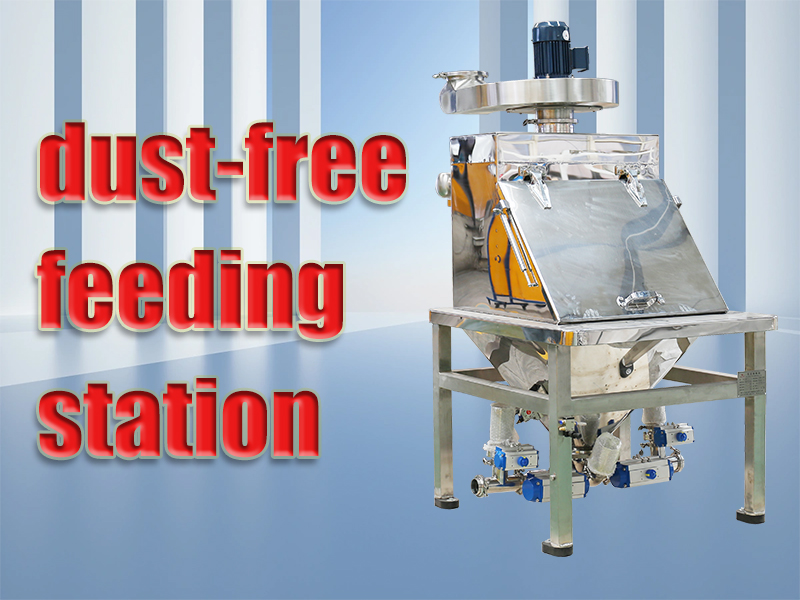
Integrating a specialized Gaofu feeding station with downstream pneumatic conveying networks bridges this gap, establishing a seamless interface between manual bag unloading and automated transfer.
1. Interfacing Feeding Stations with Pneumatic Conveying Lines
Transferring fine powders over long distances or between facility levels typically relies on dilute-phase or dense-phase pneumatic conveying. However, the suction or pressure dynamics of a pneumatic system require a stable, sealed feed point to prevent air leakage or inconsistent pick-up.
- Airtight Rotary Valve Integration: Below the feeding station’s integrated screen and hopper, precision rotary airlock valves meter the discharged protein powder into the pneumatic pipeline. This maintains pressure differentials while ensuring a continuous, metered feed rate.
- Vacuum Pick-Up Adapters: For vacuum conveying systems, pickup adapters draw powder directly from the discharge cone of the feeding station into the motive air stream, preventing premature settling in horizontal runs.
- Surge Volume Management: The internal surge capacity of the feeding station hopper absorbs batch dumping surges from operators, feeding the pneumatic line at a steady rate that prevents line choking and pressure spikes.
2. Advanced Filtration and Particulate Capture Mechanics
Protein dust particles typically range from 10 to 100 microns, making them highly susceptible to suspension in ambient air. Traditional passive hoods often fail under heavy dumping conditions.
- Continuous Reverse-Pulse Cleaning: Gaofu feeding stations utilize automated reverse-pulse compressed air jets that periodically clear filter cartridges during operation. This dislodges accumulated protein powder from the filter media, returning valuable product to the batch while maintaining constant negative pressure at the access door.
- High-Efficiency Filtration Media: Utilizing food-grade, PTFE-membrane filter cartridges ensures sub-micron particulate retention while resisting moisture absorption and product adhesion.
- Operator Breathing Zone Protection: By maintaining a consistent inward face velocity across the open access hatch, the integrated exhaust blower prevents fine aerosols from escaping into the operator's breathing zone during aggressive bag dumping.
3. Comparative Advantages in Production Lines
| Parameter | Traditional Open Dumping | Gaofu Feeding Station Integration |
| Dust Emission | High ambient dispersion; hygiene hazard | Contained negative-pressure capture; clean environment |
| Material Recovery | Lost as airborne waste or cleanup debris | Automatically pulsed back into the primary process stream |
| Downstream Protection | Risk of lumps and packaging debris entering lines | Integrated vibrating screen removes foreign objects and agglomerates |
| Operator Ergonomics | Unassisted lifting and awkward posture | Counterbalanced hood and optimal working table height |
Conclusion
Optimizing hygienic bulk material handling requires more than simple containment—it demands a synchronized approach to bag discharge, screening, and pneumatic transfer. By incorporating Gaofu feeding stations as the primary intake node, protein powder processors can eliminate airborne dust hazards, protect downstream conveying equipment, and maintain rigorous standards of product purity.