

Understanding Salt Crushing Machine Operation: How Double Roller Crushers Handle Different Salt Feed Materials
Post Date: 2026-10-06
In salt processing, the performance of a crushing stage is influenced not only by the equipment itself but also by the condition of the material entering the machine. Salt may arrive as relatively uniform granules, larger crystals, compacted pieces, agglomerates, or mixed-size material from upstream processing and storage. These different feed conditions can require different operating considerations.
A Double Roller Crusher provides a practical approach to controlled salt size reduction by passing material through a crushing zone formed between two rotating rollers. For salt-processing applications, understanding how different feed forms behave during operation can help processors establish more appropriate feeding, crushing, screening, and inspection practices.
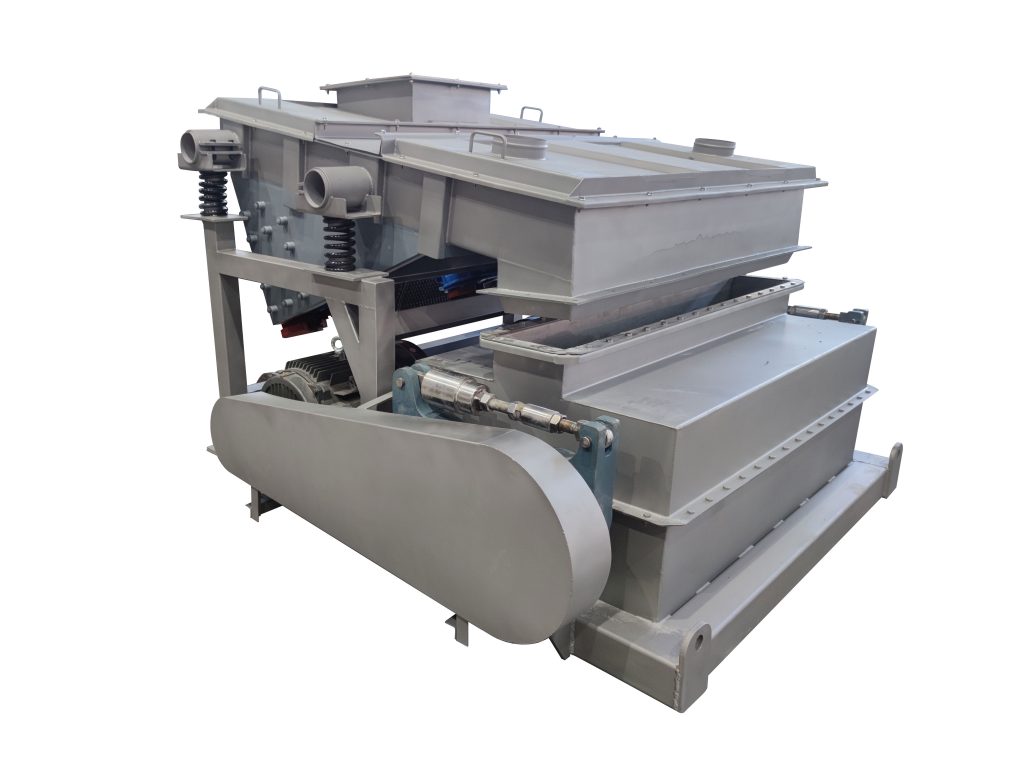
Gaofu Machinery manufactures double roller crushers for material size-reduction applications, including salt processing. The appropriate model, operating conditions, and configuration should be determined according to the actual material, required output, capacity, and process conditions.
1. Why Salt Feed Condition Matters During Crushing
Salt is not always delivered to a crusher in the same physical condition.
For example, a production line may receive:
- Relatively uniform salt crystals
- Large salt pieces
- Rock salt fragments
- Sea salt with varied crystal sizes
- Compacted salt from storage
- Agglomerated material
- Mixed-size salt from an upstream screening process
- Off-size material returned for reprocessing
Although these materials may all be described simply as “salt,” their behavior during feeding and crushing can be different.
Feed condition affects how material enters the crushing zone, how consistently it is distributed across the roller width, and how the resulting material is handled downstream. Therefore, salt crushing machine operation should be considered together with the condition of the incoming feed.
2. Operation with Relatively Uniform Salt Granules
Uniform granular salt is generally easier to introduce into a controlled crushing process because the incoming material has a relatively consistent particle-size range.
In this situation, the operating focus may include:
- Maintaining a stable feed rate
- Avoiding sudden surges into the crusher
- Keeping the crushing zone adequately supplied
- Monitoring the resulting particle-size distribution
- Coordinating the crusher with downstream screening
If the incoming particles are already relatively close to the desired size, the crushing duty may be less intensive than when processing large pieces.
This distinction is important because a crusher does not necessarily need to perform the same amount of size reduction for every salt feed. Understanding the incoming material allows operators to establish a more suitable process arrangement.
3. Handling Larger Salt Crystals and Pieces
Some salt-processing applications involve larger crystals or pieces that need to be reduced before further classification or processing.
When larger feed enters a double roller crusher, the material encounters the rotating rollers and is subjected to mechanical forces that reduce its size. The resulting material then exits through the discharge area for subsequent processing.
For larger feed, operators should pay particular attention to:
- Maximum feed size
- Feeding stability
- Crusher capacity
- Discharge characteristics
- Crushing clearance
- Downstream screening requirements
The actual acceptable feed size depends on the selected machine and configuration. For example, Gaofu's published salt-crusher specifications list a feed range of 3–10 mm and a discharge range of 0–5 mm for several models, with model-dependent capacity ratings. These figures are manufacturer-published specifications rather than universal operating limits and should be confirmed against the specific equipment and material.
4. Processing Sea Salt with Variable Crystal Sizes
Sea salt can contain particles with different sizes depending on the production and preparation process.
A mixed-size feed can therefore create a different operating objective from a uniform feed. Instead of simply reducing every particle by the same amount, the process may need to prepare the material for a subsequent classification stage.
A possible arrangement is:
Salt Feed → Double Roller Crusher → Screening → Product Collection
The crusher performs size reduction, while the screening equipment separates the resulting particles according to the required size ranges.
This division of responsibilities can help avoid expecting the crusher itself to perform the complete classification task.
For applications involving several commercial salt grades, the downstream screen can be selected according to the desired product specifications, while the double roller crusher handles the required size-reduction duty.
5. Crushing Rock Salt and Larger Compact Pieces
Rock salt can enter a processing line in larger pieces than the final product requires.
In such cases, the crusher's operating role is to reduce the feed into a more manageable size range for subsequent processing. The feed system should be designed so that large pieces are introduced at a controlled rate appropriate for the selected crusher.
Operators may monitor:
- Feed consistency
- Material accumulation around the feed inlet
- Crusher load
- Discharge condition
- Oversized material after screening
- Changes in output during operation
If the required final product is relatively fine compared with the original rock-salt pieces, multiple processing stages may be more appropriate than attempting to accomplish all size reduction in one crushing step.
6. Working with Compacted Salt from Storage
Salt can sometimes become compacted during storage or transportation. The resulting material may contain larger lumps even though the original salt was relatively fine.
This type of feed should be treated differently from naturally large salt crystals.
The first question is whether the compacted material can be introduced safely and consistently into the crushing system. Depending on the degree of compaction, upstream lump breaking or controlled feeding may be required.
A practical processing route could involve:
Storage → Feed Preparation → Double Roller Crusher → Screening → Recovered Product
The objective is not simply to crush the material aggressively. Instead, the process should restore the material to a suitable particle-size range while avoiding unnecessary additional size reduction.
7. Managing Salt Agglomerates
Agglomerated salt consists of particles that have bonded or compacted together into larger clusters.
Agglomerates can occur under certain storage, handling, moisture, or environmental conditions. Their physical behavior may differ from that of individual salt crystals.
When processing agglomerated material, the operating strategy can include:
- Identifying the approximate agglomerate size.
- Establishing an appropriate feeding method.
- Checking whether pre-breaking is required.
- Introducing the material into the double roller crusher at a controlled rate.
- Inspecting the discharge material.
- Using screening when multiple particle-size fractions are required.
The degree of agglomeration is an important practical variable. Small, friable clusters and large compact lumps should not automatically be treated as equivalent feed materials.
Material trials can therefore be useful before finalizing the equipment configuration.
8. Mixed-Size Salt from Upstream Processes
A salt line may also produce a feed containing several particle-size ranges.
For example, material remaining after a previous screening operation may contain:
- Target-size particles
- Oversized particles
- Smaller particles
- Irregular fragments
In this situation, sending the entire stream through a crusher may not always be necessary.
An upstream screen can separate material according to process requirements, allowing only the fraction requiring additional size reduction to enter the crusher.
A possible route is:
Mixed Salt → Pre-Screening → Oversize Fraction → Double Roller Crusher → Re-Screening
This approach can reduce unnecessary crushing of material that already meets the required specification.
The final arrangement should depend on the required product grades, throughput, material characteristics, and desired recovery route.
9. Reprocessing Off-Spec Salt
Another application is the treatment of salt that does not meet a specified particle-size requirement.
For example, a production batch may contain an oversized fraction after screening. Instead of discarding usable material, the process may route the appropriate fraction back to a crushing stage for further size reduction.
The operating sequence can be designed around:
Initial Processing → Screening → Off-Spec Fraction → Crushing → Re-Screening
This creates a defined route for material that requires additional processing.
However, reprocessing should be evaluated according to the product specification and quality-control requirements. For food-related applications, additional considerations may include hygiene, traceability, contamination control, and applicable regulations in the target market.
10. When Salt Contains Different Moisture Conditions
Salt with different moisture conditions may not behave identically during feeding and crushing.
Drier salt may flow differently from material that has absorbed moisture or formed compacted clusters. Moisture can also influence whether particles tend to adhere or agglomerate.
For this reason, operators should consider:
- Moisture condition at the crusher inlet
- Material flow through the feed system
- Formation of lumps
- Material accumulation
- Cleaning requirements
- Changes in discharge characteristics
The suitability of a particular double roller crusher for wetter or more cohesive salt should be evaluated through application testing rather than assumed from dry-salt operation.
11. The Relationship Between Feed Condition and Crushing Clearance
The crushing clearance between the rollers is one of the operating variables that can influence the size of discharged material.
However, clearance should not be considered independently from the incoming material.
For example, the same nominal clearance may produce different results when processing:
- Uniform small crystals
- Large salt pieces
- Compact agglomerates
- Mixed-size feed
Therefore, operators should evaluate the combination of feed condition, feeding rate, crushing clearance, and downstream screening rather than relying on a single operating parameter.
Actual adjustment procedures should follow the equipment manufacturer's instructions and the operating requirements of the specific installation.
12. Feeding Stability Is Part of Crusher Operation
Even when the salt material itself is suitable for crushing, unstable feeding can affect the consistency of the crushing process.
A feed system may need to prevent:
- Sudden material surges
- Intermittent feeding
- Excessive accumulation
- Bridging in the hopper
- Uneven distribution across the crusher inlet
Stable material delivery helps the crusher operate under more consistent conditions.
For applications involving compacted or irregular salt, the feeding arrangement deserves particular attention because the material may not flow in the same way as free-flowing granular salt.
13. Crushing and Screening Should Be Viewed as Complementary Stages
One common misunderstanding in salt processing is treating crushing and screening as interchangeable operations.
They perform different functions.
Double roller crusher:
Primarily used to reduce the size of larger or off-size material.
Screening equipment:
Used to separate material into specified particle-size fractions.
For many salt-processing applications, combining the two stages provides greater process flexibility.
For example:
Feed → Crushing → Screening → Target Fraction + Oversize Fraction
The oversize fraction can potentially be routed for further processing, subject to the production specification.
This arrangement allows the crusher to focus on size reduction while the screen performs classification.
14. Operating Considerations for Different Salt Feed Materials
A useful way to organize salt-crusher operation is to connect the feed condition with the primary operating concern.
| Salt Feed Condition | Main Operating Consideration | Possible Process Approach |
|---|---|---|
| Uniform granular salt | Stable feeding and controlled reduction | Crushing followed by inspection or screening |
| Large salt crystals | Feed size and crushing duty | Controlled feeding and size reduction |
| Rock salt pieces | Maximum feed size and capacity | Crushing followed by classification |
| Variable-size sea salt | Mixed particle distribution | Crushing combined with screening |
| Compacted salt | Lump condition and flowability | Feed preparation followed by crushing |
| Agglomerated salt | Agglomerate size and cohesion | Controlled feeding, crushing, and screening |
| Mixed-size material | Avoiding unnecessary crushing | Pre-screening and selective crushing |
| Off-spec material | Reprocessing route | Crushing and re-screening |
| Moist or cohesive salt | Flow and accumulation | Application-specific testing and operating controls |
This type of material-based analysis can help processors describe their actual feed condition more accurately when discussing equipment requirements with a supplier.
15. What Operators Should Observe During Production
A salt crushing machine should not be evaluated only by whether material passes through the equipment.
Operators can establish routine observations covering:
Feed
- Is the material entering at a relatively stable rate?
- Has the feed particle size changed?
- Are unusually large lumps appearing?
- Has the moisture or flow condition changed?
Crushing
- Is the equipment operating under the expected load?
- Are there unusual sounds or vibrations?
- Is material accumulating around the feed or discharge area?
- Has the operating condition changed after a material change?
Discharge
- Is the product within the intended size range?
- Has the amount of oversize changed?
- Has the quantity of fines changed?
- Is downstream screening receiving material consistently?
Recording these observations can help identify process changes before they become larger production problems.
16. Example: Adapting Operation to Three Salt Feed Conditions
Consider a salt-processing facility handling three different feed conditions.
Case A: Uniform Granular Feed
The incoming salt is relatively consistent in size and requires moderate size reduction.
The operating emphasis may be on stable feeding, appropriate crushing clearance, and downstream particle-size verification.
Case B: Large and Mixed-Size Feed
The feed contains both larger pieces and smaller particles.
A screening stage before or after crushing may be considered so that material already within specification does not receive unnecessary additional crushing.
Case C: Compacted Salt from Storage
The feed contains salt lumps created during storage.
The process may require controlled feeding and evaluation of whether pre-breaking is necessary before the material reaches the double roller crusher.
These examples illustrate why “salt” alone is not enough information for defining a crushing operation. The physical condition of the actual feed should be included in the equipment discussion.
17. Selecting a Double Roller Crusher Based on Real Operating Conditions
When discussing a salt crushing project with an equipment supplier, providing detailed feed information can make equipment evaluation more practical.
Useful information may include:
- Salt type
- Feed particle-size range
- Maximum lump size
- Moisture condition
- Bulk density, where available
- Expected feed rate
- Required discharge size
- Required product-size distribution
- Whether screening is required
- Whether off-spec material will be reprocessed
- Available installation space
- Product-contact requirements
- Cleaning procedures
- Local electrical requirements
Gaofu Machinery's salt crusher range includes different roller dimensions and capacity configurations. The company's published specifications should be treated as reference data for the corresponding models, with final selection based on actual application requirements and technical confirmation.
18. Gaofu Machinery: Double Roller Crusher for Salt Size Reduction
Gaofu Machinery provides screening, crushing, feeding, conveying, and related process equipment for industrial applications.
For salt processing, the Double Roller Crusher can be considered when the production objective involves reducing larger or off-size salt material to a more suitable particle-size range.
Gaofu's published salt-crusher information describes a two-roller crushing structure with adjustable crushing clearance. Depending on the selected model, published capacity ranges vary, allowing the equipment to be evaluated according to the required processing scale.
For a new project, Gaofu can evaluate the proposed application based on the salt feed condition, required output, capacity, downstream screening requirements, and other process information.
Conclusion
Salt crushing machine operation is closely connected with the physical condition of the material entering the equipment. Uniform crystals, large pieces, rock salt, compacted material, agglomerates, mixed-size feed, and off-spec fractions can each create different operating considerations.
A Double Roller Crusher can serve as a size-reduction stage within these applications, while feeding, screening, inspection, and reprocessing stages can be arranged around the specific production objective.
Rather than treating every salt feed as identical, processors can obtain a more practical equipment configuration by describing the actual material condition and defining the required output clearly. Material testing and technical evaluation can then help determine the appropriate crusher model, operating parameters, and supporting equipment for the project.
For salt-processing projects, Gaofu Machinery can provide technical discussion and equipment recommendations based on the customer's material and process requirements.