

Salt Crushing Machine Process Design: Planning Feed Size, Crushing Stages, and Material Discharge
Post Date: 2026-10-06
In salt processing, selecting a suitable crushing machine is only one part of developing an effective production process. The way material enters the crusher, the amount of size reduction required, the number of crushing stages, and the way crushed salt is discharged can all influence the overall process arrangement.
A Double Roller Crusher can be used as a controlled size-reduction stage for salt when the process requires larger or off-size material to be reduced before subsequent screening, conveying, storage, packaging, or other processing. However, the crusher should be planned as part of the complete material-flow route rather than as an isolated machine.
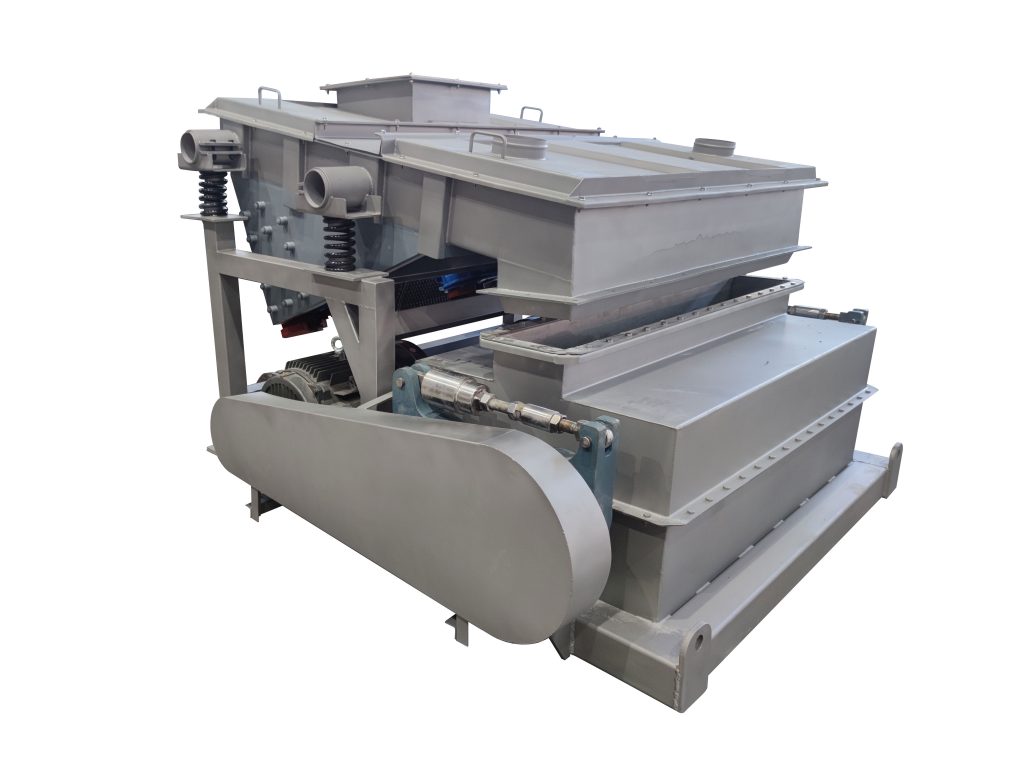
This article explains key considerations for designing a salt crushing process, with particular attention to feed size, crushing stages, discharge arrangements, screening interfaces, and process coordination.
1. Start with the Actual Salt Feed
The first step in process design is to define what enters the crushing system.
A useful salt-feed specification can include:
- Maximum feed size
- Minimum feed size
- Typical particle-size range
- Percentage of oversized material
- Moisture condition
- Bulk density, where available
- Expected feed rate
- Presence of agglomerated material
- Required final particle-size range
The maximum lump size is particularly important because it affects the feed opening and the expected crushing duty.
For example, a system receiving relatively small salt crystals may require a different process arrangement from a system receiving large pieces that need substantial size reduction.
Therefore, “salt crushing” should be translated into measurable feed and product specifications before equipment configuration is finalized.
2. Define the Required Discharge Before Designing the Crushing Stage
A crusher cannot be selected independently from the desired discharge.
The process designer should first establish what the crushed salt needs to achieve.
Possible objectives include:
- Reducing large pieces to a smaller intermediate size
- Preparing salt for screening
- Producing a specified granular range
- Breaking compacted material
- Preparing material for downstream dissolution or processing
- Reprocessing an oversized fraction
- Preparing material for a subsequent packaging stage
The discharge requirement should ideally specify more than an average particle size.
For example, the project may need to define:
Target fraction: 0–5 mm
Acceptable oversize: project-specific
Fine fraction: project-specific
The actual specification should be established according to the customer's production requirements.
3. Establish the Feed and Discharge Relationship
Once the feed and product specifications are known, the required size-reduction duty can be estimated.
A simple process description might look like:
Salt Feed → Double Roller Crusher → Discharge → Screening
The difference between the incoming and required particle-size ranges determines the role of the crusher.
A relatively small reduction may be achievable in one crushing stage, while a larger reduction may require additional preparation or classification stages.
The important point is to avoid designing the crusher around an assumed reduction requirement. The actual feed and final-product specifications should determine the process.
4. When One Crushing Stage May Be Appropriate
A single Double Roller Crusher stage may be considered when the incoming salt is already within a manageable size range and the required size reduction is moderate.
A simplified process could be:
Feed Hopper → Controlled Feeding → Double Roller Crusher → Discharge Conveyor → Screening
This arrangement can be relatively straightforward because the crusher performs one defined size-reduction duty.
The downstream screen can then classify the crushed material into the required fractions.
For example:
Crusher Discharge → Screen → Target Product + Oversize
The oversize route can be designed according to the production objective. It may be returned for additional processing where appropriate, while material meeting the specification continues to the next stage.
5. When Multiple Size-Reduction Stages May Be Considered
Some salt-processing projects begin with considerably larger material than the final product requires.
In such situations, attempting to achieve the entire reduction in one stage may not be the most appropriate process arrangement.
A staged approach could be:
Large Salt Feed → Primary Size Reduction → Intermediate Material → Double Roller Crusher → Screening → Final Product
The first stage prepares the material for the secondary crushing stage.
The Double Roller Crusher can then perform a more controlled reduction on the prepared feed.
Whether multiple crushing stages are required depends on factors such as:
- Maximum feed size
- Required discharge size
- Feed characteristics
- Required capacity
- Equipment limitations
- Downstream product specifications
- Available installation space
The final configuration should be established through technical evaluation rather than applying the same arrangement to every salt project.
6. Feed Preparation Before the Double Roller Crusher
Feed preparation can be important when incoming material contains large lumps, compacted salt, or significant size variation.
Possible upstream equipment or operations may include:
- Hopper feeding
- Lump breaking
- Pre-screening
- Magnetic or foreign-material protection where appropriate
- Controlled conveying
- Buffer storage
The purpose is to present the Double Roller Crusher with a feed condition that matches its intended operating range.
For example, if a process contains a large quantity of material that already meets the required size, pre-screening may allow that fraction to bypass unnecessary crushing.
A possible arrangement is:
Incoming Salt → Pre-Screen →
Target Fraction → Bypass
Oversize Fraction → Double Roller Crusher → Re-Screening
This can make the crushing stage more selective.
7. Planning Feed Size for the Crusher
Feed size should be considered at several levels.
Maximum Feed Size
This represents the largest particle or lump that may enter the crushing zone.
The crusher and feeding equipment should be selected so that the specified maximum feed size is compatible with the equipment configuration.
Typical Feed Size
The average or normal feed condition is also important because equipment operating conditions should reflect the material that will be processed most frequently.
Feed Size Distribution
Two materials may have the same maximum size but very different distributions.
For example:
- 90% small particles + 10% large pieces
- 40% small particles + 60% large pieces
These two feeds can create different crushing duties.
Consequently, process design should consider the complete feed-size distribution rather than relying only on the largest piece.
8. Feed Rate Should Match the Crushing Stage
The crusher should be considered together with its feeding equipment.
If material enters too quickly, the crusher may experience conditions different from those expected during normal operation. If material arrives too slowly or intermittently, the downstream equipment may not receive a consistent material flow.
A process designer should therefore evaluate:
Storage Capacity → Feeder → Crusher Capacity → Discharge Conveyor → Screen Capacity
Each stage needs to be coordinated.
For example, a crusher rated for a certain processing range does not automatically mean that the entire production line should operate at that same numerical rate. Conveyors, screens, feeders, storage equipment, and the actual material all need to be evaluated together.
9. Why Buffer Storage Can Be Useful
A buffer hopper or intermediate storage point can separate two process stages.
For example:
Salt Storage → Feed Hopper → Crusher → Buffer Hopper → Screening
The buffer can provide temporary material storage between operations and may help accommodate differences in equipment operating rates.
This can be particularly useful when:
- Upstream feeding is intermittent
- Downstream screening operates at a different rate
- Multiple production batches are handled
- Product changeovers are required
- The crushing stage needs controlled feeding
The required buffer volume should be calculated according to the actual production schedule and material-flow requirements.
10. Designing the Crushing Stage Around the Double Roller Crusher
A Double Roller Crusher typically operates with material entering the space between two rotating rollers.
For process design purposes, the important consideration is not only the crusher itself but also the equipment immediately before and after it.
A typical arrangement may include:
- Feed hopper
- Feeder
- Double Roller Crusher
- Discharge chute
- Conveyor or bucket elevator
- Screening equipment
- Product collection
Each connection point should be checked for:
- Material-flow direction
- Available space
- Inspection access
- Cleaning access
- Maintenance clearance
- Transfer height
- Dust-management requirements
- Safety access
This approach helps avoid treating the crusher as an isolated piece of equipment.
11. Planning the Crusher Discharge
The discharge point is an important part of process design because the crushed material must move reliably to the next stage.
Possible discharge arrangements include:
- Direct discharge into a conveyor
- Discharge into a buffer hopper
- Discharge to a screening machine
- Discharge to a bucket elevator
- Discharge into a collection container
The correct arrangement depends on the downstream process.
For example, when classification immediately follows crushing, a short transfer route between the crusher and screen may simplify the material-flow layout.
If temporary storage is required, a buffer hopper may be positioned between the two stages.
12. Discharge Chute Design
The discharge chute should be considered according to the physical characteristics of the crushed salt.
Design considerations can include:
- Chute dimensions
- Material-flow direction
- Inclination
- Transfer height
- Inspection access
- Cleaning access
- Potential accumulation areas
The chute should not create an unnecessary restriction immediately after the crusher.
If material accumulates at the discharge point, the restriction may affect the overall process even though the crusher itself is functioning normally.
For food-related applications, the design should also take applicable hygiene and cleaning requirements into account.
13. Crushing Followed by Screening
One of the common process arrangements for salt is:
Feed → Crushing → Screening → Product Collection
The crusher and screen perform different tasks.
The Double Roller Crusher reduces particle size.
The screening machine separates the resulting material into specified size fractions.
For example:
Crusher Discharge
↓
Screen
↓
Fine Fraction | Target Fraction | Oversize Fraction
The number and size of fractions depend on the product specification.
This separation of functions can give the process designer greater flexibility than expecting the crusher alone to produce every required product grade.
14. Handling Oversized Discharge Material
After crushing and screening, some material may remain above the required size.
A process can include a defined route for this fraction.
For example:
Crushing → Screening → Oversize → Return to Crushing
This creates a controlled reprocessing loop.
However, not every process should automatically use recirculation.
The decision depends on:
- Required product specification
- Amount of oversize
- Material-handling capacity
- Desired production rate
- Product-quality requirements
- Energy and equipment considerations
A technical assessment can determine whether recirculation is appropriate for the specific salt-processing line.
15. Managing the Fine Fraction
Crushing may also produce particles smaller than the target range.
Therefore, process design should distinguish between:
- Target-size material
- Oversized material
- Fine material
If the product specification includes a limit on fines, the crushing and screening stages should be considered together.
The objective is not simply to maximize the amount of material passing through the crusher. Instead, the process should be configured around the required product distribution.
This is one reason why screening can be an important companion stage to a salt crushing machine.
16. Process Layout for Different Production Objectives
Different salt products can require different process arrangements.
Intermediate Size Reduction
Salt Feed → Double Roller Crusher → Intermediate Storage
Here, the crusher prepares the salt for another downstream operation.
Crushing and Classification
Salt Feed → Double Roller Crusher → Screen → Multiple Product Fractions
This arrangement is suitable when crushing and size classification are both required.
Oversize Reprocessing
Salt Feed → Screen → Oversize → Double Roller Crusher → Screen
Here, the crusher handles only material requiring additional size reduction.
Large Feed Preparation
Large Salt Pieces → Primary Preparation → Double Roller Crusher → Screen → Product
This arrangement can be considered when the initial material is significantly larger than the desired product.
The appropriate layout should be determined from actual process requirements rather than from equipment type alone.
17. Allow Space for Inspection and Maintenance
A well-planned process line needs more than enough room for material flow.
The Double Roller Crusher and surrounding equipment should have appropriate access for:
- Routine inspection
- Cleaning
- Adjustment
- Component replacement
- Troubleshooting
- Safety checks
Transfer points should also remain accessible where practical.
A compact equipment arrangement may save floor space, but insufficient maintenance access can make future servicing more difficult.
Therefore, process layout should balance production flow with operational access.
18. Consider Product Changeovers
Some salt-processing facilities handle different product specifications.
A process may therefore need to change:
- Feed material
- Target particle size
- Screening specification
- Product destination
- Packaging route
The process design should consider how material from one production run will be cleared before the next product is introduced.
Depending on the application, changeover planning may involve:
- Emptying the feed system
- Clearing the crusher
- Cleaning relevant product-contact areas
- Checking screen configuration
- Confirming the next product specification
- Recording production-batch information
For food-related salt products, applicable hygiene, traceability, and cleaning procedures should follow the requirements of the relevant market and facility.
19. Example Salt Crushing Process
Consider a facility receiving salt with a relatively broad particle-size distribution.
The customer requires a controlled granular product for a downstream packaging operation.
A possible process could be:
Step 1 — Receiving
Bulk salt enters the raw-material storage area.
Step 2 — Feed Preparation
A feeder provides controlled material delivery.
Step 3 — Pre-Screening
Material already within the required range can potentially be separated from the oversized fraction.
Step 4 — Crushing
The oversized fraction enters the Double Roller Crusher for size reduction.
Step 5 — Discharge
Crushed material is transferred to a screening stage.
Step 6 — Classification
The screen separates target material from oversize and other fractions.
Step 7 — Reprocessing
Where appropriate, the oversize fraction is routed back for additional processing.
Step 8 — Product Transfer
Material meeting the specification proceeds to storage or packaging.
This example demonstrates how the crusher can become one controlled stage within a larger process rather than being responsible for every part of particle-size management.
20. Manufacturer-Published Salt Crusher Information
Gaofu Machinery publishes salt-crusher configurations with different roller dimensions, motor arrangements, feed/discharge ranges, and capacity ratings.
For example, its published salt-crusher information includes models with capacities ranging from approximately 3–5 t/h to 20–40 t/h, depending on the model. Some listed configurations specify a feed range of 3–10 mm and a discharge range of 0–5 mm.
These figures are manufacturer-published reference specifications for the corresponding models. Actual suitability and operating performance depend on the material, process conditions, equipment configuration, and required product specification.
For a project with different feed sizes or output requirements, the equipment should be evaluated based on the actual application data.
21. Information to Prepare Before Process Design
Before discussing a complete salt crushing system with an equipment supplier, it is useful to prepare a process data sheet.
The data sheet can include:
Material Information
- Salt type
- Feed condition
- Moisture
- Bulk density
- Maximum lump size
- Particle-size distribution
Production Information
- Required throughput
- Operating hours
- Batch or continuous production
- Expected production volume
Product Information
- Target particle-size range
- Maximum oversize
- Fine-particle requirements
- Number of product grades
Process Information
- Existing equipment
- Upstream process
- Downstream process
- Screening requirements
- Conveying distance
- Available installation area
This information provides a more useful basis for process planning than selecting a crusher solely from a nominal capacity number.
22. Gaofu Machinery Double Roller Crusher for Salt Processing
Gaofu Machinery provides crushing and screening equipment for industrial material-processing applications.
For salt-processing projects, its Double Roller Crusher can be considered for controlled size-reduction duties where the material needs to be reduced before screening, conveying, storage, packaging, or further processing.
The company's published salt-crusher information describes a two-roller structure with adjustable crushing clearance and model options for different processing capacities.
Gaofu can evaluate the proposed application according to the customer's feed size, required discharge, capacity, downstream process, and site requirements. Where necessary, material testing and technical discussion can be used to help determine a suitable process configuration.
Conclusion
Salt crushing process design should begin with the material-flow requirements rather than the crusher alone.
The key questions include:
- What is the maximum and typical feed size?
- How much size reduction is required?
- Can the duty be completed in one crushing stage?
- Is pre-screening useful?
- Should the Double Roller Crusher be followed by screening?
- How should oversized material be handled?
- Where should crushed salt be discharged?
- Is buffer storage required?
- How will product changeovers be managed?
- What access is required for inspection and maintenance?
A Double Roller Crusher can serve as an important size-reduction stage in a salt-processing line, but its role should be coordinated with feeders, screens, conveyors, storage equipment, and product-handling systems.
By defining feed size, crushing duty, discharge requirements, and material-flow routes before equipment selection, processors can develop a more clearly structured salt-crushing process and provide equipment suppliers with the technical information needed for application evaluation.
For salt-processing projects, Gaofu Machinery can discuss the material, production requirements, and process layout to help develop a Double Roller Crusher configuration suited to the specific application.