

Enclosed Dust Management: Improving Air Quality in Feed Processing via a Vibro Separator
Post Date: 2026-10-16
Introduction
Dust management is an important consideration in animal-feed manufacturing. During the handling and screening of grain, soybean meal, powdered ingredients, mineral additives, and other feed materials, fine particles can become airborne or accumulate around equipment connections. These conditions may increase housekeeping demands, affect workplace air quality, and create additional safety and product-handling challenges.
A Rotary Vibrating Sieve, also referred to as a rotary vibro separator, can contribute to dust management when it is configured with suitable covers, seals, enclosed material connections, and compatible dust extraction equipment.
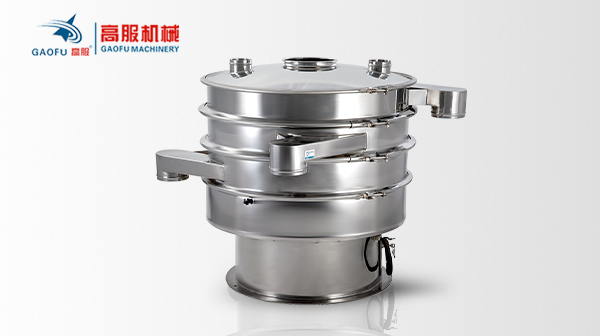
The goal is not simply to enclose the screening chamber. Effective dust management requires attention to the entire material path, from the feed inlet through the screening area to each discharge outlet. Equipment interfaces, ventilation, maintenance, and operating procedures also influence the result.
Gaofu Machinery provides rotary vibrating screening equipment for powder and granular material processing. Its product information describes sealing features intended to help limit material leakage. The suitability of a particular configuration for feed-processing dust control should be confirmed against the application and site requirements. Source: Gaofu product information.
1. Understand Where Dust Enters the Feed-Processing Environment
Dust can be generated at several points in a feed mill, including grinding, mixing, conveying, screening, transfer, and packaging.
At a screening station, potential release points include:
- The material inlet
- The interface between the screen cover and body
- Screen-frame connections
- Product discharge outlets
- Fines collection outlets
- Flexible connections to upstream and downstream equipment
- Inspection openings and access covers
A machine may have an enclosed body while still allowing dust to escape through poorly fitted connections or downstream transfer points.
For this reason, a dust-control review should examine the complete screening station rather than only the machine housing.
2. How an Enclosed Rotary Vibro Separator Supports Dust Management
A Rotary Vibrating Sieve separates material by using vibration to move particles across a screen surface. An enclosed configuration places the screening operation inside a covered chamber, helping limit the direct release of airborne particles into the surrounding workspace.
A typical arrangement may include:
- A covered screening chamber
- Sealed access covers
- Suitable gaskets
- Enclosed feed and discharge connections
- A compatible dust extraction connection, where required
- Access for inspection and cleaning
When the enclosure and connections are appropriately designed and maintained, they can help contain material during screening.
However, an enclosed housing alone does not establish a specific workplace dust concentration. Actual performance depends on sealing integrity, operating conditions, the material being handled, and whether a suitable extraction system is required and correctly designed.
3. Seal the Material Path, Not Just the Screen Chamber
Dust can escape at connection points even when the main screening body is covered.
The inlet and outlets deserve particular attention because they connect the vibrating machine to other equipment.
For example, a feed hopper may be sealed to the screen inlet, while the accepted-product outlet connects to a conveyor or storage bin. If these interfaces are poorly matched, dust may escape during material transfer.
When planning an enclosed screening station, consider:
- Gasket compatibility with the feed material
- Secure cover fastening
- Flexible connections that accommodate vibration
- Correctly aligned inlet and outlet flanges
- Sealed access points
- Inspection access for routine checks
Flexible connectors should be selected and installed so that they accommodate the required movement without creating excessive strain or opening gaps.
The objective is to maintain a suitable enclosure across the complete screening interface.
4. When to Connect a Dust Extraction System
Some applications may require more than passive enclosure.
Fine, dry feed ingredients can become airborne when material enters the screen, moves across the mesh, or falls through discharge openings. In these cases, a compatible extraction system may help capture airborne particles at appropriate collection points.
A typical arrangement may include:
Feed Hopper → Enclosed Rotary Vibrating Sieve → Sealed Discharge Connections
with a designated extraction connection linked to a properly engineered dust collector where required.
The extraction system should be designed for the material, airflow requirements, pressure conditions, filtration needs, and applicable safety standards.
Excessive or poorly balanced extraction can also affect material movement or draw useful product into the collection system. Therefore, airflow and collection arrangements should be evaluated as part of the process design rather than selected solely by fan capacity.
5. Maintain Suitable Pressure Conditions
Where local extraction is used, the pressure relationship between the screening enclosure and the surrounding workspace can influence dust containment.
A properly engineered system may maintain a slight negative pressure within the relevant enclosure so that air moves inward through potential leakage points rather than carrying dust outward.
The actual pressure requirement depends on the equipment design and dust-collection arrangement.
Important considerations include:
- Extraction airflow
- Duct diameter and routing
- Pressure losses
- Filter loading
- Collection-system capacity
- Air entering through unintended gaps
- The effect of extraction on product handling
The pressure condition should be verified during commissioning and checked as part of routine system maintenance. A connection port alone does not guarantee adequate extraction or effective dust containment.
6. Coordinate the Separator With Upstream and Downstream Equipment
A Rotary Vibrating Sieve is commonly part of a larger material-handling system.
Upstream equipment may include a storage hopper, feeder, conveyor, or mixer. Downstream equipment may include a receiving bin, conveyor, weighing system, or packaging machine.
Each interface can influence dust release.
A practical arrangement should consider:
- How material enters the screening chamber.
- Whether the feed stream is stable.
- How accepted material leaves the screen.
- Where separated fines or oversize material are directed.
- Whether downstream equipment maintains suitable containment.
- Whether inspection and maintenance remain accessible.
Minimizing unnecessary open transfer points can simplify dust management. However, the layout must still allow safe access, cleaning, and maintenance.
7. Control Dust at the Point of Material Transfer
Material falling from one piece of equipment to another can create air movement and disperse fine particles.
This may occur at the separator inlet, product outlet, or fines collection point.
To reduce the potential for dust release, the system designer can evaluate:
- Transfer height
- Chute geometry
- Material drop direction
- Connection sealing
- Receiving-bin capacity
- Feed-rate stability
- Enclosure continuity
Where practical, the material should transfer through suitably enclosed connections rather than open gaps.
The correct design depends on the material's flow behavior and the physical arrangement of the production line.
8. Distinguish Screening Dust From Product Fines
Dust management and particle-size classification are related but different functions.
A Rotary Vibrating Sieve separates particles according to their interaction with the selected screen aperture. A dust extraction system captures airborne particles from the air stream at designated collection points.
These functions should not be confused.
For example, a fine fraction passing through the screen may be a useful product stream rather than waste. Conversely, dust carried into an extraction duct may require separate collection and evaluation.
The manufacturer should define how each stream is handled, including whether collected material may be reused under the applicable product-quality procedures.
A suitable design should prevent unintended loss of acceptable material while providing the required dust control.
9. Consider Dust Characteristics Before Selecting Equipment
Feed materials differ in particle size, density, moisture, cohesion, and tendency to become airborne.
Dry, lightweight powders may behave differently from heavier granules or material with higher moisture content.
Before confirming a screening and dust-control arrangement, document:
- Material type and formulation
- Particle-size distribution
- Moisture condition
- Bulk density
- Required screening capacity
- Potential for airborne dust
- Cleaning requirements
- Applicable product-contact requirements
- Relevant safety information
These details help determine whether enclosure alone is sufficient or whether local extraction and additional controls are needed.
10. Dust Control Must Include Combustible-Dust Risk Assessment
Some feed and agricultural dusts can be combustible under suitable conditions. OSHA identifies flour, starch, feed, grain, and other finely divided organic materials among materials that may present combustible-dust hazards. The actual risk depends on the material and operating environment. Source: OSHA, Combustible Dust Overview.
Consequently, an enclosed Rotary Vibrating Sieve should not be treated as a complete combustible-dust safety solution by itself.
The overall installation may require assessment of:
- Dust explosibility characteristics
- Potential ignition sources
- Electrical equipment suitability
- Bonding and grounding where applicable
- Dust-collector location and protection
- Explosion prevention or protection measures
- Housekeeping procedures
- Inspection and maintenance practices
- Applicable local regulations and standards
The appropriate measures should be established by qualified personnel using a site-specific risk assessment. A standard enclosure or extraction connection should not be assumed to provide explosion protection unless the complete system is specifically designed and verified for that purpose.
11. Maintain the Enclosure and Gaskets
Sealing components are subject to wear, material buildup, cleaning, and repeated opening during inspection or screen changes.
A damaged or incorrectly installed gasket can create a leakage path even if the machine was initially well sealed.
Routine checks should include:
- Gasket condition
- Cover alignment
- Clamp or fastener condition
- Visible material leakage
- Flexible-connector condition
- Dust accumulation around joints
- Correct installation after cleaning
Replacement parts should be compatible with the equipment and intended material. Where feed-contact requirements apply, the gasket material should also meet the relevant application requirements.
12. Keep the Dust-Collection System in Working Condition
If a dust collector is part of the installation, its performance is an important element of the overall control strategy.
A poorly maintained collector may experience reduced airflow, increased pressure drop, filter damage, or leakage.
Maintenance planning should address:
- Filter condition
- Airflow and pressure indicators
- Duct and connection integrity
- Collection-bin condition
- Dust disposal procedures
- Fan and drive condition
- Any alarms or monitoring devices
- Manufacturer-recommended service intervals
Dust collected from feed processing should be handled according to its characteristics and the site's safety and quality procedures.
If extraction performance declines, the cause should be investigated before assuming the separator enclosure itself is defective.
13. Design Cleaning and Inspection Access Into the Layout
An enclosed screening system still requires regular inspection and cleaning.
The installation should provide enough space for authorized personnel to access screen components, remove accumulated material, inspect gaskets, and service connected equipment.
Useful design considerations include:
- Access to screen decks
- Space for safe screen removal
- Access to inlet and outlet connections
- Visibility of potential leakage points
- Safe access to extraction components
- Appropriate isolation before maintenance
- Procedures for collecting and disposing of dust
Where different feed formulations are processed on the same line, the screening station should also be included in the plant's changeover and cross-contamination procedures.
14. Monitor Dust-Control Performance During Operation
A dust-control arrangement should be checked under actual production conditions.
Visual inspection can identify obvious leakage, but it may not be sufficient to evaluate workplace exposure or extraction performance.
Depending on the site's requirements, monitoring may include:
- Inspection around connection points
- Extraction airflow or pressure checks
- Filter condition monitoring
- Workplace dust measurements
- Review of dust accumulation
- Records of maintenance and corrective action
Where occupational exposure limits apply, appropriate measurement methods and qualified personnel should be used to assess compliance.
The acceptance criteria should be based on applicable regulations, material characteristics, and the facility's risk assessment.
15. How Gaofu Machinery's Rotary Vibrating Sieve Fits Into a Dust-Control Plan
Gaofu Machinery offers Rotary Vibrating Sieve equipment for powder and granular material screening. Its published product information describes sealing features intended to help limit leakage during operation. The exact configuration available for a specific feed-processing application should be confirmed with the manufacturer. Source: Gaofu product information.
When evaluating a Rotary Vibrating Sieve for enclosed feed screening, the discussion with the supplier should cover:
- Material and particle-size range
- Required screening capacity
- Number of screen layers
- Inlet and outlet arrangement
- Sealing and access-cover design
- Dust extraction requirements
- Cleaning and maintenance access
- Product-contact requirements
- Site-specific safety conditions
Providing these details helps the equipment supplier assess the screening duty and the interfaces that need to be considered for dust management.
16. A Practical Checklist for an Enclosed Screening Station
Before commissioning a new or modified screening installation, review the following items:
- The inlet and all discharge outlets are correctly connected.
- Gaskets and covers are properly installed.
- Flexible connectors accommodate equipment movement.
- The dust extraction system, if required, is correctly sized and connected.
- Airflow or pressure conditions have been checked.
- The dust collector and its filters are ready for operation.
- Screen access and maintenance procedures are documented.
- Dust accumulation and housekeeping requirements are defined.
- Combustible-dust hazards have been assessed where relevant.
- The system has been inspected under representative operating conditions.
This checklist is a starting point, not a substitute for engineering review, commissioning procedures, or compliance verification.
Conclusion
Enclosed dust management around a Rotary Vibrating Sieve requires coordinated attention to the screening chamber, material connections, dust extraction, maintenance, and workplace safety.
A suitably configured Rotary Vibrating Sieve used as a Vibro Separator can help limit the release of airborne material during feed screening. Where necessary, integration with a compatible extraction and collection system can provide an additional control measure.
However, workplace air quality depends on the complete installation and operating practices—not on the separator alone. Seals must remain in good condition, extraction performance should be verified, and combustible-dust risks must be assessed where applicable.
Gaofu Machinery can evaluate Rotary Vibrating Sieve configurations according to the feed material, screening objective, capacity, and installation conditions. By treating dust management as part of the overall process design, feed manufacturers can develop a more controlled screening station that supports housekeeping, product handling, and workplace-air-quality objectives without relying on unsupported claims of zero emissions or guaranteed results.