

Protecting Downstream Pellet Mills: Foreign Debris Screening with an Inline Vibro Separator
Post Date: 2026-10-19
Introduction
In animal feed manufacturing, protecting downstream equipment begins with controlling what enters the production line. Raw materials such as corn meal, soybean meal, bran, grain mixtures, and other powdered ingredients may contain unwanted particles introduced during harvesting, transportation, storage, or handling. Even a small amount of foreign debris can create problems when it reaches equipment operating under mechanical load.
A pellet mill depends on a properly prepared feed mixture and stable operating conditions. Oversized hard particles, packaging fragments, stones, and other unwanted materials may interfere with material flow or contribute to equipment damage. For this reason, feed manufacturers can consider installing an inline screening stage before the pellet mill.
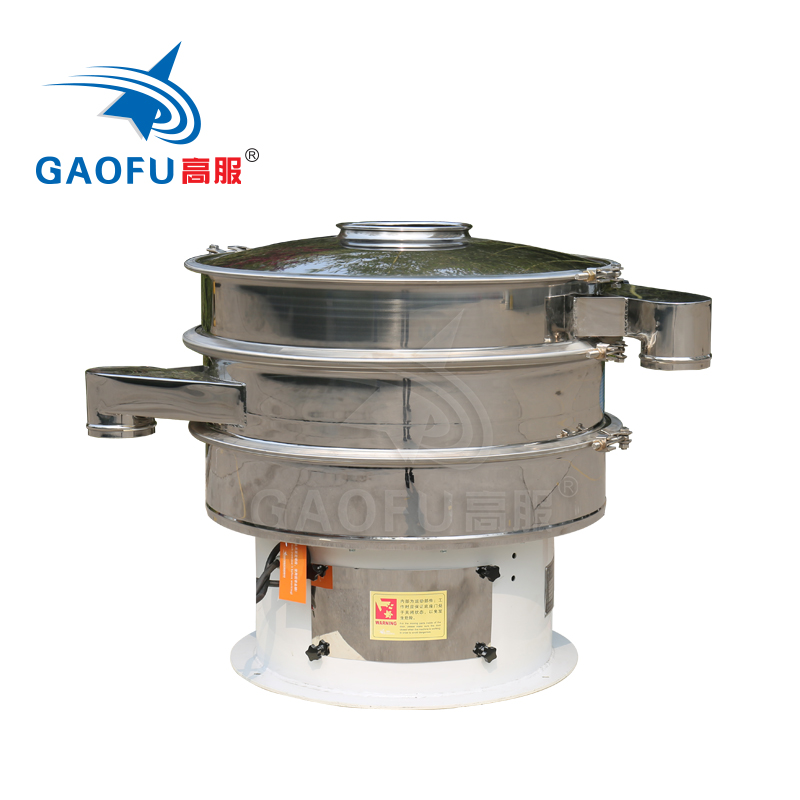
A Rotary Vibrating Sieve, also known as a rotary vibro separator, provides a mechanical screening option for separating particles according to their size. When selected and installed appropriately, it can help intercept foreign debris before the material reaches downstream processing equipment. Gaofu Machinery offers rotary vibrating screening equipment for applications involving powder and granular materials, including impurity removal. Gaofu Rotary Vibrating Screen
1. Why Foreign Debris Screening Matters Before Pelletizing
Foreign materials can enter an animal feed production line at several points. Incoming grain and agricultural ingredients may carry stones, plant residues, or compacted soil. During storage and transfer, packaging fragments, loose fasteners, or other unwanted objects may accidentally enter the material stream. Equipment wear can also introduce contaminants that require separate investigation and control.
If these materials reach a pellet mill, potential consequences include:
- Mechanical interference: Hard or oversized objects may obstruct material movement or place additional stress on processing components.
- Unplanned production stops: Operators may need to stop the line to investigate abnormal operation or remove an obstruction.
- Additional maintenance: Foreign material can contribute to wear or damage, depending on its size, hardness, shape, and the equipment involved.
- Product-quality concerns: Unwanted material in the finished feed may result in rejected batches, additional inspection, or customer complaints.
- Difficult troubleshooting: When contaminants are not intercepted early, identifying where they entered the process can become more complicated.
The risks vary with the contaminant and the equipment configuration. Screening cannot prevent every possible failure, but a well-designed screening checkpoint can form part of a broader material-protection strategy.
2. How an Inline Rotary Vibrating Sieve Works
A rotary vibrating sieve uses vibration to move material across a screen surface. In Gaofu's rotary vibrating screen design, a vertical vibration motor and eccentric weights generate three-dimensional motion. The movement distributes material over the screen and helps suitable particles pass through the mesh while retained particles move toward a separate discharge, depending on the machine configuration. Gaofu Rotary Vibrating Screen
For an animal feed application, the equipment can be configured to separate the intended feed material from selected oversized foreign particles before the material enters the pellet mill.
The process generally follows four stages:
- Material feeding: Prepared feed ingredients enter the screening chamber through a suitable inlet connection.
- Material distribution: Vibration spreads the material across the screen surface to support contact with the mesh.
- Size-based separation: Particles small enough to pass through the selected openings enter the accepted-material stream, while retained particles remain above the screen.
- Separate discharge: Screened material continues toward the next process stage, and retained material is directed to a designated reject outlet for inspection and controlled handling.
The actual separation performance depends on screen aperture, material characteristics, feed rate, particle shape, moisture content, and machine configuration. A rotary vibrating sieve should therefore be selected and validated using the specific feed ingredients and contaminants expected at the plant.
3. Choosing the Right Screening Point in the Feed Line
Correct equipment placement is essential. An inline separator should be positioned where it can intercept relevant contaminants without creating unnecessary handling problems or disrupting the production rate.
Before the pellet mill
Installing the sieve after ingredient preparation and before pellet-mill feeding can provide a final screening step for the prepared material mixture. This location may be appropriate when the objective is to intercept oversized debris that remains after upstream cleaning, grinding, or mixing.
However, the ideal position depends on the production process. If large contaminants could damage a grinder or another upstream machine, a screening stage placed only before the pellet mill would not protect that earlier equipment. Incoming-material cleaning and other protective devices may still be necessary.
After grinding or mixing
The condition of the material changes throughout processing. Grinding may reduce some particles in size, while mixing combines ingredients from multiple sources. A screening point after these operations can inspect the combined material stream before pelletizing.
The screen must be selected carefully so that it captures the intended foreign material without unnecessarily rejecting acceptable feed ingredients. Where the formulation contains naturally occurring coarse particles, the target separation should be defined before equipment selection.
At a transfer point
A transfer point may offer convenient access for integrating screening into an existing production line. Nevertheless, the installation must account for available headroom, feed distribution, discharge connections, cleaning access, and the material-handling equipment upstream and downstream.
The final arrangement should be confirmed through a process-flow review rather than relying on equipment capacity alone.
4. Selecting Screen Mesh for Foreign-Debris Control
Screen aperture is one of the most important factors in configuring an inline vibro separator. The openings must be suitable for the feed material and the foreign particles the process is intended to retain.
An aperture that is too large may allow some unwanted particles to pass through. An aperture that is too small may retain acceptable ingredients, reduce throughput, or increase the frequency of screen cleaning.
Before selecting the mesh, feed manufacturers should establish:
- Target contaminant size: Identify the approximate dimensions of the foreign material that the screen should intercept.
- Acceptable feed-particle range: Determine which ingredient particles must pass through without being unnecessarily rejected.
- Particle shape: Thin flakes, fibers, and elongated fragments may behave differently from spherical or compact particles of a similar size.
- Material flow characteristics: Moisture, fat content, cohesion, and particle distribution can affect how material moves across the screen.
- Required production rate: Confirm that the proposed screen area and aperture can handle the actual operating load.
Screening is fundamentally a size-based separation method. A small metal fragment may pass through a mesh opening if its dimensions and orientation permit it. Therefore, a rotary vibrating sieve should not be treated as a substitute for magnetic separation or metal detection where those controls are required.
5. Combine Screening with Other Equipment-Protection Measures
Foreign-debris management works best as a coordinated process rather than a single-machine solution.
A rotary vibrating sieve can intercept selected particles based on screen size, but different contaminants require different control methods.
Magnetic separators can help capture susceptible ferrous metal contaminants when properly selected and installed. Their effectiveness depends on the material, particle characteristics, magnetic field, flow conditions, and maintenance.
Metal detectors can provide an additional method of identifying metal contamination within their designed operating range. Depending on the system, detection may trigger an alarm, stop the line, or activate an automatic reject mechanism.
Incoming-material inspection can help identify contamination sources before raw materials enter production. Supplier controls, receiving inspections, storage practices, and appropriate cleaning equipment all contribute to risk reduction.
Preventive maintenance helps identify loose components, damaged screens, worn connections, or other conditions that could introduce debris into the process.
The OSHA Technical Manual discusses the importance of preventing ignition sources, including tramp metal that may enter grain-processing equipment with raw materials, in facilities where combustible dust hazards exist. This reinforces the need to assess material protection alongside the plant's wider safety controls. OSHA Technical Manual
The appropriate combination of controls depends on the feed formulation, production line, equipment risks, and applicable regulations.
6. Design the Installation to Prevent Bypass and Recontamination
Even a correctly selected screen may offer limited protection if material can bypass it or become contaminated again afterward.
For an inline installation, review the following details:
- Secure inlet and outlet connections: Ensure that material follows the intended route through the screening chamber.
- Appropriate seals and covers: Select sealing arrangements suited to the material, operating environment, and cleaning requirements.
- Controlled reject discharge: Prevent retained debris from returning accidentally to the accepted-material stream.
- Suitable downstream conveying: Maintain a reliable path from the sieve to the pellet mill without creating unnecessary accumulation points.
- Maintenance access: Allow operators to inspect the screen, remove retained material, and service the equipment safely.
- Structural compatibility: Check that supporting structures and connections can accommodate the machine's operating vibration and load.
For existing plants, the integration review should also consider available floor space, conveying height, electrical requirements, and the operating characteristics of adjacent equipment. Flexible connectors, supports, and other interface components should be selected according to the machine manufacturer's recommendations and the plant's engineering requirements.
7. Monitor Reject Material to Identify Problems Earlier
The reject outlet provides useful information about the condition of incoming materials and the production line. Routine inspection can help operators understand whether foreign-debris levels are stable or changing.
A practical monitoring program can include:
- Recording the type and approximate quantity of retained material.
- Checking for recurring stones, packaging fragments, metal pieces, or other debris.
- Investigating sudden changes in the quantity or nature of rejects.
- Inspecting the screen for tears, deformation, loosened fittings, and abnormal wear.
- Verifying that the accepted-material stream meets the intended screening requirements.
- Documenting inspections and corrective actions.
For example, a sudden increase in packaging fragments may indicate a problem during bag opening or material transfer. Repeated metal fragments may justify an inspection of upstream equipment and a review of magnetic separation or metal-detection controls. These observations should prompt investigation rather than an automatic assumption about the source.
A screen should also be checked for damage before operation resumes after maintenance. A torn or incorrectly installed mesh can undermine the intended separation process and potentially introduce additional debris.
8. Maintaining Reliable Screening Performance
Regular maintenance helps keep the screening stage aligned with the requirements of the feed line. The maintenance schedule should reflect operating hours, material characteristics, inspection findings, and the equipment manufacturer's recommendations.
Key tasks include cleaning the screen surface, checking mesh tension and integrity, inspecting sealing components, examining the motor and electrical connections, and verifying the condition of inlet and discharge interfaces.
Operators should also confirm that the reject outlet remains unobstructed and that retained contaminants are removed according to the plant's procedures. If the material begins to accumulate unevenly, the team should investigate feed distribution, screen condition, and operating settings rather than increasing feed rate without assessment.
Where feed dust may be combustible, equipment selection and maintenance must also form part of the site's wider combustible-dust risk assessment. Applicable requirements depend on the facility, material properties, installation, and jurisdiction. A rotary vibrating sieve alone does not establish that a process is safe from dust fires or explosions.
9. Gaofu Machinery: Screening Solutions for Feed Processing
Gaofu Machinery manufactures rotary vibrating screening equipment for powder and granular material applications. Its rotary vibrating sieve uses three-dimensional vibration to support screening, grading, and impurity-removal processes. Depending on the material and production requirements, the machine can be evaluated for integration into a feed preparation line as a screening checkpoint ahead of pelletizing.
For a suitable application, the selection process should consider the material composition, expected contaminant types, screen aperture, required throughput, installation dimensions, cleaning method, and downstream connection requirements.
Rather than choosing a machine solely by nominal diameter or motor power, feed manufacturers should provide application details so the equipment configuration can be assessed against their actual process conditions.
Learn more about Gaofu's Rotary Vibrating Screen and discuss your feed-screening requirements with the technical team.
Conclusion
Protecting a pellet mill starts with controlling the material that enters it. An inline Rotary Vibrating Sieve can provide a practical size-based screening stage to help intercept selected foreign debris before prepared feed reaches downstream pelletizing equipment.
The value of this installation depends on the correct screening location, suitable mesh selection, controlled material flow, reliable reject handling, and consistent maintenance. Combining screening with appropriate magnets, metal detection, incoming-material inspection, and equipment checks can create a more comprehensive approach to foreign-material control.
For feed manufacturers planning a new line or upgrading an existing one, Gaofu Machinery can be considered as a screening-equipment supplier for evaluating an application-specific solution.