

Evaluating Sealed Protein Powder Feeding Station Equipment: Minimizing Product Loss and Maintaining Environmental Cleanliness in Nutritional Powder Facilities
Post Date: 2026-10-29
In nutritional powder manufacturing, fine ingredients such as whey isolate, casein, and plant proteins represent a significant portion of operating expenditures. Beyond material costs, maintaining stringent facility cleanliness requires managing fugitive dust that escapes during raw material handling. Traditional open-air dumping methods often result in unrecovered product shrinkage, increased housekeeping overhead, and unnecessary strain on facility air filtration systems.
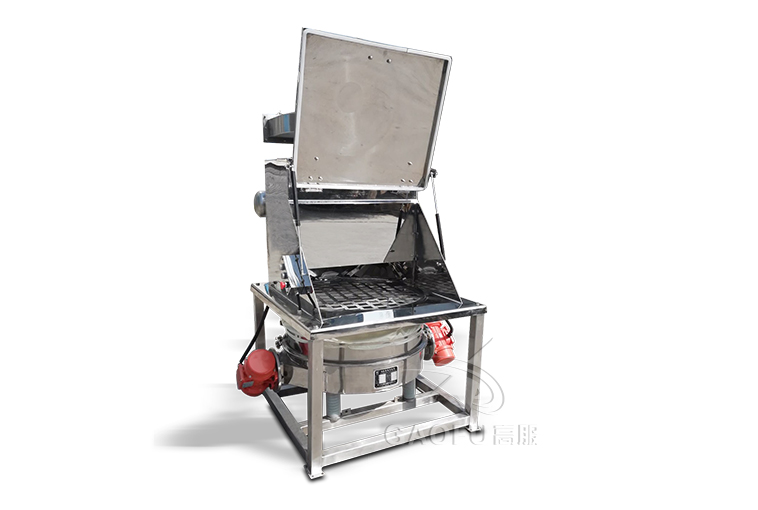
Evaluating the economic and environmental return of a sealed Gaofu feeding station provides plant managers with a clear metric for optimizing raw material recovery, protecting indoor air quality, and reducing daily sanitation labor.
1. Quantifying Product Recovery and Minimizing Shrinkage
Every gram of protein powder lost to the atmosphere or swept away during cleanup represents direct financial loss. In high-volume facilities processing tens of thousands of kilograms weekly, even a small percentage of fugitive dust accumulates into substantial inventory shrinkage.
- Closed-Loop Containment: By enclosing the bag-dumping zone inside a gasketed, negative-pressure cabinet, the Gaofu feeding station ensures that fine protein particles suspended during bag slitting remain inside the processing envelope.
- Automatic Filter Pulse-Back: Captured powders clinging to internal filter cartridges are automatically dislodged via timed compressed-air pulse jets, dropping the recovered material directly back into the primary batch stream rather than discarding it as waste.
2. Environmental Cleanliness and HVAC Optimization
Airborne organic powders pose severe housekeeping and environmental control challenges. When fine dust migrates through a production hall, it settles on overhead ductwork, lighting fixtures, and adjacent production lines, creating potential allergen cross-contamination vectors and slip hazards.
- Localized Capture vs. Room-Wide Scavenging: Rather than relying on massive facility-wide ventilation systems to clear ambient air, the feeding station captures particulates directly at the source with an integrated high-efficiency exhaust blower.
- Reduced HVAC Load: Maintaining a sealed boundary minimizes the escape of conditioned air and fine dust into the broader facility, lowering the particulate burden on central HVAC systems and decreasing filter replacement frequencies across the plant.
3. Labor Efficiency and Housekeeping Reductions
Manual cleanup of fine powder residue is labor-intensive, requiring frequent wet-wiping or vacuuming of floors and surrounding equipment surfaces between product runs.
- Streamlined Sanitation Cycles: Because fugitive dust dispersion is virtually eliminated, routine housekeeping shifts focus from sweeping sprawling powder deposits to performing quick, targeted sanitation of the internal hopper and screen mesh.
- Operator Time Reallocation: Plant personnel save hours of manual cleaning labor weekly, redirecting those resources toward higher-value batching, quality control, and monitoring tasks.
4. Operational Comparison: Open vs. Sealed Feeding Performance
| Performance Metric | Traditional Open Hoppers | Sealed Gaofu Feeding Station |
| Material Shrinkage / Loss | Moderate to high via airborne dispersion | Minimal ($\le 0.1\%$) via automated filter recovery |
| Facility Air Quality Impact | Requires constant room-level dust cleanup | Source-captured; ambient air remains clean |
| Daily Housekeeping Labor | High (frequent facility-wide sweeping/wiping) | Low (focused internal washdown/inspection) |
| Cross-Contamination Risk | Elevated due to open particulate migration | Controlled via dedicated sealed housing and filtration |
Conclusion
Investing in sealed bulk handling technology offers nutritional powder processors a measurable return through reduced raw material loss, cleaner ambient air, and lower facility maintenance costs. By integrating a Gaofu feeding station at the primary intake point, facilities can protect their bottom line while upholding rigorous environmental and workplace safety standards.