

Flour Sieve Production Line Planning: Integrating Feeding Systems with Upstream and Downstream Equipment
Post Date: 2026-09-11
A flour sieve rarely operates as an isolated machine. In a modern flour-processing line, screening is usually one stage within a broader material-handling and production process. Raw material must first reach the feeding stage, pass through the flour sieve, and then move toward storage, blending, packaging, or another downstream operation.
For this reason, production-line planning should consider the Feeding system together with upstream and downstream equipment. The objective is to establish a practical process route in which each stage performs its intended function without creating unnecessary material-handling complexity.
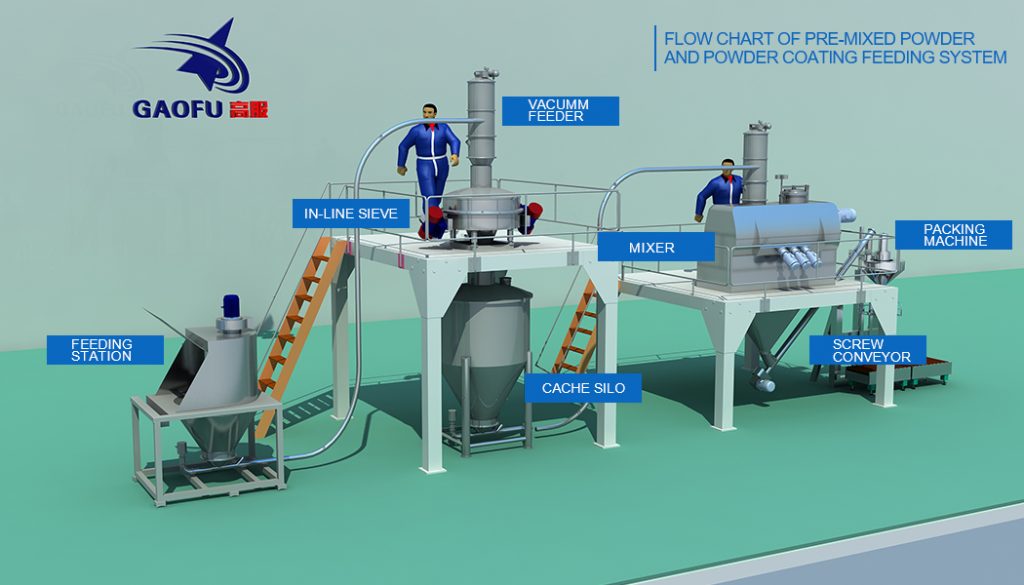
For flour mills, food-ingredient manufacturers, and powder-processing facilities, a properly planned Feeding system can serve as an important link between material supply and screening equipment.
1. Map the Complete Production Route First
Before selecting individual machines, it is useful to establish the overall process flow.
A typical flour screening process may follow a route such as:
Raw Material Storage → Feeding System → Conveying → Flour Sieve → Collection → Blending or Packaging
The exact sequence depends on the production process.
Some facilities may require bulk-bag discharge before feeding, while others may receive flour from a silo, hopper, bag unloading station, or another upstream process.
By mapping the complete route first, engineers can identify the function of each piece of equipment and determine where the Feeding system should be positioned.
This approach can also help avoid unnecessary transfers between machines.
2. Understand the Role of Upstream Equipment
Upstream equipment supplies material to the Feeding system. Its configuration can therefore influence how the feeding stage should be designed.
Possible upstream equipment includes:
- Storage silos
- Hoppers
- Bag unloading equipment
- Big Bag Feeding Stations
- Conveying equipment
- Ingredient storage systems
- Previous processing equipment
For example, a flour-processing facility using bulk bags may require a Big Bag Feeding Station before the Feeding system.
A simplified route could be:
Bulk Bag → Big Bag Feeding Station → Feeding System → Flour Sieve
In another application, material may come directly from a storage hopper:
Storage Hopper → Feeding System → Flour Sieve
The appropriate arrangement depends on the source of the flour and the required production process.
3. Define the Function of the Feeding System
Within the production line, the Feeding system acts as a material-supply stage.
Its role may include receiving material from upstream equipment, providing a suitable route toward the flour sieve, and supporting the operational requirements of the screening stage.
However, the Feeding system does not need to perform every material-handling function.
Depending on the project, separate equipment may be responsible for:
- Bulk-bag unloading
- Temporary storage
- Powder conveying
- Screening
- Collection
- Metal detection
- Blending
- Packaging
Defining these functions clearly can make the production line easier to engineer and maintain.
4. Plan the Flour Sieve as Part of the Process
The flour sieve performs the screening function, but its location in the production line should be considered carefully.
The sieve may be installed:
- Before blending
- Before packaging
- After bulk material transfer
- Before a sensitive downstream process
- At another point specified by the production process
The correct position depends on what the screening stage is intended to achieve.
For example, screening may be used to remove unwanted oversized particles or agglomerates before flour enters a downstream processing stage.
The Feeding system should then be configured to supply the sieve at the appropriate point in the overall production route.
5. Consider Downstream Equipment Early
Downstream equipment can be just as important as upstream equipment when planning a flour sieve production line.
Possible downstream stages include:
- Flour collection
- Storage
- Blending
- Dosing
- Packaging
- Filling
- Further processing
- Finished-product transfer
The discharge arrangement of the flour sieve should be compatible with the next process stage.
For example:
Feeding System → Flour Sieve → Collection Hopper
may be suitable for one production arrangement, while another may require:
Feeding System → Flour Sieve → Conveying System → Blending Equipment
The downstream process should therefore be identified before the final equipment layout is established.
6. Avoid Unnecessary Material Transfers
Every additional transfer point can introduce another interface that needs to be considered.
A production line with excessive conveying stages may require additional equipment, space, connections, maintenance points, and cleaning procedures.
Where the process allows, engineers can evaluate whether two stages can be positioned appropriately to create a more straightforward material route.
For example:
Storage → Feeding → Screening → Collection
may be more straightforward than introducing multiple unnecessary intermediate transfers.
This does not mean that the shortest material route is always the correct solution. Elevation differences, equipment functions, safety requirements, cleaning access, and plant layout must also be considered.
7. Evaluate Vertical and Horizontal Layouts
Flour sieve production lines often need to work within existing factory buildings. Available floor space and equipment height can therefore influence the arrangement.
A vertical layout may use gravity to assist certain material transfers:
Upper Storage → Feeding Stage → Flour Sieve → Lower Collection
A horizontal arrangement may instead use conveying equipment between processing stages.
During layout planning, engineers can evaluate:
- Equipment height
- Floor area
- Ceiling clearance
- Transfer distances
- Maintenance space
- Operator access
- Material inlet and outlet elevations
- Existing production equipment
The Feeding system should be positioned according to the complete line rather than independently.
8. Coordinate Material Storage with Feeding Capacity
Storage equipment and the Feeding system have different functions, but their capacities need to be considered together.
The storage stage provides material availability, while the Feeding system transfers material toward the screening process.
A production line may therefore need to consider:
- Storage volume
- Feeding capacity
- Flour sieve capacity
- Operating hours
- Batch size
- Production schedule
- Material replenishment frequency
If upstream storage cannot provide material when required, the screening stage may experience interruptions regardless of the sieve's technical configuration.
Likewise, excessive storage capacity may not be necessary for every application.
The appropriate arrangement should be based on the actual production schedule.
9. Think About Buffering Between Processes
A buffer or intermediate hopper may be useful in some production lines to separate the operating cycles of different machines.
For example:
Upstream Processing → Buffer Hopper → Feeding System → Flour Sieve → Collection Hopper → Downstream Processing
A buffer can provide temporary material storage between stages where their operating patterns are not identical.
However, adding a buffer also introduces another material-contact area that needs to be considered for cleaning, inspection, and maintenance.
Whether buffering is necessary should therefore be determined by the actual process requirements.
10. Integrate Packaging and Finished-Product Handling
When the flour sieve is positioned close to the end of the production process, downstream packaging may become part of the overall planning.
One possible route is:
Raw Flour → Feeding System → Flour Sieve → Collection → Packaging
The collection and transfer stages should be designed according to the packaging equipment's inlet requirements.
For automated packaging lines, factors such as discharge position, conveying method, storage volume, and operating sequence may need to be coordinated.
For batch production, the arrangement may instead emphasize flexible collection and convenient product changeover.
11. Consider Cleaning Across the Entire Line
Cleaning should not be considered only at the flour sieve.
The complete material-contact route may include:
Storage → Feeding System → Transfer → Flour Sieve → Collection → Downstream Equipment
Residue can potentially remain in any part of this route.
Production-line planning should therefore consider:
- Accessible material-contact surfaces
- Inspection points
- Removable components
- Cleaning procedures
- Product changeover
- Residue-prone areas
- Maintenance access
For food-processing facilities, the final equipment configuration should be evaluated against the plant's sanitation procedures and applicable requirements.
A coordinated approach can make cleaning considerations easier to incorporate into the production-line design.
12. Include Dust Management in the Overall Layout
Flour is a fine powder, so material loading, transfer, screening, and discharge may require dust-management measures.
A complete production line may incorporate:
- Enclosed transfer sections
- Suitable seals
- Covers
- Ventilation
- Dust collection
- Appropriate grounding
- Suitable electrical equipment
The Feeding system should be evaluated as one part of this broader arrangement.
Where combustible flour dust may present a hazard, the complete installation should be assessed according to applicable regulations, site risk assessments, and relevant safety requirements. No individual component should be regarded as eliminating all dust-related risks.
13. Example of a Coordinated Flour Sieve Production Line
Consider a food-processing facility receiving flour in bulk bags.
A possible production route could be:
Bulk Bag → Big Bag Feeding Station → Feeding System → Flour Sieve → Collection Hopper → Blending → Packaging
Each stage has a defined function:
Big Bag Feeding Station: receives and discharges bulk material.
Feeding System: manages the material supply route toward screening.
Flour Sieve: performs the required screening operation.
Collection Hopper: receives screened material.
Blending Equipment: combines ingredients according to the production process.
Packaging Equipment: prepares the processed product for the next stage.
The actual configuration would depend on material characteristics, capacity, equipment specifications, factory layout, and the customer's production requirements.
14. How Gaofu Machinery Supports Production-Line Planning
Gaofu Machinery provides Feeding system and screening equipment solutions for powder-processing applications. When planning a flour sieve production line, the Feeding system can be considered together with upstream and downstream equipment according to the customer's process.
The technical evaluation may cover:
- Raw-material supply method
- Required production capacity
- Storage arrangements
- Feeding method
- Flour sieve configuration
- Collection method
- Downstream processing
- Packaging requirements
- Factory layout
- Cleaning and maintenance access
- Dust-management considerations
Depending on the application, the line may incorporate equipment such as Feeding systems, Big Bag Feeding Stations, conveying equipment, and screening machines.
The final configuration should be confirmed through technical evaluation based on actual material properties, process requirements, site conditions, and applicable standards.
Conclusion
Planning a flour sieve production line requires consideration of the complete process rather than the screening machine alone.
The Feeding system connects the material-supply stage with the flour sieve, while upstream equipment determines how material arrives and downstream equipment determines where screened flour goes next. Storage, conveying, collection, blending, packaging, cleaning, maintenance, and dust management may all influence the final layout.
A practical planning process can therefore follow this sequence:
Define the Production Process → Map Upstream Equipment → Select the Feeding System → Position the Flour Sieve → Plan Downstream Handling → Review Cleaning and Safety Requirements
By considering these stages together, flour processors can develop a production-line configuration that is aligned with their specific operating conditions.
Gaofu Machinery can provide customized Feeding system and screening equipment solutions for different powder-processing applications, with the final configuration determined according to actual production and site requirements.