

From Bulk Salt to Finished Product: Understanding the Screening Steps Involving a Rotary Vibrating Sieve
Post Date: 2026-09-17
Salt production involves more than simply moving bulk material from one location to another. Depending on the type of salt and the final product specification, the material may pass through storage, conveying, crushing, drying, screening, classification, and packaging stages before reaching the finished-product area.
Within this process, a Rotary vibrating sieve can serve as a screening and classification point. Its role may change according to where it is installed. At one stage, it may separate oversized particles from bulk salt; at another, it may divide the material into different size fractions before the product enters storage or packaging.
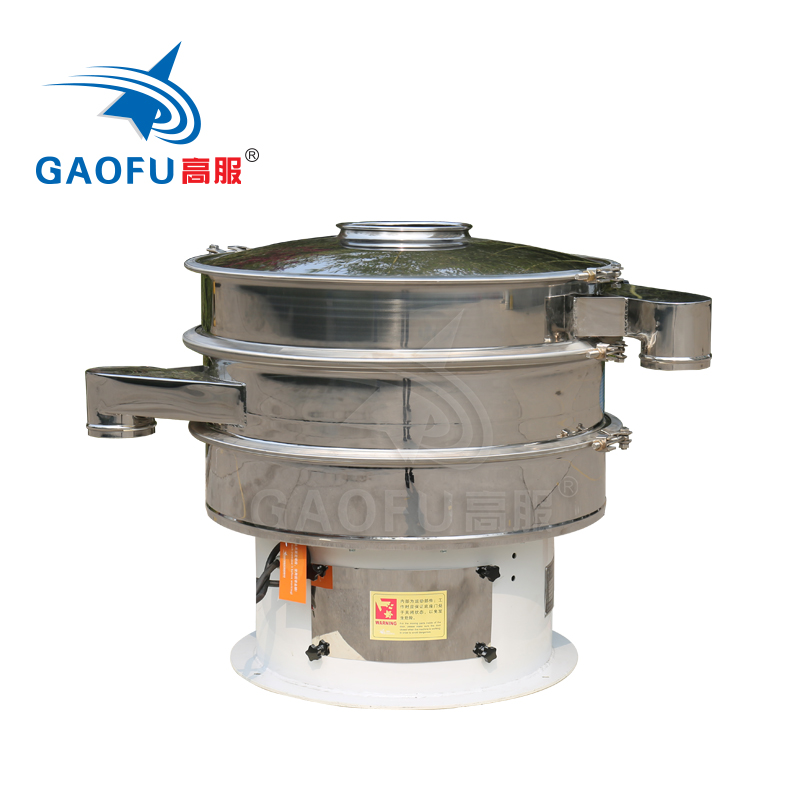
Understanding the complete material journey helps processors determine how screening fits into the production process and how each screening step can be connected with the next operation.
1. Starting With Bulk Salt
Bulk salt can arrive at a processing facility in different physical conditions. It may contain a broad range of crystal sizes, larger particles, agglomerates, or other material that needs to be handled before the salt reaches the finished-product stage.
A simplified route can be represented as:
Bulk Salt → Material Feeding → Size Adjustment / Drying → Screening → Classification → Finished Product → Packaging
The actual process may be shorter or more complex depending on the salt source, product requirements, and production technology.
The screening stage should therefore be viewed as part of the overall material journey.
2. Receiving and Preparing Bulk Material
Before salt reaches a Rotary vibrating sieve, the material normally needs an appropriate feeding method.
Possible equipment may include:
- Feed hoppers
- Conveyors
- Elevators
- Storage bins
- Feeding systems
The purpose is to transfer bulk salt toward the processing equipment at a suitable rate.
At this stage, the main concern is not yet final particle-size classification. Instead, the production line needs to establish a controlled route from bulk storage to the next processing stage.
3. Initial Size Adjustment
Bulk salt may contain crystals outside the desired product range.
Depending on the production process, crushing or other size-adjustment equipment may be used before screening.
The process can follow:
Bulk Salt → Crushing → Rotary Vibrating Sieve
The crusher reduces larger particles, while the sieve subsequently separates the resulting material according to the required screening specification.
This combination allows the two operations to perform different functions:
- Crushing: changes particle size
- Screening: separates particles according to size
Keeping these functions distinct can make the material route easier to understand and manage.
4. Screening After Drying
Some salt-processing lines include a drying stage.
After drying, the material may require screening before it moves to the finished-product section.
A typical route may be:
Salt → Drying → Rotary Vibrating Sieve → Product Collection
At this point, the sieve can separate particles according to the defined screening requirement.
For example, larger particles or agglomerates may be separated from the main product fraction.
The appropriate screening position depends on the physical condition of the salt and the process design.
5. Feeding Salt Into the Rotary Vibrating Sieve
Once the material reaches the screening stage, it enters the Rotary vibrating sieve through the feed inlet.
The material is distributed across the screening surface while the machine generates a controlled vibration pattern.
During operation, particles interact with the screen surface according to their size and physical characteristics.
Particles that can pass through the selected openings move toward the corresponding lower fraction, while larger particles remain on the screening surface and move toward the appropriate discharge route.
The exact separation result depends on the screen specification and operating conditions.
6. The First Screening Step: Removing Oversized Material
One common use of a Rotary vibrating sieve is preliminary removal of oversized particles.
The process can be represented as:
Bulk Salt → Rotary Vibrating Sieve → Target Material + Oversized Material
The oversized fraction may contain large crystals or agglomerated particles.
Depending on the production procedure, this fraction can be:
- Collected separately
- Sent for further processing
- Returned to a size-adjustment stage
- Inspected before disposal or reuse
The destination should be defined as part of the process design.
7. The Second Screening Step: Particle Classification
Some salt products require more than simple oversize removal.
When different particle-size fractions are needed, a multi-layer Rotary vibrating sieve can be used for progressive classification.
For example:
Salt Feed
↓
Upper Screen → Coarse Fraction
↓
Lower Screen → Medium Fraction
↓
Final Discharge → Fine Fraction
This arrangement allows several fractions to be collected from one screening operation, subject to the machine configuration and material characteristics.
The resulting fractions can then be routed to separate storage or packaging processes.
8. Separating Salt Into Product Streams
After screening, different particle-size fractions need clearly defined destinations.
A simplified process might look like:
Rotary Vibrating Sieve
→ Fine Salt → Fine Product Hopper
→ Medium Salt → Medium Product Hopper
→ Coarse Salt → Reprocessing / Separate Storage
This is where screening becomes directly connected with finished-product management.
Each fraction can be identified and routed according to the corresponding product specification.
The screening machine therefore functions as a material-distribution point as well as a separation device.
9. Managing the Oversized Fraction
The coarse fraction from a screening stage does not automatically represent waste.
In some production processes, oversized salt can be returned to an upstream size-adjustment operation.
For example:
Screening → Oversized Salt → Crushing → Screening Again
This creates a circulation path within the process.
Whether this approach is practical depends on production capacity, material characteristics, equipment compatibility, and the customer's process requirements.
Other facilities may use separate collection instead.
10. Moving the Qualified Fraction Toward Finished Product Storage
Once the salt has passed the required screening stage, the qualified fraction can move toward intermediate storage or directly toward packaging.
A common route is:
Rotary Vibrating Sieve → Conveying → Finished Product Hopper → Packaging
The conveying method can vary depending on the material, equipment arrangement, plant height, and production rate.
An intermediate hopper can also be used when the screening and packaging stages operate at different rates.
This buffer can help separate the material-screening operation from the packaging operation within the overall workflow.
11. Screening Immediately Before Packaging
Some production lines place a final screening stage relatively close to the packaging section.
The purpose may be to provide a final particle-size separation or remove oversized particles before the material enters the packaging equipment.
A simplified arrangement is:
Finished Salt → Rotary Vibrating Sieve → Product Hopper → Packaging Machine
This configuration can be considered when the production process requires a screening checkpoint before filling.
The exact location should depend on the material route and the customer's product-control procedures.
12. From Screened Salt to Finished Packages
After the screening stage, the material may enter an automated or semi-automated packaging process.
For example:
Screened Salt → Storage Hopper → Weighing → Filling → Sealing → Finished Package
At this point, the Rotary vibrating sieve has already completed its specific role in material separation.
Its contribution is not to perform packaging, but to prepare or classify the material before it reaches the packaging stage.
Separating these process functions makes it easier to identify the requirements of each piece of equipment.
13. Where Multiple Screening Points May Be Used
Some salt production processes may require more than one screening operation.
For example:
Bulk Salt
↓
Preliminary Screening
↓
Crushing / Drying
↓
Secondary Screening
↓
Classification
↓
Final Screening
↓
Packaging
The purpose of each screening point should be different.
An early screening stage may handle oversized material, while a later stage may focus on final classification.
Using several screening points should be based on the actual process requirements rather than simply adding equipment to the line.
14. Screening Different Salt Products
The screening sequence can vary between salt products.
Fine Edible Salt
A typical route may involve:
Bulk Salt → Processing → Fine Screening → Product Storage → Packaging
Coarse Salt
A possible route is:
Bulk Salt → Size Adjustment → Screening → Coarse Product Collection
Multi-Grade Salt
A more complex process may use:
Bulk Salt → Processing → Multi-Layer Screening → Several Product Fractions
The final configuration depends on the intended product specifications.
15. Considering Material Transfer Between Screening Steps
The material does not necessarily move directly from one machine to another.
Depending on the plant, intermediate transfer equipment may be required.
For example:
Rotary Vibrating Sieve → Hopper → Conveyor → Storage Bin
or:
Rotary Vibrating Sieve → Direct Discharge → Downstream Equipment
The choice depends on equipment elevation, material flow, plant space, production rate, and process arrangement.
Clear transfer routes can make it easier to identify where material accumulation, cleaning, inspection, or operator access may be required.
16. Screening as a Process Checkpoint
A screening stage can also function as a process checkpoint.
Operators or quality-control personnel may examine the screened fractions to determine whether the material is within the defined product requirements.
For example, the production team can monitor:
- Particle-size distribution
- Oversized material levels
- Product fraction separation
- Screen condition
- Material flow
- Changes between batches
Screening does not replace the customer's complete quality-control system. Instead, it can provide a physical separation stage that supports the broader production process.
17. Cleaning and Product Changeover Along the Material Route
When different salt products are processed on the same equipment, changeover procedures become part of the material journey.
The screening stage may require:
- Removal of remaining material
- Screen inspection
- Cleaning of contact surfaces
- Verification before the next batch
- Appropriate handling of collected fractions
The exact procedure should follow the production site's hygiene and quality requirements.
For food-processing applications, cleaning and material-contact requirements should also be considered according to applicable regulations and facility standards.
18. A Complete Example of a Salt Screening Workflow
A representative salt-processing sequence could be:
1. Bulk Salt Receiving
↓
2. Storage / Buffer Hopper
↓
3. Controlled Feeding
↓
4. Crushing or Size Adjustment
↓
5. Drying, Where Required
↓
6. Rotary Vibrating Sieve
↓
7. Oversized Material Separation
↓
8. Particle-Size Classification
↓
9. Product Collection
↓
10. Finished Product Storage
↓
11. Packaging
Not every facility requires every step. The actual sequence should be adapted to the raw material, product specifications, production capacity, and existing equipment.
19. Gaofu Machinery Rotary Vibrating Sieve for Salt Processing
Gaofu Machinery provides Rotary vibrating sieve equipment for powder and granular material screening applications.
For salt-processing projects, the machine can be considered at different stages of the production route, including:
- Screening after size adjustment
- Screening after drying
- Oversized-particle separation
- Multi-fraction classification
- Screening before product storage
- Screening before packaging
Configuration discussions can include the required screening objective, material characteristics, number of fractions, screen arrangement, feeding conditions, discharge routes, equipment dimensions, and cleaning requirements.
Gaofu Machinery can evaluate the customer's complete material route and process conditions when developing a suitable screening proposal.
Conclusion
From bulk salt receiving to finished-product packaging, screening can appear at several points in a salt-processing workflow. A Rotary vibrating sieve can perform different functions depending on its position, including oversized-particle removal, particle-size classification, and preparation of salt before storage or packaging.
The key is to define the role of each screening stage within the complete material route.
By connecting bulk-material handling, size adjustment, drying, screening, classification, collection, and packaging into a clearly defined process, salt producers can determine where a Rotary vibrating sieve fits and what function it should perform.
Gaofu Machinery can work with customers to evaluate the material route and develop Rotary vibrating sieve configurations according to the specific salt-processing application and production requirements.