

Rotary Vibrating Sieve Applications for Edible Salt, Industrial Salt, and Other Crystalline Materials
Post Date: 2026-09-17
Crystalline materials are widely used across food processing, chemical manufacturing, mineral processing, and other industrial applications. Although many crystalline materials have relatively free-flowing characteristics, their particle size, moisture content, shape, and processing requirements can vary significantly from one application to another.
A Rotary vibrating sieve can be incorporated into these processes to perform screening, particle separation, classification, or removal of oversized material. Its circular screening structure and multi-layer configuration make it suitable for a range of powder and granular material applications when the equipment parameters are matched to the process.
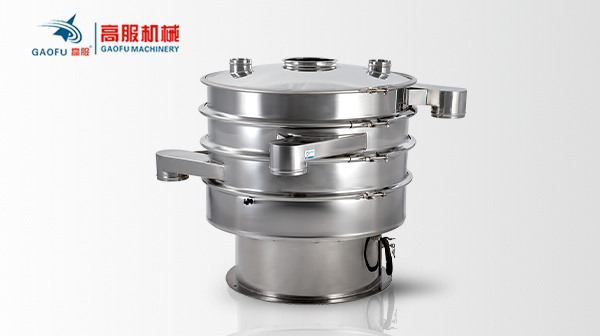
Salt is one of the common crystalline materials processed with vibrating screening equipment. Depending on the application, the material may be edible salt, industrial salt, refined salt, coarse crystalline salt, or salt-containing mixtures. Other crystalline materials, such as sugar, fertilizer crystals, mineral granules, and certain chemical materials, may also require screening before further processing.
1. Screening Requirements Vary Between Crystalline Materials
Crystalline materials should not be treated as one uniform category.
Their processing characteristics can differ according to:
- Crystal size
- Particle-size distribution
- Particle shape
- Moisture content
- Surface characteristics
- Bulk density
- Tendency to form agglomerates
- Required product specification
For this reason, the same Rotary vibrating sieve configuration may not be appropriate for every crystalline material.
The screening process should be developed around the actual material and the purpose of separation.
2. Rotary Vibrating Sieve for Edible Salt
Edible salt is commonly processed into different particle-size grades for food manufacturing and consumer products.
A Rotary vibrating sieve can be used to screen edible salt after processes such as drying, crushing, or size adjustment.
Typical applications may include:
- Removing oversized salt particles
- Separating different crystal-size fractions
- Screening before packaging
- Checking material size during production
- Handling salt for different product specifications
For food-related applications, the equipment configuration can be evaluated according to applicable food-contact requirements, cleaning procedures, production environment, and the customer's hygiene standards.
The screening stage can therefore become one part of a broader edible-salt processing workflow.
3. Fine Edible Salt Screening
Fine salt has a smaller particle size and may require a finer screening surface.
In this application, the Rotary vibrating sieve can be configured around the desired separation range.
A typical process may be:
Fine Salt Feed → Rotary Vibrating Sieve → Qualified Fine Salt → Packaging
The actual screen specification should be established according to the required particle-size range and material characteristics.
Where fine particles are involved, operators may also need to consider material loading, screen condition, cleaning, and enclosed material transfer according to the production environment.
4. Coarse Crystalline Salt Applications
Coarse salt crystals can have substantially larger particle sizes than fine edible salt.
A Rotary vibrating sieve can be used to separate coarse material into different fractions or remove particles outside the intended range.
For example:
Coarse Salt → Screening → Large Fraction + Target Fraction
If the production process requires several grades, a multi-layer machine can be considered.
Each screening deck can use an appropriate opening so that the material is separated progressively into different fractions.
5. Industrial Salt Screening
Industrial salt is used in various manufacturing processes and may have different specifications from edible salt.
The screening objective may include:
- Particle-size classification
- Oversized material separation
- Process-material preparation
- Screening before storage
- Screening before downstream manufacturing
Because industrial salt applications can differ significantly, the Rotary vibrating sieve should be configured according to the customer's material characteristics and process requirements.
Factors such as required throughput, crystal size, moisture, and downstream equipment can all affect the appropriate configuration.
6. Salt Used as an Industrial Raw Material
In some manufacturing processes, salt serves as a process raw material rather than a finished consumer product.
In these situations, screening can be used to prepare the material for a subsequent production stage.
For example:
Salt Storage → Feeding → Rotary Vibrating Sieve → Classified Salt → Downstream Process
The sieve can function as a material-preparation step that separates particles according to the requirements of the next operation.
The appropriate separation criteria depend on the downstream process.
7. Refined Salt and Processed Salt
Refined salt may undergo several processing steps before reaching the finished-product stage.
A Rotary vibrating sieve can be positioned at an appropriate point to screen the material after processing or before final packaging.
Potential functions include:
- Removing coarse particles
- Separating size fractions
- Screening after drying
- Supporting final material inspection
- Preparing material for packaging
The exact position of the sieve should be determined by the complete production process rather than by the salt type alone.
8. Salt With Added Ingredients
Some salt products may contain additional ingredients or functional components.
For example, salt can be combined with seasoning materials or other food ingredients to produce a blended product.
When screening such materials, the equipment selection should consider the physical properties of the complete mixture.
Relevant questions include:
- Are all components within a similar particle-size range?
- Is screening intended to remove oversized particles?
- Does the mixture require classification?
- Could different components separate during material movement?
- What cleaning procedure is required between products?
A Rotary vibrating sieve can be considered when the screening objective is compatible with the physical characteristics of the mixture.
9. Sugar Crystals
Sugar is another crystalline material that may require screening during food processing.
Screening applications can include:
- Removing oversized particles
- Separating agglomerated material
- Preparing sugar for downstream processing
- Classifying crystal sizes
- Screening before packaging
Although salt and sugar are both crystalline materials, their physical properties are not identical.
Therefore, a configuration developed for salt should not automatically be transferred to sugar without evaluating the actual material.
10. Fertilizer Crystals and Granules
Certain fertilizer products are manufactured or handled as crystalline or granular materials.
Screening can help separate different particle-size fractions or remove oversized granules.
A Rotary vibrating sieve may be incorporated into processes involving:
Fertilizer Material → Screening → Classified Product → Storage or Packaging
For these applications, material density, particle strength, moisture, and chemical characteristics should be considered when determining the equipment configuration.
If the material or working environment presents specific safety risks, the complete system should be assessed according to applicable regulations and site requirements.
11. Mineral Crystals and Granular Minerals
Some mineral-processing applications involve crystalline or granular materials that need size separation before further processing.
Potential applications include screening:
- Mineral crystals
- Granular mineral products
- Processed mineral powders
- Crushed crystalline materials
The required screening method depends on the material size range and the desired separation.
For larger or heavier mineral particles, equipment selection may differ from the configuration used for fine food-grade salt.
12. Chemical Crystalline Materials
Various chemical products can be produced or handled in crystalline form.
Examples may include certain inorganic salts and other crystalline chemical products.
A Rotary vibrating sieve may be used for:
- Particle-size separation
- Removal of oversized crystals
- Classification
- Preparation before filling
- Process-stage inspection
Chemical applications require particular attention to material compatibility, operating environment, cleaning procedures, and applicable safety requirements.
For potentially hazardous or combustible materials, the complete installation should be assessed based on the material's properties and relevant regulations.
13. Screening Crystalline Materials After Drying
Drying can change the physical condition of crystalline materials.
After drying, some materials may contain a mixture of individual crystals and larger agglomerates.
A Rotary vibrating sieve can be installed downstream of the dryer to separate the material according to the process requirement.
A simplified route is:
Wet Material → Drying → Rotary Vibrating Sieve → Classified Material
This arrangement can provide a screening stage between drying and subsequent storage, conveying, or packaging.
The actual arrangement depends on whether screening is more appropriate before or after drying for the specific material.
14. Removing Oversized Crystals and Agglomerates
Not all screening applications require several commercial grades.
Sometimes the main purpose is to remove particles that exceed the desired size.
For example:
Bulk Crystalline Material → Rotary Vibrating Sieve → Target Material + Oversized Material
This can be useful when oversized crystals or agglomerates may interfere with downstream conveying, feeding, filling, or processing.
The separated oversized material can then be collected, inspected, or returned to an appropriate processing stage according to the production procedure.
15. Multi-Product Production With One Screening Machine
Manufacturers handling multiple crystalline materials may need equipment that can accommodate different production requirements.
A Rotary vibrating sieve can be configured with different screen arrangements for different applications, subject to machine design and process conditions.
When switching between materials, production teams should establish suitable procedures for:
- Screen changes
- Equipment cleaning
- Residual material removal
- Cross-contamination control
- Product identification
- Process verification
This is particularly relevant when one machine is used for multiple food or chemical products.
16. Why Material Testing Matters
Material names provide only a starting point for equipment selection.
For crystalline materials, a practical evaluation may examine:
- Particle-size distribution
- Moisture content
- Bulk density
- Crystal shape
- Agglomeration
- Desired screening range
- Required fractions
- Feed rate
Sample testing can help determine whether the proposed screen configuration is suitable for the specific application.
This is useful when the material has unusual characteristics or when the required separation range is narrow.
17. Gaofu Machinery Rotary Vibrating Sieve Applications
Gaofu Machinery develops vibrating screening equipment for powder and granular material processing.
The Rotary vibrating sieve can be configured for different applications involving salt and other crystalline materials, with considerations such as:
- Material characteristics
- Screening objective
- Required particle-size range
- Number of product fractions
- Screen configuration
- Feeding method
- Discharge arrangement
- Contact-material requirements
- Cleaning procedures
- Production environment
For edible salt applications, hygiene and applicable food-processing requirements can be incorporated into the equipment discussion.
For industrial and chemical materials, material compatibility and site-specific safety requirements can also be evaluated.
Gaofu Machinery can review the customer's material information and process conditions when developing a suitable screening proposal.
Conclusion
Edible salt, industrial salt, and other crystalline materials can have different physical characteristics and processing objectives, even when they appear similar in bulk form.
A Rotary vibrating sieve can be used in various stages of crystalline-material processing, including particle-size classification, oversized-particle removal, post-drying screening, process preparation, and pre-packaging screening.
The appropriate configuration depends on the material, required separation, production conditions, and downstream process. Rather than applying one standard setup to every crystalline material, processors can evaluate the actual material characteristics and screening objective before determining the equipment configuration.
With experience in vibrating screening applications, Gaofu Machinery can provide Rotary vibrating sieve solutions for salt and other powder or granular materials based on individual process requirements.