

How Salt Moisture and Particle Characteristics Influence Salt Crushing Machine Configuration and Operation
Post Date: 2026-10-07
In salt processing, the same crushing machine can encounter significantly different operating conditions depending on the physical state of the incoming material. Moisture content, particle size, crystal structure, bulk density, flowability, and the presence of agglomerated material can all influence how a salt crushing machine should be configured and operated.
For processors using a Double Roller Crusher, understanding these variables can help improve the consistency of the crushing process and provide a more practical basis for equipment configuration. Instead of treating salt as a uniform material, operators can evaluate its physical condition before determining feeding arrangements, crushing settings, inspection methods, and downstream screening requirements.
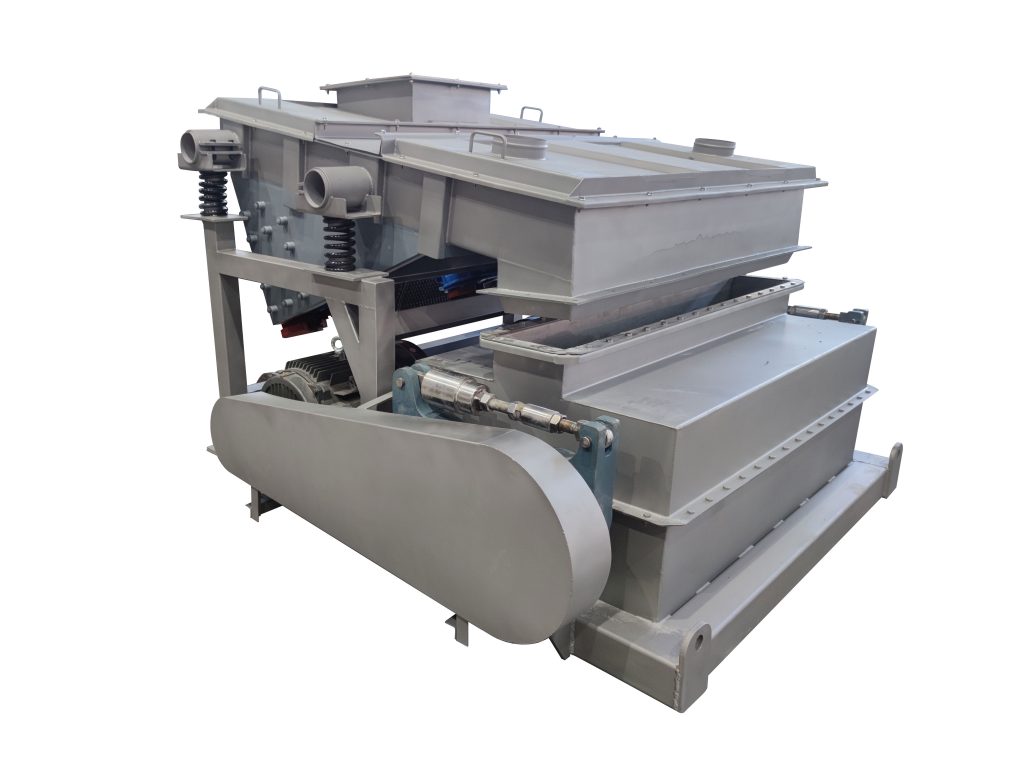
This article examines how moisture and particle characteristics may affect the operation of a Double Roller Crusher in salt processing applications, with emphasis on practical process decisions rather than simply comparing salt types or providing a general equipment-selection checklist.
1. Why Salt Condition Matters During Crushing
Salt crystals do not always enter a crusher in the same physical condition.
Depending on the upstream process and storage environment, the feed may contain:
- Relatively dry individual crystals
- Larger salt particles
- Irregularly shaped pieces
- Compacted material
- Storage-related agglomerates
- Mixed particle-size fractions
- Material with different levels of surface moisture
These differences can change the way material enters the crushing zone and passes between the rollers.
A Double Roller Crusher is generally used to reduce material size through the interaction of two rollers. Gaofu's published salt-crusher information describes cutting as a primary crushing action, supplemented by extrusion and pressing, with an adjustable crushing clearance for controlling the discharge size.
Therefore, operating conditions should be considered together with the physical characteristics of the incoming salt.
2. How Moisture Can Change Salt Feeding Behavior
Moisture is one of the most important variables to examine before establishing a stable crushing process.
Dry salt generally has different flow behavior from salt containing higher surface moisture. Moisture can contribute to adhesion, agglomeration, or changes in flowability, depending on the material condition and storage environment.
For a Double Roller Crusher, this may influence the material's behavior before it reaches the rollers.
Dry and Free-Flowing Salt
When salt is relatively dry and free-flowing, the feeding system may provide a more predictable material stream. This can make it easier to maintain a consistent feed rate to the crusher.
However, dry material can still vary in particle size and bulk density. Therefore, moisture alone should not be used as the only operating reference.
Salt with Surface Moisture
Salt containing surface moisture may behave differently during storage and feeding. Depending on the amount of moisture and the specific salt, particles may become more likely to form temporary agglomerates.
In such cases, operators may need to pay closer attention to:
- Hopper flow
- Feed consistency
- Material bridging
- Agglomerate size
- Crusher inlet conditions
- Discharge behavior
- Cleaning requirements
The appropriate configuration should be determined through material testing and site-specific evaluation rather than assuming that every moist salt behaves in the same way.
3. Moisture and Agglomeration Are Not the Same Problem
A useful distinction is between moisture content and agglomeration condition.
Two salt materials can have similar moisture levels but behave differently because of differences in storage time, particle size, crystal structure, pressure, and handling conditions.
For example, one material may remain relatively free-flowing, while another may form larger compacted pieces during storage.
This distinction matters when configuring a Double Roller Crusher.
If the main requirement is to break down storage-related agglomerates, the process objective may differ from reducing already-separated salt crystals to a specified product size.
Operators should therefore identify whether the crusher is primarily expected to:
- Reduce naturally large particles;
- Break compacted agglomerates;
- Prepare material for subsequent screening;
- Produce a defined particle-size fraction; or
- Process a combination of these conditions.
Clarifying the actual duty helps prevent the crusher from being expected to solve problems that should instead be addressed by upstream conditioning or downstream classification.
4. Particle Size Distribution Influences Operating Conditions
The average particle size of salt does not tell the whole story.
A feed containing mostly similarly sized particles may behave differently from a feed containing a broad distribution of fine particles, medium particles, and larger pieces.
For example, a feed could contain:
- A high proportion of target-size particles
- A smaller oversize fraction
- A mixture of several particle ranges
- Large agglomerates combined with fine material
If much of the material is already within the required product range, excessive crushing may create unnecessary fines.
In contrast, if a substantial proportion of the feed is oversized, the crusher may have a more significant size-reduction duty.
This is why particle-size distribution should be considered alongside the required product specification.
5. Feed Size and Crusher Inlet Configuration
The maximum feed size is another important operating parameter.
Large salt pieces or agglomerates can require different feeding considerations from relatively small crystals. The crusher inlet, upstream hopper, feeder, and transfer chute should therefore be considered as a connected system.
A practical evaluation can include:
- Maximum feed particle size
- Typical feed particle size
- Percentage of oversized material
- Feed-rate variation
- Agglomerate dimensions
- Hopper outlet dimensions
- Transfer-chute geometry
- Crusher inlet requirements
Gaofu's published salt-crusher specifications provide a reference example in which several models are listed for feed material in the 3–10 mm range, with published discharge and capacity values varying by model. These figures are manufacturer-published specifications for the listed models and should not be treated as universal performance guarantees.
For a different salt feed condition, actual equipment configuration should be confirmed against the material and process requirements.
6. Bulk Density Can Affect Feeding Stability
Particle characteristics also influence bulk density.
A salt feed containing loosely packed crystals may occupy a different volume from compacted or irregular material at the same mass flow rate.
This becomes relevant when selecting and adjusting the feeding system.
For example, if the crusher is expected to process a specified mass per hour, the corresponding volumetric feed rate can vary as bulk density changes.
This means that a stable crushing process requires more than simply matching a nominal tonnage figure.
The feeding system should be evaluated for:
- Mass flow
- Volumetric flow
- Hopper capacity
- Feeder characteristics
- Material residence behavior
- Potential bridging or segregation
A well-matched feeding arrangement can help the Double Roller Crusher receive a more consistent material stream.
7. Crystal Structure and Friability Influence Crushing Response
Salt crystals can differ in shape and mechanical behavior.
Some material may break relatively easily, while other material may contain larger or more compact structures. Crystal shape can also influence how particles contact the rollers.
This affects the practical crushing response.
When material is relatively friable, operators may need to pay attention to the generation of smaller particles. When material contains larger, stronger pieces, the crushing duty may be more concentrated around the larger particles.
Rather than relying only on a material name such as "salt," a process evaluation should consider actual samples.
Useful information may include:
- Representative feed samples
- Maximum particle size
- Typical particle size
- Moisture condition
- Bulk density
- Product-size requirement
- Percentage of fines
- Percentage of oversize
- Storage condition
8. How Moisture Can Influence Discharge Conditions
The effect of moisture does not necessarily stop at the crusher inlet.
Material condition can also influence how the crushed product leaves the machine and moves toward the next process stage.
For relatively dry granular material, discharge may be easier to transfer through conventional equipment. Material with greater adhesion or agglomeration potential may require closer observation of the discharge chute and downstream conveying route.
The process designer should therefore examine:
Feed → Crushing → Discharge → Screening or Conveying → Storage
rather than evaluating the crusher independently.
This approach can help identify whether an apparent crusher problem actually originates in feeding or downstream material handling.
9. Crushing Clearance Should Be Considered with Feed Characteristics
The crushing clearance between the rollers is an important configuration variable.
Gaofu's salt-crusher information states that the crushing clearance can be adjusted to control particle size.
However, the clearance should not be considered independently from the material.
The practical relationship can be viewed as:
Material Condition + Feed Size + Feed Rate + Crushing Clearance → Discharge Characteristics
For example, changing the feed from relatively uniform crystals to a mixture containing larger agglomerates may change the operating response even if the nominal crusher setting remains unchanged.
Operators should therefore establish settings through controlled testing rather than assuming that one setting will provide identical results under all feed conditions.
10. Why Excessive Crushing Should Be Avoided
The objective of a salt crushing machine is not necessarily to make every particle as small as possible.
In many applications, the desired result is a defined size range.
If material already close to the target specification is repeatedly subjected to unnecessary size reduction, the process may produce more fine material than required.
This can affect downstream screening and product classification.
A practical operating strategy is therefore to define:
- Target particle-size range
- Acceptable fine fraction
- Acceptable oversize fraction
- Required throughput
- Reprocessing criteria
The Double Roller Crusher can then be operated as one part of a controlled size-reduction process rather than as a standalone grinding device.
11. Screening Can Help Separate the Crushing Result
When the crusher is used to prepare salt for several product grades, screening may be installed after crushing.
The screening stage can separate material into different fractions, allowing operators to identify:
- Target-size product
- Oversized particles
- Smaller particles
- Material requiring additional processing
This also provides useful feedback for the crushing process.
For example, if the oversize fraction increases, the operator can investigate whether the cause is related to feed size, material condition, crusher settings, roller wear, or another process variable.
If the fine fraction changes significantly, the investigation may focus on material characteristics, operating conditions, or the relationship between crushing and screening.
The key is to use measured results rather than making assumptions from machine appearance alone.
12. Feed Consistency Is Important for Stable Operation
A crusher may be correctly configured, but inconsistent feeding can still make the process difficult to control.
Sudden changes in feed rate can change the amount of material entering the crushing zone at a given moment.
A practical operating approach is to monitor:
- Feed rate
- Hopper level
- Material flow
- Feed particle size
- Moisture condition
- Crusher discharge
- Screening results
This creates a connection between upstream material handling and downstream product quality.
If the feed characteristics change substantially, operators should record the change and determine whether the existing operating parameters remain appropriate.
13. Storage Conditions Can Change the Material Before Crushing
Salt may spend considerable time in storage before entering a crushing stage.
During storage, changes in moisture exposure, compression, temperature, and handling conditions can alter the physical state of the material.
A process that worked well with freshly prepared salt may therefore behave differently after prolonged storage.
For this reason, material inspection before crushing can be useful.
Operators can check:
- Whether agglomerates have formed
- Whether particle size has changed
- Whether moisture appears uniform
- Whether foreign material is present
- Whether the material flows normally from the storage system
This information can help determine whether the crusher should receive the material directly or whether additional upstream preparation is appropriate.
14. Operating Adjustments Should Be Based on Measured Results
One of the most practical approaches to salt crushing is to establish a relationship between operating parameters and measured output.
A simple production record might include:
| Item | Example Record |
|---|---|
| Feed condition | Dry / Moist / Agglomerated |
| Feed size | Measured range |
| Feed rate | Actual operating value |
| Crushing clearance | Actual setting |
| Discharge size | Measured result |
| Fine fraction | Measured percentage |
| Oversize fraction | Measured percentage |
| Screening result | Recorded fraction |
| Operating observations | Flow, buildup, abnormal conditions |
The values should be based on actual production measurements rather than assumptions.
Over time, these records can help operators recognize whether changes in product distribution are associated with material condition, equipment condition, or process settings.
15. A Practical Operating Approach for Different Salt Conditions
A useful operating strategy is to treat material condition as an input to the process.
Condition A: Relatively Dry, Uniform Salt
Focus on:
- Stable feeding
- Appropriate crushing clearance
- Target particle-size distribution
- Screening verification
- Regular roller inspection
Condition B: Mixed-Size Salt
Focus on:
- Maximum feed size
- Feed-size distribution
- Inlet configuration
- Crusher capacity
- Oversize fraction
- Screening requirements
Condition C: Compacted or Agglomerated Salt
Focus on:
- Agglomerate dimensions
- Feed stability
- Hopper flow
- Crushing duty
- Discharge behavior
- Potential reprocessing
Condition D: Salt with Higher Surface Moisture
Focus on:
- Flowability
- Material buildup
- Agglomeration
- Feeding stability
- Cleaning requirements
- Downstream transfer conditions
These categories are process-planning references rather than universal operating rules. Actual behavior should be confirmed through representative material testing.
16. Food Salt Requires Additional Process Considerations
When the Double Roller Crusher is used for edible or food-processing salt, the evaluation should include hygiene and product-contact requirements in addition to crushing performance.
Depending on the target market and application, the equipment may need to be evaluated for:
- Product-contact materials
- Surface condition
- Cleanability
- Access for inspection
- Cleaning procedures
- Cross-contamination control
- Changeover procedures
- Applicable food-contact requirements
Specific material grades and regulatory requirements should be confirmed according to the destination market and actual application.
The goal is to ensure that the crushing process fits into the broader food-processing quality system.
17. Foreign Material Should Be Considered Before Crushing
Salt may contain unwanted foreign material depending on its source and handling route.
A Double Roller Crusher should not automatically be treated as the first line of defense against every type of foreign object.
Upstream inspection, magnetic separation, screening, or other protective measures may be appropriate depending on the material and process.
Foreign material can also affect equipment condition if it enters the crushing zone.
Therefore, the process design should consider:
Raw Material Inspection → Appropriate Protection → Feeding → Crushing → Screening
The exact arrangement depends on the salt source and production requirements.
18. How to Validate a Double Roller Crusher Configuration
Before regular production, a practical validation process can help determine whether the proposed configuration is suitable.
A material trial can evaluate:
- Representative salt feed.
- Initial feed-size distribution.
- Moisture condition.
- Bulk density.
- Target discharge size.
- Initial crushing clearance.
- Actual feed rate.
- Discharge particle-size distribution.
- Fine and oversize fractions.
- Material-flow behavior.
- Screening performance, where applicable.
- Cleaning and inspection requirements.
The purpose is not simply to confirm that the machine can crush salt. It is to determine whether the machine configuration and operating conditions are appropriate for the customer's actual material and product requirements.
19. What to Provide When Discussing a Salt Crushing Machine Project
For a more meaningful equipment discussion, a salt processor can prepare a basic technical data sheet containing:
- Material name
- Material source
- Moisture condition
- Feed particle-size range
- Maximum particle size
- Bulk density
- Required capacity
- Desired discharge size
- Acceptable fine fraction
- Required product grades
- Operating hours
- Upstream equipment
- Downstream equipment
- Product-contact requirements
- Site installation conditions
Gaofu's service information indicates that material, capacity, and input/output size are among the information used when discussing equipment configuration and quotation.
Providing more complete process information can make technical communication between the equipment supplier and end user more precise.
20. Gaofu Double Roller Crusher for Salt Processing
For salt-processing projects, Gaofu Machinery provides salt crushing equipment designed around controlled material size reduction.
Gaofu's published salt-crusher information includes adjustable crushing clearance and multiple model configurations with different roller dimensions and manufacturer-listed capacities. For example, the published models range from smaller-capacity configurations to models listed at 20–40 t/h. These figures are reference specifications for the corresponding models and should be confirmed against the actual material, feed condition, and process requirements.
Gaofu also provides screening, conveying, feeding, and other material-processing equipment, allowing the crusher to be considered as part of a broader salt-processing system.
For a specific project, technical evaluation can focus on the relationship between salt moisture, particle characteristics, feed behavior, crushing conditions, and final product requirements.
Conclusion
Salt moisture and particle characteristics can influence much more than the material's appearance. They may affect feeding stability, agglomeration, crusher loading, discharge behavior, screening requirements, cleaning procedures, and the way operators establish suitable crushing conditions.
For a Double Roller Crusher, a practical approach is to evaluate the material before deciding how the machine should operate. Moisture should be considered together with particle-size distribution, bulk density, crystal structure, flowability, agglomeration, and the required product specification.
Instead of relying on a single machine setting for every production condition, processors can establish operating parameters through representative material testing, measured particle-size results, and production records.
This material-based approach can help create a more predictable salt-crushing process while giving equipment suppliers clearer information for configuration and technical support.
For Gaofu Machinery's Double Roller Crusher, the final configuration should be determined according to the actual salt characteristics, required capacity, feed and discharge sizes, site conditions, and applicable processing requirements.