

How to Choose a Salt Crushing Machine for Edible Salt and Industrial Salt Processing Applications
Post Date: 2026-10-06
Salt crushing requirements can vary considerably depending on the final application. A crushing system designed for edible salt may place greater emphasis on product-contact considerations, cleaning, changeover procedures, and particle-size consistency for downstream food processing. Industrial salt applications may instead prioritize throughput, feed preparation, process integration, and the requirements of the particular industrial process.
For both applications, a Double Roller Crusher can be considered when controlled size reduction is required. However, choosing the appropriate configuration should begin with the intended use of the crushed salt rather than simply comparing crusher models.
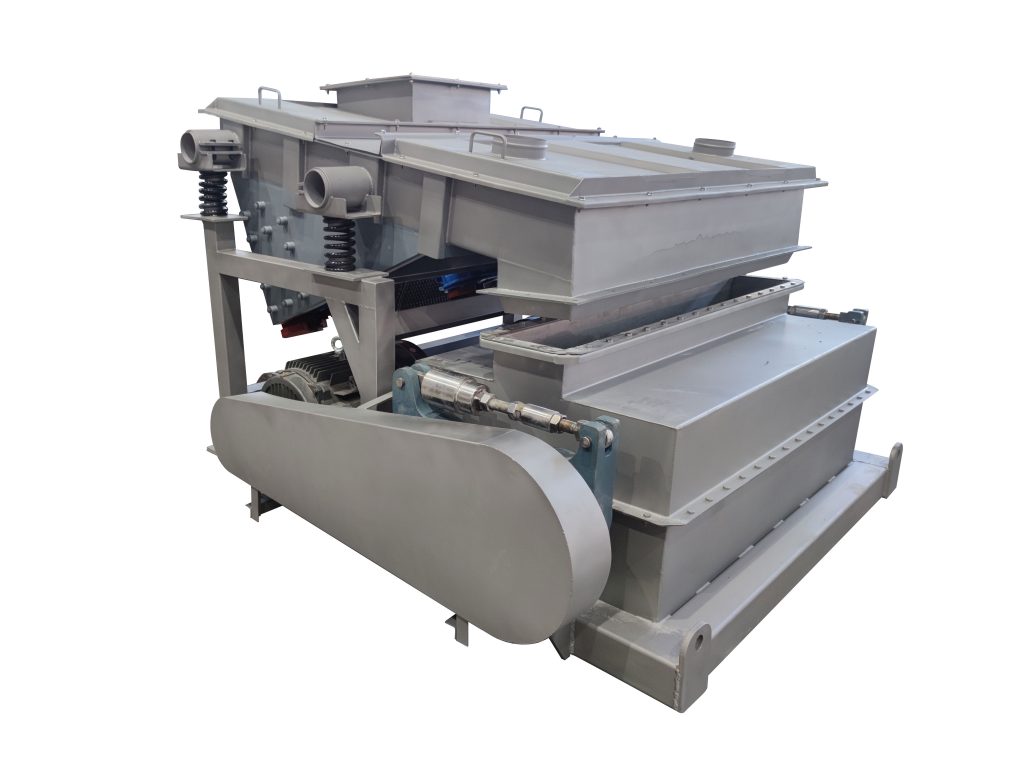
This article explains how edible-salt and industrial-salt applications can lead to different equipment considerations and how a double roller crusher can be evaluated within each processing environment.
1. Start with the End Use of the Salt
The first question when evaluating a salt crushing machine is:
Where will the crushed salt be used?
Edible salt may be prepared for:
- Table salt production
- Seasoning blends
- Food ingredient processing
- Salt packaging
- Further food-product manufacturing
Industrial salt may be used for:
- Chemical processing
- Water-treatment applications
- Industrial formulation
- Manufacturing processes requiring sodium chloride
- Other technical applications
The end use influences the required particle-size range, material-handling route, equipment-contact requirements, cleaning procedures, and downstream process.
Therefore, two customers processing the same basic raw material may require different crusher configurations because their final products and production environments are different.
2. Edible Salt and Industrial Salt Have Different Process Priorities
The distinction is not necessarily that one type of salt requires a completely different crushing technology.
In many cases, the same basic Double Roller Crusher concept can be evaluated for both applications.
The difference is more often found in the surrounding process requirements.
Edible Salt
Typical considerations may include:
- Product-contact materials
- Cleanability
- Hygienic equipment design
- Prevention of cross-contamination
- Product changeover procedures
- Particle-size consistency
- Applicable food-contact requirements
- Integration with food-processing equipment
Industrial Salt
Typical considerations may include:
- Required throughput
- Feed preparation
- Particle-size requirements for the industrial process
- Material transfer
- Crusher capacity
- Integration with other processing equipment
- Operating environment
- Maintenance accessibility
These are general process considerations. The actual requirements should be established according to the customer's product, site, and applicable regulations.
3. Choosing a Crusher for Edible Salt
For edible-salt processing, the crusher should be evaluated as part of a food-processing environment.
The first consideration is the intended product-contact configuration.
If salt comes directly into contact with equipment surfaces, the manufacturer and customer should establish what materials, surface conditions, cleaning methods, and regulatory requirements apply to the particular market.
Food-contact requirements can vary by jurisdiction and intended use. For example, the FDA explains that food-contact substances and processing equipment can be subject to specific requirements based on their intended conditions of use.
Consequently, it is better to specify the applicable market and food-contact requirements during equipment selection rather than assuming that one material specification automatically satisfies every food-processing application.
4. Cleanability Matters in Edible-Salt Applications
A crusher used in an edible-salt line may be exposed to repeated cleaning and product changeovers.
The equipment evaluation can therefore include:
- Accessibility of product-contact areas
- Ease of inspection
- Ease of cleaning
- Potential material-accumulation areas
- Drainage where wet cleaning is applicable
- Protection of non-product-contact components
- Cleaning procedures between production batches
The FDA Food Code emphasizes that food-contact surfaces should be designed so they can be effectively cleaned, with accessibility being an important consideration.
This does not mean every salt-processing installation is governed directly by the FDA Food Code. Rather, the relevant food-safety and equipment requirements should be identified for the destination market and application.
5. Particle Size Still Matters for Edible Salt
Although hygiene is an important consideration, edible-salt crusher selection should not overlook the product specification.
Different food applications may require different salt particle sizes.
For example, a process may require:
- Fine salt
- Granulated salt
- Intermediate-size crystals
- A defined size range for blending
- A controlled feed size for packaging equipment
The Double Roller Crusher should therefore be evaluated according to the actual required discharge specification.
The crushing stage may be followed by screening when the process requires tighter separation of different particle-size fractions.
A possible arrangement is:
Salt Feed → Double Roller Crusher → Screening → Product Classification → Packaging
The crusher performs size reduction, while the screen performs classification.
6. Consider Product Changeovers for Food Salt
Food-processing facilities may produce different salt products on the same production line.
For example, one production run may require a particular granular specification while another requires a different size range.
The crusher system should therefore be evaluated for changeover requirements.
Questions can include:
- How is remaining salt removed from the equipment?
- How are product-contact surfaces cleaned?
- How long does a typical changeover take?
- How is cross-contact controlled?
- Can the downstream screen be adjusted or replaced?
- How is the new product specification verified?
The equipment itself is only one part of the changeover process. Feeders, conveyors, screens, hoppers, and packaging equipment should also be included in the evaluation.
7. Choosing a Crusher for Industrial Salt
Industrial salt applications can have substantially different priorities.
For example, the crushed material may be used as an input for another industrial process rather than sold directly as a consumer food ingredient.
The evaluation may therefore focus more heavily on:
- Required processing rate
- Feed size
- Required discharge range
- Continuous material flow
- Equipment integration
- Transfer distance
- Operating environment
- Maintenance access
- Production schedule
In this situation, the Double Roller Crusher can be treated primarily as a size-reduction stage within a larger industrial material-handling system.
The surrounding process may include feeders, conveyors, screens, storage hoppers, and other equipment depending on the application.
8. Industrial Salt May Have Different Product Specifications
Industrial users do not necessarily require the same particle-size specification as edible-salt producers.
The required size may be determined by the next industrial operation.
For example, the crushed salt may need to:
- Enter a downstream screening process
- Feed another processing machine
- Dissolve within a subsequent process
- Be mixed with another material
- Meet a particular industrial particle-size range
The crusher should therefore be evaluated according to the function of the crushed salt.
Instead of asking only:
“What size can this crusher produce?”
a process designer can ask:
“What particle-size condition does the next process require?”
This helps connect crusher selection with the actual production objective.
9. Feed Size Can Be Different Between Edible and Industrial Applications
Feed preparation is another area where applications can differ.
An edible-salt production line may already receive relatively processed salt crystals, while an industrial operation may receive larger or more irregular material.
The process designer should document:
- Maximum feed size
- Typical feed size
- Feed-size distribution
- Feed rate
- Moisture condition
- Presence of agglomerates
- Required reduction
For a relatively uniform edible-salt feed, the crusher may perform a defined finishing or preparation duty.
For larger industrial salt, the crusher may perform a more substantial size-reduction role.
The same crusher category can therefore be used in different process positions.
10. Evaluate Whether Pre-Screening Is Useful
Pre-screening can be considered when a significant portion of incoming salt already meets the required size.
For example:
Incoming Salt
↓
Pre-Screen
↓
Acceptable Fraction → Downstream Process
Oversize Fraction → Double Roller Crusher
This arrangement prevents material that already meets the product requirement from unnecessarily entering the crushing stage.
For industrial applications, pre-screening may also help direct different material fractions to different process routes.
For edible salt, the decision should additionally consider hygiene, product segregation, cleaning, and traceability requirements.
Whether pre-screening is worthwhile depends on the actual feed-size distribution and production objectives.
11. When a Double Roller Crusher Is Used Before Screening
Another common arrangement is to place the crusher upstream of classification.
Salt Feed → Double Roller Crusher → Screening
This can be useful when incoming material contains pieces that need to be reduced before the screen can efficiently separate the desired product fractions.
For edible salt, this may support preparation of a defined granular product.
For industrial salt, the screen may classify the crushed material according to the requirements of the next industrial process.
The two machines should be sized and configured as a coordinated system rather than independently.
12. Compare the Crushing Duty, Not Just the Crusher Model
When comparing double roller crushers, customers may naturally look at:
- Roller dimensions
- Motor power
- Capacity
- Feed range
- Discharge range
These specifications are useful, but they do not by themselves determine whether a machine is suitable.
The crushing duty should also be defined.
For example:
Edible Salt
Raw material → size reduction → classification → food packaging
Industrial Salt
Raw material → size reduction → classification or direct transfer → industrial process
Although both lines contain a crusher, the operating objectives are different.
A suitable machine is therefore one that fits the complete duty rather than simply having a larger nominal capacity.
13. Capacity Requirements Should Reflect the Complete Line
Capacity is another area where edible and industrial applications can differ.
An industrial process may operate continuously at a relatively high material flow, while a food-processing plant may operate several product batches with different specifications.
The crusher should be considered alongside:
- Feeder capacity
- Conveyor capacity
- Screen capacity
- Storage capacity
- Packaging rate
- Production schedule
For example, selecting a crusher with a nominal capacity above the actual requirement does not automatically improve the performance of the entire line if the feeder or screening equipment becomes the limiting stage.
The complete material-flow rate should therefore be evaluated.
14. Consider the Downstream Equipment
The discharge from the Double Roller Crusher should match what comes next.
For Edible Salt
The next stage may be:
Crusher → Fine Screening → Product Storage → Packaging
or:
Crusher → Classification → Blending → Packaging
The equipment should be compatible with the applicable food-processing requirements.
For Industrial Salt
The route may instead be:
Crusher → Conveyor → Storage → Industrial Process
or:
Crusher → Screening → Multiple Industrial Grades
The crusher configuration should be evaluated according to the downstream process rather than selected independently.
15. Materials and Corrosion Considerations
Salt can create corrosion-related considerations, particularly where moisture is present.
The appropriate material construction should be evaluated according to:
- Dry or moist salt
- Cleaning method
- Environmental humidity
- Product-contact requirements
- Expected service conditions
- Required service life
- Applicable regulations
For edible-salt applications, product-contact materials should be selected according to the applicable food-contact requirements of the target market.
For industrial salt, the equipment material may instead be evaluated primarily around the operating environment, corrosion exposure, wear, and maintenance requirements.
The exact material grade should be confirmed with the equipment manufacturer for the application.
16. Dry Salt and Moisture Conditions
The moisture condition of salt can influence material flow and handling.
Dry crystalline salt generally behaves differently from salt that has absorbed moisture or developed compacted areas.
For edible salt, moisture management may be important because the product may need to maintain a specified condition before packaging.
For industrial salt, moisture may affect conveying, storage, feeding, or the next manufacturing stage.
When evaluating a Double Roller Crusher, customers should therefore provide information about the expected moisture condition rather than assuming that all salt will behave in the same way.
17. Food-Salt Applications Require a Broader Hygiene Evaluation
Choosing a crusher for edible salt should not be reduced to choosing stainless steel.
A broader evaluation may include:
- Product-contact materials
- Surface condition
- Cleaning accessibility
- Sealing arrangements
- Lubricant protection
- Potential accumulation areas
- Cleaning chemicals
- Cleaning frequency
- Product changeover
- Foreign-material control
The FDA notes that food-contact substances and equipment can be subject to specific regulatory conditions, including requirements related to intended use.
Therefore, a supplier should be given the destination market and intended application when discussing food-contact equipment.
18. Industrial Applications Require Process-Specific Evaluation
Industrial salt covers a wide range of applications, so “industrial salt” should not be treated as one standardized material-processing duty.
The customer should clarify:
- Where the salt is used
- Why size reduction is required
- Required output size
- Required capacity
- Whether screening follows crushing
- Whether the material is recycled
- How the crushed salt is stored or transferred
For example, an industrial user needing salt for a chemical process may have very different requirements from a user preparing salt for water-treatment applications.
The crusher should be configured around the specific process.
19. A Practical Comparison
| Consideration | Edible Salt | Industrial Salt |
|---|---|---|
| Primary objective | Prepare salt for food-related use | Prepare salt for an industrial process |
| Particle size | Based on product and packaging requirements | Based on downstream industrial requirements |
| Product-contact requirements | Important and market-specific | Depends on intended application |
| Cleanability | Often a major consideration | Depends on process |
| Changeovers | May be important for multiple food products | Depends on production schedule |
| Capacity | Matched to food-processing line | Matched to industrial production flow |
| Screening | Often used for product classification | Used when required by process |
| Material construction | Evaluate food-contact requirements | Evaluate corrosion, wear, environment, and process needs |
| Documentation | May include food-contact and hygiene documentation | Usually focused on technical/process requirements |
| Downstream interface | Blending, storage, packaging, etc. | Conveying, storage, chemical or other industrial process |
This comparison is intended as a planning framework. Actual requirements should be established from the customer's material, product specification, facility, and applicable regulations.
20. How to Discuss the Application with a Crusher Manufacturer
Instead of requesting a quotation using only the phrase “salt crusher,” customers can provide a more complete application description.
For edible salt, useful information includes:
Material: Edible salt
Feed size: Actual range
Required product: Actual size specification
Capacity: Required production rate
Process: Crushing + screening + packaging, if applicable
Product-contact requirements: Applicable market requirements
Cleaning: Planned cleaning method
Changeover: Number of products or batches
For industrial salt:
Material: Industrial salt
Feed size: Actual range
Required product: Process-specific size
Capacity: Required production rate
Downstream process: Actual application
Moisture: Expected condition
Screening: Required or not
Transfer: Conveyor, storage, or direct feeding
This information provides a much stronger basis for technical equipment evaluation.
21. Gaofu Double Roller Crusher for Salt Processing
Gaofu Machinery provides crushing and screening equipment for industrial material-processing applications.
Its Double Roller Crusher can be considered for salt size-reduction duties where the customer needs to reduce larger or off-size material before screening, conveying, storage, packaging, or further processing.
Gaofu's published salt-crusher information includes multiple model configurations with different roller dimensions and capacity ranges. For several listed models, the published feed range is 3–10 mm and the discharge range is 0–5 mm, with capacity varying by model. These are manufacturer-published reference specifications and should not be interpreted as universal results for every salt-processing application.
For edible-salt projects, the equipment discussion can include product-contact and cleaning requirements applicable to the target market. For industrial salt, the evaluation can focus on the required crushing duty, material flow, capacity, and downstream process.
22. A Simple Decision Framework
A practical way to begin the selection process is to answer five questions.
Question 1: What is the salt used for?
If it is intended for human food processing, establish the relevant food-contact and hygiene requirements.
If it is intended for an industrial process, define the specific downstream application.
Question 2: What size enters the crusher?
Provide the maximum, minimum, and typical feed-size ranges.
Question 3: What size must leave the crusher?
Define the required product range and any limits on oversize or fines.
Question 4: What happens after crushing?
Identify whether the material goes to:
- Screening
- Packaging
- Storage
- Conveying
- Blending
- Chemical processing
- Another crushing stage
Question 5: What operating environment does the equipment face?
Consider:
- Moisture
- Cleaning
- Corrosion
- Temperature
- Dust
- Production schedule
- Accessibility
Once these questions are answered, a supplier can evaluate the Double Roller Crusher configuration more accurately.
Conclusion
Choosing a salt crushing machine for edible salt and industrial salt is not simply a matter of selecting the same crusher for two different materials. The intended use of the crushed salt changes the way the equipment and surrounding process should be evaluated.
For edible salt, greater attention may be required for product-contact materials, cleanability, changeovers, particle-size specifications, and applicable food-contact regulations.
For industrial salt, the main considerations may instead center on the required size-reduction duty, production rate, material flow, operating environment, and the requirements of the downstream industrial process.
A Double Roller Crusher can be evaluated for both categories when its crushing duty, feed condition, discharge requirement, and process position are appropriate. The most useful selection process begins with the actual application data rather than a generic equipment specification.
Gaofu Machinery can discuss the salt type, feed size, required output, capacity, downstream process, and application environment to help determine a suitable Double Roller Crusher configuration for the project.