

Salt Crushing Machine Maintenance Guide: Practical Considerations for Rollers, Gaps, and Wear Components
Post Date: 2026-10-07
A salt crushing machine operates under repeated mechanical loading while processing a material that can create challenging operating conditions, particularly when moisture is present. For a Double Roller Crusher, maintaining the condition of the rollers, crushing gap, bearings, seals, and other wear-related components is important for keeping the crushing process aligned with its intended operating range.
Maintenance should not be viewed only as a scheduled task performed after a certain number of operating hours. Changes in discharge material, unusual vibration, visible roller wear, or difficulty maintaining the intended crushing gap can also provide useful information about the condition of the equipment.
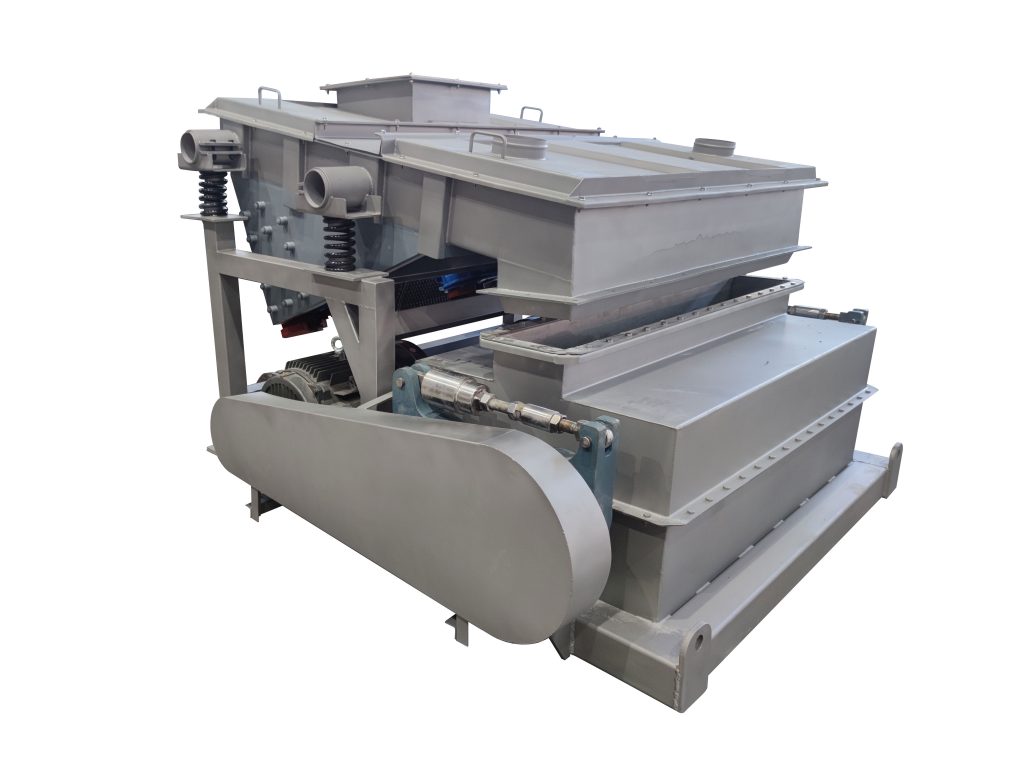
Gaofu Machinery's salt crusher is designed with an adjustable crushing gap, allowing the crushing condition to be adjusted according to application requirements.
This guide focuses on practical inspection and diagnostic considerations for a Double Roller Crusher used in salt processing.
1. Why Maintenance Should Be Linked to Crushing Results
A crusher can continue running even when some components have begun to wear.
The more important question is whether the equipment is still operating within the expected process condition.
For a salt-processing operation, useful indicators can include:
- Changes in discharged particle size
- Increasing oversize material
- Increasing fine material
- Uneven product distribution
- Changes in motor load
- Unusual vibration
- Changes in operating noise
- Material accumulation around the rollers
- Visible surface wear
- Difficulty maintaining the intended gap
These observations do not automatically indicate a specific mechanical fault. However, they can provide reasons for a closer inspection.
Connecting equipment condition with actual process results makes maintenance more informative than relying only on a calendar-based schedule.
2. Establish a Baseline After Installation
Before deciding whether a component has deteriorated, operators need a reference point.
After commissioning the Double Roller Crusher, it can be useful to record the normal operating condition, including:
- Normal feed material
- Feed rate
- Crushing-gap setting
- Typical discharge particle-size distribution
- Motor operating condition
- Normal vibration and sound
- Roller surface condition
- Bearing temperature, where monitored
- Typical material accumulation
The baseline does not need to be complicated.
The purpose is to establish what “normal” looks like for the specific installation.
Later changes can then be compared with this reference instead of relying solely on general maintenance intervals.
3. Inspect the Roller Surfaces Regularly
The rollers are among the most important working components of a Double Roller Crusher.
During inspection, operators can look for:
- Uneven surface wear
- Localized wear
- Grooves
- Surface damage
- Material buildup
- Corrosion
- Deformation
- Changes in the working profile
The appropriate inspection frequency depends on the material, operating hours, feed condition, and equipment configuration.
For salt processing, particular attention may be appropriate when the material contains moisture or when the process experiences frequent changes in feed condition.
The objective is not necessarily to replace a roller at the first sign of surface change. Instead, the observed condition should be evaluated against the equipment's operating requirements.
4. Recognize Uneven Roller Wear
Not all roller wear occurs evenly.
If one area of a roller wears more quickly than another, possible contributing factors may include:
- Uneven material distribution
- Irregular feeding
- Localized material accumulation
- Changes in feed characteristics
- Foreign material
- Misalignment or mechanical issues
Uneven wear can influence the effective crushing condition across the roller width.
For this reason, inspection should not be limited to looking at the roller as a whole. Where practical, operators can compare different areas of the working surface.
If a significant difference is observed, technical inspection should be carried out before simply changing the operating gap.
5. Watch for Changes in the Crushing Gap
The crushing gap is an important operating variable because it influences the size of material passing through the crushing zone.
Gaofu describes its salt crusher as having an adjustable crushing clearance for particle-size control.
During maintenance, operators should therefore distinguish between:
A gap that has intentionally been adjusted
and
A gap that has changed because of mechanical condition.
This distinction is important.
If operators repeatedly need to make larger adjustments to maintain the same product specification, the cause should be investigated rather than treating adjustment alone as the solution.
Potential areas for inspection can include:
- Gap-adjustment mechanism
- Roller surfaces
- Bearings
- Fasteners
- Mechanical supports
- Alignment
- Accumulated material
6. Do Not Use Gap Adjustment to Compensate for Every Problem
Suppose the product gradually becomes coarser.
One possible response is to reduce the crushing gap.
However, a change in product size does not necessarily mean that the gap is the only issue.
Other possible factors include:
- Roller wear
- Feed-size changes
- Feed-rate changes
- Material moisture
- Uneven feeding
- Screening changes
- Mechanical looseness
Therefore, operators should investigate the complete process before making repeated gap adjustments.
A useful diagnostic sequence can be:
Observe Output → Check Feed → Verify Gap → Inspect Rollers → Check Mechanical Components → Adjust if Appropriate
This approach helps prevent operating adjustments from masking a mechanical problem.
7. Monitor the Relationship Between Gap and Discharge
The crushing gap should be evaluated together with the resulting product.
For example, operators may record:
| Observation | Possible Investigation |
|---|---|
| Product becomes coarser at the same recorded gap | Check roller condition and actual gap |
| More oversize appears | Check feed size, roller surface, and gap |
| Fines increase | Check whether the gap has become smaller or feed conditions changed |
| Output varies during one production run | Check feed consistency and mechanical condition |
| Gap requires repeated readjustment | Inspect adjustment mechanism and wear components |
These are diagnostic starting points rather than fault diagnoses.
Actual causes should be confirmed through equipment inspection.
8. Check the Gap-Adjustment Mechanism
The gap-adjustment mechanism deserves its own inspection because it directly influences the crushing condition.
Depending on the equipment design, maintenance personnel may inspect:
- Adjustment components
- Handwheels or actuators
- Mechanical fasteners
- Guides
- Springs or other loading components, where fitted
- Hydraulic elements, where applicable
- Position indicators
- Locking arrangements
The objective is to confirm that the selected gap can be maintained during operation.
If an adjustment mechanism becomes loose or difficult to operate, the issue should be addressed before attempting to compensate through other process settings.
9. Inspect Bearings and Their Surrounding Areas
Bearings support the rotating rollers and therefore deserve routine condition checks.
Useful observations can include:
- Abnormal temperature
- Unusual sound
- Excessive vibration
- Lubrication condition
- Seal condition
- Signs of contamination
- Looseness
A change in bearing behavior does not necessarily mean that the bearing itself is the original cause. Misalignment, excessive loading, material accumulation, or other mechanical conditions can also contribute.
Therefore, bearing inspection should be considered together with the roller and drive system.
10. Monitor Vibration as a Condition Indicator
A change in vibration can provide an early reason for inspection.
For example, if vibration is noticeably different from the established baseline, maintenance personnel can investigate:
- Roller balance
- Bearing condition
- Fasteners
- Drive components
- Material buildup
- Alignment
- Foreign material
The exact vibration limit should come from the equipment manufacturer's requirements or an appropriate site-specific maintenance standard.
Rather than assigning a universal vibration value to every salt crusher, operators should establish suitable reference values for the particular machine.
11. Listen for Changes in Operating Sound
Experienced operators often notice mechanical changes through sound before a visible failure occurs.
A new:
- Grinding sound
- Repetitive knocking
- Rubbing sound
- Intermittent impact
- Unusual drive noise
can justify an inspection.
Sound alone cannot identify the fault, but it can help identify when normal operation has changed.
A useful maintenance practice is to combine sound observations with vibration, temperature, visual inspection, and process-output data.
12. Examine Material Buildup on the Rollers
Salt accumulation can alter the effective roller surface.
This can be particularly relevant when the feed contains moisture or has a tendency to form compacted material.
Operators can inspect for:
- Salt buildup
- Uneven deposits
- Blocked scraper areas
- Accumulation near seals
- Material around the crushing zone
Cleaning procedures should be appropriate for the specific equipment and site.
For food-related salt applications, cleaning methods should also follow the facility's validated hygiene procedures and the applicable requirements of the target market.
13. Inspect Scrapers and Other Contact Components
Where the crusher uses scrapers or similar components to control material buildup, their condition should be checked during maintenance.
Wear may result in:
- Increasing material accumulation
- Changes in roller-surface condition
- More frequent cleaning
- Changes in discharge behavior
A scraper should not simply be tightened or repositioned repeatedly without checking its physical condition.
If it has become worn, damaged, or deformed, replacement may be more appropriate.
The exact inspection and replacement procedure should follow the equipment manufacturer's design.
14. Salt and Corrosion Require Additional Attention
Salt can create a corrosive operating environment, especially when moisture is present.
Consequently, maintenance inspections can include:
- Product-contact surfaces
- Fasteners
- Frames
- Covers
- Chutes
- Seals
- Welded areas
- Drainage or accumulation points
Gaofu's salt-crusher information identifies the equipment specifically for salt processing and lists adjustable crushing clearance among its features.
The appropriate construction material and maintenance procedure should nevertheless be evaluated according to the actual salt condition, cleaning method, and installation environment.
15. Check Fasteners After Extended Operation
Repeated mechanical loading can make fastener inspection worthwhile.
Maintenance personnel can check:
- Mounting bolts
- Bearing-housing fasteners
- Guards
- Adjustment components
- Structural connections
- Chute connections
A loose component can create secondary problems if it is allowed to remain in service.
Any tightening or torque procedure should follow the manufacturer's maintenance instructions rather than using a generic torque value.
16. Use Product Quality as a Maintenance Signal
The final salt product can provide useful information about equipment condition.
Suppose the process normally produces a relatively stable particle-size distribution, but operators begin observing:
- More oversized particles
- More fines
- A broader size distribution
- Greater batch-to-batch variation
The first step should be to determine whether the feed material or process conditions have changed.
If the feed and operating conditions remain stable, the crusher should then be inspected.
This creates a useful maintenance relationship:
Stable Feed + Stable Settings + Changing Output = Reason to Inspect the Crusher
It is not proof of mechanical wear, but it is a useful trigger for investigation.
17. Distinguish Wear from Feed Changes
One of the most important maintenance principles is to avoid assuming that every output change comes from equipment wear.
For example, a change in salt feed may involve:
- Larger crystals
- More agglomerates
- Different moisture
- Different bulk density
- More foreign material
These changes can alter crusher behavior even when the machine itself has not changed.
Therefore, maintenance records should ideally include both:
Equipment Data
and
Material Data
This makes troubleshooting more reliable.
18. Inspect the Crusher After Foreign Material Enters the System
Foreign material can create an unusual mechanical load.
If operators suspect that hard or unsuitable material has entered the crusher, the machine should be stopped and inspected according to the applicable safety procedure.
Inspection may include:
- Roller surfaces
- Gap-setting components
- Bearings
- Fasteners
- Guards
- Drive components
The purpose is to determine whether the event caused damage or altered the operating condition.
The crusher should not simply be restarted and returned to normal production without appropriate inspection when a potentially damaging event has occurred.
19. When Roller Replacement May Be Considered
Roller replacement should be based on actual condition and process requirements.
Potential indicators include:
- Significant working-surface wear
- Persistent inability to maintain the required output
- Localized surface damage
- Mechanical damage
- Excessive corrosion
- Repeated adjustment without restoring the required operating condition
Before replacing the roller, maintenance personnel should determine whether another component is responsible for the observed problem.
For example, replacing a roller will not necessarily resolve an issue caused by unstable feeding or an inaccurate gap-adjustment mechanism.
20. Plan Wear-Component Replacement Before Failure
Waiting until a component fails completely can create unnecessary downtime.
A more practical approach is to track the condition of components over time.
A maintenance record might include:
| Component | Inspection Item | Record |
|---|---|---|
| Rollers | Surface condition | Normal / wear observed |
| Gap mechanism | Adjustment condition | Normal / attention required |
| Bearings | Temperature/noise/vibration | Recorded value |
| Scrapers | Wear | Remaining condition |
| Seals | Damage/leakage | Condition |
| Fasteners | Tightness | Inspection result |
| Drive components | Noise/condition | Inspection result |
The purpose is to create a trend.
A gradual change can then be identified before it becomes an unexpected production interruption.
21. Establish Maintenance Levels
Instead of treating all maintenance activities equally, a salt-crusher program can be divided into several levels.
Before Each Production Run
Check:
- Visible equipment condition
- Roller area
- Feed and discharge
- Obvious material accumulation
- Abnormal leaks or damage
Routine Inspection
Check:
- Gap-setting mechanism
- Roller condition
- Bearings
- Fasteners
- Seals
- Drive system
Planned Shutdown
Perform:
- Detailed roller inspection
- Component cleaning
- Wear measurement
- Mechanical adjustment inspection
- Bearing and drive inspection
- Replacement of components approaching their service limits
Corrective Maintenance
When abnormal conditions occur:
- Stop the equipment according to the site's safety procedure.
- Identify the abnormal condition.
- Inspect the relevant components.
- Correct the mechanical or process issue.
- Verify the crushing gap.
- Conduct a controlled restart.
- Check the resulting product.
This structure can make maintenance more systematic.
22. Food-Grade Salt Applications Need Additional Maintenance Controls
When the Double Roller Crusher is used in edible-salt processing, mechanical maintenance should be combined with hygiene controls.
Additional considerations may include:
- Cleaning after product changeover
- Inspection of product-contact surfaces
- Foreign-material control
- Lubricant management
- Seal condition
- Corrosion inspection
- Cleaning documentation
- Traceability
The applicable food-contact and sanitation requirements depend on the target market and intended use. Equipment should therefore be maintained according to the facility's food-safety system and applicable regulations.
23. Maintenance Records Can Help Identify Recurring Problems
A maintenance log does more than document completed work.
It can help answer questions such as:
- How frequently is the gap adjusted?
- When was the roller last inspected?
- When did particle-size variation begin?
- How often are scrapers replaced?
- Has bearing temperature changed over time?
- Does increased wear occur after a particular salt feed condition?
- Are problems concentrated around particular production batches?
This information can reveal relationships between equipment condition and process operation.
For example, if repeated roller wear occurs shortly after processing a particular material condition, the production data can be reviewed to determine whether feed characteristics or operating practices should also be investigated.
24. A Practical Troubleshooting Sequence
When a salt crushing machine begins producing unexpected results, a structured inspection can reduce unnecessary adjustments.
Step 1: Check the Feed
Confirm that the salt material has not changed significantly.
Step 2: Check the Recorded Gap
Verify that the actual operating setting corresponds with the production requirement.
Step 3: Inspect the Rollers
Look for wear, damage, buildup, or uneven surface condition.
Step 4: Check Bearings and Drive Components
Look for changes in temperature, sound, vibration, or mechanical condition.
Step 5: Inspect the Gap Mechanism
Confirm that the adjustment system is operating correctly.
Step 6: Check the Discharge Route
Make sure downstream screening, chutes, or conveyors are not creating a restriction.
Step 7: Restart Under Controlled Conditions
After the relevant issue has been addressed, verify the operating condition and product result.
This approach helps distinguish equipment problems from upstream or downstream process changes.
25. Manufacturer Guidance Should Take Priority
Maintenance practices should always follow the documentation supplied for the specific crusher model.
This is especially important for:
- Lubrication
- Bearing service
- Gap adjustment
- Torque requirements
- Wear limits
- Replacement procedures
- Electrical isolation
- Safety interlocks
- Cleaning
Generic maintenance advice cannot replace the manufacturer's model-specific instructions.
Gaofu's salt crusher product information describes a compact salt-crushing machine with adjustable crushing clearance and multiple model configurations.
The correct maintenance interval and replacement criteria should therefore be established from the actual equipment configuration and operating conditions.
26. Gaofu Double Roller Crusher for Salt Processing
Gaofu Machinery provides crushing and screening equipment for industrial material-processing applications.
Its salt crusher is designed specifically for salt size-reduction applications, with the company describing an adjustable crushing clearance and a crushing action primarily based on cutting, supplemented by extrusion and pressing.
For maintenance planning, this means the condition of the rollers and gap-setting system is particularly relevant to maintaining the intended crushing condition.
Gaofu can support equipment evaluation based on the customer's salt material, required particle size, capacity, and process arrangement. Maintenance and spare-parts planning can then be considered according to the selected equipment configuration.
Conclusion
Maintaining a Double Roller Crusher for salt processing is more than periodically cleaning the machine or replacing worn components.
A useful maintenance program connects:
Roller Condition + Crushing Gap + Mechanical Components + Feed Condition + Discharge Results
Regular inspection of roller surfaces can help identify wear before it significantly affects production. Monitoring the crushing gap can help distinguish intentional process adjustment from unwanted mechanical change. Bearing, seal, scraper, fastener, and drive inspections can provide additional information about the overall equipment condition.
Most importantly, changes in the finished salt should be treated as useful diagnostic information. If the feed and operating conditions remain stable but the discharge gradually changes, the crusher deserves closer inspection.
By combining routine checks, condition-based observations, maintenance records, and manufacturer-specific procedures, salt processors can establish a more structured approach to maintaining their Double Roller Crusher and supporting consistent operation over its service life.