

How to Evaluate Vacuum Feeder Configurations for Different Sieving Machine Material Handling Requirements
Post Date: 2026-08-15
Introduction
In a powder-processing line, the relationship between conveying and screening can influence the overall process arrangement. A Vacuum Feeder can provide a pneumatic transfer route between an upstream material source and a downstream sieving machine, but the appropriate configuration depends on the specific application.
Different powders have different flow characteristics, while different sieving machines have different inlet arrangements, processing requirements, and operating conditions. Therefore, evaluating a Vacuum Feeder should involve the complete material-handling process rather than focusing on a single equipment parameter.
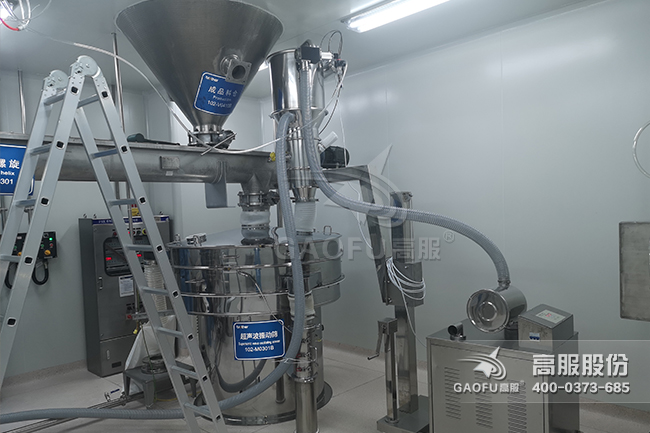
For manufacturers planning a new screening line or modifying an existing one, the following factors provide a practical framework for evaluating Vacuum Feeder configurations.
1. Begin with the Material Handling Objective
Before comparing Vacuum Feeder configurations, define what the conveying stage needs to accomplish.
The material route may be:
Raw Material → Conveying → Sieving → Collection
The Vacuum Feeder is responsible for transferring the material, while the sieving machine performs the separation process.
Depending on the production line, the conveying stage may need to:
- Move powder from storage to screening
- Transfer material between production stages
- Reduce repeated manual loading
- Connect equipment at different elevations
- Provide a pipeline-based transfer route
Clearly defining this objective helps prevent unnecessary equipment selection based only on nominal specifications.
2. Evaluate the Material's Physical Properties
Material characteristics are among the first factors to examine.
Bulk Density
Bulk density affects how much material occupies a given volume and can influence conveying requirements.
Particle Size
Fine powders and coarser particles may behave differently during pneumatic transfer.
Flowability
A free-flowing powder may require a different material-loading arrangement from a cohesive powder.
Moisture
Moisture can influence flowability and the tendency of some powders to form agglomerates.
Particle Shape
Particle shape can influence material movement and screening behavior.
Abrasiveness
Abrasive materials may require additional consideration of contact components and maintenance.
Providing accurate material information during equipment evaluation can help suppliers develop a more application-specific configuration.
3. Look at the Sieving Machine First
The downstream screening equipment should influence the Vacuum Feeder configuration.
A typical process can be arranged as:
Material Source → Vacuum Feeder → Sieving Machine → Collection
Before selecting the feeder, identify:
- Sieving machine type
- Material inlet position
- Required feeding conditions
- Processing capacity
- Installation height
- Material discharge arrangement
The goal is to establish compatibility between conveying and screening rather than selecting each machine separately.
4. Match the Configuration to the Screening Application
Different screening technologies may require different approaches to material supply.
Rotary Vibrating Sieve
A rotary vibrating sieve may be used for powder screening, classification, and separation of oversized particles.
The Vacuum Feeder can provide upstream material transfer.
Typical route:
Storage → Vacuum Feeder → Rotary Vibrating Sieve → Collection
The feeder should be evaluated according to the screen's material inlet and processing requirements.
Centrifugal Sifter
A centrifugal sifter can be considered for continuous powder screening applications.
The Vacuum Feeder can connect the material source to the sifter while maintaining a defined transfer route.
Linear Vibrating Screen
A linear vibrating screen may be used for various bulk-material screening applications.
The feeding arrangement should take into account the screen inlet and required material supply conditions.
5. Evaluate the Required Material Supply Rate
Capacity matching is an important part of configuration evaluation.
Consider the relationship between:
Upstream Material Supply → Vacuum Feeder → Sieving Machine
Relevant information includes:
- Required production throughput
- Material supply rate
- Conveying cycle
- Screening machine capacity
- Operating schedule
The Vacuum Feeder should not simply be selected according to its maximum nominal capacity. Actual performance can vary according to material properties, conveying distance, pipeline arrangement, and operating conditions.
Application-specific evaluation is therefore recommended.
6. Examine the Conveying Distance
The distance between the material source and sieving machine can influence system configuration.
Evaluate:
Horizontal Distance
How far must the powder travel across the production floor?
Vertical Distance
Does the material need to move between different floors or elevations?
Pipeline Bends
How many directional changes are required?
Pipeline Arrangement
Is there sufficient space for the planned conveying route?
A clear understanding of the physical route helps establish a practical system configuration.
7. Consider the Material Source
The Vacuum Feeder may be connected to different upstream devices.
Hopper
Hopper → Vacuum Feeder → Sieving Machine
This can be considered when powder is already stored in a hopper.
Big Bag Feeding Station
Big Bag Feeding Station → Vacuum Feeder → Sieving Machine
This arrangement can connect bulk-bag unloading with downstream screening.
Mixer
Mixer → Vacuum Feeder → Sieving Machine
This can be considered when powder needs screening after mixing.
Other Upstream Equipment
The feeder may also connect with other process machinery where the material-transfer conditions are suitable.
The connection should be designed around the actual process sequence.
8. Consider the Installation Environment
Equipment configuration should account for the available production space.
Evaluate:
- Floor area
- Equipment height
- Pipeline routing
- Maintenance clearance
- Operator access
- Cleaning access
A compact factory may require a different pipeline arrangement from a larger facility with greater installation flexibility.
Planning the layout before equipment fabrication can help identify potential interface problems.
9. Evaluate the Need for Enclosed Material Transfer
Vacuum conveying uses a pipeline-based transfer method.
For powder applications, manufacturers may consider an enclosed conveying route when they want to reduce the number of open transfer points.
A representative system is:
Storage Vessel → Vacuum Feeder → Pipeline → Sieving Machine
However, the actual environmental performance depends on the complete installation, including:
- Equipment sealing
- Pipeline connections
- Filters
- Material characteristics
- Operating conditions
An enclosed conveying method should therefore be evaluated as part of the entire system.
10. Consider Powder Cleanliness and Cross-Contamination
For facilities processing multiple materials, equipment configuration should also consider product changeovers.
Important points include:
- Cleaning accessibility
- Residual powder
- Pipeline cleaning
- Filter maintenance
- Screen replacement
- Material-contact surfaces
Food and ingredient processors should establish cleaning procedures appropriate to their products and applicable requirements.
For chemical powders, compatibility between the material and equipment-contact components should also be evaluated.
11. Evaluate Special Material Requirements
Not every powder can be handled under the same conditions.
Fine Powders
Fine powders may require particular attention to filtration, sealing, and material accumulation.
Cohesive Powders
Materials with poor flowability may require an appropriate feeding arrangement at the source.
Abrasive Powders
Abrasive materials may influence wear of contact components and maintenance frequency.
Temperature-Sensitive Materials
The operating temperature of the material should be considered when selecting equipment.
Combustible Powders
For combustible or hazardous powders, the complete system should be evaluated according to applicable safety standards, regulations, and facility requirements.
12. Assess Filter and Air Management Requirements
The filtration section is an important part of a vacuum conveying system.
When evaluating a configuration, manufacturers should consider:
- Filter type
- Filtration area
- Cleaning method
- Inspection accessibility
- Material characteristics
The filter arrangement should be appropriate for the conveyed material and operating conditions.
Regular inspection and maintenance can help maintain the intended conveying performance.
13. Consider the Automation Level
Different production lines require different levels of automation.
A basic system may rely on operator-controlled start and stop functions.
A more integrated system may incorporate:
- Material-level signals
- Automatic conveying cycles
- Equipment interlocking
- Alarm functions
- Centralized control
For a sieving machine production line, the Vacuum Feeder can be incorporated into the broader control strategy.
The actual automation configuration depends on the production process and selected control equipment.
14. Evaluate Maintenance Requirements
Configuration evaluation should include the long-term maintenance process.
Vacuum Feeder
Check:
- Filters
- Seals
- Valves
- Material inlet
- Discharge components
Pipeline
Check:
- Connections
- Sealing points
- Accumulation
- Physical condition
Sieving Machine
Check:
- Screen mesh
- Screen frame
- Inlet
- Discharge
- Operating components
Maintenance frequency should be determined according to manufacturer instructions, material characteristics, and operating conditions.
15. Compare Configurations by Application
Rather than asking which Vacuum Feeder configuration is universally best, manufacturers can compare configurations according to the actual process.
| Evaluation Factor | Questions to Consider |
|---|---|
| Material | What powder is being conveyed? |
| Bulk density | How dense is the material? |
| Flowability | Does the material flow freely? |
| Particle size | Is it fine, coarse, or mixed? |
| Throughput | What material supply rate is required? |
| Distance | How far must the powder travel? |
| Elevation | Is vertical conveying necessary? |
| Screening | What type of sieving machine is used? |
| Layout | Where will each machine be installed? |
| Hygiene | What cleaning requirements apply? |
| Safety | Does the material require special protection? |
| Automation | How much automatic control is needed? |
| Maintenance | What components require routine inspection? |
This application-based comparison provides a more practical basis for configuration selection.
16. Example: Flour Screening Line
Consider a flour-processing application.
The material route could be:
Flour Hopper → Vacuum Feeder → Rotary Vibrating Sieve → Flour Collection
The configuration evaluation may include:
- Determine flour bulk density and flow characteristics.
- Establish the required screening specification.
- Measure the distance between hopper and sieve.
- Determine the required material supply rate.
- Select a suitable conveying pipeline arrangement.
- Confirm the Vacuum Feeder and sieve interfaces.
- Plan cleaning and maintenance access.
- Evaluate applicable food-processing requirements.
This workflow illustrates why feeder selection should be based on the entire application.
17. Example: Chemical Powder Screening Line
A chemical powder line might be arranged as:
Chemical Powder Storage → Vacuum Feeder → Screening Equipment → Collection
The evaluation can focus on:
- Powder density
- Particle size
- Abrasiveness
- Material compatibility
- Conveying distance
- Screening objective
- Environmental conditions
Where combustible or hazardous materials are involved, additional safety assessment is necessary.
18. Gaofu Vacuum Feeder Configuration Support
The Gaofu Vacuum Feeder can be considered for powder conveying applications connected to screening equipment.
Potential combinations include:
- Vacuum Feeder + Rotary Vibrating Sieve
- Vacuum Feeder + Centrifugal Sifter
- Vacuum Feeder + Linear Vibrating Screen
- Vacuum Feeder + Customized Screening Equipment
Configuration can be evaluated according to:
- Material characteristics
- Conveying distance
- Feeding requirements
- Screening process
- Plant layout
- Automation objectives
This approach allows the conveying stage to be designed around the requirements of the downstream screening process.
Why Choose Gaofu Machinery?
Gaofu Machinery provides equipment and system solutions for screening, conveying, filtration, and powder processing.
Its product range includes:
- Vacuum Feeders
- Big Bag Feeding Stations
- Feeding Stations
- Rotary Vibrating Sieves
- Centrifugal Sifters
- Filtration Sieves
- Linear Vibrating Screens
- Ultrasonic Vibrating Screens
With application-based evaluation, manufacturers can consider material characteristics and complete process requirements when developing a conveying and screening system.
Conclusion
Evaluating a Vacuum Feeder for a sieving machine should involve more than comparing individual equipment specifications. Material characteristics, screening objectives, required throughput, conveying distance, pipeline design, material source, factory layout, filtration, cleaning, automation, maintenance, and safety requirements can all influence the appropriate configuration.
A well-planned system connects the stages logically:
Material Source → Vacuum Feeder → Conveying Route → Sieving Machine → Collection
The Gaofu Vacuum Feeder can be integrated with different screening solutions according to application-specific requirements, providing a practical option for powder material transfer in food, chemical, and industrial processing lines.