

Understanding Vacuum Feeder Operation in Sieving Machine Systems for Food, Chemical, and Powder Processing
Post Date: 2026-08-15
Introduction
In many powder-processing lines, conveying and screening are separate operations that need to work together. Before a sieving machine can classify or separate material, the powder must first reach its inlet under suitable feeding conditions.
A Vacuum Feeder provides a pneumatic conveying method for transferring powders through a pipeline. When integrated into a sieving system, it can act as the material-transfer link between an upstream source and downstream screening equipment.
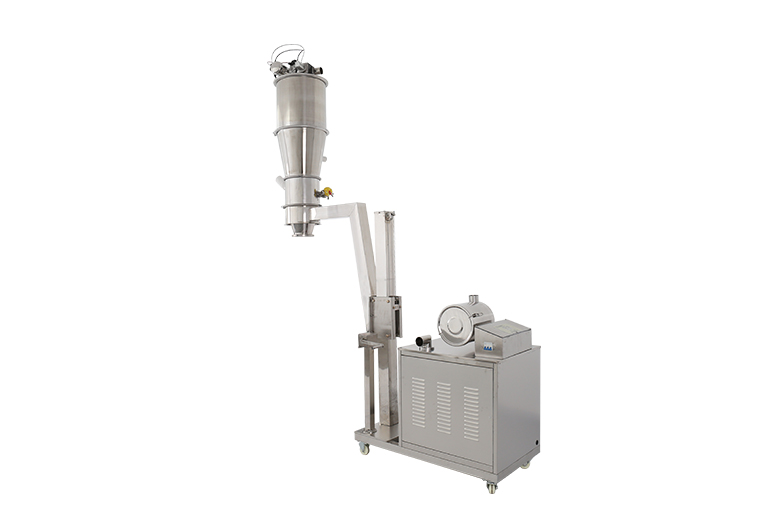
For food, chemical, and industrial powder applications, understanding how the Vacuum Feeder operates can help manufacturers evaluate whether this conveying method fits their process. The appropriate configuration depends on material characteristics, conveying requirements, equipment layout, and applicable safety or hygiene requirements.
1. What Is a Vacuum Feeder?
A Vacuum Feeder is a pneumatic conveying device designed to move powder or other suitable dry materials through a conveying pipeline.
Unlike a conventional open manual loading method, the material is transported through a defined pipeline route.
A simplified process can be represented as:
Material Source → Vacuum Feeder → Conveying Pipeline → Sieving Machine → Collection
The Vacuum Feeder handles material transfer, while the sieving machine handles screening.
Keeping these functions separate allows each stage to be selected according to its specific process requirements.
2. The Basic Operating Principle
A typical vacuum conveying cycle involves several key stages.
Step 1: Establishing the Vacuum
The conveying system creates a pressure difference between the material source and receiving section.
This pressure difference provides the driving force for material movement through the conveying line.
Step 2: Drawing in Material
Powder enters the Vacuum Feeder from the connected material source.
The source may be:
- Storage hopper
- Feeding station
- Big bag unloading system
- Mixing equipment
- Upstream processing equipment
Step 3: Conveying Through the Pipeline
The material travels through the configured pipeline toward the receiving section.
Pipeline design can include horizontal or vertical sections depending on the plant layout.
Step 4: Separating Material from Conveying Air
At the receiving section, the conveying system separates the transported material from the air stream according to the equipment configuration.
Step 5: Discharging the Material
The collected powder is discharged toward the downstream equipment.
When connected to a sieving machine, this becomes the material-loading stage before screening.
Step 6: Repeating the Conveying Cycle
Depending on the system configuration, the Vacuum Feeder can operate through repeated conveying and discharge cycles.
The actual cycle time and capacity depend on material properties and equipment configuration.
3. Why the Operating Principle Matters to Sieving Machine Design
The Vacuum Feeder should not be selected independently from the screening equipment.
The complete process can be viewed as:
Storage → Conveying → Feeding → Sieving → Collection
Each stage affects the next.
For example, the downstream sieving machine has a defined material inlet and operating capacity. Therefore, the Vacuum Feeder and its conveying route should be designed to provide a suitable material supply for the screening process.
This makes the connection between the two machines an important part of system planning.
4. Understanding the Material Transfer Cycle
A Vacuum Feeder-based sieving system can be divided into four functional zones.
Zone 1: Material Storage
The powder is stored in an upstream vessel or feeding device.
Zone 2: Vacuum Conveying
The Vacuum Feeder transfers material through the pipeline.
Zone 3: Screening
The conveyed powder enters the sieving machine.
Zone 4: Material Collection
Accepted material and, where applicable, oversized material are directed to their respective collection points.
This structure makes it easier to analyze the material flow from beginning to end.
5. Application in Food Powder Processing
Food powders often require organized material handling before screening.
Potential materials include:
- Flour
- Starch
- Sugar powder
- Protein powder
- Cocoa powder
- Other powdered ingredients
A representative process is:
Food Powder Storage → Vacuum Feeder → Sieving Machine → Collection
Flour
For flour processing, the Vacuum Feeder can transfer flour from an upstream storage point to a screening machine.
The system may be designed to screen the flour before:
- Packaging
- Mixing
- Storage
- Further processing
The appropriate screen specification and conveying conditions should be selected according to the actual flour characteristics.
Starch and Sugar
Starch and sugar powders can have different flow properties depending on moisture, particle size, and storage conditions.
The system should therefore be evaluated based on the actual material rather than using a universal configuration.
Protein and Ingredient Powders
Food ingredient applications may require particular attention to:
- Material-contact surfaces
- Cleaning procedures
- Residual material
- Applicable food-processing requirements
Equipment selection should be consistent with the requirements of the specific production environment.
6. Application in Chemical Powder Processing
Chemical powders can vary considerably in their physical and handling characteristics.
Potential materials include:
- Chemical additives
- Fine mineral powders
- Pigments
- Industrial fillers
- Other dry powder materials
Before selecting a Vacuum Feeder, manufacturers should evaluate:
- Bulk density
- Particle size
- Flowability
- Abrasiveness
- Material compatibility
- Temperature
- Conveying distance
A possible process is:
Chemical Powder Storage → Vacuum Feeder → Sieving Machine → Product Collection
The screening stage can then perform classification or removal of unwanted particle fractions according to the process objective.
7. Application in General Powder Processing
The same conveying principle can be considered for many industrial powder applications.
Examples include:
- Mineral powders
- Ceramic powders
- Plastic additives
- Fine industrial materials
- Powdered raw materials
However, similar-looking powders may have very different conveying behavior.
For this reason, application evaluation should include actual material data whenever possible.
8. Matching the Vacuum Feeder with the Sieving Machine
The type of downstream screening equipment can influence the overall system design.
Rotary Vibrating Sieve
A rotary vibrating sieve can be considered for fine powder screening and particle classification.
The workflow may be:
Material Source → Vacuum Feeder → Rotary Vibrating Sieve → Collection
The feeder should be matched to the screen's material supply requirements.
Centrifugal Sifter
A centrifugal sifter can be considered for continuous powder screening applications.
The Vacuum Feeder provides the upstream conveying function, while the centrifugal sifter performs screening.
Linear Vibrating Screen
A linear vibrating screen may be suitable for different bulk-material screening applications.
Its inlet and material-consumption characteristics should be considered when designing the conveying system.
9. Factors That Influence Vacuum Feeder Operation
The operating result is affected by more than the feeder itself.
Material Properties
Bulk density, particle size, moisture, flowability, and particle shape can influence conveying behavior.
Conveying Distance
Longer routes may require additional evaluation of pipeline diameter, bends, elevation changes, and conveying conditions.
Pipeline Design
Pipeline routing should consider:
- Length
- Diameter
- Bends
- Elevation
- Connection points
Feeding Requirement
The required material supply rate should be compared with the processing capacity of the downstream sieving machine.
Operating Environment
Temperature, humidity, cleaning requirements, and material-contact requirements may affect equipment selection.
10. How the Vacuum Feeder Can Support Enclosed Powder Transfer
One characteristic of vacuum conveying is the use of a pipeline as the material-transfer route.
This can help manufacturers organize powder movement between process stages without relying on repeated open manual transfer.
A representative arrangement is:
Storage Vessel
↓
Vacuum Feeder
↓
Enclosed Conveying Pipeline
↓
Sieving Machine
↓
Collection System
The actual degree of enclosure and dust control depends on the sealing design, filters, pipeline connections, material properties, and operating conditions.
11. Connecting the Feeder to Different Material Sources
Hopper-to-Sieve Transfer
Hopper → Vacuum Feeder → Sieving Machine
This arrangement can be considered when powder is already stored in a hopper.
Big Bag-to-Sieve Transfer
Big Bag Feeding Station → Vacuum Feeder → Sieving Machine
This can connect bulk-bag unloading with downstream screening.
Machine-to-Sieve Transfer
Upstream Processing Machine → Vacuum Feeder → Sieving Machine
This arrangement may be considered when screening is required after mixing, grinding, or another processing stage.
The appropriate configuration depends on the production sequence.
12. Safety Considerations for Chemical and Powder Applications
Safety should be considered during system design, particularly for powders with special handling characteristics.
Manufacturers should evaluate:
- Combustible-dust properties
- Static electricity
- Grounding requirements
- Material temperature
- Chemical compatibility
- Applicable local regulations
For combustible or hazardous powders, the Vacuum Feeder, sieving machine, electrical components, and related equipment should be selected as a compatible system in accordance with applicable safety standards.
No single equipment feature should be treated as a substitute for a complete process safety assessment.
13. Hygiene Considerations for Food Processing
For food powder applications, system design may also consider hygienic material handling.
Important points include:
Accessible Cleaning Areas
Components requiring inspection or cleaning should remain accessible.
Material-Contact Components
The materials used in product-contact areas should be appropriate for the application and applicable requirements.
Residual Material
The system layout should consider areas where powder could potentially accumulate.
Changeovers
Facilities processing multiple products should establish suitable cleaning and changeover procedures.
The exact hygiene requirements depend on the product, facility, and applicable regulations.
14. Vacuum Feeder Operation and Production Control
In a more automated line, the Vacuum Feeder can form part of a coordinated control system.
Depending on the selected configuration, manufacturers may consider:
- Feeding-cycle control
- Material-level monitoring
- Start/stop sequencing
- Equipment interlocking
- Alarm functions
For example, the feeding operation can be coordinated with the operating status of the downstream sieving machine.
The specific control logic should be developed according to the actual equipment and production requirements.
15. Maintenance Points to Monitor
Understanding the operating principle also helps identify routine inspection points.
Filter System
Inspect the filter according to the manufacturer's maintenance requirements.
Seals
Check sealing components for signs of wear or damage.
Valves
Confirm that valves operate according to the intended conveying cycle.
Pipeline
Inspect connections and monitor for material accumulation.
Sieving Machine
The screen mesh, frame, inlet, and discharge sections should also be inspected regularly.
Maintenance schedules should be based on manufacturer recommendations and actual operating conditions.
16. Practical Example of a Complete Powder Workflow
Consider a flour-processing application.
Stage 1 — Storage
Flour is stored in an upstream hopper.
Stage 2 — Vacuum Transfer
The Vacuum Feeder transfers the flour through the conveying pipeline.
Stage 3 — Material Reception
The flour reaches the inlet of the sieving machine.
Stage 4 — Screening
The sieving machine separates the material according to the selected mesh and process requirements.
Stage 5 — Collection
The screened flour is collected for subsequent processing or packaging.
The resulting workflow is:
Flour Hopper → Vacuum Feeder → Conveying Pipeline → Sieving Machine → Flour Collection
This illustrates how conveying and screening can be organized as connected stages rather than independent operations.
17. Gaofu Vacuum Feeder for Integrated Screening Systems
The Gaofu Vacuum Feeder can be considered for powder conveying applications where pneumatic transfer is appropriate.
It can be integrated with:
- Rotary Vibrating Sieves
- Centrifugal Sifters
- Linear Vibrating Screens
- Other customized screening equipment
Configuration should be evaluated according to:
- Material characteristics
- Conveying distance
- Required feeding rate
- Pipeline arrangement
- Screening equipment
- Production environment
For different food, chemical, and industrial powders, application-specific assessment remains important.
Why Choose Gaofu Machinery?
Gaofu Machinery focuses on screening, conveying, filtration, and powder-handling equipment for industrial applications.
Its product range includes:
- Vacuum Feeders
- Big Bag Feeding Stations
- Feeding Stations
- Rotary Vibrating Sieves
- Centrifugal Sifters
- Filtration Sieves
- Linear Vibrating Screens
- Ultrasonic Vibrating Screens
By considering material characteristics and the complete production sequence, manufacturers can select equipment and connections that correspond to their actual processing requirements.
Conclusion
Understanding Vacuum Feeder operation is useful when designing an integrated sieving machine system. The Vacuum Feeder provides the material-transfer function, while the sieving machine performs screening, creating a workflow that can be organized around the requirements of each process stage.
For food, chemical, and industrial powder applications, equipment selection should take into account material properties, conveying distance, pipeline configuration, feeding requirements, screening objectives, hygiene conditions, maintenance access, and applicable safety standards.
The Gaofu Vacuum Feeder can be integrated with different screening machines and configured around specific powder-processing conditions, providing manufacturers with an option for connecting material transfer and screening within a coordinated production workflow.