

How to Match Feeding System Configurations with Different Sieving Machine Screening Requirements
Post Date: 2026-08-18
Introduction
In modern powder-processing plants, a sieving machine is often part of a complete production system that includes material storage, feeding, conveying, screening, and collection equipment. While the sieving machine determines how materials are separated, the Feeding system provides the necessary connection between material supply and screening operations.
Selecting a suitable Feeding system configuration requires more than considering only feeding capacity. Factors such as material characteristics, screening objectives, equipment structure, production process, and plant layout all influence the final design.
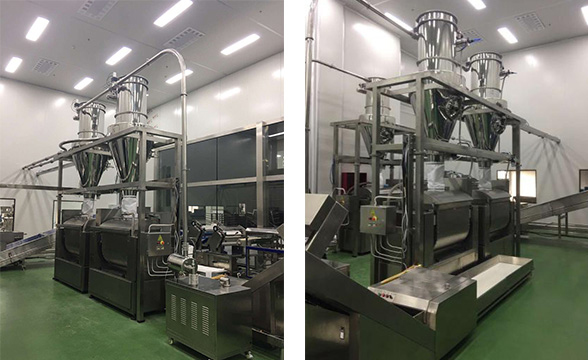
A well-matched Feeding system can help provide a more organized material supply process and support stable coordination between upstream equipment and sieving machines.
1. Why Feeding System Matching Matters in Sieving Applications
The relationship between feeding and screening can be described as:
Material Supply → Feeding System → Sieving Machine → Material Collection
The Feeding system influences:
- How material enters the screening equipment
- The connection between different production stages
- The overall process layout
- The coordination between equipment units
A suitable configuration helps the production line operate according to the intended process design.
However, the actual performance of any screening system depends on many variables, including material properties, machine specifications, operating conditions, and maintenance practices.
2. Start with the Screening Objective
Before selecting a Feeding system, it is important to understand why the sieving machine is being used.
Common screening purposes include:
Removing Oversized Particles
The process may require material to enter the screen evenly so unwanted larger particles can be separated.
Particle Classification
Different particle-size ranges may need to be collected separately.
Product Preparation
Screening may be used before packaging, mixing, or additional processing.
Quality Control Screening
A sieving machine may be installed to check material consistency before the next production stage.
The Feeding system should be selected according to the role of the screening process within the complete production line.
3. Matching Feeding Systems with Rotary Vibrating Sieves
A rotary vibrating sieve is widely considered for powder screening and particle classification applications.
A typical arrangement:
Storage Hopper → Feeding System → Rotary Vibrating Sieve → Collection
When matching a Feeding system with a rotary vibrating sieve, consider:
- Feed inlet design
- Required material supply rate
- Number of screening layers
- Material flow behavior
- Installation height
For example, fine powders and granular materials may require different feeding considerations because their flow characteristics can vary.
The Feeding system should provide material transfer conditions suitable for the selected rotary vibrating sieve configuration.
4. Matching with Centrifugal Sifter Applications
A centrifugal sifter is commonly used in continuous powder-screening processes.
Possible workflow:
Material Source → Feeding System → Centrifugal Sifter → Collection
When designing this combination, evaluate:
- Continuous material supply requirements
- Powder characteristics
- Transfer distance
- Equipment connection method
- Production line arrangement
A consistent material supply approach can help the centrifugal sifter operate within the planned process conditions.
5. Matching with Ultrasonic Vibrating Screen Applications
For some fine-powder applications, an ultrasonic vibrating screen may be considered.
A possible arrangement:
Feeding System → Ultrasonic Vibrating Screen → Collection
Important considerations include:
- Fine powder characteristics
- Screen mesh requirements
- Material sensitivity
- Cleaning procedures
- Feeding stability
The Feeding system should be configured according to the actual material and screening requirements.
6. Matching with Linear Vibrating Screen Applications
Linear vibrating screens are often considered for different bulk-material screening applications.
A typical process:
Material Storage → Feeding System → Linear Vibrating Screen → Discharge
When integrating the Feeding system, consider:
- Material width distribution
- Feeding direction
- Screen surface dimensions
- Production capacity
- Downstream equipment connection
The feeding arrangement should correspond with the movement direction and structure of the screening equipment.
7. Match Configuration According to Material Characteristics
Different materials require different Feeding system considerations.
Free-Flowing Powders
Examples:
- Certain mineral powders
- Dry granular materials
- Some food ingredients
Possible considerations:
- Smooth material transfer path
- Suitable outlet design
- Appropriate feeding rate
Fine Powders
Examples:
- Flour
- Starch
- Powdered sugar
- Chemical powders
Possible considerations:
- Controlled material transfer
- Enclosed connection
- Cleaning accessibility
Cohesive Materials
Some powders may have a tendency to stick together or form buildup.
Consider:
- Hopper design
- Material contact surfaces
- Feeding method
- Maintenance access
Abrasive Materials
Some industrial materials may create higher wear requirements.
Consider:
- Component material selection
- Wear inspection points
- Maintenance planning
8. Match Feeding Configuration with Material Supply Sources
The upstream material source affects the Feeding system design.
Hopper-Based Supply
Process:
Storage Hopper → Feeding System → Sieving Machine
Suitable when material is already stored in a controlled feeding location.
Big Bag Supply
Process:
Big Bag Feeding Station → Feeding System → Sieving Machine
Suitable for bulk powder unloading applications.
Vacuum Conveying Supply
Process:
Vacuum Feeder → Sieving Machine
Suitable when pneumatic transfer is considered appropriate.
Production Equipment Supply
Process:
Mixer / Crusher / Processing Equipment → Feeding System → Sieving Machine
The Feeding system should match the output conditions of the upstream equipment.
9. Consider Feeding Capacity and Screening Capacity Together
A common mistake in production-line planning is evaluating feeding capacity separately from screening capacity.
A complete process should consider:
Material Availability
↓
Feeding Capacity
↓
Sieving Capacity
↓
Collection Capacity
Important factors include:
- Required output
- Material density
- Screening area
- Operating schedule
- Storage capacity
The selected Feeding system should support the complete production workflow.
10. Consider Batch and Continuous Screening Requirements
Different production methods influence Feeding system selection.
Batch Screening
Typical process:
Material Loading → Feeding → Screening → Collection
The Feeding system supplies material according to the production cycle.
Continuous Screening
Typical process:
Continuous Material Supply → Feeding → Screening → Collection
The Feeding system should coordinate with continuous material flow requirements.
The final configuration depends on the specific application.
11. Match Feeding System Design with Production Layout
The factory environment affects equipment selection.
Evaluate:
- Available installation space
- Equipment height
- Transfer distance
- Operator access
- Maintenance space
Examples:
Compact Layout
A short connection between feeder and sieving machine may be preferred.
Multi-Level Layout
Vertical transfer considerations may influence the feeding arrangement.
Long-Distance Transfer
Additional conveying considerations may be required.
The Feeding system should fit the actual production environment.
12. Integration with Food Processing Sieving Lines
Food industries often require careful planning when connecting feeding and screening equipment.
Common materials include:
- Flour
- Starch
- Milk powder
- Sugar powder
- Protein powder
- Other ingredients
A typical process:
Ingredient Storage → Feeding System → Sieving Machine → Packaging
Important considerations include:
- Cleaning access
- Product changeover
- Material-contact requirements
- Powder residue management
Equipment selection should follow the applicable requirements of the facility.
13. Integration with Chemical and Industrial Powder Lines
Industrial applications may involve:
- Ceramic powder
- Mineral powder
- Chemical additives
- Industrial fillers
When selecting a Feeding system, consider:
- Material compatibility
- Particle characteristics
- Abrasion
- Moisture
- Temperature
- Special operating conditions
For materials requiring specific safety considerations, the complete system should be evaluated according to relevant regulations.
14. Consider Enclosed Feeding Configurations
Some powder-processing lines may require enclosed material transfer.
A possible arrangement:
Storage → Enclosed Feeding System → Sieving Machine → Collection
Potential considerations include:
- Connection sealing
- Transfer route
- Filter arrangement
- Cleaning requirements
- Material properties
The final design depends on the complete production environment.
15. Automation Matching Between Feeding and Screening Equipment
A Feeding system can be designed with different levels of automation.
Possible functions include:
- Automatic feeding control
- Material-level monitoring
- Equipment communication
- Operating status feedback
Example:
Screening Equipment Ready
↓
Feeding System Starts
↓
Material Transfer Begins
The automation configuration should match the requirements of the production process.
16. Maintenance Factors When Selecting a Configuration
A suitable Feeding system should also support practical maintenance.
Consider:
Access
Can operators inspect key components?
Cleaning
Can material-contact areas be cleaned effectively?
Replacement
Can wear parts or related components be replaced conveniently?
Inspection
Can connection points be checked regularly?
Maintenance planning should be included before equipment installation.
17. Practical Matching Guide
| Sieving Machine Type | Feeding System Considerations |
|---|---|
| Rotary Vibrating Sieve | Match inlet design, material supply rate, and powder characteristics |
| Centrifugal Sifter | Consider continuous feeding and powder-transfer requirements |
| Ultrasonic Vibrating Screen | Consider fine powder handling and controlled feeding |
| Linear Vibrating Screen | Consider feeding direction and bulk material distribution |
This table provides a general reference. Actual equipment selection should be based on specific application conditions.
18. Gaofu Feeding System for Sieving Applications
The Gaofu Feeding System can be configured for different sieving machine applications according to:
- Material characteristics
- Production capacity
- Screening requirements
- Equipment layout
- Automation needs
- Maintenance requirements
It can be integrated with:
- Rotary Vibrating Sieves
- Centrifugal Sifters
- Ultrasonic Vibrating Screens
- Linear Vibrating Screens
- Vacuum Feeders
- Big Bag Feeding Stations
By evaluating feeding and screening equipment together, manufacturers can develop a more coordinated powder-processing solution.
Why Choose Gaofu Machinery?
Gaofu Machinery provides solutions for powder-processing applications, including:
- Screening equipment
- Feeding systems
- Conveying solutions
- Filtration equipment
- Customized material-handling systems
Product categories include:
- Feeding Systems
- Vacuum Feeders
- Big Bag Feeding Stations
- Rotary Vibrating Sieves
- Centrifugal Sifters
- Filtration Sieves
- Linear Vibrating Screens
- Ultrasonic Vibrating Screens
Equipment selection should be based on actual material conditions, production requirements, and applicable industry standards.
Conclusion
Matching a Feeding system configuration with different sieving machine requirements requires consideration of the complete production process. Material characteristics, screening objectives, equipment type, capacity, layout, automation, and maintenance requirements all influence the final design.
A practical selection approach is:
Understand Material → Define Screening Purpose → Select Sieving Machine → Match Feeding Configuration → Integrate Complete Production Line
Through reasonable system planning, the Feeding system can effectively connect material supply and screening operations, helping manufacturers build powder-processing lines suited to their specific application needs.