

Understanding Feeding System Components and Their Functions in Sieving Machine Powder Processing Applications
Post Date: 2026-08-18
Introduction
In powder-processing industries, a sieving machine is often integrated into a complete material-handling system rather than used as a standalone unit. Before screening begins, materials need to be transferred from storage, unloading equipment, or upstream processing machines to the screening stage in a controlled manner.
A Feeding system plays an important role in this connection process. By combining different functional components, a Feeding system can help organize powder intake, regulate material transfer, and connect upstream and downstream equipment within a production line.
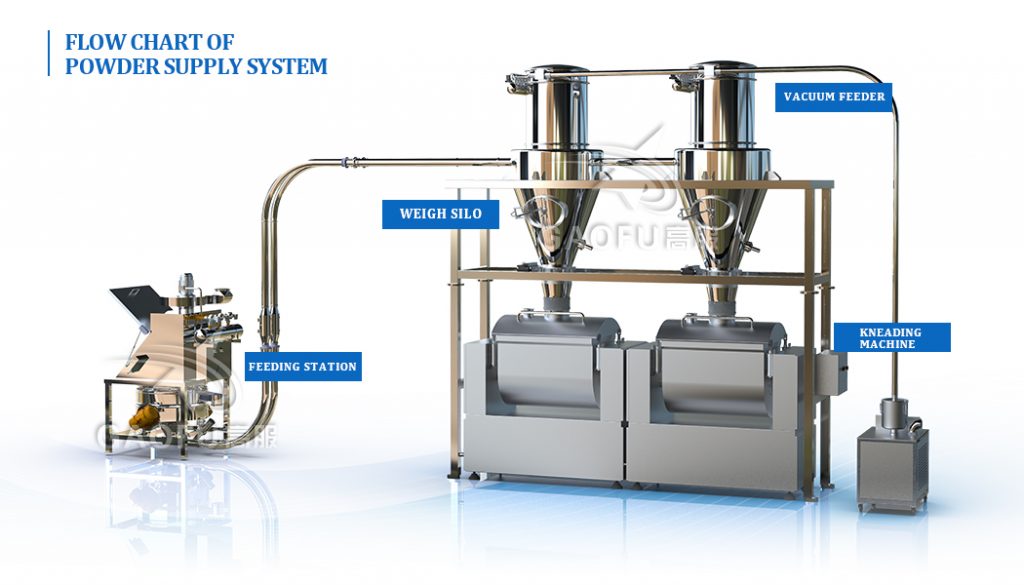
The structure and configuration of a Feeding system depend on many factors, including material characteristics, production capacity, equipment layout, screening requirements, and automation level. Understanding the main components and their functions can help manufacturers design a more suitable powder-processing solution.
1. The Role of a Feeding System in Sieving Machine Applications
A Feeding system is positioned between the material supply source and the screening equipment.
A typical process flow is:
Material Storage → Feeding System → Sieving Machine → Collection System
Its main functions may include:
- Receiving material from upstream equipment
- Providing a connection between different machines
- Controlling material supply to the screening stage
- Supporting organized powder transfer
- Helping improve production-line coordination
The Feeding system does not perform the screening function itself. Instead, it provides suitable material conditions for the sieving machine to complete particle separation.
2. Main Components of a Feeding System
Although Feeding systems can vary depending on application requirements, common components may include:
- Feeding hopper
- Inlet connection section
- Discharge outlet
- Flow-control device
- Supporting structure
- Monitoring components
- Transfer components
- Control system
Each part has a specific role within the overall material-handling process.
3. Feeding Hopper: The Material Receiving Section
The feeding hopper is often the first contact point between stored material and the Feeding system.
Its main functions include:
- Receiving powder from upstream equipment
- Providing temporary material storage
- Guiding material toward the outlet
- Supporting continuous or batch feeding processes
When designing a hopper, manufacturers should consider:
- Material flow characteristics
- Bulk density
- Hopper capacity
- Outlet size
- Cleaning requirements
- Installation space
Different powders may behave differently inside the hopper. Fine powders, cohesive materials, and free-flowing materials may require different structural considerations.
4. Inlet Connection: Linking Upstream Equipment
The inlet section connects the Feeding system with the material source.
Possible upstream equipment includes:
- Storage tanks
- Hoppers
- Big Bag Feeding Stations
- Vacuum Feeders
- Production machines
A typical connection is:
Upstream Equipment → Feeding System → Sieving Machine
The inlet design should consider:
- Connection dimensions
- Material entry direction
- Equipment height
- Sealing requirements
- Maintenance accessibility
A suitable inlet arrangement helps create a smoother transition between different process stages.
5. Outlet Section: Delivering Material to the Sieving Machine
The outlet section connects the Feeding system with the screening equipment.
Its function is to guide material from the feeder toward the sieving machine inlet.
Important considerations include:
- Outlet position
- Discharge direction
- Connection size
- Distance to screening equipment
- Material flow path
A representative arrangement is:
Feeding System Outlet → Sieving Machine Inlet → Screening Area
The outlet structure should match the selected sieving machine configuration.
6. Flow-Control Components: Managing Material Supply
A Feeding system may include components designed to regulate material movement.
Depending on the application, these may include:
- Valves
- Adjustable outlets
- Feeding control devices
- Flow monitoring elements
Their purpose is to help coordinate material supply with the requirements of the screening process.
For example:
Material Available → Feeding Control → Sieving Machine Operation
The appropriate control method depends on:
- Production mode
- Material properties
- Required feeding rate
- Automation level
7. Supporting Structure: Ensuring Equipment Integration
The support structure provides mechanical stability and helps connect the Feeding system with surrounding equipment.
When designing the support structure, consider:
- Equipment weight
- Installation environment
- Floor space
- Maintenance access
- Connection height
A properly planned structure can make installation and inspection more convenient.
8. Monitoring Components: Supporting Process Management
Modern powder-processing systems may include monitoring components to help operators understand equipment status.
Possible monitoring functions include:
- Material-level monitoring
- Feeding status feedback
- Equipment operation signals
For example:
Low Material Level → Feeding Request
or:
Collection Full → Feeding Adjustment
The specific monitoring method depends on the production process and automation requirements.
9. Control System: Coordinating Equipment Operation
For automated production lines, the Feeding system may be connected with a control system.
Possible functions include:
- Start and stop control
- Equipment sequence management
- Status monitoring
- Alarm notifications
- Communication with other machines
A coordinated workflow may be:
Sieving Machine Ready
↓
Feeding System Activated
↓
Material Transfer Begins
↓
Screening Process Continues
The control strategy should be developed according to the actual production requirements.
10. Connection with Rotary Vibrating Sieve Systems
A common application is integrating a Feeding system with a rotary vibrating sieve.
A typical process:
Material Storage → Feeding System → Rotary Vibrating Sieve → Collection
The Feeding system components should be evaluated according to:
- Screen inlet design
- Material characteristics
- Production capacity
- Installation layout
For powder screening applications, suitable material supply conditions can help the screening process operate according to the intended design.
11. Connection with Different Sieving Machines
Different screening technologies may require different feeding arrangements.
Rotary Vibrating Sieve
Used for various powder screening and classification applications.
Centrifugal Sifter
Suitable for continuous powder-screening processes where this technology matches the application.
Ultrasonic Vibrating Screen
Can be considered for certain fine-powder applications requiring additional screening assistance.
Linear Vibrating Screen
Can be considered for different bulk-material screening requirements.
The Feeding system should be selected according to the actual screening equipment and process objectives.
12. Feeding System Components for Food Powder Applications
Food-processing facilities often integrate Feeding systems with screening equipment.
Typical materials include:
- Flour
- Starch
- Sugar powder
- Cocoa powder
- Protein powder
- Other food ingredients
When selecting components, consider:
Cleaning Requirements
The structure should allow practical inspection and cleaning procedures.
Material Contact Parts
Components contacting products should be selected according to the intended application requirements.
Changeover Needs
Facilities processing different powders should consider cleaning and product-change procedures.
Residual Material
The system design should consider possible powder accumulation areas.
13. Components Used in Chemical and Industrial Powder Processing
Industrial applications may involve materials such as:
- Mineral powders
- Ceramic powders
- Chemical additives
- Industrial fillers
Component selection should consider:
- Material compatibility
- Wear characteristics
- Particle size
- Moisture
- Temperature
- Special operating conditions
For powders with special safety requirements, the complete system should be evaluated according to applicable standards.
14. Feeding System Components and Material Flow Design
The arrangement of components influences how material moves through the production line.
Important design factors include:
- Hopper shape
- Outlet position
- Transfer distance
- Feeding direction
- Connection layout
A well-planned flow path can help reduce unnecessary transfer steps.
A typical workflow is:
Storage → Receiving Section → Feeding Control → Sieving Machine → Collection
The actual design depends on the material and production environment.
15. Components for Batch and Continuous Processing
The same Feeding system concept may be applied in different production modes.
Batch Processing
Components work according to a defined production cycle:
Material Loading → Feeding → Screening → Collection
Continuous Processing
Components support ongoing material transfer:
Continuous Supply → Feeding → Screening → Collection
The selected components should match the operating mode.
16. Maintenance Considerations for Feeding System Components
Regular inspection is important for maintaining stable operation.
Key inspection areas include:
Hopper Section
Check:
- Material buildup
- Structural condition
- Cleaning access
Connection Section
Check:
- Sealing condition
- Installation stability
- Material leakage
Flow-Control Components
Check:
- Operating condition
- Adjustment function
- Wear condition
Monitoring Components
Check:
- Signal accuracy
- Sensor condition
Maintenance schedules should follow equipment recommendations and actual operating conditions.
17. Practical Selection Checklist
Before selecting a Feeding system, consider:
Material Information
- What type of powder is being handled?
- Is it free-flowing or cohesive?
- What is the bulk density?
- Are there special handling requirements?
Production Requirements
- What feeding capacity is needed?
- Is the process batch or continuous?
- What screening equipment will be connected?
Layout Requirements
- Where is the material source?
- Where is the sieving machine installed?
- What transfer distance is required?
System Requirements
- Is automation needed?
- Are monitoring functions required?
- What maintenance access is available?
18. Gaofu Feeding System for Sieving Machine Applications
The Gaofu Feeding System is designed for powder-processing applications where organized material supply is required before screening.
It can be integrated with:
- Rotary Vibrating Sieves
- Centrifugal Sifters
- Ultrasonic Vibrating Screens
- Linear Vibrating Screens
- Vacuum Feeders
- Big Bag Feeding Stations
System configuration can be evaluated according to:
- Material characteristics
- Feeding requirements
- Production capacity
- Screening objectives
- Factory layout
- Automation requirements
This allows manufacturers to design a connected workflow from material intake to final screening.
Why Choose Gaofu Machinery?
Gaofu Machinery provides solutions for:
- Powder screening
- Feeding systems
- Conveying equipment
- Filtration applications
- Material-processing systems
Product categories include:
- Feeding Systems
- Vacuum Feeders
- Big Bag Feeding Stations
- Rotary Vibrating Sieves
- Centrifugal Sifters
- Filtration Sieves
- Linear Vibrating Screens
- Ultrasonic Vibrating Screens
Equipment selection should be based on actual process conditions, material characteristics, and applicable industry requirements.
Conclusion
A Feeding system consists of multiple components that work together to connect material supply with sieving machine operations. Components such as feeding hoppers, inlet connections, outlets, flow-control devices, monitoring elements, and control systems each contribute to organized powder transfer.
When designing a powder-processing line, manufacturers should evaluate:
Material Characteristics → Feeding System Components → Sieving Machine Requirements → Downstream Process
By understanding the function of each component, companies can develop a more suitable feeding and screening arrangement for food, chemical, mineral, and other powder-processing applications.
The Gaofu Feeding System provides configurable options for connecting material handling and screening equipment, helping manufacturers plan production lines according to their specific operating conditions.