

How Tumbler Screen Design Influences Salt Particle Separation in Continuous Processing Applications
Post Date: 2026-09-18
Continuous salt processing requires screening equipment to handle a steady flow of material while maintaining an organized separation process. Whether the product contains fine salt, granular crystals, coarse particles, or several size fractions, the design of the screening machine can influence how material moves across the screening surface and how effectively different fractions are directed to their respective outlets.
A Tumbler screen uses a controlled, three-dimensional screening motion to move material across the screen surface. Its design can be configured around factors such as screen area, deck arrangement, feeding method, material residence time, and discharge routing.
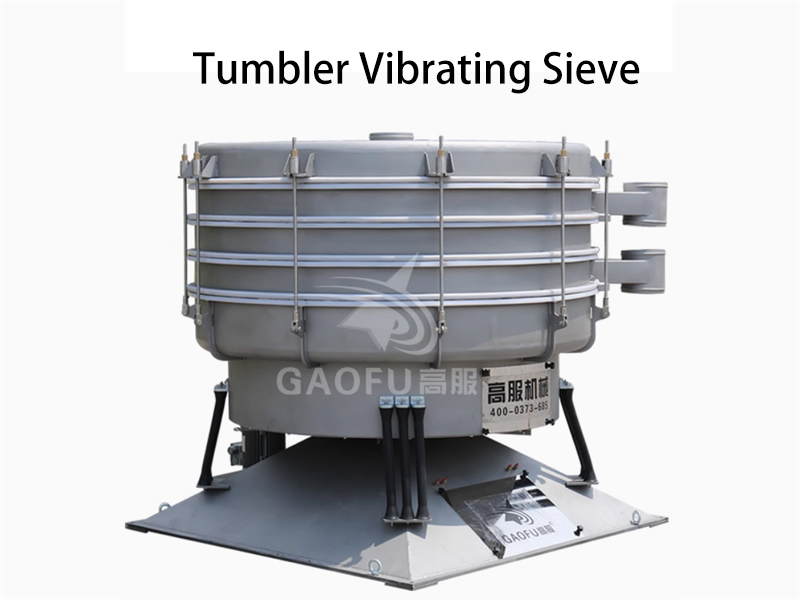
For continuous applications, understanding these design relationships can help processors develop a screening process that matches their material characteristics and production workflow.
1. Screening Design Begins with the Material Flow Path
In a continuous process, salt does not enter the screen as an isolated batch. Material continuously enters, travels across the screening decks, and leaves through designated outlets.
The basic material route can be represented as:
Continuous Feeding → Screening Surface → Particle Classification → Separate Discharge
The design of each stage can influence the behavior of the next stage.
If material enters unevenly, for example, some sections of the screen may receive more salt than others. This can change the loading distribution across the screening surface.
A suitable Tumbler screen design therefore considers the entire material path rather than focusing only on the screen mesh.
2. Screen Area Influences the Available Separation Surface
Screen area provides the working surface through which particles can interact with the selected openings.
For a continuous salt-processing application, the required area depends on factors such as:
- Feed rate
- Particle-size distribution
- Material characteristics
- Target separation
- Number of screening stages
- Desired process arrangement
A larger screen area does not automatically mean better screening. The useful screening area needs to be considered together with feed distribution, material loading, screen opening, and material movement.
This is why screen dimensions should be determined from actual process requirements rather than from capacity figures alone.
3. Tumbler Motion Helps Distribute Salt Across the Screen
One characteristic of a Tumbler screen is its simulated manual-screening movement. The screening surface moves in a controlled circular and reciprocating pattern, encouraging material to travel across the deck while particles interact with the screen openings.
For salt classification, this movement can help create repeated opportunities for appropriately sized particles to pass through the screen while larger particles continue toward the discharge end.
The actual separation result depends on the complete combination of:
Material Properties + Screen Configuration + Feeding Conditions + Operating Parameters
Therefore, the motion of the machine should be considered as one part of the overall screening design.
4. Screen Deck Arrangement Determines the Classification Sequence
When continuous salt processing requires several particle-size fractions, multiple screening decks can organize the separation into stages.
A simplified example is:
Feed Salt
↓
Deck 1 — Coarse Separation
↓
Deck 2 — Medium Separation
↓
Deck 3 — Fine Separation
Each deck performs a different separation function.
The sequence can be adjusted according to the required particle-size distribution and target products. The number of decks should correspond to the number of practical classification stages rather than simply increasing the number of layers.
A well-planned deck arrangement can help simplify the routing of different salt fractions through the downstream process.
5. Residence Time Is Related to Material Travel
During continuous screening, salt needs sufficient opportunity to interact with the screening surface.
Residence time refers to the period during which material remains within the screening zone before reaching its discharge point. It can be influenced by:
- Screen length
- Tumbler movement
- Material feed rate
- Material flow characteristics
- Screen-deck arrangement
- Screen inclination and structural configuration
If material travels through the machine too quickly, there may be less opportunity for separation. If material accumulates excessively, the screening surface may become heavily loaded.
The objective is to establish a material-flow condition appropriate for the specific salt and screening requirement.
6. Feeding Distribution Influences Continuous Screening
A continuous screening machine needs a stable relationship between incoming material and available screening surface.
If the feed is concentrated in one area, the effective screening surface may not be used evenly. If the feed rate changes significantly during operation, material loading can also change.
A Tumbler screen system can therefore be designed with a suitable feeding arrangement to distribute salt into the screening area.
Depending on the production line, the feeding section may connect with:
- Storage hoppers
- Screw feeders
- Belt conveyors
- Other controlled feeding devices
- Upstream crushing or drying equipment
The appropriate feeding method depends on the material characteristics and process layout.
7. Screen Opening Selection Defines the Separation Point
The screen opening is one of the key design elements determining which particles can pass through a particular deck.
For salt classification, different openings can be used to create different separation points.
For example:
Large Opening → Coarser Fraction Separation
Intermediate Opening → Medium Fraction Separation
Smaller Opening → Fine Fraction Separation
However, screen opening should not be selected independently. Particle shape, moisture, agglomeration, feed distribution, and the required product specification can all affect actual screening behavior.
Testing the material under representative conditions can help establish a practical screen configuration.
8. Discharge Design Completes the Separation Process
A screening deck only separates material; the separated particles still need to be collected and transferred.
In continuous salt processing, discharge design is particularly important because the material needs to move continuously into the next stage without disrupting the screening operation.
A multi-fraction Tumbler screen may therefore include different discharge routes for:
- Fine salt
- Intermediate-size salt
- Coarse salt
- Oversize particles
These outlets can be connected to separate collection bins, conveyors, storage equipment, packaging equipment, or a downstream processing system.
The discharge arrangement should be designed together with the downstream material-handling requirements.
9. Enclosed Construction Can Support Controlled Material Handling
Fine salt may generate airborne particles during feeding, screening, and discharge. Open transfer points can increase the possibility of material escaping into the surrounding work area.
An enclosed Tumbler screen configuration can provide a more controlled material path.
Depending on the project, the system may incorporate:
- Enclosed screening chambers
- Sealed covers
- Flexible connections
- Closed discharge routes
- Dust-collection interfaces
The appropriate dust-control arrangement depends on the salt material, plant conditions, process requirements, and applicable workplace regulations.
10. Continuous Processing Requires Consistent Material Loading
A Tumbler screen can be mechanically capable of continuous operation, but the complete process must also provide an appropriate material supply.
For example, an upstream hopper that frequently runs empty may interrupt the screening feed. Conversely, excessive upstream accumulation may produce sudden feed surges.
A practical continuous line can therefore coordinate:
Material Storage → Controlled Feeding → Tumbler Screen → Fraction Collection → Downstream Processing
The objective is to establish a coordinated material-flow sequence rather than treating the screening machine as an independent unit.
11. Screen Surface Utilization Can Affect Separation
The available screen surface should be used effectively throughout the continuous screening process.
Uneven material distribution can leave some areas underused while other areas receive excessive loading. This may affect the consistency of particle movement across the deck.
Tumbler screen design can take into account:
- Feed position
- Screen dimensions
- Deck arrangement
- Material travel direction
- Discharge position
- Internal material distribution
These details can be particularly relevant when the salt has a broad particle-size distribution or when several grades need to be produced simultaneously.
12. Continuous Screening Is Different from Batch Screening
Batch screening allows operators to process a defined quantity of material and stop the equipment between batches. Continuous processing introduces additional requirements.
The screening system needs to accommodate:
| Design Aspect | Continuous Processing Consideration |
|---|---|
| Feeding | Stable and controlled material supply |
| Screen area | Appropriate surface for the planned feed rate |
| Material movement | Suitable travel through the screening zone |
| Deck configuration | Coordinated separation sequence |
| Discharge | Continuous routing of separated fractions |
| Collection | Sufficient downstream receiving capacity |
| Monitoring | Observation of feed, discharge, and equipment condition |
This distinction is important when designing a salt-processing line. A configuration suitable for intermittent operation may require modification when production changes to continuous feeding.
13. Managing Oversize Material in a Continuous Line
Salt entering a screening system may contain particles larger than the target product specification.
These particles need to be directed away from the accepted fraction without interrupting continuous processing.
The Tumbler screen can incorporate an oversize discharge route so that larger particles remain on the appropriate screening surface and travel toward the designated outlet.
Depending on the process, oversize material may then be:
- Collected separately
- Returned for additional processing
- Sent to another production stage
- Removed from the finished-product route
The correct handling method depends on the salt-processing workflow.
14. Designing Around Different Continuous Production Rates
Continuous salt lines may operate at different production rates depending on plant scale and downstream requirements.
When production capacity changes, several design parameters may need to be reconsidered rather than simply increasing feed speed.
These include:
- Screen area
- Number of decks
- Feed distribution
- Material residence time
- Discharge capacity
- Collection equipment
- Upstream and downstream conveying
This system-level approach helps prevent the screening machine from becoming a bottleneck within the wider production line.
15. Material Testing Can Help Validate the Design
Salt characteristics can vary between sources and processing stages. Laboratory specifications alone may not fully represent how a particular salt behaves on a screening machine.
Representative testing can provide useful information about:
- Particle-size distribution
- Material flow behavior
- Screening response
- Agglomeration
- Fraction separation
- Screen configuration
- Discharge behavior
For continuous processing projects, testing can also help evaluate whether the proposed material flow remains practical at the intended operating conditions.
16. Gaofu Machinery Tumbler Screen for Continuous Salt Processing
Gaofu Machinery develops screening equipment for powder and granular material applications, including food, chemical, mineral, and other industrial processes.
For salt-processing applications, the Tumbler screen can be configured around the customer's material characteristics and process objectives. The design discussion can include screening decks, screen specifications, feeding arrangements, discharge routes, enclosed construction, equipment layout, and connections with upstream and downstream equipment.
The goal is to establish a screening system that works as part of the customer's complete process.
For continuous salt classification, Gaofu Machinery can evaluate the proposed material characteristics, required particle-size separation, processing capacity, and line arrangement before recommending a suitable configuration.
Conclusion
Tumbler screen design can influence salt particle separation in continuous processing because the screening result is affected by more than the screen surface itself.
Screen area, tumbler movement, deck arrangement, screen openings, material residence, feeding distribution, discharge routing, and upstream/downstream coordination all contribute to the overall screening process.
For fine, granular, and coarse salt, the appropriate configuration should be based on actual material characteristics and production requirements. Representative material testing can provide additional information when the screening conditions are difficult to determine from specifications alone.
Gaofu Machinery's Tumbler screen can be considered for continuous salt screening and multi-size classification applications where a controlled material-flow route is required. The final equipment configuration should be determined according to the customer's material, capacity, separation objectives, plant conditions, and applicable operating requirements.