

Operational Best Practices for Protein Powder Feeding Station Deployment: Dust Extraction, Filter Cleaning, and System Maintenance Guidelines
Post Date: 2026-11-02
Deploying bulk ingredient handling equipment in high-capacity food facilities requires structured operating procedures to maximize equipment uptime, protect operator health, and uphold strict food safety protocols. Protein powders present distinct operational characteristics due to their fine particle size, static charges, and hygroscopic behavior.
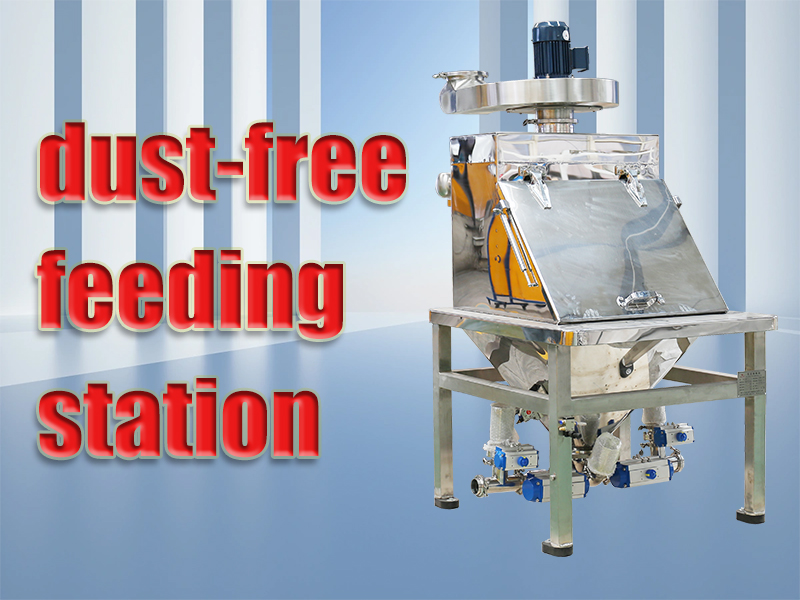
To ensure continuous, trouble-free operation, this technical guide outlines essential best practices for managing dust extraction, filter cleaning cycles, and preventative maintenance on the Gaofu feeding station.
1. Optimizing Dust Extraction and Inward Airflow Dynamics
The primary defense against airborne contamination during bag dumping is maintaining proper velocity at the access hatch.
- Establishing Baseline Face Velocity: Verify that the integrated exhaust fan maintains an inward air velocity of at least $0.5\text{ m/s}$ to $0.75\text{ m/s}$ across the open door. This prevents powder particulates from escaping into the ambient environment during rapid bag slitting.
- Managing Door Position Signals: Ensure the automated limit switches linked to the access hatch operate correctly. Opening the hatch should immediately trigger maximum fan extraction speed, maintaining negative pressure only when required to reduce overall energy consumption.
2. Reverse Pulse-Jet Filter Cleaning Protocols
Filter media efficiency directly dictates extraction strength. Without timely pulse-jet clearing, protein powder forms a dense surface cake that increases differential pressure across the cartridge.
- Pulse Interval Calibration: Program the pulse-jet timer based on powder density and moisture. For fine whey or plant isolates, short compressed-air pulses ($0.1\text{ to }0.2\text{ seconds}$) every $15\text{ to }30\text{ seconds}$ maintain steady airflow without degrading filter structural integrity.
- Dry Air Supply Requirements: Always supply clean, oil-free, dry compressed air (ISO 8573-1 Class 1.4.1 standard) at $0.4\text{ to }0.6\text{ MPa}$ to the pulse tank. Moisture in the air line causes protein powder to hydrate and blind the filter media permanently.
3. Routine Inspection and Preventative Maintenance Schedule
Implementing a clear maintenance schedule extends component lifespan and prevents unscheduled downtime during critical production runs.
| Component / Task | Inspection Frequency | Operational Guideline |
| Gasket Seals & O-Rings | Daily (Pre-Run) | Inspect access door and discharge seals for tears, cracking, or stiffness. Replace worn food-grade silicone/EPDM seals immediately to preserve cabinet vacuum. |
| Filter Cartridge Condition | Weekly | Check differential pressure gauges. Clean or replace cartridges if differential pressure consistently exceeds manufacturer parameters. |
| Vibratory Screen / Mesh Deck | Per Batch / Shift Change | Check for mesh tears, wire deformation, or blinded areas. Clean thoroughly using approved dry-wiping or ultrasonic methods. |
| Vibratory Motor Bolts | Monthly | Check torque specs on motor mounting hardware to prevent vibrational loosening and structural stress. |
4. Sanitation and Changeover Best Practices
During product changeovers—especially between allergenic formulations like soy isolate and non-allergenic lines—proper cleaning procedures prevent cross-contact.
- Dry Clean First: Vacuum residual powder from interior walls, hopper ledges, and mesh decks using an ATEX/explosion-proof industrial vacuum before introducing liquid washdown.
- Tool-Free Disassembly: Utilize the quick-release clamps to drop the lower hopper cone and remove the vibrator screen deck for dedicated out-of-line cleaning and swab verification.
- Thorough Drying Phase: Ensure all internal stainless steel surfaces and air lines are completely dry before re-installing filter cartridges and introducing new batches, preventing powder clumping on initial startup.
Conclusion
Following structured operational guidelines allows food processors to achieve optimal dust containment, maintain steady material flow, and extend the operating life of their intake equipment. The Gaofu feeding station offers a robust platform for hygienic powder intake, provided operators maintain proper airflow parameters, clean compressed air supplies, and routine sanitation protocols.