

Preventing Contamination in Bulk Ingredients with a Circular Vibrating Screen Flour Sifter
Post Date: 2026-06-09
In high-volume food production, managing bulk dry ingredients like flour, sugar, starch, and powdered dairy poses a constant operational challenge. Because these materials travel through extensive supply chains—from agricultural processing plants through railcars, silos, and pneumatic lines—they are consistently vulnerable to physical contamination.
For quality assurance teams, an unmanaged contamination event can result in expensive product recalls, damaged processing machinery, and compromised consumer trust. Implementing a circular vibrating screen configured as a dedicated flour sifter is a highly reliable method for safeguarding bulk ingredient streams. In modern production lines, this protective function is effectively carried out by the industrial Rotary Vibrating Sieve.
Identifying the Vectors of Bulk Contamination
Before implementing a screening strategy, it is critical to understand how foreign materials enter bulk ingredient streams. Contamination typically falls into three main categories:
- Supply Chain Inclusions: Items like woven plastic threads from bulk bags, paper shreds from multi-wall bags, or pallet splinters introduced during manual dumping.
- Operational Degradation: Hardened chunks of material caused by moisture buildup in silos, scale or rust from internal piping walls, and minor components like loose bolts or nuts from upstream conveyors.
- Biological Variables: Agglomerated lumps or insect larvae that can occasionally develop in stagnant zones of bulk storage if environmental humidity fluctuates.
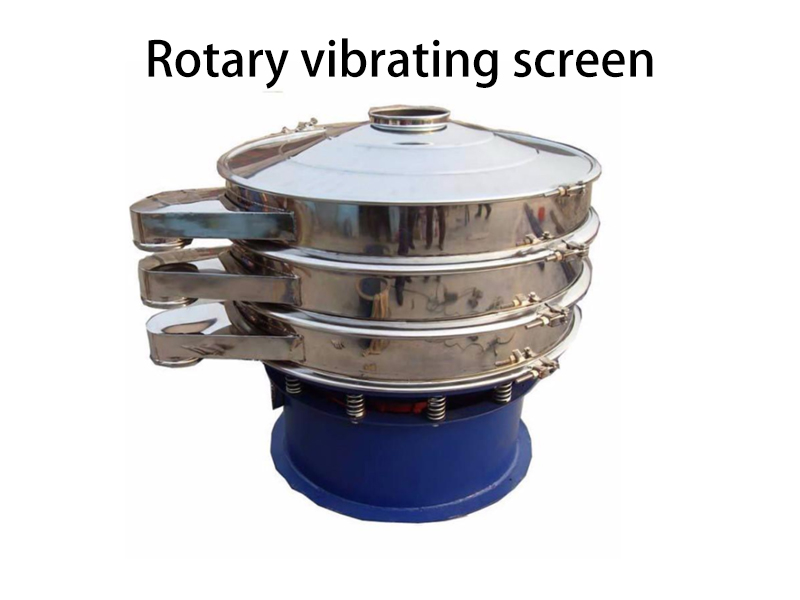
As illustrated in the equipment profile above, the circular layout provides a streamlined path for materials. Ingredients enter through the center, and the continuous three-dimensional vibration moves qualified particles down through the mesh while driving oversized impurities outward to the lateral discharge ports.
How the Rotary Vibrating Sieve Neutralizes Risks
The Rotary Vibrating Sieve serves as a mechanical gatekeeper, using physical dimensions to filter out impurities. Its design provides several layers of protection against contamination:
1. High-Precision Mechanical Isolation
The mesh screen inside a circular sifter acts as a definitive physical barrier. Because the sieve cloth is calibrated to a specific micrometer rating, any particle larger than the target flour specification cannot pass through. The machine's high-frequency vertical vibration prevents materials from bridging or matting over the openings, ensuring that contaminants are continuously isolated and driven to the waste outlet without slowing down the primary production line.
2. Sealed Atmosphere Protection
Contamination is not just about what is already inside the flour; it is also about preventing ambient dust, moisture, and pests from entering the system during the sifting process. A high-quality Rotary Vibrating Sieve features a fully enclosed design utilizing food-grade silicone or EPDM gaskets. This dust-tight barrier keeps the ingredient stream fully isolated from the factory environment, protecting product purity and preventing fine flour dust from escaping into the workspace.
3. Multi-Deck Separation for Complex Grading
When handling multi-component bulk ingredients or processing raw flour that requires simultaneous fine-particle grading and safety scalping, the Rotary Vibrating Sieve can be configured with multiple screen decks stacked vertically.
| Sieve Layer | Mesh Configuration | Operational Function | Target Contaminant / Output |
| Top Deck (Scalping) | Coarse Mesh (e.g., 10-20 Mesh) | Rapid structural protection. | Removes large foreign items, paper scraps, and strings. |
| Middle Deck (Grading) | Fine Mesh (e.g., 40-60 Mesh) | De-clumping and uniform separation. | Breaks up agglomerated flour; isolates uniform flour particles. |
| Bottom Deck (Discharge) | Fine Collection Basin | Final product routing. | Directs the clean, aerated flour into the mixing or packaging system. |
Sanitation Reminder: To satisfy strict food-safety protocols (such as HACCP), the screening equipment must be regularly checked for mesh integrity. A damaged or torn wire cloth compromises your critical control point, allowing contaminants to slip through into the final product.
Maintaining Industrial Hygiene Standards
For a contamination barrier to be truly effective, the machine itself must not become a source of microbial growth. Industrial Rotary Vibrating Sieves are engineered with polished 304 or 316L stainless steel contact parts. All internal joints are continuously welded and ground smooth to eliminate microscopic cracks or "dead zones" where flour could settle and spoil.
Additionally, the quick-release clamp assembly allows operators to strip the machine down to its individual decks without tools, making routine washdowns or allergen changeovers efficient and verifiable.
By integrating robust circular screening technology into your primary bulk intake and packaging points, your facility can systematically reduce contamination risks, protect critical downstream assets, and maintain a consistent standard of product safety.
To help tailor this contamination prevention strategy to your plant.