

Sieving Machine Workflow Planning: Using a Vacuum Feeder to Coordinate Powder Transfer and Screening
Post Date: 2026-08-15
Introduction
Efficient powder processing depends not only on individual machines but also on how material moves between each stage. When a sieving machine is installed in a production line, the upstream transfer process needs to provide a suitable and organized supply of material without creating unnecessary interruptions.
A Vacuum Feeder offers a pneumatic conveying approach for moving powders from one process stage to another through a pipeline. When incorporated into a sieving machine workflow, it can help connect material preparation, powder transfer, screening, and collection into a coordinated sequence.
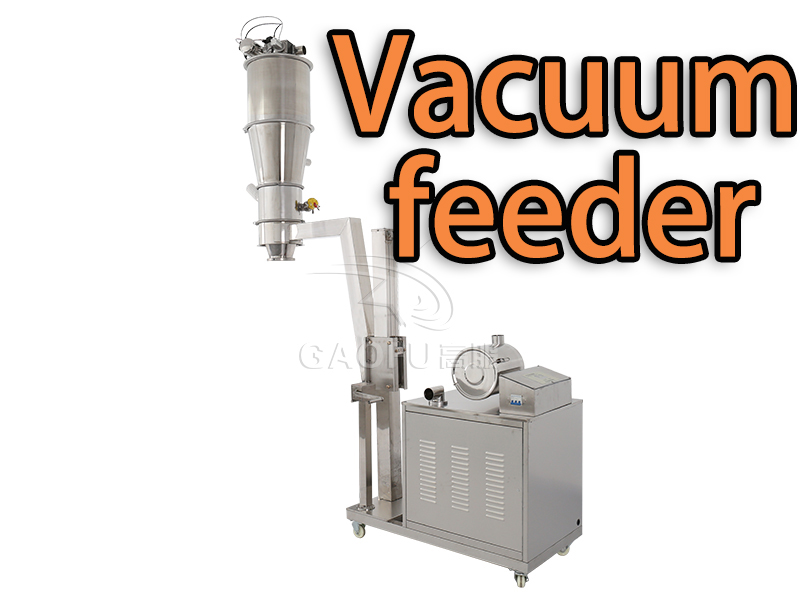
For manufacturers planning or upgrading powder-processing lines, the key is to design the workflow around the actual material characteristics and production objectives rather than simply adding equipment. This article explains practical considerations for using a Vacuum Feeder to coordinate powder transfer and screening.
1. Begin with the Material Journey
A useful starting point for system planning is to map the complete journey of the powder.
A representative workflow may be:
Raw Material Receiving → Storage → Transfer → Sieving → Collection → Next Process
The Vacuum Feeder can be positioned within the transfer stage:
Raw Material Source → Vacuum Feeder → Sieving Machine → Collection
This approach gives each component a defined responsibility.
- Storage equipment holds the material.
- Vacuum Feeder transfers the powder.
- Sieving machine performs separation.
- Collection equipment receives the screened fractions.
- Downstream equipment continues the production process.
Clearly defining these stages can make it easier to identify potential bottlenecks and connection requirements.
2. Plan the Workflow Around the Screening Objective
The desired screening result should be established before determining how the material will reach the sieving machine.
For example, the screening stage may be intended to:
- Remove oversized particles
- Separate different particle fractions
- Prepare powder for subsequent processing
- Screen material before packaging
- Maintain a specified particle-size range
Once the screening objective is established, the upstream feeding process can be designed around the material requirements of the selected sieving machine.
This avoids treating the Vacuum Feeder as an independent component and instead makes it part of the overall process sequence.
3. Identify the Material Supply Point
The location and type of the material source influence the workflow.
A Vacuum Feeder may be connected with:
Storage Hopper
Hopper → Vacuum Feeder → Sieving Machine
This arrangement may be considered when material is stored in a hopper before screening.
Big Bag Feeding Station
Big Bag → Feeding Station → Vacuum Feeder → Sieving Machine
This can be considered when bulk powder arrives in flexible intermediate bulk containers.
Upstream Processing Equipment
Mixer / Grinder / Other Equipment → Vacuum Feeder → Sieving Machine
This arrangement may be suitable when screening is positioned after another processing operation.
The appropriate connection depends on material properties, equipment interfaces, and the desired production sequence.
4. Determine Where the Vacuum Feeder Fits in the Workflow
The Vacuum Feeder does not necessarily need to be positioned directly beside the material source.
Because the material is conveyed through a pipeline, system designers can consider different equipment arrangements according to the available plant space.
Potential layouts include:
- Same-floor transfer
- Vertical transfer
- Multi-level production layouts
- Equipment separated by production zones
When planning the route, consider pipeline length, bends, elevation changes, connection points, and maintenance accessibility.
5. Coordinate Material Supply with Screening Demand
One of the most important workflow considerations is the relationship between material supply and screening demand.
The process can be viewed as three linked stages:
Material Availability → Vacuum Feeding → Screening Demand
If the upstream material supply is irregular, the sieving machine may not receive material consistently. Conversely, feeding material at a rate that is unsuitable for the screening equipment may affect the intended screening conditions.
Therefore, the system should evaluate:
- Required production throughput
- Feeding cycle
- Screening machine capacity
- Material storage volume
- Operating schedule
Actual capacity should be determined from application-specific conditions rather than a generalized figure.
6. Account for Different Powder Characteristics
Workflow planning should begin with the material rather than the equipment model.
Important characteristics may include:
Bulk Density
The density of the powder affects material handling and conveying requirements.
Flowability
Free-flowing and cohesive powders may require different material supply arrangements.
Particle Size
Particle size influences both conveying behavior and the screening specification.
Moisture
Moisture can affect flowability and may contribute to agglomeration in some powders.
Abrasiveness
Abrasive materials may require appropriate consideration of contact components and maintenance.
Temperature
Materials entering the conveying system at elevated temperatures require equipment selected for the applicable operating conditions.
7. Design the Workflow for Flour Processing
Flour processing is one example where material transfer and screening can form consecutive stages.
A possible workflow is:
Flour Storage → Vacuum Feeder → Sieving Machine → Flour Collection → Packaging or Further Processing
The workflow can be planned around:
- Flour flowability
- Required screening specification
- Material supply rate
- Cleaning procedures
- Equipment layout
The Vacuum Feeder provides the transfer stage, while the sieving machine handles the screening operation.
8. Apply the Same Planning Logic to Other Powders
The workflow concept can also be considered for other materials.
Starch
Starch Storage → Vacuum Feeder → Sieving Machine → Collection
The design should account for powder flow characteristics and screening requirements.
Sugar Powder
The system may include controlled transfer before screening, with attention to material condition and applicable production requirements.
Protein Powder
Food ingredient powders may require consideration of cleaning, material-contact surfaces, and process hygiene.
Chemical Powders
Chemical materials can differ substantially in density, particle size, abrasiveness, and handling requirements. The complete system should be selected accordingly.
For combustible or otherwise hazardous powders, the installation should be designed according to applicable safety standards and local regulations.
9. Think Beyond the Feeding Point
Workflow planning should not stop at the inlet of the sieving machine.
The complete material route should include the post-screening stage.
For example:
Material Source
↓
Vacuum Feeder
↓
Conveying Pipeline
↓
Sieving Machine
↓
Fine / Accepted Material
↓
Storage or Further Processing
If oversized material is separated, an additional collection route can be included:
Oversized Material → Separate Collection
This makes the complete process easier to evaluate before equipment installation.
10. Plan for Material Changeovers
Production facilities that process multiple powders may need to change materials periodically.
In this situation, workflow planning should consider:
- Cleaning access
- Residual material
- Screen replacement
- Pipeline inspection
- Cross-material contamination controls
- Changeover time
The appropriate procedures depend on the material and production requirements.
For food and ingredient applications, manufacturers should establish cleaning and sanitation procedures consistent with applicable regulations and facility practices.
11. Consider the Operator's Workflow
Automation can change how operators interact with the production line.
Instead of repeatedly transferring powder manually, operators may focus on:
- Monitoring material supply
- Checking equipment status
- Inspecting filters and screens
- Managing collection containers
- Performing scheduled maintenance
The appropriate level of automation depends on the plant's production objectives and control system.
A well-planned workflow should also retain suitable access for inspection and maintenance.
12. Use Control Logic to Coordinate the Process
Where automation is required, the Vacuum Feeder and sieving machine can be considered as connected process units.
Depending on the selected system, control planning may include:
- Start/stop sequences
- Material-level signals
- Feeding-cycle control
- Equipment interlocking
- Alarm management
For example, the material supply system may be arranged so that feeding conditions correspond with the operating state of the downstream screening equipment.
The specific control strategy should be developed according to the equipment configuration and production requirements.
13. Plan for Cleaning and Maintenance from the Beginning
Maintenance access should be incorporated into the workflow layout rather than added after installation.
Vacuum Feeder
Inspect:
- Filters
- Sealing components
- Valves
- Material inlet and discharge areas
Pipeline
Inspect:
- Connections
- Sealing points
- Accumulated material
- Physical condition
Sieving Machine
Inspect:
- Screen mesh
- Screen frame
- Inlet
- Discharge outlets
- Operating components
Maintenance frequency should follow the manufacturer's recommendations and actual operating conditions.
14. A Practical Workflow Planning Checklist
Before integrating a Vacuum Feeder with a sieving machine, manufacturers can evaluate the following:
Material Route
- Where does the material enter the line?
- Where should screening take place?
- Where will accepted and rejected fractions go?
Material Properties
- What is the bulk density?
- How does the powder flow?
- What are the particle-size characteristics?
- Is moisture or temperature a concern?
Equipment
- What type of sieving machine is required?
- What conveying arrangement is appropriate?
- Are the equipment interfaces compatible?
Production
- What material supply rate is needed?
- What screening capacity is required?
- Will different powders be processed?
Layout
- How long is the transfer route?
- Are vertical sections necessary?
- Is there sufficient maintenance space?
Automation
- What level of automatic feeding is required?
- Are material-level signals needed?
- Should equipment start/stop operations be coordinated?
Safety and Hygiene
- Does the powder require special handling?
- Are combustible-dust considerations applicable?
- What cleaning procedures are required?
- Which regulations apply to the installation?
15. Gaofu Vacuum Feeder in Integrated Sieving Workflows
The Gaofu Vacuum Feeder can be incorporated into powder-processing systems where pneumatic conveying is appropriate.
It can be considered for integration with:
- Rotary vibrating sieves
- Centrifugal sifters
- Linear vibrating screens
- Other customized screening equipment
Depending on the application, the system can be evaluated around:
- Powder characteristics
- Material supply conditions
- Conveying route
- Screening requirements
- Production layout
- Automation objectives
This workflow-oriented approach helps manufacturers consider conveying and screening as connected stages of one production process.
Why Choose Gaofu Machinery?
Gaofu Machinery provides equipment for screening, conveying, filtration, and powder handling applications.
Its product range includes:
- Vacuum Feeders
- Big Bag Feeding Stations
- Feeding Stations
- Rotary Vibrating Sieves
- Centrifugal Sifters
- Filtration Sieves
- Linear Vibrating Screens
- Ultrasonic Vibrating Screens
With application-specific equipment selection and system planning, manufacturers can develop a material transfer and screening workflow suited to their production conditions.
Conclusion
Effective sieving machine workflow planning requires more than deciding where to install a screen. The entire material journey—from storage and transfer to screening, collection, and subsequent processing—should be considered as one connected process.
A Vacuum Feeder can serve as the transfer link between an upstream material source and a downstream sieving machine. By considering material characteristics, feeding requirements, equipment capacity, pipeline routing, changeovers, automation, cleaning, and maintenance at the planning stage, manufacturers can establish a more organized powder-processing workflow.
The Gaofu Vacuum Feeder provides a configurable option for powder conveying applications and can be integrated with different screening solutions according to actual production requirements.