

Troubleshooting Material Feeding Issues in Sieving Machine Lines: Practical Feeding System Considerations
Post Date: 2026-08-18
Introduction
In a powder-processing line, the sieving machine is responsible for separating materials according to the intended screening requirements, but the screening process begins before material reaches the screen surface. If powder is supplied unevenly, interrupted, or poorly distributed, operators may need to adjust the upstream feeding process to keep the production line operating as planned.
A Feeding system provides the connection between material storage, conveying, and screening equipment. When feeding problems occur, examining the complete material-transfer path rather than focusing only on the sieving machine can help identify potential causes more systematically.
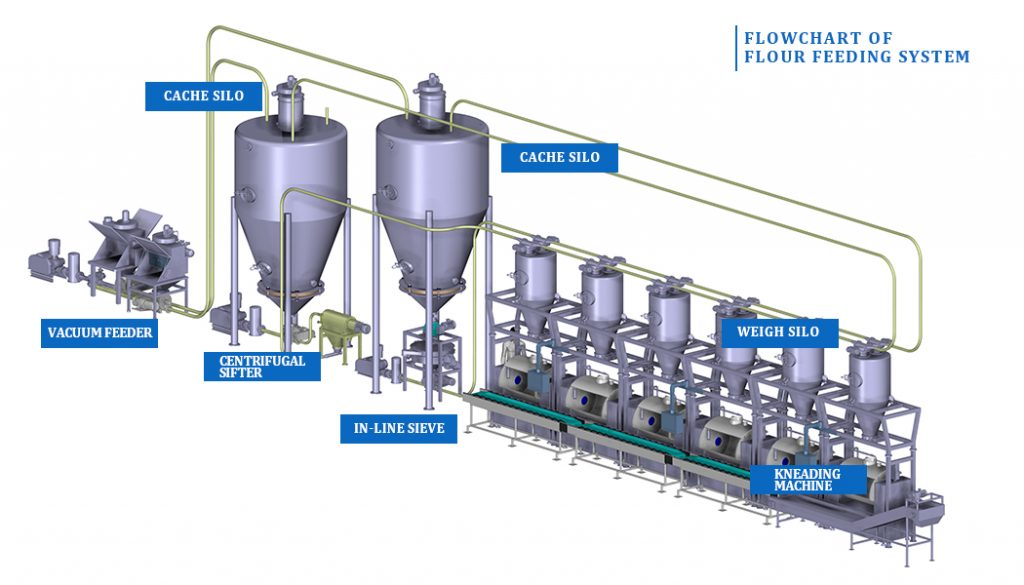
This guide discusses common material-feeding issues, possible contributing factors, and practical considerations for configuring a Feeding system for powder-screening applications.
1. Start with the Complete Material Flow
A typical powder-screening process can be represented as:
Material Source → Feeding System → Sieving Machine → Collection Equipment
When material feeding becomes unstable, check each stage in sequence.
Potential problem areas include:
- Material storage
- Hopper outlet
- Feeding mechanism
- Transfer connection
- Control components
- Sieving machine inlet
- Downstream discharge
This approach helps distinguish between an upstream feeding issue and a screening-equipment issue.
2. Issue: Irregular Material Feeding
One common problem is an inconsistent flow of powder into the sieving machine.
Possible contributing factors include:
- Fluctuating material supply
- Inappropriate hopper design
- Material bridging
- Inconsistent feeding settings
- Changes in powder flow characteristics
- Incorrect equipment matching
Practical Considerations
First, inspect whether material is entering the Feeding system consistently.
Then check:
- Material level
- Hopper outlet
- Feeding mechanism
- Transfer connection
- Feeding-control settings
The objective is to identify where the material flow begins to change rather than immediately adjusting the screen itself.
3. Issue: Material Bridging in the Hopper
Some powders can form bridges or arches above the hopper outlet, interrupting material discharge.
This behavior can be influenced by:
- Fine particle size
- Cohesion
- Moisture
- Bulk density
- Hopper geometry
- Storage conditions
Feeding System Considerations
When selecting or designing a Feeding system, evaluate the material's flow characteristics in advance.
Potential measures may include:
- Appropriate hopper geometry
- Suitable outlet dimensions
- Material-flow assistance where required
- Regular inspection and cleaning
The appropriate solution depends on the actual powder and equipment configuration.
4. Issue: Feeding Rate Is Too High
An excessive material supply rate may create challenges for the screening stage.
Possible symptoms include:
- Material accumulation around the feed area
- Uneven distribution across the screen
- Increased carryover
- Reduced process stability
Practical Response
Instead of simply increasing screening-machine settings, review the relationship between:
Feeding Rate ↔ Screen Configuration ↔ Material Characteristics
The Feeding system should be configured according to the actual processing capacity of the sieving machine.
5. Issue: Feeding Rate Is Too Low
Insufficient material supply can also affect production efficiency.
Possible reasons include:
- Low material availability
- Restricted hopper outlet
- Feeding-control settings
- Poor material flow
- Inappropriate transfer configuration
A systematic inspection can begin at the material source and continue toward the sieving machine.
If the material supply is inadequate before the screen, changing the screening machine alone may not address the underlying issue.
6. Issue: Powder Accumulation at the Feeding Outlet
Powder may accumulate around an outlet or connection point because of:
- Cohesive material
- Moisture
- Inappropriate outlet geometry
- Insufficient cleaning
- Long material residence time
Practical Considerations
Inspect the Feeding system outlet regularly and consider:
- Outlet structure
- Material-contact surfaces
- Cleaning access
- Connection angle
- Material properties
For food and other powder-processing applications, cleaning procedures should follow the applicable production requirements.
7. Issue: Uneven Material Distribution
Even when the feeding rate appears stable, material may not be distributed as intended when entering the sieving machine.
Potential factors include:
- Feed inlet position
- Material transfer direction
- Connection geometry
- Powder flow behavior
- Equipment alignment
A practical engineering approach is to examine the complete path:
Feeding Outlet → Connection → Sieving Machine Inlet → Screening Surface
The feeding arrangement should be matched to the structure of the selected sieving machine.
8. Issue: Material Flow Stops Unexpectedly
An unexpected interruption can originate from several points.
Check:
Material Source
Is sufficient material available?
Hopper
Is material bridging or accumulating?
Feeding Mechanism
Is the feeding component operating as intended?
Transfer Line
Is there a blockage or connection problem?
Control System
Are sensors or control signals generating an interruption?
Sieving Machine
Is the machine operating according to its configured conditions?
Following this sequence can make troubleshooting more structured.
9. Issue: Powder Leakage at Connections
Powder leakage may occur around poorly matched or improperly maintained connections.
Potential inspection points include:
- Inlet connections
- Outlet connections
- Flexible connectors
- Sealing components
- Inspection openings
When integrating a Feeding system with a sieving machine, connection dimensions and sealing requirements should be considered during engineering rather than after installation.
10. Issue: Excessive Dust During Material Transfer
Powder handling can generate dust, particularly when dry fine materials are transferred between open equipment.
Potential approaches include:
- Enclosed transfer
- Appropriate connection design
- Dust-collection integration where required
- Suitable sealing arrangements
- Controlled feeding
A possible configuration is:
Enclosed Material Source → Feeding System → Enclosed Sieving Machine → Collection
For powders with specific safety requirements, the complete system should be evaluated according to applicable regulations and site conditions.
11. Issue: Feeding Problems with Fine Powders
Fine powders such as flour, starch, powdered sugar, and certain chemical powders may have different flow characteristics from coarse particles.
When handling fine powders, evaluate:
- Particle size
- Moisture
- Cohesion
- Bulk density
- Flowability
A Feeding system may need a different configuration from one used for coarse granular materials.
The correct solution should be determined through material testing and application analysis.
12. Issue: Feeding Problems with Moist or Cohesive Materials
Moisture can change powder flow behavior and may increase the tendency toward buildup.
Potential considerations include:
- Material storage conditions
- Hopper geometry
- Outlet dimensions
- Cleaning frequency
- Transfer distance
If material characteristics change significantly during production, the Feeding system should be reviewed accordingly.
13. Issue: Feeding Problems with Abrasive Materials
Industrial powders such as some mineral or ceramic materials can impose different wear considerations.
Inspect:
- Feeding outlets
- Transfer sections
- Material-contact surfaces
- Connection components
When selecting a Feeding system, material abrasiveness should be considered alongside capacity and layout requirements.
Component selection should be based on the specific material and operating conditions.
14. Troubleshooting Feeding Issues with Rotary Vibrating Sieves
A rotary vibrating sieve may be integrated into the production line as follows:
Storage → Feeding System → Rotary Vibrating Sieve → Collection
If screening conditions appear unstable, investigate the upstream feeding process first.
A practical checklist includes:
- Is material entering consistently?
- Is the feed inlet correctly connected?
- Is the material distributed appropriately?
- Is the feeding rate compatible with the screening process?
- Is powder accumulating before the screen?
This can help determine whether the observed problem originates from material supply or the screening stage.
15. Troubleshooting with Centrifugal Sifters
A centrifugal sifter may be incorporated into continuous powder-processing lines.
Possible workflow:
Feeding System → Centrifugal Sifter → Collection
For this type of arrangement, examine:
- Continuous material supply
- Transfer consistency
- Material flowability
- Connection condition
- Feeding-control settings
The Feeding system should be evaluated together with the continuous screening requirements.
16. Troubleshooting Fine Screening with Ultrasonic Vibrating Screens
When an ultrasonic vibrating screen is used for selected fine-powder applications, feeding conditions should also be considered.
Potential inspection points include:
- Feeding uniformity
- Material characteristics
- Screen mesh condition
- Material buildup
- Feeding rate
If the screen is receiving material inconsistently, correcting the upstream feeding process may be necessary before evaluating other operating parameters.
17. Check Whether the Problem Is Material-Related
Not every feeding problem originates from equipment.
Material properties can change because of:
- Different suppliers
- Changes in particle size
- Moisture variation
- Storage conditions
- Formulation changes
- Mixing conditions
For this reason, troubleshooting should compare current material properties with the original process conditions.
A useful approach is:
Check Material → Check Feeding System → Check Sieving Machine → Check Downstream Equipment
18. Check the Feeding System Against Production Capacity
A Feeding system should be evaluated together with the capacity requirements of the entire production line.
Consider:
Material Supply Capacity
↓
Feeding Capacity
↓
Screening Capacity
↓
Collection Capacity
A mismatch between these stages can create operating difficulties.
Rather than focusing on one machine parameter, evaluate the complete process flow.
19. Automation-Related Feeding Problems
Automated Feeding systems may use sensors, control signals, and equipment interlocks.
When an automated feeding process stops unexpectedly, check:
- Sensor status
- Material-level signals
- Control settings
- Equipment communication
- Interlock conditions
- Alarm information
A basic troubleshooting sequence can be:
Check Alarm → Confirm Material Availability → Check Sensor → Check Control Signal → Inspect Mechanical Components
The actual sequence should follow the equipment's control design.
20. Maintenance Can Help Prevent Recurring Feeding Issues
Troubleshooting should not stop once the immediate problem disappears.
Regular inspection can focus on:
Hopper
Check for buildup and material accumulation.
Feeding Components
Check operating condition and wear.
Connections
Check sealing and installation condition.
Sensors
Check signal and physical condition.
Sieving Machine Inlet
Check for powder accumulation or blockage.
A preventive maintenance schedule should be established according to actual operating conditions and manufacturer recommendations.
21. Selecting the Right Feeding System Configuration
If feeding problems repeatedly occur, the original system configuration may need to be reviewed.
Evaluate:
Material
- Particle size
- Density
- Moisture
- Flowability
- Cohesion
- Abrasiveness
Process
- Required capacity
- Batch or continuous operation
- Screening objective
- Feeding frequency
Equipment
- Sieving machine type
- Inlet structure
- Downstream equipment
- Automation level
Layout
- Transfer distance
- Installation height
- Maintenance space
- Connection direction
These factors provide a more complete basis for Feeding system selection.
22. Gaofu Feeding System for Powder Screening Lines
The Gaofu Feeding System can be configured for different powder-processing applications and integrated with screening equipment according to specific process requirements.
Potential equipment combinations include:
- Feeding System + Rotary Vibrating Sieve
- Feeding System + Centrifugal Sifter
- Feeding System + Ultrasonic Vibrating Screen
- Feeding System + Linear Vibrating Screen
- Big Bag Feeding Station + Sieving Machine
- Vacuum Feeder + Sieving Machine
Configuration can be evaluated according to material characteristics, feeding requirements, screening objectives, production capacity, and plant layout.
Rather than applying one configuration to every material, the system should be selected based on the actual process conditions.
Why Choose Gaofu Machinery?
Gaofu Machinery provides equipment and integrated solutions for powder screening and material handling, including:
- Feeding Systems
- Rotary Vibrating Sieves
- Centrifugal Sifters
- Filtration Sieves
- Ultrasonic Vibrating Screens
- Linear Vibrating Screens
- Vacuum Feeders
- Big Bag Feeding Stations
Gaofu can evaluate the relationship between feeding, screening, and material-handling stages to help develop an equipment configuration suited to the application.
Actual equipment selection and operating parameters should be confirmed according to material testing, production requirements, installation conditions, and applicable standards.
Conclusion
Material feeding problems in a sieving machine production line can have multiple causes, ranging from powder characteristics and hopper conditions to feeding mechanisms, equipment connections, automation settings, and screening-machine configuration.
A practical troubleshooting approach is:
Identify the Symptom → Check Material → Inspect Feeding Path → Verify Feeding Rate → Check Equipment Connections → Review Control System → Inspect the Sieving Machine
The Feeding system should be treated as an integral part of the complete screening process rather than an isolated component. By matching its configuration with material properties, production requirements, and sieving machine characteristics, manufacturers can establish a more coordinated powder-processing workflow while addressing potential feeding challenges systematically.